Author: admin-to-del

  • Image Shows New Russian Drone Launch Site Near Ukraine Front Lines

    Image Shows New Russian Drone Launch Site Near Ukraine Front Lines


    New satellite imagery shows Russia has built several drone launchers on the runway at an airport near the front lines in an occupied region of Ukraine.

    Russian long-range drone launch sites near the front lines could pose a major threat to Ukraine because they reduce the time Kyiv has to respond to and defend against attacks, conflict analysts say. However, the short distance may also make the sites more vulnerable to strikes.

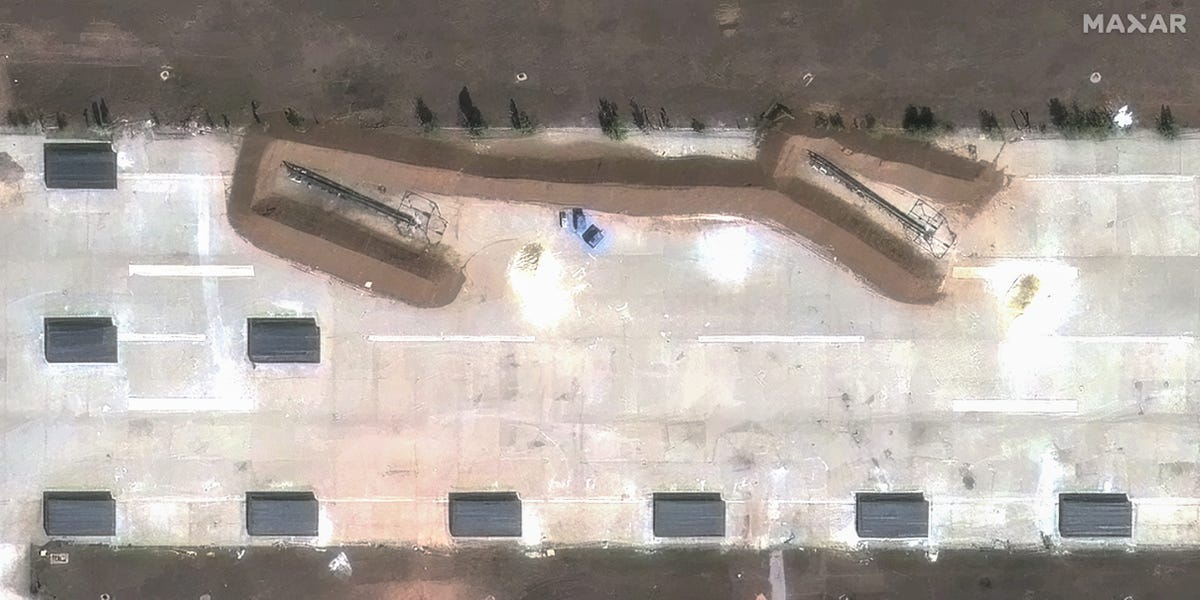
    An image captured on Sunday by Maxar Technologies and reviewed by Business Insider shows launch rails and drone storage sheds at the main airport in Donetsk, an embattled region in eastern Ukraine.

    An overview of the drone base at the Donestk airport in occupied Ukraine on August 17.

    Two launch sites surrounded by storage sheds are seen at the Donetsk airport on August 17.

    Satellite image ©2025 Maxar Technologies


    Launch rails and drone storage sheds are seen at the Donetsk airport on August 17.

    Russia built a new drone launch site at an airport in the occupied Donetsk region.

    Satellite image ©2025 Maxar Technologies


    Russia occupies around 75% of Donetsk, including the airport. The image also shows extensive destruction to the airport terminal and other facilities from years of fighting.

    The airport, located just northwest of Donetsk city, is less than two dozen miles from the front. It stopped operations in 2014 after Russia’s initial invasion of the Donbas, which consists of eastern Ukraine’s Donetsk and Luhansk regions.

    The Donbas has seen some of the fiercest fighting since Russia began its full-scale invasion of Ukraine in February 2022. Pokrovsk, a war-torn city in Donetsk that remains under Kyiv’s control, is one of the hottest and most brutal sectors of the front lines.

    Ukrainian open-source intelligence group Cyberboroshno reported in early August that Russia had constructed infrastructure on the runway at the Donetsk airport to support the launch of Shahed-style one-way attack drones, destructive Iranian-designed loitering munitions that Moscow has used to attack Ukraine relentlessly for three years.

    According to information from Maxar, construction of the launch positions at the Donetsk airport began between late May and early June, and since then, that infrastructure has continued to expand.

    An Iranian-made Shahed-136 drone flies in the sky over Kermanshah, Iran, on March 7.

    Russia produces its own version of the Iranian-designed Shahed drone, which have been used in large-scale attacks against Ukraine.

    Photo by ANONYMOUS/Middle East Images/AFP via Getty Images


    Kyle Glen, an investigator at the UK-based Centre for Information Resilience who monitors Russian drone operations, told Business Insider it is unusual for the base to be so close to the front lines. Other known drone launch sites are much deeper inside Russian territory.

    “Long-range drone launch sites closer to the frontline will reduce the reaction time for Ukrainian air defenses,” analysts at the Institute for the Study of War, a US think tank, said earlier this month.

    “Russian forces have been launching long-range strike drones from occupied Ukraine, and Russia’s continued use of occupied Ukraine for such strikes will increasingly threaten” both Ukraine and NATO if Russia continues to occupy the land, the analysts wrote.

    Reporting indicates that Russia has converted other civilian airports within occupied Ukrainian territory into drone launch sites, including on the Crimean peninsula, which Moscow seized from Kyiv in 2014.

    While there are certain advantages, Donetsk airport’s proximity to the front could backfire for Russia. Glen said the Russian base is more vulnerable to Ukrainian strikes, which don’t necessarily require sophisticated weapons.

    Brady Africk, an open-source intelligence analyst who has closely tracked and researched drone base developments, explained that “Russia often launches a combination of explosive attack drones and decoys in waves, which can stress Ukraine’s already-limited air defenses.” Ukraine has to take them out on the ground if it doesn’t want to face them in the air.

    The challenge, Africk told Business Insider, is that “confronting these drones on the launch pad is difficult, as Russia can keep them in storage until close to the time they plan to launch them.”

    Many drone launch sites are farther away

    Drone launch positions at the Shatalovo base in Russia's Smolensk region in May 2025.

    Drone launch positions at Shatalovo in Russia’s Smolensk region.

    Satellite image ©2025 Maxar Technologies


    Russia also has a number of drone launch sites inside Russia — some of them with relatively new infrastructure — that are much farther from the Donetsk airport and the front lines, though not entirely out of Ukraine’s reach.

    These include sites at Primorsko-Akhtarsk in the Krasnodar Krai region, Navlya in the Bryansk region, Tsimbulova in the Oryol region, Shatalovo in the Smolensk region, and Millerovo in the Rostov region.

    Recent satellite images captured by Maxar and reviewed by Business Insider show infrastructure to support drone operations, including launch rails, runways, hardened shelters, and even what appears to be Shahed-style drones on the tarmac.

    Drone launch sites at the Primorsko-Akhtarsk air base in Russia in August 2025.

    Storage facilities, seen in the circle, and two launch rails at Primorsko-Akhtarsk on August 11.

    Satellite image ©2025 Maxar Technologies


    Drone launch positions at a base in Shatalovo, in Russia's Smolensk region, in May 2025.

    A set of drone launch positions at Shatalovo in May.

    Satellite image ©2025 Maxar Technologies


    Shahed drones and launch positions at the Millerovo base in Russia's Rostov region in July 2025.

    Shahed drones and launch positions at Millerovo in July.

    Satellite image ©2025 Maxar Technologies


    Despite the distance from the front line, Ukraine has proven that it is capable of attacking these bases. At the beginning of August, for instance, Kyiv said its drones struck Primorsko-Akhtarsk, some 150 miles away.

    Ukraine has carried out drone strikes even farther than that, reaching hundreds of miles into Russian territory. Close-in sites could be less of a challenge for the Ukrainians. The Donetsk launch site, if left by Russia insufficiently defended, could be an easy target.

    “Russia’s setup for launching drones from Donetsk airport mirrors what has been seen at other sites, with newly built storage areas and launch rails protected by berms,” Africk said.

    Construction of the new Donetsk airport launch site comes amid a broader Russian investment in its one-way attack drone capabilities. It is producing thousands of drones modeled after the notorious Iranian-designed Shahed every month. And Moscow has consistently demonstrated that it can launch hundreds of them at Ukraine in a single night.

    A recent assessment by the British defense ministry said that Russia launched 6,200 one-way attack drones at Ukraine in July, marking a new monthly high during the war. The scale of strikes subsided during the first three weeks of August.

    However, on Thursday, Russia carried out its largest bombardment of the month, launching over 614 missiles and drones at Ukraine. Kyiv said that the 574 drones used in the attack came from the direction of Primorsko-Akhtarsk, Bryansk, Oryol, Shatalovo, Millerovo, and other regions.

    window.allScripts = window.allScripts || []; window.allScripts.push({ type: “gdpr”, script: “%3Cscript%20id%3D%22meta-pixel-script%22%20%3E(()%3D%3E%7Bvar%20e%3D%7B69531%3A()%3D%3E%7B!function()%7Bvar%20e%2Ct%2Cr%2Cn%2Co%2Ci%3Bfunction%20a()%7Bwindow.Fenrir%3F.cm%3F.usPrivacyApplies%26%26window.Fenrir%3F.cm%3F.isOptedOutOfAds%3Ffbq(%22dataProcessingOptions%22%2C%5B%22LDU%22%5D%2C0%2C0)%3Afbq(%22dataProcessingOptions%22%2C%5B%5D)%2Cfbq(%22init%22%2C%221988166924554892%22)%2Cfbq(%22track%22%2C%22PageView%22)%7Ddocument.querySelectorAll(‘iframe%5Bsrc*%3D%22jwplayer%22%5D’).length%7C%7C(e%3Dwindow%2Ct%3Ddocument%2Cr%3D%22script%22%2Ce.fbq%7C%7C(n%3De.fbq%3Dfunction()%7Bn.callMethod%3Fn.callMethod.apply(n%2Carguments)%3An.queue.push(arguments)%7D%2Ce._fbq%7C%7C(e._fbq%3Dn)%2Cn.push%3Dn%2Cn.loaded%3D!0%2Cn.version%3D%222.0%22%2Cn.queue%3D%5B%5D%2C(o%3Dt.createElement(r)).async%3D!0%2Co.src%3D%22https%3A%2F%2Fconnect.facebook.net%2Fen_US%2Ffbevents.js%22%2C(i%3Dt.getElementsByTagName(r)%5B0%5D).parentNode.insertBefore(o%2Ci))%2Cwindow.Fenrir%3F.cm%3F.cmStarted%3Fa()%3AsetTimeout(a%2C1e3))%7D()%7D%7D%2Ct%3D%7B%7D%3Bfunction%20r(n)%7Bvar%20o%3Dt%5Bn%5D%3Bif(void%200!%3D%3Do)return%20o.exports%3Bvar%20i%3Dt%5Bn%5D%3D%7Bexports%3A%7B%7D%7D%3Breturn%20e%5Bn%5D(i%2Ci.exports%2Cr)%2Ci.exports%7Dr.m%3De%2Cr.c%3Dt%2Cr.o%3D(e%2Ct)%3D%3EObject.prototype.hasOwnProperty.call(e%2Ct)%2C(()%3D%3E%7Br.S%3D%7B%7D%3Bvar%20e%3D%7B%7D%2Ct%3D%7B%7D%3Br.I%3D(n%2Co)%3D%3E%7Bo%7C%7C(o%3D%5B%5D)%3Bvar%20i%3Dt%5Bn%5D%3Bif(i%7C%7C(i%3Dt%5Bn%5D%3D%7B%7D)%2C!(o.indexOf(i)%3E%3D0))%7Bif(o.push(i)%2Ce%5Bn%5D)return%20e%5Bn%5D%3Br.o(r.S%2Cn)%7C%7C(r.S%5Bn%5D%3D%7B%7D)%3Br.S%5Bn%5D%3Bvar%20a%3D%5B%5D%3Breturn%20a.length%3Fe%5Bn%5D%3DPromise.all(a).then((()%3D%3Ee%5Bn%5D%3D1))%3Ae%5Bn%5D%3D1%7D%7D%7D)()%3Br(69531)%7D)()%3B%3C%2Fscript%3E” });


    Source link
  • Image Shows New Russian Drone Launch Site Near Ukraine Front Lines

    Image Shows New Russian Drone Launch Site Near Ukraine Front Lines


    New satellite imagery shows Russia has built several drone launchers on the runway at an airport near the front lines in an occupied region of Ukraine.

    Russian long-range drone launch sites near the front lines could pose a major threat to Ukraine because they reduce the time Kyiv has to respond to and defend against attacks, conflict analysts say. However, the short distance may also make the sites more vulnerable to strikes.

    An image captured on Sunday by Maxar Technologies and reviewed by Business Insider shows launch rails and drone storage sheds at the main airport in Donetsk, an embattled region in eastern Ukraine.

    An overview of the drone base at the Donestk airport in occupied Ukraine on August 17.

    Two launch sites surrounded by storage sheds are seen at the Donetsk airport on August 17.

    Satellite image ©2025 Maxar Technologies


    Launch rails and drone storage sheds are seen at the Donetsk airport on August 17.

    Russia built a new drone launch site at an airport in the occupied Donetsk region.

    Satellite image ©2025 Maxar Technologies


    Russia occupies around 75% of Donetsk, including the airport. The image also shows extensive destruction to the airport terminal and other facilities from years of fighting.

    The airport, located just northwest of Donetsk city, is less than two dozen miles from the front. It stopped operations in 2014 after Russia’s initial invasion of the Donbas, which consists of eastern Ukraine’s Donetsk and Luhansk regions.

    The Donbas has seen some of the fiercest fighting since Russia began its full-scale invasion of Ukraine in February 2022. Pokrovsk, a war-torn city in Donetsk that remains under Kyiv’s control, is one of the hottest and most brutal sectors of the front lines.

    Ukrainian open-source intelligence group Cyberboroshno reported in early August that Russia had constructed infrastructure on the runway at the Donetsk airport to support the launch of Shahed-style one-way attack drones, destructive Iranian-designed loitering munitions that Moscow has used to attack Ukraine relentlessly for three years.

    According to information from Maxar, construction of the launch positions at the Donetsk airport began between late May and early June, and since then, that infrastructure has continued to expand.

    An Iranian-made Shahed-136 drone flies in the sky over Kermanshah, Iran, on March 7.

    Russia produces its own version of the Iranian-designed Shahed drone, which have been used in large-scale attacks against Ukraine.

    Photo by ANONYMOUS/Middle East Images/AFP via Getty Images


    Kyle Glen, an investigator at the UK-based Centre for Information Resilience who monitors Russian drone operations, told Business Insider it is unusual for the base to be so close to the front lines. Other known drone launch sites are much deeper inside Russian territory.

    “Long-range drone launch sites closer to the frontline will reduce the reaction time for Ukrainian air defenses,” analysts at the Institute for the Study of War, a US think tank, said earlier this month.

    “Russian forces have been launching long-range strike drones from occupied Ukraine, and Russia’s continued use of occupied Ukraine for such strikes will increasingly threaten” both Ukraine and NATO if Russia continues to occupy the land, the analysts wrote.

    Reporting indicates that Russia has converted other civilian airports within occupied Ukrainian territory into drone launch sites, including on the Crimean peninsula, which Moscow seized from Kyiv in 2014.

    While there are certain advantages, Donetsk airport’s proximity to the front could backfire for Russia. Glen said the Russian base is more vulnerable to Ukrainian strikes, which don’t necessarily require sophisticated weapons.

    Brady Africk, an open-source intelligence analyst who has closely tracked and researched drone base developments, explained that “Russia often launches a combination of explosive attack drones and decoys in waves, which can stress Ukraine’s already-limited air defenses.” Ukraine has to take them out on the ground if it doesn’t want to face them in the air.

    The challenge, Africk told Business Insider, is that “confronting these drones on the launch pad is difficult, as Russia can keep them in storage until close to the time they plan to launch them.”

    Many drone launch sites are farther away

    Drone launch positions at the Shatalovo base in Russia's Smolensk region in May 2025.

    Drone launch positions at Shatalovo in Russia’s Smolensk region.

    Satellite image ©2025 Maxar Technologies


    Russia also has a number of drone launch sites inside Russia — some of them with relatively new infrastructure — that are much farther from the Donetsk airport and the front lines, though not entirely out of Ukraine’s reach.

    These include sites at Primorsko-Akhtarsk in the Krasnodar Krai region, Navlya in the Bryansk region, Tsimbulova in the Oryol region, Shatalovo in the Smolensk region, and Millerovo in the Rostov region.

    Recent satellite images captured by Maxar and reviewed by Business Insider show infrastructure to support drone operations, including launch rails, runways, hardened shelters, and even what appears to be Shahed-style drones on the tarmac.

    Drone launch sites at the Primorsko-Akhtarsk air base in Russia in August 2025.

    Storage facilities, seen in the circle, and two launch rails at Primorsko-Akhtarsk on August 11.

    Satellite image ©2025 Maxar Technologies


    Drone launch positions at a base in Shatalovo, in Russia's Smolensk region, in May 2025.

    A set of drone launch positions at Shatalovo in May.

    Satellite image ©2025 Maxar Technologies


    Shahed drones and launch positions at the Millerovo base in Russia's Rostov region in July 2025.

    Shahed drones and launch positions at Millerovo in July.

    Satellite image ©2025 Maxar Technologies


    Despite the distance from the front line, Ukraine has proven that it is capable of attacking these bases. At the beginning of August, for instance, Kyiv said its drones struck Primorsko-Akhtarsk, some 150 miles away.

    Ukraine has carried out drone strikes even farther than that, reaching hundreds of miles into Russian territory. Close-in sites could be less of a challenge for the Ukrainians. The Donetsk launch site, if left by Russia insufficiently defended, could be an easy target.

    “Russia’s setup for launching drones from Donetsk airport mirrors what has been seen at other sites, with newly built storage areas and launch rails protected by berms,” Africk said.

    Construction of the new Donetsk airport launch site comes amid a broader Russian investment in its one-way attack drone capabilities. It is producing thousands of drones modeled after the notorious Iranian-designed Shahed every month. And Moscow has consistently demonstrated that it can launch hundreds of them at Ukraine in a single night.

    A recent assessment by the British defense ministry said that Russia launched 6,200 one-way attack drones at Ukraine in July, marking a new monthly high during the war. The scale of strikes subsided during the first three weeks of August.

    However, on Thursday, Russia carried out its largest bombardment of the month, launching over 614 missiles and drones at Ukraine. Kyiv said that the 574 drones used in the attack came from the direction of Primorsko-Akhtarsk, Bryansk, Oryol, Shatalovo, Millerovo, and other regions.

    window.allScripts = window.allScripts || []; window.allScripts.push({ type: “gdpr”, script: “%3Cscript%20id%3D%22meta-pixel-script%22%20%3E(()%3D%3E%7Bvar%20e%3D%7B69531%3A()%3D%3E%7B!function()%7Bvar%20e%2Ct%2Cr%2Cn%2Co%2Ci%3Bfunction%20a()%7Bwindow.Fenrir%3F.cm%3F.usPrivacyApplies%26%26window.Fenrir%3F.cm%3F.isOptedOutOfAds%3Ffbq(%22dataProcessingOptions%22%2C%5B%22LDU%22%5D%2C0%2C0)%3Afbq(%22dataProcessingOptions%22%2C%5B%5D)%2Cfbq(%22init%22%2C%221988166924554892%22)%2Cfbq(%22track%22%2C%22PageView%22)%7Ddocument.querySelectorAll(‘iframe%5Bsrc*%3D%22jwplayer%22%5D’).length%7C%7C(e%3Dwindow%2Ct%3Ddocument%2Cr%3D%22script%22%2Ce.fbq%7C%7C(n%3De.fbq%3Dfunction()%7Bn.callMethod%3Fn.callMethod.apply(n%2Carguments)%3An.queue.push(arguments)%7D%2Ce._fbq%7C%7C(e._fbq%3Dn)%2Cn.push%3Dn%2Cn.loaded%3D!0%2Cn.version%3D%222.0%22%2Cn.queue%3D%5B%5D%2C(o%3Dt.createElement(r)).async%3D!0%2Co.src%3D%22https%3A%2F%2Fconnect.facebook.net%2Fen_US%2Ffbevents.js%22%2C(i%3Dt.getElementsByTagName(r)%5B0%5D).parentNode.insertBefore(o%2Ci))%2Cwindow.Fenrir%3F.cm%3F.cmStarted%3Fa()%3AsetTimeout(a%2C1e3))%7D()%7D%7D%2Ct%3D%7B%7D%3Bfunction%20r(n)%7Bvar%20o%3Dt%5Bn%5D%3Bif(void%200!%3D%3Do)return%20o.exports%3Bvar%20i%3Dt%5Bn%5D%3D%7Bexports%3A%7B%7D%7D%3Breturn%20e%5Bn%5D(i%2Ci.exports%2Cr)%2Ci.exports%7Dr.m%3De%2Cr.c%3Dt%2Cr.o%3D(e%2Ct)%3D%3EObject.prototype.hasOwnProperty.call(e%2Ct)%2C(()%3D%3E%7Br.S%3D%7B%7D%3Bvar%20e%3D%7B%7D%2Ct%3D%7B%7D%3Br.I%3D(n%2Co)%3D%3E%7Bo%7C%7C(o%3D%5B%5D)%3Bvar%20i%3Dt%5Bn%5D%3Bif(i%7C%7C(i%3Dt%5Bn%5D%3D%7B%7D)%2C!(o.indexOf(i)%3E%3D0))%7Bif(o.push(i)%2Ce%5Bn%5D)return%20e%5Bn%5D%3Br.o(r.S%2Cn)%7C%7C(r.S%5Bn%5D%3D%7B%7D)%3Br.S%5Bn%5D%3Bvar%20a%3D%5B%5D%3Breturn%20a.length%3Fe%5Bn%5D%3DPromise.all(a).then((()%3D%3Ee%5Bn%5D%3D1))%3Ae%5Bn%5D%3D1%7D%7D%7D)()%3Br(69531)%7D)()%3B%3C%2Fscript%3E” });


    Source link
  • Image Shows New Russian Drone Launch Site Near Ukraine Front Lines

    Image Shows New Russian Drone Launch Site Near Ukraine Front Lines


    New satellite imagery shows Russia has built several drone launchers on the runway at an airport near the front lines in an occupied region of Ukraine.

    Russian long-range drone launch sites near the front lines could pose a major threat to Ukraine because they reduce the time Kyiv has to respond to and defend against attacks, conflict analysts say. However, the short distance may also make the sites more vulnerable to strikes.

    An image captured on Sunday by Maxar Technologies and reviewed by Business Insider shows launch rails and drone storage sheds at the main airport in Donetsk, an embattled region in eastern Ukraine.

    An overview of the drone base at the Donestk airport in occupied Ukraine on August 17.

    Two launch sites surrounded by storage sheds are seen at the Donetsk airport on August 17.

    Satellite image ©2025 Maxar Technologies


    Launch rails and drone storage sheds are seen at the Donetsk airport on August 17.

    Russia built a new drone launch site at an airport in the occupied Donetsk region.

    Satellite image ©2025 Maxar Technologies


    Russia occupies around 75% of Donetsk, including the airport. The image also shows extensive destruction to the airport terminal and other facilities from years of fighting.

    The airport, located just northwest of Donetsk city, is less than two dozen miles from the front. It stopped operations in 2014 after Russia’s initial invasion of the Donbas, which consists of eastern Ukraine’s Donetsk and Luhansk regions.

    The Donbas has seen some of the fiercest fighting since Russia began its full-scale invasion of Ukraine in February 2022. Pokrovsk, a war-torn city in Donetsk that remains under Kyiv’s control, is one of the hottest and most brutal sectors of the front lines.

    Ukrainian open-source intelligence group Cyberboroshno reported in early August that Russia had constructed infrastructure on the runway at the Donetsk airport to support the launch of Shahed-style one-way attack drones, destructive Iranian-designed loitering munitions that Moscow has used to attack Ukraine relentlessly for three years.

    According to information from Maxar, construction of the launch positions at the Donetsk airport began between late May and early June, and since then, that infrastructure has continued to expand.

    An Iranian-made Shahed-136 drone flies in the sky over Kermanshah, Iran, on March 7.

    Russia produces its own version of the Iranian-designed Shahed drone, which have been used in large-scale attacks against Ukraine.

    Photo by ANONYMOUS/Middle East Images/AFP via Getty Images


    Kyle Glen, an investigator at the UK-based Centre for Information Resilience who monitors Russian drone operations, told Business Insider it is unusual for the base to be so close to the front lines. Other known drone launch sites are much deeper inside Russian territory.

    “Long-range drone launch sites closer to the frontline will reduce the reaction time for Ukrainian air defenses,” analysts at the Institute for the Study of War, a US think tank, said earlier this month.

    “Russian forces have been launching long-range strike drones from occupied Ukraine, and Russia’s continued use of occupied Ukraine for such strikes will increasingly threaten” both Ukraine and NATO if Russia continues to occupy the land, the analysts wrote.

    Reporting indicates that Russia has converted other civilian airports within occupied Ukrainian territory into drone launch sites, including on the Crimean peninsula, which Moscow seized from Kyiv in 2014.

    While there are certain advantages, Donetsk airport’s proximity to the front could backfire for Russia. Glen said the Russian base is more vulnerable to Ukrainian strikes, which don’t necessarily require sophisticated weapons.

    Brady Africk, an open-source intelligence analyst who has closely tracked and researched drone base developments, explained that “Russia often launches a combination of explosive attack drones and decoys in waves, which can stress Ukraine’s already-limited air defenses.” Ukraine has to take them out on the ground if it doesn’t want to face them in the air.

    The challenge, Africk told Business Insider, is that “confronting these drones on the launch pad is difficult, as Russia can keep them in storage until close to the time they plan to launch them.”

    Many drone launch sites are farther away

    Drone launch positions at the Shatalovo base in Russia's Smolensk region in May 2025.

    Drone launch positions at Shatalovo in Russia’s Smolensk region.

    Satellite image ©2025 Maxar Technologies


    Russia also has a number of drone launch sites inside Russia — some of them with relatively new infrastructure — that are much farther from the Donetsk airport and the front lines, though not entirely out of Ukraine’s reach.

    These include sites at Primorsko-Akhtarsk in the Krasnodar Krai region, Navlya in the Bryansk region, Tsimbulova in the Oryol region, Shatalovo in the Smolensk region, and Millerovo in the Rostov region.

    Recent satellite images captured by Maxar and reviewed by Business Insider show infrastructure to support drone operations, including launch rails, runways, hardened shelters, and even what appears to be Shahed-style drones on the tarmac.

    Drone launch sites at the Primorsko-Akhtarsk air base in Russia in August 2025.

    Storage facilities, seen in the circle, and two launch rails at Primorsko-Akhtarsk on August 11.

    Satellite image ©2025 Maxar Technologies


    Drone launch positions at a base in Shatalovo, in Russia's Smolensk region, in May 2025.

    A set of drone launch positions at Shatalovo in May.

    Satellite image ©2025 Maxar Technologies


    Shahed drones and launch positions at the Millerovo base in Russia's Rostov region in July 2025.

    Shahed drones and launch positions at Millerovo in July.

    Satellite image ©2025 Maxar Technologies


    Despite the distance from the front line, Ukraine has proven that it is capable of attacking these bases. At the beginning of August, for instance, Kyiv said its drones struck Primorsko-Akhtarsk, some 150 miles away.

    Ukraine has carried out drone strikes even farther than that, reaching hundreds of miles into Russian territory. Close-in sites could be less of a challenge for the Ukrainians. The Donetsk launch site, if left by Russia insufficiently defended, could be an easy target.

    “Russia’s setup for launching drones from Donetsk airport mirrors what has been seen at other sites, with newly built storage areas and launch rails protected by berms,” Africk said.

    Construction of the new Donetsk airport launch site comes amid a broader Russian investment in its one-way attack drone capabilities. It is producing thousands of drones modeled after the notorious Iranian-designed Shahed every month. And Moscow has consistently demonstrated that it can launch hundreds of them at Ukraine in a single night.

    A recent assessment by the British defense ministry said that Russia launched 6,200 one-way attack drones at Ukraine in July, marking a new monthly high during the war. The scale of strikes subsided during the first three weeks of August.

    However, on Thursday, Russia carried out its largest bombardment of the month, launching over 614 missiles and drones at Ukraine. Kyiv said that the 574 drones used in the attack came from the direction of Primorsko-Akhtarsk, Bryansk, Oryol, Shatalovo, Millerovo, and other regions.

    window.allScripts = window.allScripts || []; window.allScripts.push({ type: “gdpr”, script: “%3Cscript%20id%3D%22meta-pixel-script%22%20%3E(()%3D%3E%7Bvar%20e%3D%7B69531%3A()%3D%3E%7B!function()%7Bvar%20e%2Ct%2Cr%2Cn%2Co%2Ci%3Bfunction%20a()%7Bwindow.Fenrir%3F.cm%3F.usPrivacyApplies%26%26window.Fenrir%3F.cm%3F.isOptedOutOfAds%3Ffbq(%22dataProcessingOptions%22%2C%5B%22LDU%22%5D%2C0%2C0)%3Afbq(%22dataProcessingOptions%22%2C%5B%5D)%2Cfbq(%22init%22%2C%221988166924554892%22)%2Cfbq(%22track%22%2C%22PageView%22)%7Ddocument.querySelectorAll(‘iframe%5Bsrc*%3D%22jwplayer%22%5D’).length%7C%7C(e%3Dwindow%2Ct%3Ddocument%2Cr%3D%22script%22%2Ce.fbq%7C%7C(n%3De.fbq%3Dfunction()%7Bn.callMethod%3Fn.callMethod.apply(n%2Carguments)%3An.queue.push(arguments)%7D%2Ce._fbq%7C%7C(e._fbq%3Dn)%2Cn.push%3Dn%2Cn.loaded%3D!0%2Cn.version%3D%222.0%22%2Cn.queue%3D%5B%5D%2C(o%3Dt.createElement(r)).async%3D!0%2Co.src%3D%22https%3A%2F%2Fconnect.facebook.net%2Fen_US%2Ffbevents.js%22%2C(i%3Dt.getElementsByTagName(r)%5B0%5D).parentNode.insertBefore(o%2Ci))%2Cwindow.Fenrir%3F.cm%3F.cmStarted%3Fa()%3AsetTimeout(a%2C1e3))%7D()%7D%7D%2Ct%3D%7B%7D%3Bfunction%20r(n)%7Bvar%20o%3Dt%5Bn%5D%3Bif(void%200!%3D%3Do)return%20o.exports%3Bvar%20i%3Dt%5Bn%5D%3D%7Bexports%3A%7B%7D%7D%3Breturn%20e%5Bn%5D(i%2Ci.exports%2Cr)%2Ci.exports%7Dr.m%3De%2Cr.c%3Dt%2Cr.o%3D(e%2Ct)%3D%3EObject.prototype.hasOwnProperty.call(e%2Ct)%2C(()%3D%3E%7Br.S%3D%7B%7D%3Bvar%20e%3D%7B%7D%2Ct%3D%7B%7D%3Br.I%3D(n%2Co)%3D%3E%7Bo%7C%7C(o%3D%5B%5D)%3Bvar%20i%3Dt%5Bn%5D%3Bif(i%7C%7C(i%3Dt%5Bn%5D%3D%7B%7D)%2C!(o.indexOf(i)%3E%3D0))%7Bif(o.push(i)%2Ce%5Bn%5D)return%20e%5Bn%5D%3Br.o(r.S%2Cn)%7C%7C(r.S%5Bn%5D%3D%7B%7D)%3Br.S%5Bn%5D%3Bvar%20a%3D%5B%5D%3Breturn%20a.length%3Fe%5Bn%5D%3DPromise.all(a).then((()%3D%3Ee%5Bn%5D%3D1))%3Ae%5Bn%5D%3D1%7D%7D%7D)()%3Br(69531)%7D)()%3B%3C%2Fscript%3E” });


    Source link

  • Image Shows New Russian Drone Launch Site Near Ukraine Front Lines

    Image Shows New Russian Drone Launch Site Near Ukraine Front Lines


    New satellite imagery shows Russia has built several drone launchers on the runway at an airport near the front lines in an occupied region of Ukraine.

    Russian long-range drone launch sites near the front lines could pose a major threat to Ukraine because they reduce the time Kyiv has to respond to and defend against attacks, conflict analysts say. However, the short distance may also make the sites more vulnerable to strikes.

    An image captured on Sunday by Maxar Technologies and reviewed by Business Insider shows launch rails and drone storage sheds at the main airport in Donetsk, an embattled region in eastern Ukraine.

    An overview of the drone base at the Donestk airport in occupied Ukraine on August 17.

    Two launch sites surrounded by storage sheds are seen at the Donetsk airport on August 17.

    Satellite image ©2025 Maxar Technologies


    Launch rails and drone storage sheds are seen at the Donetsk airport on August 17.

    Russia built a new drone launch site at an airport in the occupied Donetsk region.

    Satellite image ©2025 Maxar Technologies


    Russia occupies around 75% of Donetsk, including the airport. The image also shows extensive destruction to the airport terminal and other facilities from years of fighting.

    The airport, located just northwest of Donetsk city, is less than two dozen miles from the front. It stopped operations in 2014 after Russia’s initial invasion of the Donbas, which consists of eastern Ukraine’s Donetsk and Luhansk regions.

    The Donbas has seen some of the fiercest fighting since Russia began its full-scale invasion of Ukraine in February 2022. Pokrovsk, a war-torn city in Donetsk that remains under Kyiv’s control, is one of the hottest and most brutal sectors of the front lines.

    Ukrainian open-source intelligence group Cyberboroshno reported in early August that Russia had constructed infrastructure on the runway at the Donetsk airport to support the launch of Shahed-style one-way attack drones, destructive Iranian-designed loitering munitions that Moscow has used to attack Ukraine relentlessly for three years.

    According to information from Maxar, construction of the launch positions at the Donetsk airport began between late May and early June, and since then, that infrastructure has continued to expand.

    An Iranian-made Shahed-136 drone flies in the sky over Kermanshah, Iran, on March 7.

    Russia produces its own version of the Iranian-designed Shahed drone, which have been used in large-scale attacks against Ukraine.

    Photo by ANONYMOUS/Middle East Images/AFP via Getty Images


    Kyle Glen, an investigator at the UK-based Centre for Information Resilience who monitors Russian drone operations, told Business Insider it is unusual for the base to be so close to the front lines. Other known drone launch sites are much deeper inside Russian territory.

    “Long-range drone launch sites closer to the frontline will reduce the reaction time for Ukrainian air defenses,” analysts at the Institute for the Study of War, a US think tank, said earlier this month.

    “Russian forces have been launching long-range strike drones from occupied Ukraine, and Russia’s continued use of occupied Ukraine for such strikes will increasingly threaten” both Ukraine and NATO if Russia continues to occupy the land, the analysts wrote.

    Reporting indicates that Russia has converted other civilian airports within occupied Ukrainian territory into drone launch sites, including on the Crimean peninsula, which Moscow seized from Kyiv in 2014.

    While there are certain advantages, Donetsk airport’s proximity to the front could backfire for Russia. Glen said the Russian base is more vulnerable to Ukrainian strikes, which don’t necessarily require sophisticated weapons.

    Brady Africk, an open-source intelligence analyst who has closely tracked and researched drone base developments, explained that “Russia often launches a combination of explosive attack drones and decoys in waves, which can stress Ukraine’s already-limited air defenses.” Ukraine has to take them out on the ground if it doesn’t want to face them in the air.

    The challenge, Africk told Business Insider, is that “confronting these drones on the launch pad is difficult, as Russia can keep them in storage until close to the time they plan to launch them.”

    Many drone launch sites are farther away

    Drone launch positions at the Shatalovo base in Russia's Smolensk region in May 2025.

    Drone launch positions at Shatalovo in Russia’s Smolensk region.

    Satellite image ©2025 Maxar Technologies


    Russia also has a number of drone launch sites inside Russia — some of them with relatively new infrastructure — that are much farther from the Donetsk airport and the front lines, though not entirely out of Ukraine’s reach.

    These include sites at Primorsko-Akhtarsk in the Krasnodar Krai region, Navlya in the Bryansk region, Tsimbulova in the Oryol region, Shatalovo in the Smolensk region, and Millerovo in the Rostov region.

    Recent satellite images captured by Maxar and reviewed by Business Insider show infrastructure to support drone operations, including launch rails, runways, hardened shelters, and even what appears to be Shahed-style drones on the tarmac.

    Drone launch sites at the Primorsko-Akhtarsk air base in Russia in August 2025.

    Storage facilities, seen in the circle, and two launch rails at Primorsko-Akhtarsk on August 11.

    Satellite image ©2025 Maxar Technologies


    Drone launch positions at a base in Shatalovo, in Russia's Smolensk region, in May 2025.

    A set of drone launch positions at Shatalovo in May.

    Satellite image ©2025 Maxar Technologies


    Shahed drones and launch positions at the Millerovo base in Russia's Rostov region in July 2025.

    Shahed drones and launch positions at Millerovo in July.

    Satellite image ©2025 Maxar Technologies


    Despite the distance from the front line, Ukraine has proven that it is capable of attacking these bases. At the beginning of August, for instance, Kyiv said its drones struck Primorsko-Akhtarsk, some 150 miles away.

    Ukraine has carried out drone strikes even farther than that, reaching hundreds of miles into Russian territory. Close-in sites could be less of a challenge for the Ukrainians. The Donetsk launch site, if left by Russia insufficiently defended, could be an easy target.

    “Russia’s setup for launching drones from Donetsk airport mirrors what has been seen at other sites, with newly built storage areas and launch rails protected by berms,” Africk said.

    Construction of the new Donetsk airport launch site comes amid a broader Russian investment in its one-way attack drone capabilities. It is producing thousands of drones modeled after the notorious Iranian-designed Shahed every month. And Moscow has consistently demonstrated that it can launch hundreds of them at Ukraine in a single night.

    A recent assessment by the British defense ministry said that Russia launched 6,200 one-way attack drones at Ukraine in July, marking a new monthly high during the war. The scale of strikes subsided during the first three weeks of August.

    However, on Thursday, Russia carried out its largest bombardment of the month, launching over 614 missiles and drones at Ukraine. Kyiv said that the 574 drones used in the attack came from the direction of Primorsko-Akhtarsk, Bryansk, Oryol, Shatalovo, Millerovo, and other regions.

    window.allScripts = window.allScripts || []; window.allScripts.push({ type: “gdpr”, script: “%3Cscript%20id%3D%22meta-pixel-script%22%20%3E(()%3D%3E%7Bvar%20e%3D%7B69531%3A()%3D%3E%7B!function()%7Bvar%20e%2Ct%2Cr%2Cn%2Co%2Ci%3Bfunction%20a()%7Bwindow.Fenrir%3F.cm%3F.usPrivacyApplies%26%26window.Fenrir%3F.cm%3F.isOptedOutOfAds%3Ffbq(%22dataProcessingOptions%22%2C%5B%22LDU%22%5D%2C0%2C0)%3Afbq(%22dataProcessingOptions%22%2C%5B%5D)%2Cfbq(%22init%22%2C%221988166924554892%22)%2Cfbq(%22track%22%2C%22PageView%22)%7Ddocument.querySelectorAll(‘iframe%5Bsrc*%3D%22jwplayer%22%5D’).length%7C%7C(e%3Dwindow%2Ct%3Ddocument%2Cr%3D%22script%22%2Ce.fbq%7C%7C(n%3De.fbq%3Dfunction()%7Bn.callMethod%3Fn.callMethod.apply(n%2Carguments)%3An.queue.push(arguments)%7D%2Ce._fbq%7C%7C(e._fbq%3Dn)%2Cn.push%3Dn%2Cn.loaded%3D!0%2Cn.version%3D%222.0%22%2Cn.queue%3D%5B%5D%2C(o%3Dt.createElement(r)).async%3D!0%2Co.src%3D%22https%3A%2F%2Fconnect.facebook.net%2Fen_US%2Ffbevents.js%22%2C(i%3Dt.getElementsByTagName(r)%5B0%5D).parentNode.insertBefore(o%2Ci))%2Cwindow.Fenrir%3F.cm%3F.cmStarted%3Fa()%3AsetTimeout(a%2C1e3))%7D()%7D%7D%2Ct%3D%7B%7D%3Bfunction%20r(n)%7Bvar%20o%3Dt%5Bn%5D%3Bif(void%200!%3D%3Do)return%20o.exports%3Bvar%20i%3Dt%5Bn%5D%3D%7Bexports%3A%7B%7D%7D%3Breturn%20e%5Bn%5D(i%2Ci.exports%2Cr)%2Ci.exports%7Dr.m%3De%2Cr.c%3Dt%2Cr.o%3D(e%2Ct)%3D%3EObject.prototype.hasOwnProperty.call(e%2Ct)%2C(()%3D%3E%7Br.S%3D%7B%7D%3Bvar%20e%3D%7B%7D%2Ct%3D%7B%7D%3Br.I%3D(n%2Co)%3D%3E%7Bo%7C%7C(o%3D%5B%5D)%3Bvar%20i%3Dt%5Bn%5D%3Bif(i%7C%7C(i%3Dt%5Bn%5D%3D%7B%7D)%2C!(o.indexOf(i)%3E%3D0))%7Bif(o.push(i)%2Ce%5Bn%5D)return%20e%5Bn%5D%3Br.o(r.S%2Cn)%7C%7C(r.S%5Bn%5D%3D%7B%7D)%3Br.S%5Bn%5D%3Bvar%20a%3D%5B%5D%3Breturn%20a.length%3Fe%5Bn%5D%3DPromise.all(a).then((()%3D%3Ee%5Bn%5D%3D1))%3Ae%5Bn%5D%3D1%7D%7D%7D)()%3Br(69531)%7D)()%3B%3C%2Fscript%3E” });


    Source link
  • Image Shows New Russian Drone Launch Site Near Ukraine Front Lines

    Image Shows New Russian Drone Launch Site Near Ukraine Front Lines


    New satellite imagery shows Russia has built several drone launchers on the runway at an airport near the front lines in an occupied region of Ukraine.

    Russian long-range drone launch sites near the front lines could pose a major threat to Ukraine because they reduce the time Kyiv has to respond to and defend against attacks, conflict analysts say. However, the short distance may also make the sites more vulnerable to strikes.

    An image captured on Sunday by Maxar Technologies and reviewed by Business Insider shows launch rails and drone storage sheds at the main airport in Donetsk, an embattled region in eastern Ukraine.

    An overview of the drone base at the Donestk airport in occupied Ukraine on August 17.

    Two launch sites surrounded by storage sheds are seen at the Donetsk airport on August 17.

    Satellite image ©2025 Maxar Technologies


    Launch rails and drone storage sheds are seen at the Donetsk airport on August 17.

    Russia built a new drone launch site at an airport in the occupied Donetsk region.

    Satellite image ©2025 Maxar Technologies


    Russia occupies around 75% of Donetsk, including the airport. The image also shows extensive destruction to the airport terminal and other facilities from years of fighting.

    The airport, located just northwest of Donetsk city, is less than two dozen miles from the front. It stopped operations in 2014 after Russia’s initial invasion of the Donbas, which consists of eastern Ukraine’s Donetsk and Luhansk regions.

    The Donbas has seen some of the fiercest fighting since Russia began its full-scale invasion of Ukraine in February 2022. Pokrovsk, a war-torn city in Donetsk that remains under Kyiv’s control, is one of the hottest and most brutal sectors of the front lines.

    Ukrainian open-source intelligence group Cyberboroshno reported in early August that Russia had constructed infrastructure on the runway at the Donetsk airport to support the launch of Shahed-style one-way attack drones, destructive Iranian-designed loitering munitions that Moscow has used to attack Ukraine relentlessly for three years.

    According to information from Maxar, construction of the launch positions at the Donetsk airport began between late May and early June, and since then, that infrastructure has continued to expand.

    An Iranian-made Shahed-136 drone flies in the sky over Kermanshah, Iran, on March 7.

    Russia produces its own version of the Iranian-designed Shahed drone, which have been used in large-scale attacks against Ukraine.

    Photo by ANONYMOUS/Middle East Images/AFP via Getty Images


    Kyle Glen, an investigator at the UK-based Centre for Information Resilience who monitors Russian drone operations, told Business Insider it is unusual for the base to be so close to the front lines. Other known drone launch sites are much deeper inside Russian territory.

    “Long-range drone launch sites closer to the frontline will reduce the reaction time for Ukrainian air defenses,” analysts at the Institute for the Study of War, a US think tank, said earlier this month.

    “Russian forces have been launching long-range strike drones from occupied Ukraine, and Russia’s continued use of occupied Ukraine for such strikes will increasingly threaten” both Ukraine and NATO if Russia continues to occupy the land, the analysts wrote.

    Reporting indicates that Russia has converted other civilian airports within occupied Ukrainian territory into drone launch sites, including on the Crimean peninsula, which Moscow seized from Kyiv in 2014.

    While there are certain advantages, Donetsk airport’s proximity to the front could backfire for Russia. Glen said the Russian base is more vulnerable to Ukrainian strikes, which don’t necessarily require sophisticated weapons.

    Brady Africk, an open-source intelligence analyst who has closely tracked and researched drone base developments, explained that “Russia often launches a combination of explosive attack drones and decoys in waves, which can stress Ukraine’s already-limited air defenses.” Ukraine has to take them out on the ground if it doesn’t want to face them in the air.

    The challenge, Africk told Business Insider, is that “confronting these drones on the launch pad is difficult, as Russia can keep them in storage until close to the time they plan to launch them.”

    Many drone launch sites are farther away

    Drone launch positions at the Shatalovo base in Russia's Smolensk region in May 2025.

    Drone launch positions at Shatalovo in Russia’s Smolensk region.

    Satellite image ©2025 Maxar Technologies


    Russia also has a number of drone launch sites inside Russia — some of them with relatively new infrastructure — that are much farther from the Donetsk airport and the front lines, though not entirely out of Ukraine’s reach.

    These include sites at Primorsko-Akhtarsk in the Krasnodar Krai region, Navlya in the Bryansk region, Tsimbulova in the Oryol region, Shatalovo in the Smolensk region, and Millerovo in the Rostov region.

    Recent satellite images captured by Maxar and reviewed by Business Insider show infrastructure to support drone operations, including launch rails, runways, hardened shelters, and even what appears to be Shahed-style drones on the tarmac.

    Drone launch sites at the Primorsko-Akhtarsk air base in Russia in August 2025.

    Storage facilities, seen in the circle, and two launch rails at Primorsko-Akhtarsk on August 11.

    Satellite image ©2025 Maxar Technologies


    Drone launch positions at a base in Shatalovo, in Russia's Smolensk region, in May 2025.

    A set of drone launch positions at Shatalovo in May.

    Satellite image ©2025 Maxar Technologies


    Shahed drones and launch positions at the Millerovo base in Russia's Rostov region in July 2025.

    Shahed drones and launch positions at Millerovo in July.

    Satellite image ©2025 Maxar Technologies


    Despite the distance from the front line, Ukraine has proven that it is capable of attacking these bases. At the beginning of August, for instance, Kyiv said its drones struck Primorsko-Akhtarsk, some 150 miles away.

    Ukraine has carried out drone strikes even farther than that, reaching hundreds of miles into Russian territory. Close-in sites could be less of a challenge for the Ukrainians. The Donetsk launch site, if left by Russia insufficiently defended, could be an easy target.

    “Russia’s setup for launching drones from Donetsk airport mirrors what has been seen at other sites, with newly built storage areas and launch rails protected by berms,” Africk said.

    Construction of the new Donetsk airport launch site comes amid a broader Russian investment in its one-way attack drone capabilities. It is producing thousands of drones modeled after the notorious Iranian-designed Shahed every month. And Moscow has consistently demonstrated that it can launch hundreds of them at Ukraine in a single night.

    A recent assessment by the British defense ministry said that Russia launched 6,200 one-way attack drones at Ukraine in July, marking a new monthly high during the war. The scale of strikes subsided during the first three weeks of August.

    However, on Thursday, Russia carried out its largest bombardment of the month, launching over 614 missiles and drones at Ukraine. Kyiv said that the 574 drones used in the attack came from the direction of Primorsko-Akhtarsk, Bryansk, Oryol, Shatalovo, Millerovo, and other regions.

    window.allScripts = window.allScripts || []; window.allScripts.push({ type: “gdpr”, script: “%3Cscript%20id%3D%22meta-pixel-script%22%20%3E(()%3D%3E%7Bvar%20e%3D%7B69531%3A()%3D%3E%7B!function()%7Bvar%20e%2Ct%2Cr%2Cn%2Co%2Ci%3Bfunction%20a()%7Bwindow.Fenrir%3F.cm%3F.usPrivacyApplies%26%26window.Fenrir%3F.cm%3F.isOptedOutOfAds%3Ffbq(%22dataProcessingOptions%22%2C%5B%22LDU%22%5D%2C0%2C0)%3Afbq(%22dataProcessingOptions%22%2C%5B%5D)%2Cfbq(%22init%22%2C%221988166924554892%22)%2Cfbq(%22track%22%2C%22PageView%22)%7Ddocument.querySelectorAll(‘iframe%5Bsrc*%3D%22jwplayer%22%5D’).length%7C%7C(e%3Dwindow%2Ct%3Ddocument%2Cr%3D%22script%22%2Ce.fbq%7C%7C(n%3De.fbq%3Dfunction()%7Bn.callMethod%3Fn.callMethod.apply(n%2Carguments)%3An.queue.push(arguments)%7D%2Ce._fbq%7C%7C(e._fbq%3Dn)%2Cn.push%3Dn%2Cn.loaded%3D!0%2Cn.version%3D%222.0%22%2Cn.queue%3D%5B%5D%2C(o%3Dt.createElement(r)).async%3D!0%2Co.src%3D%22https%3A%2F%2Fconnect.facebook.net%2Fen_US%2Ffbevents.js%22%2C(i%3Dt.getElementsByTagName(r)%5B0%5D).parentNode.insertBefore(o%2Ci))%2Cwindow.Fenrir%3F.cm%3F.cmStarted%3Fa()%3AsetTimeout(a%2C1e3))%7D()%7D%7D%2Ct%3D%7B%7D%3Bfunction%20r(n)%7Bvar%20o%3Dt%5Bn%5D%3Bif(void%200!%3D%3Do)return%20o.exports%3Bvar%20i%3Dt%5Bn%5D%3D%7Bexports%3A%7B%7D%7D%3Breturn%20e%5Bn%5D(i%2Ci.exports%2Cr)%2Ci.exports%7Dr.m%3De%2Cr.c%3Dt%2Cr.o%3D(e%2Ct)%3D%3EObject.prototype.hasOwnProperty.call(e%2Ct)%2C(()%3D%3E%7Br.S%3D%7B%7D%3Bvar%20e%3D%7B%7D%2Ct%3D%7B%7D%3Br.I%3D(n%2Co)%3D%3E%7Bo%7C%7C(o%3D%5B%5D)%3Bvar%20i%3Dt%5Bn%5D%3Bif(i%7C%7C(i%3Dt%5Bn%5D%3D%7B%7D)%2C!(o.indexOf(i)%3E%3D0))%7Bif(o.push(i)%2Ce%5Bn%5D)return%20e%5Bn%5D%3Br.o(r.S%2Cn)%7C%7C(r.S%5Bn%5D%3D%7B%7D)%3Br.S%5Bn%5D%3Bvar%20a%3D%5B%5D%3Breturn%20a.length%3Fe%5Bn%5D%3DPromise.all(a).then((()%3D%3Ee%5Bn%5D%3D1))%3Ae%5Bn%5D%3D1%7D%7D%7D)()%3Br(69531)%7D)()%3B%3C%2Fscript%3E” });


    Source link

  • Image Shows New Russian Drone Launch Site Near Ukraine Front Lines

    Image Shows New Russian Drone Launch Site Near Ukraine Front Lines


    New satellite imagery shows Russia has built several drone launchers on the runway at an airport near the front lines in an occupied region of Ukraine.

    Russian long-range drone launch sites near the front lines could pose a major threat to Ukraine because they reduce the time Kyiv has to respond to and defend against attacks, conflict analysts say. However, the short distance may also make the sites more vulnerable to strikes.

    An image captured on Sunday by Maxar Technologies and reviewed by Business Insider shows launch rails and drone storage sheds at the main airport in Donetsk, an embattled region in eastern Ukraine.

    An overview of the drone base at the Donestk airport in occupied Ukraine on August 17.

    Two launch sites surrounded by storage sheds are seen at the Donetsk airport on August 17.

    Satellite image ©2025 Maxar Technologies


    Launch rails and drone storage sheds are seen at the Donetsk airport on August 17.

    Russia built a new drone launch site at an airport in the occupied Donetsk region.

    Satellite image ©2025 Maxar Technologies


    Russia occupies around 75% of Donetsk, including the airport. The image also shows extensive destruction to the airport terminal and other facilities from years of fighting.

    The airport, located just northwest of Donetsk city, is less than two dozen miles from the front. It stopped operations in 2014 after Russia’s initial invasion of the Donbas, which consists of eastern Ukraine’s Donetsk and Luhansk regions.

    The Donbas has seen some of the fiercest fighting since Russia began its full-scale invasion of Ukraine in February 2022. Pokrovsk, a war-torn city in Donetsk that remains under Kyiv’s control, is one of the hottest and most brutal sectors of the front lines.

    Ukrainian open-source intelligence group Cyberboroshno reported in early August that Russia had constructed infrastructure on the runway at the Donetsk airport to support the launch of Shahed-style one-way attack drones, destructive Iranian-designed loitering munitions that Moscow has used to attack Ukraine relentlessly for three years.

    According to information from Maxar, construction of the launch positions at the Donetsk airport began between late May and early June, and since then, that infrastructure has continued to expand.

    An Iranian-made Shahed-136 drone flies in the sky over Kermanshah, Iran, on March 7.

    Russia produces its own version of the Iranian-designed Shahed drone, which have been used in large-scale attacks against Ukraine.

    Photo by ANONYMOUS/Middle East Images/AFP via Getty Images


    Kyle Glen, an investigator at the UK-based Centre for Information Resilience who monitors Russian drone operations, told Business Insider it is unusual for the base to be so close to the front lines. Other known drone launch sites are much deeper inside Russian territory.

    “Long-range drone launch sites closer to the frontline will reduce the reaction time for Ukrainian air defenses,” analysts at the Institute for the Study of War, a US think tank, said earlier this month.

    “Russian forces have been launching long-range strike drones from occupied Ukraine, and Russia’s continued use of occupied Ukraine for such strikes will increasingly threaten” both Ukraine and NATO if Russia continues to occupy the land, the analysts wrote.

    Reporting indicates that Russia has converted other civilian airports within occupied Ukrainian territory into drone launch sites, including on the Crimean peninsula, which Moscow seized from Kyiv in 2014.

    While there are certain advantages, Donetsk airport’s proximity to the front could backfire for Russia. Glen said the Russian base is more vulnerable to Ukrainian strikes, which don’t necessarily require sophisticated weapons.

    Brady Africk, an open-source intelligence analyst who has closely tracked and researched drone base developments, explained that “Russia often launches a combination of explosive attack drones and decoys in waves, which can stress Ukraine’s already-limited air defenses.” Ukraine has to take them out on the ground if it doesn’t want to face them in the air.

    The challenge, Africk told Business Insider, is that “confronting these drones on the launch pad is difficult, as Russia can keep them in storage until close to the time they plan to launch them.”

    Many drone launch sites are farther away

    Drone launch positions at the Shatalovo base in Russia's Smolensk region in May 2025.

    Drone launch positions at Shatalovo in Russia’s Smolensk region.

    Satellite image ©2025 Maxar Technologies


    Russia also has a number of drone launch sites inside Russia — some of them with relatively new infrastructure — that are much farther from the Donetsk airport and the front lines, though not entirely out of Ukraine’s reach.

    These include sites at Primorsko-Akhtarsk in the Krasnodar Krai region, Navlya in the Bryansk region, Tsimbulova in the Oryol region, Shatalovo in the Smolensk region, and Millerovo in the Rostov region.

    Recent satellite images captured by Maxar and reviewed by Business Insider show infrastructure to support drone operations, including launch rails, runways, hardened shelters, and even what appears to be Shahed-style drones on the tarmac.

    Drone launch sites at the Primorsko-Akhtarsk air base in Russia in August 2025.

    Storage facilities, seen in the circle, and two launch rails at Primorsko-Akhtarsk on August 11.

    Satellite image ©2025 Maxar Technologies


    Drone launch positions at a base in Shatalovo, in Russia's Smolensk region, in May 2025.

    A set of drone launch positions at Shatalovo in May.

    Satellite image ©2025 Maxar Technologies


    Shahed drones and launch positions at the Millerovo base in Russia's Rostov region in July 2025.

    Shahed drones and launch positions at Millerovo in July.

    Satellite image ©2025 Maxar Technologies


    Despite the distance from the front line, Ukraine has proven that it is capable of attacking these bases. At the beginning of August, for instance, Kyiv said its drones struck Primorsko-Akhtarsk, some 150 miles away.

    Ukraine has carried out drone strikes even farther than that, reaching hundreds of miles into Russian territory. Close-in sites could be less of a challenge for the Ukrainians. The Donetsk launch site, if left by Russia insufficiently defended, could be an easy target.

    “Russia’s setup for launching drones from Donetsk airport mirrors what has been seen at other sites, with newly built storage areas and launch rails protected by berms,” Africk said.

    Construction of the new Donetsk airport launch site comes amid a broader Russian investment in its one-way attack drone capabilities. It is producing thousands of drones modeled after the notorious Iranian-designed Shahed every month. And Moscow has consistently demonstrated that it can launch hundreds of them at Ukraine in a single night.

    A recent assessment by the British defense ministry said that Russia launched 6,200 one-way attack drones at Ukraine in July, marking a new monthly high during the war. The scale of strikes subsided during the first three weeks of August.

    However, on Thursday, Russia carried out its largest bombardment of the month, launching over 614 missiles and drones at Ukraine. Kyiv said that the 574 drones used in the attack came from the direction of Primorsko-Akhtarsk, Bryansk, Oryol, Shatalovo, Millerovo, and other regions.

    window.allScripts = window.allScripts || []; window.allScripts.push({ type: “gdpr”, script: “%3Cscript%20id%3D%22meta-pixel-script%22%20%3E(()%3D%3E%7Bvar%20e%3D%7B69531%3A()%3D%3E%7B!function()%7Bvar%20e%2Ct%2Cr%2Cn%2Co%2Ci%3Bfunction%20a()%7Bwindow.Fenrir%3F.cm%3F.usPrivacyApplies%26%26window.Fenrir%3F.cm%3F.isOptedOutOfAds%3Ffbq(%22dataProcessingOptions%22%2C%5B%22LDU%22%5D%2C0%2C0)%3Afbq(%22dataProcessingOptions%22%2C%5B%5D)%2Cfbq(%22init%22%2C%221988166924554892%22)%2Cfbq(%22track%22%2C%22PageView%22)%7Ddocument.querySelectorAll(‘iframe%5Bsrc*%3D%22jwplayer%22%5D’).length%7C%7C(e%3Dwindow%2Ct%3Ddocument%2Cr%3D%22script%22%2Ce.fbq%7C%7C(n%3De.fbq%3Dfunction()%7Bn.callMethod%3Fn.callMethod.apply(n%2Carguments)%3An.queue.push(arguments)%7D%2Ce._fbq%7C%7C(e._fbq%3Dn)%2Cn.push%3Dn%2Cn.loaded%3D!0%2Cn.version%3D%222.0%22%2Cn.queue%3D%5B%5D%2C(o%3Dt.createElement(r)).async%3D!0%2Co.src%3D%22https%3A%2F%2Fconnect.facebook.net%2Fen_US%2Ffbevents.js%22%2C(i%3Dt.getElementsByTagName(r)%5B0%5D).parentNode.insertBefore(o%2Ci))%2Cwindow.Fenrir%3F.cm%3F.cmStarted%3Fa()%3AsetTimeout(a%2C1e3))%7D()%7D%7D%2Ct%3D%7B%7D%3Bfunction%20r(n)%7Bvar%20o%3Dt%5Bn%5D%3Bif(void%200!%3D%3Do)return%20o.exports%3Bvar%20i%3Dt%5Bn%5D%3D%7Bexports%3A%7B%7D%7D%3Breturn%20e%5Bn%5D(i%2Ci.exports%2Cr)%2Ci.exports%7Dr.m%3De%2Cr.c%3Dt%2Cr.o%3D(e%2Ct)%3D%3EObject.prototype.hasOwnProperty.call(e%2Ct)%2C(()%3D%3E%7Br.S%3D%7B%7D%3Bvar%20e%3D%7B%7D%2Ct%3D%7B%7D%3Br.I%3D(n%2Co)%3D%3E%7Bo%7C%7C(o%3D%5B%5D)%3Bvar%20i%3Dt%5Bn%5D%3Bif(i%7C%7C(i%3Dt%5Bn%5D%3D%7B%7D)%2C!(o.indexOf(i)%3E%3D0))%7Bif(o.push(i)%2Ce%5Bn%5D)return%20e%5Bn%5D%3Br.o(r.S%2Cn)%7C%7C(r.S%5Bn%5D%3D%7B%7D)%3Br.S%5Bn%5D%3Bvar%20a%3D%5B%5D%3Breturn%20a.length%3Fe%5Bn%5D%3DPromise.all(a).then((()%3D%3Ee%5Bn%5D%3D1))%3Ae%5Bn%5D%3D1%7D%7D%7D)()%3Br(69531)%7D)()%3B%3C%2Fscript%3E” });


    Source link

  • Ex-Sri Lankan president Ranil Wickremesinghe arrested | World News

    Ex-Sri Lankan president Ranil Wickremesinghe arrested | World News


    Updated on: Aug 22, 2025 02:08 pm IST

    Ranil Wickremesinghe was taken into custody after being questioned about a September 2023 visit to London to attend a ceremony for his wife at a university.

    Former Sri Lankan president Ranil Wickremesinghe was arrested on Friday for allegedly “misusing government funds”.

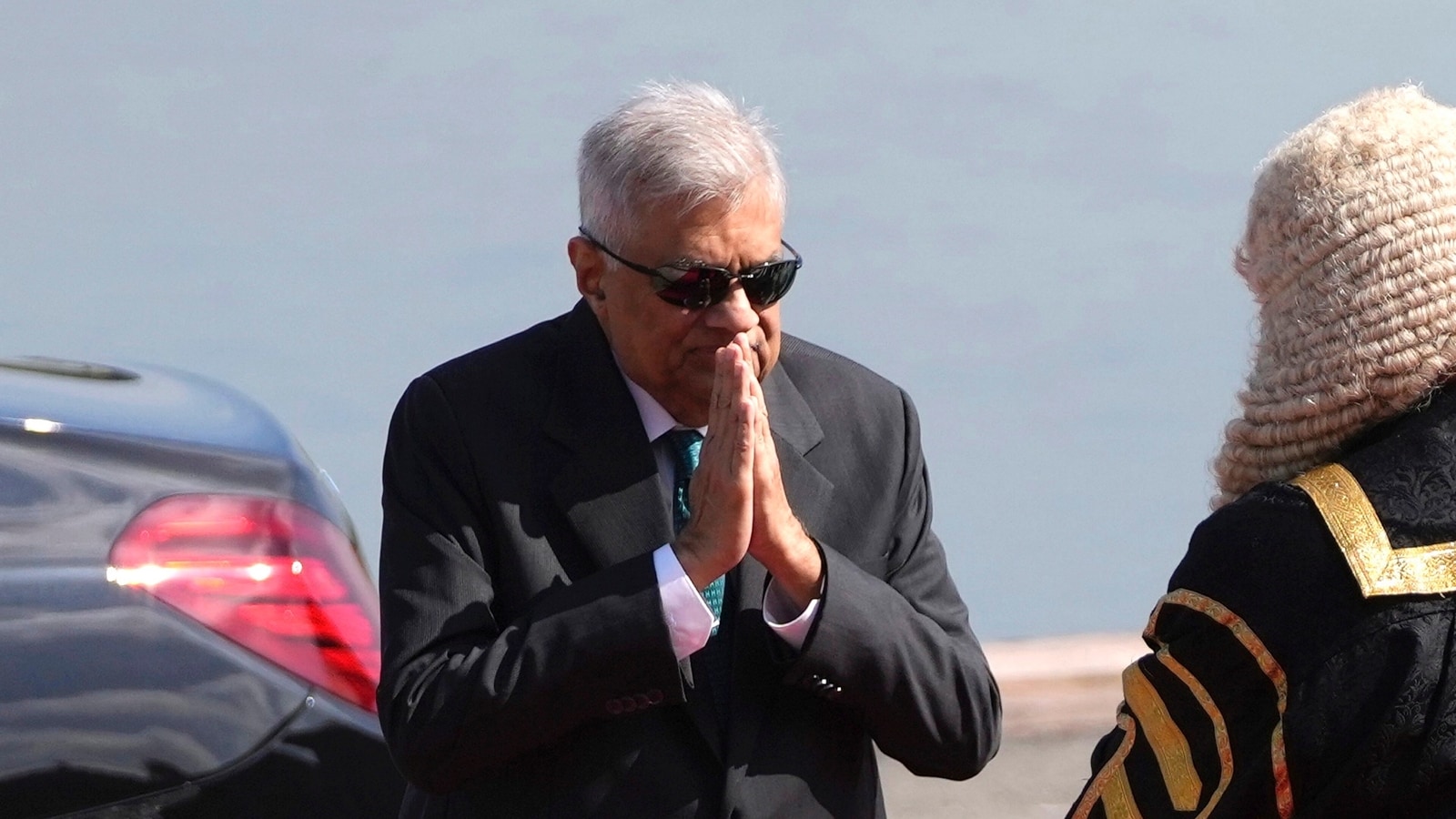
    Ex-Sri Lankan president Ranil Wickremesinghe.(AP File)
    Ex-Sri Lankan president Ranil Wickremesinghe.(AP File)

    News agency AFP reported the arrest of the former president of the island nation, citing police officials. Wickremesinghe was taken into custody after being questioned about a September 2023 visit to London to attend a ceremony for his wife at a British university while he was head of state, the officer cited in the AFP report said.

    According to reports in the local media, Wickremsinghe arrived at the Financial Crimes Investigation Division (FCID) on Friday morning to provide a statement.

    “We are producing him before the Colombo Fort magistrate,” the officer told AFP, adding that they were pressing charges for using state resources for personal purposes.

    What is the case against Ranil Wickremsinghe?

    Ranil Wickremesinghe had stopped in London in 2023 on his way back from Havana, where he attended a G77 summit. He and his wife, Maithree, attended a University of Wolverhampton ceremony during that time.

    Wickremesinghe had maintained that his wife met her own travel expenses and that no state funds were used.

    However, the Criminal Investigation Department of the police alleged that Wickremesinghe used government money for his travel on a private visit and that the state also paid his bodyguards. He was summoned to give a statement on the case on Friday morning, after which the arrest was made.

    Wickremesinghe became president in July 2022 for the remainder of Gotabaya Rajapaksa’s term, after Rajapaksa stepped down following months of protests over alleged corruption and mismanagement.

    Wickremesinghe is credited with stabilising the economy after the country’s worst-ever financial meltdown in 2022.

    Wickremsinghe lost his re-election bid to the left-wing AK Disannayake in September last year in a close fight that went into the second round.

    Get the latest headlines from US news and global updates from Pakistan, UK, Bangladesh, and Russia get all the latest headlines in one place with including Trump-Putin meet Liveon Hindustan Times.

    Get the latest headlines from US news and global updates from Pakistan, UK, Bangladesh, and Russia get all the latest headlines in one place with including Trump-Putin meet Liveon Hindustan Times.


    Source link

  • Court acquits Thaksin Shinawatra in royal insult case

    Court acquits Thaksin Shinawatra in royal insult case


    Jonathan Head

    BBC News, Bangkok

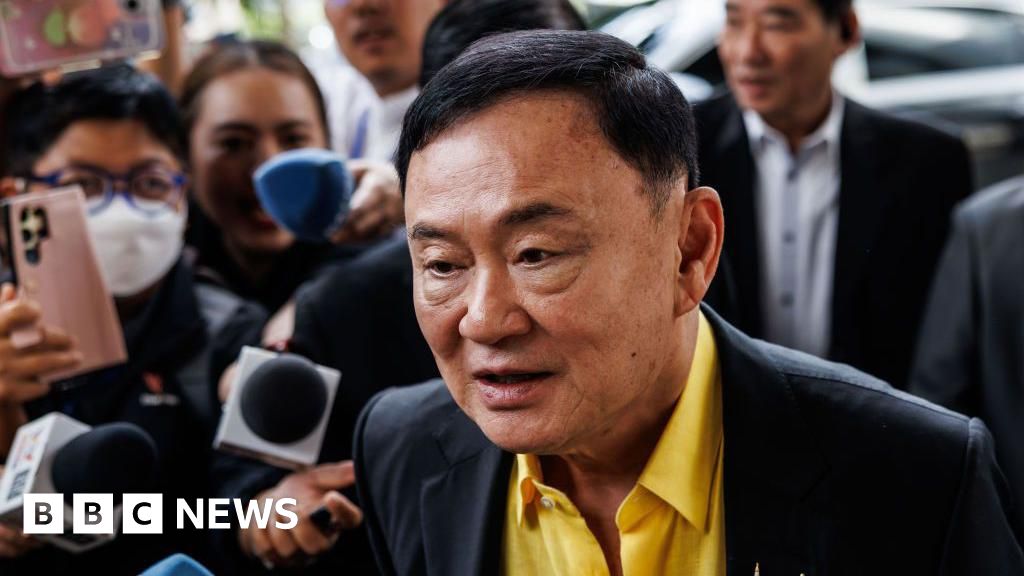
    Getty Images Side view of Thaksin in a black blazer and yellow shirt, surrounded by reporters who are holding microphones out to him.Getty Images

    Thaksin Shinawatra’s lese majeste charge relates to an interview he gave to a South Korean newspaper 10 years ago

    A Bangkok court has acquitted controversial billionaire and former Thai prime minister Thaksin Shinawatra, who was accused of insulting the monarchy.

    The charge related to an interview he gave to a South Korean newspaper ten years ago. He would have faced up to 15 years in jail if convicted.

    Thailand’s lese majeste law forbids insulting its monarchy. But critics say it is often used to target activists and political opponents.

    The verdict came as Thaksin’s daughter, suspended PM Paetongtarn , faces a Constitutional Court decision on whether or not she should be removed from office. These cases pose a threat to the Shinawatra clan, which has been a dominant force in Thai politics for decades.

    Friday’s verdict has brought some relief to the family and their supporters.

    Winyat Charmontree, a lawyer acting for Thaksin, told reporters that after the verdict was read out in court, his client had smiled and thanked his lawyers. He had also said he was now able to work for the country’s benefit.

    The charge against Thaksin was originally filed under the then-military government in 2016, when he was in exile, and re-activated last year after his return to Thailand.

    At first glance the case against him seemed weak.

    In the South Korean newspaper interview, the former prime minister said he believed the 2014 military coup which deposed the elected government of his sister Yingluck – just as he had been deposed by a previous coup in 2006 – had been instigated by “some people in the palace” and members of the privy council, the 19-member body which advises the Thai king.

    Technically the privy council is not covered by the lese majeste law, which states that it is an offence to defame only the king, queen, heir to the throne or anyone acting as regent.

    However, in recent years the law has been invoked to criminalise any action or statement which might reflect negatively on the monarchy as an institution.

    In the past people have been prosecuted for making unfavourable comments about the late King Bhumibol’s dog and about a Thai king from the 16th Century.

    More recently, a young woman was sentenced to five years in prison for placing a banner criticising the budget to help those affected by Covid close to a portrait of King Vajiralongkorn.

    The interpretation of the law has become so broad that human rights groups view it as a political tool, which can be used to intimidate and silence those who challenge the status quo.

    Many believed this was what was happening to Thaksin.

    However, the judges chose to interpret the wording of the law literally, and said that as the defendant had not named names, he should be acquitted.

    This verdict comes exactly two years after the former prime minister’s dramatic return from 15 years of exile.

    At the time it was assumed there had been a grand bargain struck between Thaksin and his long-time conservative adversaries, so that his party Pheu Thai, which in the 2023 election had been relegated to second place from its usual number one spot, could form a coalition government and keep the young reformists who had actually won the election out of power.

    The terms of that bargain have never been made public –Thaksin has always insisted there was no deal – but it is likely they included an agreement that he would keep a low profile and stay out of politics.

    But a low profile is something completely alien to the flamboyant, wealthy and ambitious tycoon.

    He is still believed to be the largest funder of Pheu Thai and makes all of the main decisions for the party.

    When his first choice of prime minister, businessman Srettha Thavisin, was disqualified by the persistently interventionist Constitutional Court a year ago, Thaksin’s inexperienced daughter Paetongtarn Shinawatra took the helm, becoming Thailand’s youngest ever prime minister.

    Getty Images Thaksin and Paetongtarn smiling as they stand beside each other, Thaksin wearing a suit and Paetongtarn a grey blazer.Getty Images

    Thaksin’s daughter, Paetongtarn, may be removed from office over her handling of a border conflict with Cambodia

    A self-described “daddy’s girl”, she said she would happily take his advice. As she took office Mr Thaksin announced his “Vision for Thailand”, including a controversial proposal to legalise casinos; much of that subsequently became official policy.

    The parliamentary opposition has accused the Shinawatra family of running a “dual leadership”. Thaksin’s business ties to the Cambodian strongman Hun Sen also raised concerns over how firmly his government would defend Thailand over the border dispute between the two countries.

    This came to a head in the private phone conversation leaked by Hun Sen in which Paetongtarn was heard referring to him as “uncle”, and criticising her own army commander on the border, for which she has now been suspended by the Constitutional Court, which will decide whether she is dismissed in a week’s time.

    Losing another prime minister after just a year, at a time of great global uncertainty, might be judged as too risky. It is not clear who would replace Paetongtarn.

    Thaksin faces another court case next month, over his transfer to a hospital to serve a previous jail sentence. The price for him being allowed to stay out of jail may be that his party has to call an early election, at a time when its poor performance in government could result in it losing many of its seats in parliament.


    Source link

  • Court acquits Thaksin Shinawatra in royal insult case

    Court acquits Thaksin Shinawatra in royal insult case


    Jonathan Head

    BBC News, Bangkok

    Getty Images Side view of Thaksin in a black blazer and yellow shirt, surrounded by reporters who are holding microphones out to him.Getty Images

    Thaksin Shinawatra’s lese majeste charge relates to an interview he gave to a South Korean newspaper 10 years ago

    A Bangkok court has acquitted controversial billionaire and former Thai prime minister Thaksin Shinawatra, who was accused of insulting the monarchy.

    The charge related to an interview he gave to a South Korean newspaper ten years ago. He would have faced up to 15 years in jail if convicted.

    Thailand’s lese majeste law forbids insulting its monarchy. But critics say it is often used to target activists and political opponents.

    The verdict came as Thaksin’s daughter, suspended PM Paetongtarn , faces a Constitutional Court decision on whether or not she should be removed from office. These cases pose a threat to the Shinawatra clan, which has been a dominant force in Thai politics for decades.

    Friday’s verdict has brought some relief to the family and their supporters.

    Winyat Charmontree, a lawyer acting for Thaksin, told reporters that after the verdict was read out in court, his client had smiled and thanked his lawyers. He had also said he was now able to work for the country’s benefit.

    The charge against Thaksin was originally filed under the then-military government in 2016, when he was in exile, and re-activated last year after his return to Thailand.

    At first glance the case against him seemed weak.

    In the South Korean newspaper interview, the former prime minister said he believed the 2014 military coup which deposed the elected government of his sister Yingluck – just as he had been deposed by a previous coup in 2006 – had been instigated by “some people in the palace” and members of the privy council, the 19-member body which advises the Thai king.

    Technically the privy council is not covered by the lese majeste law, which states that it is an offence to defame only the king, queen, heir to the throne or anyone acting as regent.

    However, in recent years the law has been invoked to criminalise any action or statement which might reflect negatively on the monarchy as an institution.

    In the past people have been prosecuted for making unfavourable comments about the late King Bhumibol’s dog and about a Thai king from the 16th Century.

    More recently, a young woman was sentenced to five years in prison for placing a banner criticising the budget to help those affected by Covid close to a portrait of King Vajiralongkorn.

    The interpretation of the law has become so broad that human rights groups view it as a political tool, which can be used to intimidate and silence those who challenge the status quo.

    Many believed this was what was happening to Thaksin.

    However, the judges chose to interpret the wording of the law literally, and said that as the defendant had not named names, he should be acquitted.

    This verdict comes exactly two years after the former prime minister’s dramatic return from 15 years of exile.

    At the time it was assumed there had been a grand bargain struck between Thaksin and his long-time conservative adversaries, so that his party Pheu Thai, which in the 2023 election had been relegated to second place from its usual number one spot, could form a coalition government and keep the young reformists who had actually won the election out of power.

    The terms of that bargain have never been made public –Thaksin has always insisted there was no deal – but it is likely they included an agreement that he would keep a low profile and stay out of politics.

    But a low profile is something completely alien to the flamboyant, wealthy and ambitious tycoon.

    He is still believed to be the largest funder of Pheu Thai and makes all of the main decisions for the party.

    When his first choice of prime minister, businessman Srettha Thavisin, was disqualified by the persistently interventionist Constitutional Court a year ago, Thaksin’s inexperienced daughter Paetongtarn Shinawatra took the helm, becoming Thailand’s youngest ever prime minister.

    Getty Images Thaksin and Paetongtarn smiling as they stand beside each other, Thaksin wearing a suit and Paetongtarn a grey blazer.Getty Images

    Thaksin’s daughter, Paetongtarn, may be removed from office over her handling of a border conflict with Cambodia

    A self-described “daddy’s girl”, she said she would happily take his advice. As she took office Mr Thaksin announced his “Vision for Thailand”, including a controversial proposal to legalise casinos; much of that subsequently became official policy.

    The parliamentary opposition has accused the Shinawatra family of running a “dual leadership”. Thaksin’s business ties to the Cambodian strongman Hun Sen also raised concerns over how firmly his government would defend Thailand over the border dispute between the two countries.

    This came to a head in the private phone conversation leaked by Hun Sen in which Paetongtarn was heard referring to him as “uncle”, and criticising her own army commander on the border, for which she has now been suspended by the Constitutional Court, which will decide whether she is dismissed in a week’s time.

    Losing another prime minister after just a year, at a time of great global uncertainty, might be judged as too risky. It is not clear who would replace Paetongtarn.

    Thaksin faces another court case next month, over his transfer to a hospital to serve a previous jail sentence. The price for him being allowed to stay out of jail may be that his party has to call an early election, at a time when its poor performance in government could result in it losing many of its seats in parliament.


    Source link

  • Court acquits Thaksin Shinawatra in royal insult case

    Court acquits Thaksin Shinawatra in royal insult case


    Jonathan Head

    BBC News, Bangkok

    Getty Images Side view of Thaksin in a black blazer and yellow shirt, surrounded by reporters who are holding microphones out to him.Getty Images

    Thaksin Shinawatra’s lese majeste charge relates to an interview he gave to a South Korean newspaper 10 years ago

    A Bangkok court has acquitted controversial billionaire and former Thai prime minister Thaksin Shinawatra, who was accused of insulting the monarchy.

    The charge related to an interview he gave to a South Korean newspaper ten years ago. He would have faced up to 15 years in jail if convicted.

    Thailand’s lese majeste law forbids insulting its monarchy. But critics say it is often used to target activists and political opponents.

    The verdict came as Thaksin’s daughter, suspended PM Paetongtarn , faces a Constitutional Court decision on whether or not she should be removed from office. These cases pose a threat to the Shinawatra clan, which has been a dominant force in Thai politics for decades.

    Friday’s verdict has brought some relief to the family and their supporters.

    Winyat Charmontree, a lawyer acting for Thaksin, told reporters that after the verdict was read out in court, his client had smiled and thanked his lawyers. He had also said he was now able to work for the country’s benefit.

    The charge against Thaksin was originally filed under the then-military government in 2016, when he was in exile, and re-activated last year after his return to Thailand.

    At first glance the case against him seemed weak.

    In the South Korean newspaper interview, the former prime minister said he believed the 2014 military coup which deposed the elected government of his sister Yingluck – just as he had been deposed by a previous coup in 2006 – had been instigated by “some people in the palace” and members of the privy council, the 19-member body which advises the Thai king.

    Technically the privy council is not covered by the lese majeste law, which states that it is an offence to defame only the king, queen, heir to the throne or anyone acting as regent.

    However, in recent years the law has been invoked to criminalise any action or statement which might reflect negatively on the monarchy as an institution.

    In the past people have been prosecuted for making unfavourable comments about the late King Bhumibol’s dog and about a Thai king from the 16th Century.

    More recently, a young woman was sentenced to five years in prison for placing a banner criticising the budget to help those affected by Covid close to a portrait of King Vajiralongkorn.

    The interpretation of the law has become so broad that human rights groups view it as a political tool, which can be used to intimidate and silence those who challenge the status quo.

    Many believed this was what was happening to Thaksin.

    However, the judges chose to interpret the wording of the law literally, and said that as the defendant had not named names, he should be acquitted.

    This verdict comes exactly two years after the former prime minister’s dramatic return from 15 years of exile.

    At the time it was assumed there had been a grand bargain struck between Thaksin and his long-time conservative adversaries, so that his party Pheu Thai, which in the 2023 election had been relegated to second place from its usual number one spot, could form a coalition government and keep the young reformists who had actually won the election out of power.

    The terms of that bargain have never been made public –Thaksin has always insisted there was no deal – but it is likely they included an agreement that he would keep a low profile and stay out of politics.

    But a low profile is something completely alien to the flamboyant, wealthy and ambitious tycoon.

    He is still believed to be the largest funder of Pheu Thai and makes all of the main decisions for the party.

    When his first choice of prime minister, businessman Srettha Thavisin, was disqualified by the persistently interventionist Constitutional Court a year ago, Thaksin’s inexperienced daughter Paetongtarn Shinawatra took the helm, becoming Thailand’s youngest ever prime minister.

    Getty Images Thaksin and Paetongtarn smiling as they stand beside each other, Thaksin wearing a suit and Paetongtarn a grey blazer.Getty Images

    Thaksin’s daughter, Paetongtarn, may be removed from office over her handling of a border conflict with Cambodia

    A self-described “daddy’s girl”, she said she would happily take his advice. As she took office Mr Thaksin announced his “Vision for Thailand”, including a controversial proposal to legalise casinos; much of that subsequently became official policy.

    The parliamentary opposition has accused the Shinawatra family of running a “dual leadership”. Thaksin’s business ties to the Cambodian strongman Hun Sen also raised concerns over how firmly his government would defend Thailand over the border dispute between the two countries.

    This came to a head in the private phone conversation leaked by Hun Sen in which Paetongtarn was heard referring to him as “uncle”, and criticising her own army commander on the border, for which she has now been suspended by the Constitutional Court, which will decide whether she is dismissed in a week’s time.

    Losing another prime minister after just a year, at a time of great global uncertainty, might be judged as too risky. It is not clear who would replace Paetongtarn.

    Thaksin faces another court case next month, over his transfer to a hospital to serve a previous jail sentence. The price for him being allowed to stay out of jail may be that his party has to call an early election, at a time when its poor performance in government could result in it losing many of its seats in parliament.


    Source link