Author: admin-to-del

  • US briefly deploys warships after Chinese military ships’ collision

    US briefly deploys warships after Chinese military ships’ collision


    MANILA, Philippines — The U.S. deployed two warships Wednesday in a disputed South China Sea shoal where two Chinese ships collided earlier in the week while trying to drive away a smaller Philippine ship in a high-seas accident that raised alarms about maritime safety.

    Both China and the Philippines claim Scarborough Shoal and other outcroppings in the South China Sea. Vietnam, Malaysia, Brunei and Taiwan also lay overlapping claims in the contested waters.

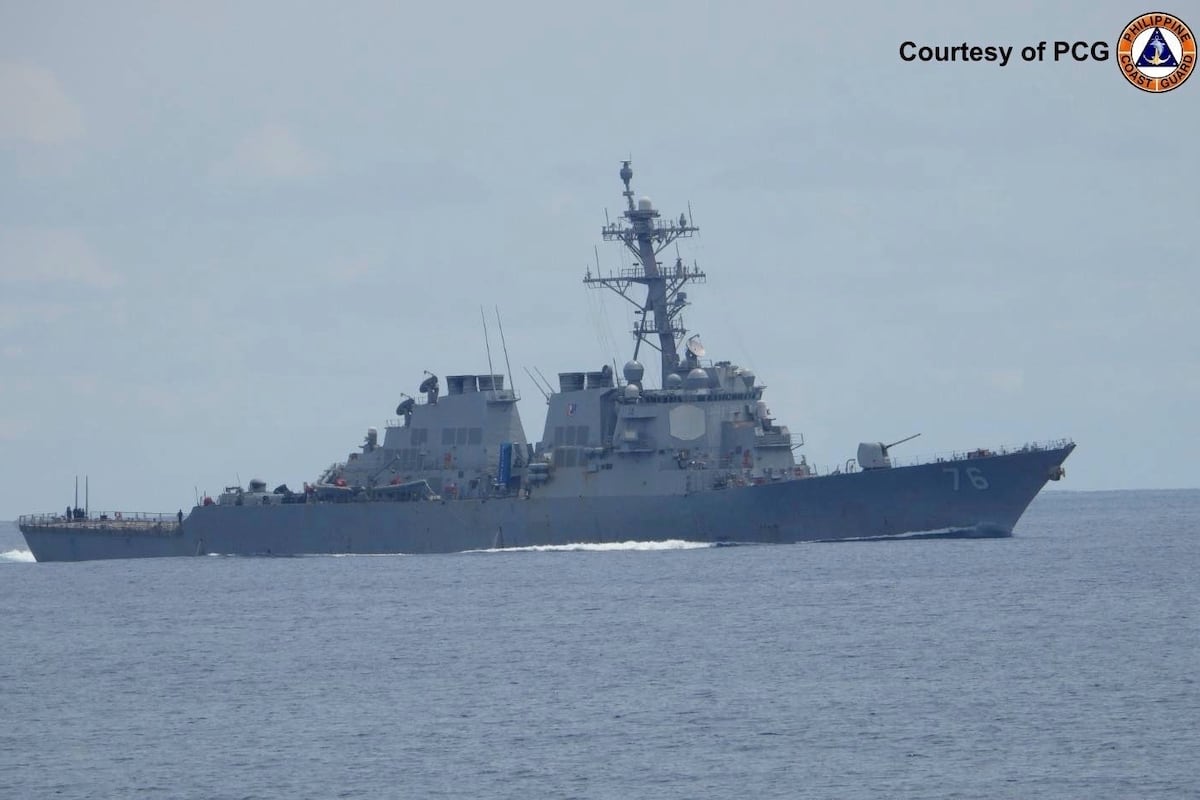
    The Higgins, a guided missile destroyer, and Cincinnati, a littoral combat ship, were shadowed by a Chinese navy ship while sailing about 30 nautical miles from the Scarborough Shoal. There were no reports of any untoward incident, Philippine coast guard Commodore Jay Tarriela said, citing information from U.S. officials and a Philippine surveillance flight.

    The U.S. Navy has staged what it calls freedom-of-navigation voyages and overflights in the South China Sea for years to challenge China’s restrictions and its demand for entry notifications in virtually the entire stretch of the disputed waters that it claims. That has angered China and its forces have had close runs-in with U.S. warships and aircraft on such patrols in international waters and airspace.

    The deployment happened after Washington’s ambassador to Manila, MaryKay Carlson, on Tuesday condemned “the latest reckless action by China directed against a Philippine vessel” in Scarborough. The rich fishing atoll off the northwestern Philippines has been the scene of increasingly tense confrontations between the Chinese and Philippine coast guard, fishing and other ships in recent years.

    The Philippines is the oldest treaty ally of the U.S. in Asia. Washington has repeatedly warned that it’s obligated to defend the Philippines if Filipino forces come under an armed attack, including in the South China Sea.

    On Monday, a Chinese navy destroyer and a Chinese coast guard ship accidentally collided while trying to block and drive away a smaller Philippine coast guard ship, the BRP Suluan, about 10.5 nautical miles from Scarborough. Video footages made public by the Philippine coast guard show the Chinese coast guard ship blasting its powerful water cannon and a number of Chinese personnel standing at the bow shortly before that section was hit by the fast-turning Chinese navy ship.

    Shortly after the collision, the video shows the heavily shattered bow of the Chinese coast guard ship without the Chinese personnel, who were standing on deck before the crash. The Chinese navy ship sustained deep dents and what appeared to be linear gushes on its hull.

    Japan, Australia and New Zealand expressed alarm on Wednesday over the dangerous maneuvers that led to the collision in the busy waters, a key global trade route.

    “Japan upholds the rule of law and opposes any actions which increase tensions. Our concern goes to the repeated actions in the South China Sea,” Japanese Ambassador to Manila Endo Kazuya said in a post on X.

    The Australian Embassy in Manila expressed concern “by the dangerous and unprofessional conduct of Chinese vessels near Scarborough Shoal involving the Philippine Coast Guard,” saying in a statement the incident “highlights the need for de-escalation, restraint and respect for international law.”

    “This is a learning experience for the People’s Republic of China,” Tarriela, the Philippine coast guard commodore, told a news conference in Manila. “For so many years, we have been reminding them to stop dangerous maneuvers, to stop risky blockings, to adhere to the [anti-]collision regulations because if there is a very high chance of miscalculation, this kind of collision incident would happen.”

    Tarriela spoke a few hours after a Chinese fighter jet flew as close as 500 feet to try to drive away a Philippine coast guard plane on a surveillance flight on Wednesday over the Scarborough with invited journalists on board. The Chinese jet carried out dangerous maneuvers for about 20 minutes, including flying about 200 feet above the small Philippine aircraft, Tarriela said.

    Associated Press writers Joeal Calupitan and Aaron Favila in Manila, Philippines, contributed to this report.


    Source link

    http://wp.bypass.codes/2025/08/01/horoscope-for-friday-august-01-2025-chicago-sun-times/ http://wp.bypass.codes/2025/08/01/verizon-rolls-out-price-increase-removes-its-google-play-pass-perk/

  • US briefly deploys warships after Chinese military ships’ collision

    US briefly deploys warships after Chinese military ships’ collision


    MANILA, Philippines — The U.S. deployed two warships Wednesday in a disputed South China Sea shoal where two Chinese ships collided earlier in the week while trying to drive away a smaller Philippine ship in a high-seas accident that raised alarms about maritime safety.

    Both China and the Philippines claim Scarborough Shoal and other outcroppings in the South China Sea. Vietnam, Malaysia, Brunei and Taiwan also lay overlapping claims in the contested waters.

    The Higgins, a guided missile destroyer, and Cincinnati, a littoral combat ship, were shadowed by a Chinese navy ship while sailing about 30 nautical miles from the Scarborough Shoal. There were no reports of any untoward incident, Philippine coast guard Commodore Jay Tarriela said, citing information from U.S. officials and a Philippine surveillance flight.

    The U.S. Navy has staged what it calls freedom-of-navigation voyages and overflights in the South China Sea for years to challenge China’s restrictions and its demand for entry notifications in virtually the entire stretch of the disputed waters that it claims. That has angered China and its forces have had close runs-in with U.S. warships and aircraft on such patrols in international waters and airspace.

    The deployment happened after Washington’s ambassador to Manila, MaryKay Carlson, on Tuesday condemned “the latest reckless action by China directed against a Philippine vessel” in Scarborough. The rich fishing atoll off the northwestern Philippines has been the scene of increasingly tense confrontations between the Chinese and Philippine coast guard, fishing and other ships in recent years.

    The Philippines is the oldest treaty ally of the U.S. in Asia. Washington has repeatedly warned that it’s obligated to defend the Philippines if Filipino forces come under an armed attack, including in the South China Sea.

    On Monday, a Chinese navy destroyer and a Chinese coast guard ship accidentally collided while trying to block and drive away a smaller Philippine coast guard ship, the BRP Suluan, about 10.5 nautical miles from Scarborough. Video footages made public by the Philippine coast guard show the Chinese coast guard ship blasting its powerful water cannon and a number of Chinese personnel standing at the bow shortly before that section was hit by the fast-turning Chinese navy ship.

    Shortly after the collision, the video shows the heavily shattered bow of the Chinese coast guard ship without the Chinese personnel, who were standing on deck before the crash. The Chinese navy ship sustained deep dents and what appeared to be linear gushes on its hull.

    Japan, Australia and New Zealand expressed alarm on Wednesday over the dangerous maneuvers that led to the collision in the busy waters, a key global trade route.

    “Japan upholds the rule of law and opposes any actions which increase tensions. Our concern goes to the repeated actions in the South China Sea,” Japanese Ambassador to Manila Endo Kazuya said in a post on X.

    The Australian Embassy in Manila expressed concern “by the dangerous and unprofessional conduct of Chinese vessels near Scarborough Shoal involving the Philippine Coast Guard,” saying in a statement the incident “highlights the need for de-escalation, restraint and respect for international law.”

    “This is a learning experience for the People’s Republic of China,” Tarriela, the Philippine coast guard commodore, told a news conference in Manila. “For so many years, we have been reminding them to stop dangerous maneuvers, to stop risky blockings, to adhere to the [anti-]collision regulations because if there is a very high chance of miscalculation, this kind of collision incident would happen.”

    Tarriela spoke a few hours after a Chinese fighter jet flew as close as 500 feet to try to drive away a Philippine coast guard plane on a surveillance flight on Wednesday over the Scarborough with invited journalists on board. The Chinese jet carried out dangerous maneuvers for about 20 minutes, including flying about 200 feet above the small Philippine aircraft, Tarriela said.

    Associated Press writers Joeal Calupitan and Aaron Favila in Manila, Philippines, contributed to this report.


    Source link

  • US briefly deploys warships after Chinese military ships’ collision

    US briefly deploys warships after Chinese military ships’ collision


    MANILA, Philippines — The U.S. deployed two warships Wednesday in a disputed South China Sea shoal where two Chinese ships collided earlier in the week while trying to drive away a smaller Philippine ship in a high-seas accident that raised alarms about maritime safety.

    Both China and the Philippines claim Scarborough Shoal and other outcroppings in the South China Sea. Vietnam, Malaysia, Brunei and Taiwan also lay overlapping claims in the contested waters.

    The Higgins, a guided missile destroyer, and Cincinnati, a littoral combat ship, were shadowed by a Chinese navy ship while sailing about 30 nautical miles from the Scarborough Shoal. There were no reports of any untoward incident, Philippine coast guard Commodore Jay Tarriela said, citing information from U.S. officials and a Philippine surveillance flight.

    The U.S. Navy has staged what it calls freedom-of-navigation voyages and overflights in the South China Sea for years to challenge China’s restrictions and its demand for entry notifications in virtually the entire stretch of the disputed waters that it claims. That has angered China and its forces have had close runs-in with U.S. warships and aircraft on such patrols in international waters and airspace.

    The deployment happened after Washington’s ambassador to Manila, MaryKay Carlson, on Tuesday condemned “the latest reckless action by China directed against a Philippine vessel” in Scarborough. The rich fishing atoll off the northwestern Philippines has been the scene of increasingly tense confrontations between the Chinese and Philippine coast guard, fishing and other ships in recent years.

    The Philippines is the oldest treaty ally of the U.S. in Asia. Washington has repeatedly warned that it’s obligated to defend the Philippines if Filipino forces come under an armed attack, including in the South China Sea.

    On Monday, a Chinese navy destroyer and a Chinese coast guard ship accidentally collided while trying to block and drive away a smaller Philippine coast guard ship, the BRP Suluan, about 10.5 nautical miles from Scarborough. Video footages made public by the Philippine coast guard show the Chinese coast guard ship blasting its powerful water cannon and a number of Chinese personnel standing at the bow shortly before that section was hit by the fast-turning Chinese navy ship.

    Shortly after the collision, the video shows the heavily shattered bow of the Chinese coast guard ship without the Chinese personnel, who were standing on deck before the crash. The Chinese navy ship sustained deep dents and what appeared to be linear gushes on its hull.

    Japan, Australia and New Zealand expressed alarm on Wednesday over the dangerous maneuvers that led to the collision in the busy waters, a key global trade route.

    “Japan upholds the rule of law and opposes any actions which increase tensions. Our concern goes to the repeated actions in the South China Sea,” Japanese Ambassador to Manila Endo Kazuya said in a post on X.

    The Australian Embassy in Manila expressed concern “by the dangerous and unprofessional conduct of Chinese vessels near Scarborough Shoal involving the Philippine Coast Guard,” saying in a statement the incident “highlights the need for de-escalation, restraint and respect for international law.”

    “This is a learning experience for the People’s Republic of China,” Tarriela, the Philippine coast guard commodore, told a news conference in Manila. “For so many years, we have been reminding them to stop dangerous maneuvers, to stop risky blockings, to adhere to the [anti-]collision regulations because if there is a very high chance of miscalculation, this kind of collision incident would happen.”

    Tarriela spoke a few hours after a Chinese fighter jet flew as close as 500 feet to try to drive away a Philippine coast guard plane on a surveillance flight on Wednesday over the Scarborough with invited journalists on board. The Chinese jet carried out dangerous maneuvers for about 20 minutes, including flying about 200 feet above the small Philippine aircraft, Tarriela said.

    Associated Press writers Joeal Calupitan and Aaron Favila in Manila, Philippines, contributed to this report.


    Source link

    http://wp.bypass.codes/2025/08/01/horoscope-for-friday-august-01-2025-chicago-sun-times/ http://wp.bypass.codes/2025/08/01/verizon-rolls-out-price-increase-removes-its-google-play-pass-perk/
  • After mass arrests, what happens next with Palestine Action ban?

    After mass arrests, what happens next with Palestine Action ban?


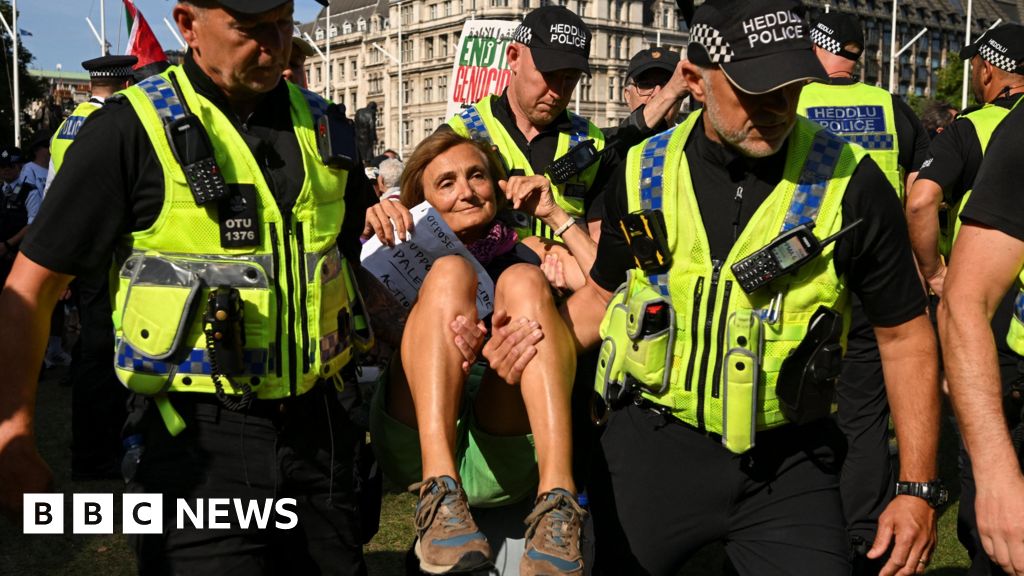
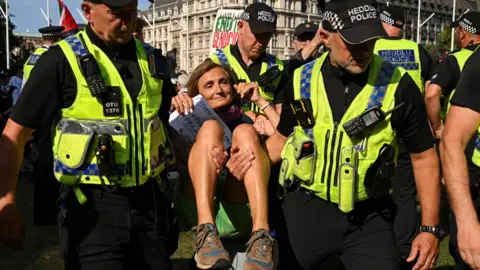
    Reuters Three male police officers detain a female protester, who is holding a paper sign appearing to mention Palestine, during a rally challenging the UK government's proscription of "Palestine Action" under anti-terrorism law. In the background there are grand buildings a Palestine flag and a poster mentioning genocideReuters

    The pictures from last week’s sit-in protest in Parliament Square over the banned group Palestine Action were unprecedented.

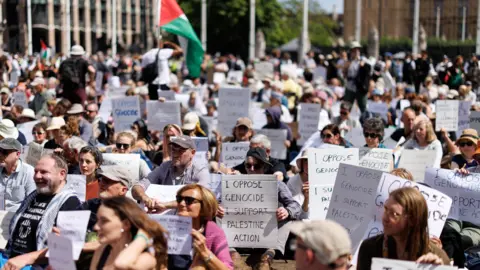
    As demonstrators held up placards reading, “I oppose genocide, I support Palestine Action”, some 522 of them were arrested on suspicion of breaking terrorism laws – more than double the total such arrests in 2024.

    Their average age was 54, said the police. Some 112 of them were over 70 years old.

    The battle over the ban on Palestine Action (PAG) – last month, proscribed as a terrorist organisation in the UK – now feels as much a political and PR battle as a legal one.

    And the organisers of the campaign are trying to capitalise on perceived sympathy among some of the public by organising another demonstration in September – hoping to force the state, through numbers, to lift the ban.

    How does it end?

    Does it risk becoming an “I am Spartacus moment”? – the words of Baroness Shami Chakrabarti, the Labour peer and civil rights campaigner?

    That depends on three courtroom battles that will each, in turn, influence how Palestine Action is publicly perceived and legally characterised.

    Let’s start with the protesters arrested since July for showing support for the group – more than 700 so far.

    One lawyer says it has been awkward so far for police officers.

    “I’ve seen police look incredibly uncomfortable with the fact that they are having to treat these elderly people as criminals,” said solicitor Katie McFadden, who advised many protesters, after their arrests, last Saturday.

    “I’ve seen them in police custody and they’ve certainly been considerate and looked, frankly, quite shocked and horrified that this is what they were having to do as part of their job when they’ve signed up to go out and protect the public from dangerous criminals.”

    The real challenge for the police and prosecutors is how many protesters do they need to charge with support of a banned terrorist organisation to send a message to the public. And what message do they send if they don’t charge them all?

    EPA A large group of protesters are sitting down, many are holding up pieces of card or paper reading 'I oppose genocide I support Palestine Action'EPA

    The average age of those arrested was 54, police say, with 112 over the age of 70

    So far, three people have been charged with displaying an item showing support for Palestine Action during the first demonstration on 5 July. This is a relatively minor offence and they will all appear in court next month.

    The director of public prosecutions, Stephen Parkinson, consulted the Attorney General’s Office before he could go ahead with the charges because of additional safeguards in some terrorism cases.

    That means that Lord Hermer, the Attorney General and also a cabinet minister, or his deputy, may have to be involved in each of the files that police send to prosecutors.

    That, in turn, means the vast majority of the 700 may not know for months if they are going to end up on trial – in cases that could be more than a year away from a jury if accused of more serious offences.

    Just assuming they do get charged, history suggests the risk of a maximum of 14-year sentence is low.

    Conventionally, a conviction like this would leave careers in tatters and have other life-changing effects.

    The equation for some Palestine Action protesters is different.

    Many are older people who have graduated from involvement in climate change activism and believe the ban breaches free speech safeguards. It seems many have fewer fears about the impact of arrest on their day-to-day lives. They may ultimately only be charged with the lesser crime of displaying a sign supportive of PAG, which doesn’t even go before a judge in Crown Court.

    So is the ban on Palestine Action a legal and PR disaster in the making for Home Secretary Yvette Cooper?

    Huda Ammori, Palestine Action’s co-founder, has said on social media: “The system can’t cope when thousands resist.”

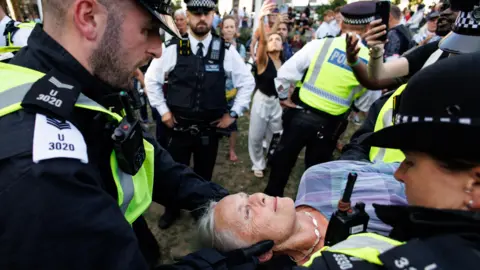
    EPA A woman with grey hair and wearing a necklace and checked shirt is carried away by officers, one of whom is holding her head as she lies still. In the background more officers and people taking pictures can be seenEPA

    But ministers hope that the difference between the organisation she founded and other forms of protest over Gaza will become clear thanks to the second of the three linked legal battles soon to take centre stage.

    In August 2024 alleged PAG supporters broke into Elbit Systems UK in Bristol, an Israeli defence firm that has long been a key target.

    A repurposed prison van smashed through a security fence and crowbars and a sledgehammer were allegedly used to smash up equipment.

    Three people were injured: a security guard and two police officers.

    Palestine Action promoted video of the damage – but not any pictures of the alleged assaults.

    Those allegations begin to come to trial in November. Some 18 people deny charges including criminal damage, assault causing actual bodily harm, violent disorder and aggravated burglary.

    That incident prompted national security officials and the police to look at whether a terrorism ban on PAG could be justified, after having previously concluded that the vast majority of its highly disruptive activities amounted to minor criminal damage.

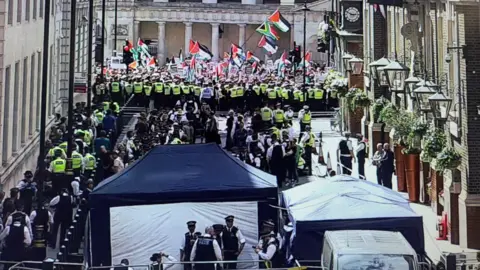
    Metropolitan Police Metropolitan Police arrest processing point in central London at the protest in support of Palestine Action. There are lots of police officers standing near two blue tents. In the background a wall of officers wearing high-vis tops are standing in front of a group of people waving Palestine flagsMetropolitan Police

    The police set up two arrest processing points in central London to deal with the number of protesters who were arrested

    Documents disclosed to the BBC in the High Court show how the thinking on a ban had evolved. Palestine Action was becoming more militant, said officials. It had allegedly produced an “underground manual” that it was claimed detailed how to plan a “break-in”, referring to face masks, burner phones and fake car number plates.

    “With an efficient sledgehammer in your hand, you can cause quite a bit of damage,” the manual read, before than detailing how to do so.

    And this is where the UK’s wide definition of terrorism comes in. It includes not just the threat or use of violence to advance a cause – but also the use of serious criminal damage.

    That‘s because the IRA, at times, had a strategy of causing economic damage through bombs, without aiming to take life – particularly in England in the 1990s.

    So when Cooper banned PAG, her decision was largely informed by what the Home Office has described as millions of pounds of criminal damage, not an assessment that it was a group of murderous militants.

    “Proscription is about one narrow group that has been involved in violent attacks including injuries, including weapons, smoke bombs causing panic among innocent people, major criminal damage,” the home secretary said following last Saturday’s arrests.

    “There may be people who are objecting to proscription who don’t know the full nature of this organisation due to court restrictions on reporting while serious prosecutions are under way but it’s really important that no one is in any doubt that this is not a non-violent organisation.”

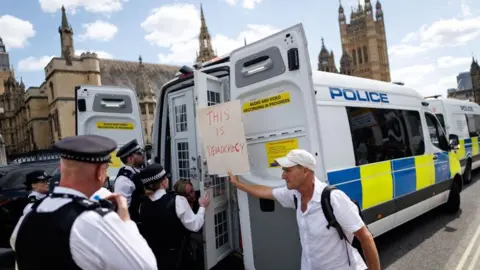
    TOLGA AKMEN/EPA/Shutterstock Four police officers stand at the back of an open police van where a person appears to be being put in the back. Next to them a man holds a sign saying 'This is democracy'. In the background the Palace of Westminster can be seen.TOLGA AKMEN/EPA/Shutterstock

    Ms Ammori has contested this characterisation, saying the government’s own papers show that Palestine Action did not advocate for violence.

    This brings us to the third of the three big legal challenges that will decide this affair: was the Home Secretary right?

    The High Court will consider in the autumn if the ban was a rational and proportionate response to PAG’s activities.

    Jonathan Hall KC, the independent watchdog of terrorism laws, has previously told BBC News that the ban is legally workable because the group had moved from protest into what is effectively “blackmail” – suggesting it was exerting pressure to get what it wanted.

    But Ms Ammori’s legal team have a range of significant arguments around freedom of protest.

    Volker Turk, the United Nations’ human rights chief has got involved too, saying the ban is so wrong it places the UK outside international law.

    The outcome of that case will define whether Palestine Action remains banned. If the ban falls, then the 700 arrested so far are free – their cases would collapse. As for the group itself, it may feel emboldened – but would know that it could still be banned again if its actions cross the terrorism laws line.

    If the ban stands, then the advantage will be with the government – and arrests and charges will continue.

    That is the counter-terrorism policing way: slowly but surely, step by step, seek to contain and, ultimately, crush the threat.

    A thin, grey banner promoting the News Daily newsletter. On the right, there is a graphic of an orange sphere with two concentric crescent shapes around it in a red-orange gradient, like a sound wave. The banner reads: "The latest news in your inbox first thing.”

    Get our flagship newsletter with all the headlines you need to start the day. Sign up here.


    Source link

  • After mass arrests, what happens next with Palestine Action ban?

    After mass arrests, what happens next with Palestine Action ban?


    Reuters Three male police officers detain a female protester, who is holding a paper sign appearing to mention Palestine, during a rally challenging the UK government's proscription of "Palestine Action" under anti-terrorism law. In the background there are grand buildings a Palestine flag and a poster mentioning genocideReuters

    The pictures from last week’s sit-in protest in Parliament Square over the banned group Palestine Action were unprecedented.

    As demonstrators held up placards reading, “I oppose genocide, I support Palestine Action”, some 522 of them were arrested on suspicion of breaking terrorism laws – more than double the total such arrests in 2024.

    Their average age was 54, said the police. Some 112 of them were over 70 years old.

    The battle over the ban on Palestine Action (PAG) – last month, proscribed as a terrorist organisation in the UK – now feels as much a political and PR battle as a legal one.

    And the organisers of the campaign are trying to capitalise on perceived sympathy among some of the public by organising another demonstration in September – hoping to force the state, through numbers, to lift the ban.

    How does it end?

    Does it risk becoming an “I am Spartacus moment”? – the words of Baroness Shami Chakrabarti, the Labour peer and civil rights campaigner?

    That depends on three courtroom battles that will each, in turn, influence how Palestine Action is publicly perceived and legally characterised.

    Let’s start with the protesters arrested since July for showing support for the group – more than 700 so far.

    One lawyer says it has been awkward so far for police officers.

    “I’ve seen police look incredibly uncomfortable with the fact that they are having to treat these elderly people as criminals,” said solicitor Katie McFadden, who advised many protesters, after their arrests, last Saturday.

    “I’ve seen them in police custody and they’ve certainly been considerate and looked, frankly, quite shocked and horrified that this is what they were having to do as part of their job when they’ve signed up to go out and protect the public from dangerous criminals.”

    The real challenge for the police and prosecutors is how many protesters do they need to charge with support of a banned terrorist organisation to send a message to the public. And what message do they send if they don’t charge them all?

    EPA A large group of protesters are sitting down, many are holding up pieces of card or paper reading 'I oppose genocide I support Palestine Action'EPA

    The average age of those arrested was 54, police say, with 112 over the age of 70

    So far, three people have been charged with displaying an item showing support for Palestine Action during the first demonstration on 5 July. This is a relatively minor offence and they will all appear in court next month.

    The director of public prosecutions, Stephen Parkinson, consulted the Attorney General’s Office before he could go ahead with the charges because of additional safeguards in some terrorism cases.

    That means that Lord Hermer, the Attorney General and also a cabinet minister, or his deputy, may have to be involved in each of the files that police send to prosecutors.

    That, in turn, means the vast majority of the 700 may not know for months if they are going to end up on trial – in cases that could be more than a year away from a jury if accused of more serious offences.

    Just assuming they do get charged, history suggests the risk of a maximum of 14-year sentence is low.

    Conventionally, a conviction like this would leave careers in tatters and have other life-changing effects.

    The equation for some Palestine Action protesters is different.

    Many are older people who have graduated from involvement in climate change activism and believe the ban breaches free speech safeguards. It seems many have fewer fears about the impact of arrest on their day-to-day lives. They may ultimately only be charged with the lesser crime of displaying a sign supportive of PAG, which doesn’t even go before a judge in Crown Court.

    So is the ban on Palestine Action a legal and PR disaster in the making for Home Secretary Yvette Cooper?

    Huda Ammori, Palestine Action’s co-founder, has said on social media: “The system can’t cope when thousands resist.”

    EPA A woman with grey hair and wearing a necklace and checked shirt is carried away by officers, one of whom is holding her head as she lies still. In the background more officers and people taking pictures can be seenEPA

    But ministers hope that the difference between the organisation she founded and other forms of protest over Gaza will become clear thanks to the second of the three linked legal battles soon to take centre stage.

    In August 2024 alleged PAG supporters broke into Elbit Systems UK in Bristol, an Israeli defence firm that has long been a key target.

    A repurposed prison van smashed through a security fence and crowbars and a sledgehammer were allegedly used to smash up equipment.

    Three people were injured: a security guard and two police officers.

    Palestine Action promoted video of the damage – but not any pictures of the alleged assaults.

    Those allegations begin to come to trial in November. Some 18 people deny charges including criminal damage, assault causing actual bodily harm, violent disorder and aggravated burglary.

    That incident prompted national security officials and the police to look at whether a terrorism ban on PAG could be justified, after having previously concluded that the vast majority of its highly disruptive activities amounted to minor criminal damage.

    Metropolitan Police Metropolitan Police arrest processing point in central London at the protest in support of Palestine Action. There are lots of police officers standing near two blue tents. In the background a wall of officers wearing high-vis tops are standing in front of a group of people waving Palestine flagsMetropolitan Police

    The police set up two arrest processing points in central London to deal with the number of protesters who were arrested

    Documents disclosed to the BBC in the High Court show how the thinking on a ban had evolved. Palestine Action was becoming more militant, said officials. It had allegedly produced an “underground manual” that it was claimed detailed how to plan a “break-in”, referring to face masks, burner phones and fake car number plates.

    “With an efficient sledgehammer in your hand, you can cause quite a bit of damage,” the manual read, before than detailing how to do so.

    And this is where the UK’s wide definition of terrorism comes in. It includes not just the threat or use of violence to advance a cause – but also the use of serious criminal damage.

    That‘s because the IRA, at times, had a strategy of causing economic damage through bombs, without aiming to take life – particularly in England in the 1990s.

    So when Cooper banned PAG, her decision was largely informed by what the Home Office has described as millions of pounds of criminal damage, not an assessment that it was a group of murderous militants.

    “Proscription is about one narrow group that has been involved in violent attacks including injuries, including weapons, smoke bombs causing panic among innocent people, major criminal damage,” the home secretary said following last Saturday’s arrests.

    “There may be people who are objecting to proscription who don’t know the full nature of this organisation due to court restrictions on reporting while serious prosecutions are under way but it’s really important that no one is in any doubt that this is not a non-violent organisation.”

    TOLGA AKMEN/EPA/Shutterstock Four police officers stand at the back of an open police van where a person appears to be being put in the back. Next to them a man holds a sign saying 'This is democracy'. In the background the Palace of Westminster can be seen.TOLGA AKMEN/EPA/Shutterstock

    Ms Ammori has contested this characterisation, saying the government’s own papers show that Palestine Action did not advocate for violence.

    This brings us to the third of the three big legal challenges that will decide this affair: was the Home Secretary right?

    The High Court will consider in the autumn if the ban was a rational and proportionate response to PAG’s activities.

    Jonathan Hall KC, the independent watchdog of terrorism laws, has previously told BBC News that the ban is legally workable because the group had moved from protest into what is effectively “blackmail” – suggesting it was exerting pressure to get what it wanted.

    But Ms Ammori’s legal team have a range of significant arguments around freedom of protest.

    Volker Turk, the United Nations’ human rights chief has got involved too, saying the ban is so wrong it places the UK outside international law.

    The outcome of that case will define whether Palestine Action remains banned. If the ban falls, then the 700 arrested so far are free – their cases would collapse. As for the group itself, it may feel emboldened – but would know that it could still be banned again if its actions cross the terrorism laws line.

    If the ban stands, then the advantage will be with the government – and arrests and charges will continue.

    That is the counter-terrorism policing way: slowly but surely, step by step, seek to contain and, ultimately, crush the threat.

    A thin, grey banner promoting the News Daily newsletter. On the right, there is a graphic of an orange sphere with two concentric crescent shapes around it in a red-orange gradient, like a sound wave. The banner reads: "The latest news in your inbox first thing.”

    Get our flagship newsletter with all the headlines you need to start the day. Sign up here.


    Source link

    http://wp.bypass.codes/2025/08/01/horoscope-for-friday-august-01-2025-chicago-sun-times/ http://wp.bypass.codes/2025/08/01/verizon-rolls-out-price-increase-removes-its-google-play-pass-perk/
  • After mass arrests, what happens next with Palestine Action ban?

    After mass arrests, what happens next with Palestine Action ban?


    Reuters Three male police officers detain a female protester, who is holding a paper sign appearing to mention Palestine, during a rally challenging the UK government's proscription of "Palestine Action" under anti-terrorism law. In the background there are grand buildings a Palestine flag and a poster mentioning genocideReuters

    The pictures from last week’s sit-in protest in Parliament Square over the banned group Palestine Action were unprecedented.

    As demonstrators held up placards reading, “I oppose genocide, I support Palestine Action”, some 522 of them were arrested on suspicion of breaking terrorism laws – more than double the total such arrests in 2024.

    Their average age was 54, said the police. Some 112 of them were over 70 years old.

    The battle over the ban on Palestine Action (PAG) – last month, proscribed as a terrorist organisation in the UK – now feels as much a political and PR battle as a legal one.

    And the organisers of the campaign are trying to capitalise on perceived sympathy among some of the public by organising another demonstration in September – hoping to force the state, through numbers, to lift the ban.

    How does it end?

    Does it risk becoming an “I am Spartacus moment”? – the words of Baroness Shami Chakrabarti, the Labour peer and civil rights campaigner?

    That depends on three courtroom battles that will each, in turn, influence how Palestine Action is publicly perceived and legally characterised.

    Let’s start with the protesters arrested since July for showing support for the group – more than 700 so far.

    One lawyer says it has been awkward so far for police officers.

    “I’ve seen police look incredibly uncomfortable with the fact that they are having to treat these elderly people as criminals,” said solicitor Katie McFadden, who advised many protesters, after their arrests, last Saturday.

    “I’ve seen them in police custody and they’ve certainly been considerate and looked, frankly, quite shocked and horrified that this is what they were having to do as part of their job when they’ve signed up to go out and protect the public from dangerous criminals.”

    The real challenge for the police and prosecutors is how many protesters do they need to charge with support of a banned terrorist organisation to send a message to the public. And what message do they send if they don’t charge them all?

    EPA A large group of protesters are sitting down, many are holding up pieces of card or paper reading 'I oppose genocide I support Palestine Action'EPA

    The average age of those arrested was 54, police say, with 112 over the age of 70

    So far, three people have been charged with displaying an item showing support for Palestine Action during the first demonstration on 5 July. This is a relatively minor offence and they will all appear in court next month.

    The director of public prosecutions, Stephen Parkinson, consulted the Attorney General’s Office before he could go ahead with the charges because of additional safeguards in some terrorism cases.

    That means that Lord Hermer, the Attorney General and also a cabinet minister, or his deputy, may have to be involved in each of the files that police send to prosecutors.

    That, in turn, means the vast majority of the 700 may not know for months if they are going to end up on trial – in cases that could be more than a year away from a jury if accused of more serious offences.

    Just assuming they do get charged, history suggests the risk of a maximum of 14-year sentence is low.

    Conventionally, a conviction like this would leave careers in tatters and have other life-changing effects.

    The equation for some Palestine Action protesters is different.

    Many are older people who have graduated from involvement in climate change activism and believe the ban breaches free speech safeguards. It seems many have fewer fears about the impact of arrest on their day-to-day lives. They may ultimately only be charged with the lesser crime of displaying a sign supportive of PAG, which doesn’t even go before a judge in Crown Court.

    So is the ban on Palestine Action a legal and PR disaster in the making for Home Secretary Yvette Cooper?

    Huda Ammori, Palestine Action’s co-founder, has said on social media: “The system can’t cope when thousands resist.”

    EPA A woman with grey hair and wearing a necklace and checked shirt is carried away by officers, one of whom is holding her head as she lies still. In the background more officers and people taking pictures can be seenEPA

    But ministers hope that the difference between the organisation she founded and other forms of protest over Gaza will become clear thanks to the second of the three linked legal battles soon to take centre stage.

    In August 2024 alleged PAG supporters broke into Elbit Systems UK in Bristol, an Israeli defence firm that has long been a key target.

    A repurposed prison van smashed through a security fence and crowbars and a sledgehammer were allegedly used to smash up equipment.

    Three people were injured: a security guard and two police officers.

    Palestine Action promoted video of the damage – but not any pictures of the alleged assaults.

    Those allegations begin to come to trial in November. Some 18 people deny charges including criminal damage, assault causing actual bodily harm, violent disorder and aggravated burglary.

    That incident prompted national security officials and the police to look at whether a terrorism ban on PAG could be justified, after having previously concluded that the vast majority of its highly disruptive activities amounted to minor criminal damage.

    Metropolitan Police Metropolitan Police arrest processing point in central London at the protest in support of Palestine Action. There are lots of police officers standing near two blue tents. In the background a wall of officers wearing high-vis tops are standing in front of a group of people waving Palestine flagsMetropolitan Police

    The police set up two arrest processing points in central London to deal with the number of protesters who were arrested

    Documents disclosed to the BBC in the High Court show how the thinking on a ban had evolved. Palestine Action was becoming more militant, said officials. It had allegedly produced an “underground manual” that it was claimed detailed how to plan a “break-in”, referring to face masks, burner phones and fake car number plates.

    “With an efficient sledgehammer in your hand, you can cause quite a bit of damage,” the manual read, before than detailing how to do so.

    And this is where the UK’s wide definition of terrorism comes in. It includes not just the threat or use of violence to advance a cause – but also the use of serious criminal damage.

    That‘s because the IRA, at times, had a strategy of causing economic damage through bombs, without aiming to take life – particularly in England in the 1990s.

    So when Cooper banned PAG, her decision was largely informed by what the Home Office has described as millions of pounds of criminal damage, not an assessment that it was a group of murderous militants.

    “Proscription is about one narrow group that has been involved in violent attacks including injuries, including weapons, smoke bombs causing panic among innocent people, major criminal damage,” the home secretary said following last Saturday’s arrests.

    “There may be people who are objecting to proscription who don’t know the full nature of this organisation due to court restrictions on reporting while serious prosecutions are under way but it’s really important that no one is in any doubt that this is not a non-violent organisation.”

    TOLGA AKMEN/EPA/Shutterstock Four police officers stand at the back of an open police van where a person appears to be being put in the back. Next to them a man holds a sign saying 'This is democracy'. In the background the Palace of Westminster can be seen.TOLGA AKMEN/EPA/Shutterstock

    Ms Ammori has contested this characterisation, saying the government’s own papers show that Palestine Action did not advocate for violence.

    This brings us to the third of the three big legal challenges that will decide this affair: was the Home Secretary right?

    The High Court will consider in the autumn if the ban was a rational and proportionate response to PAG’s activities.

    Jonathan Hall KC, the independent watchdog of terrorism laws, has previously told BBC News that the ban is legally workable because the group had moved from protest into what is effectively “blackmail” – suggesting it was exerting pressure to get what it wanted.

    But Ms Ammori’s legal team have a range of significant arguments around freedom of protest.

    Volker Turk, the United Nations’ human rights chief has got involved too, saying the ban is so wrong it places the UK outside international law.

    The outcome of that case will define whether Palestine Action remains banned. If the ban falls, then the 700 arrested so far are free – their cases would collapse. As for the group itself, it may feel emboldened – but would know that it could still be banned again if its actions cross the terrorism laws line.

    If the ban stands, then the advantage will be with the government – and arrests and charges will continue.

    That is the counter-terrorism policing way: slowly but surely, step by step, seek to contain and, ultimately, crush the threat.

    A thin, grey banner promoting the News Daily newsletter. On the right, there is a graphic of an orange sphere with two concentric crescent shapes around it in a red-orange gradient, like a sound wave. The banner reads: "The latest news in your inbox first thing.”

    Get our flagship newsletter with all the headlines you need to start the day. Sign up here.


    Source link

  • Zelensky meets Starmer ahead of US-Russia summit on Ukraine’s future

    Zelensky meets Starmer ahead of US-Russia summit on Ukraine’s future


    Kate Whannel

    Political reporter

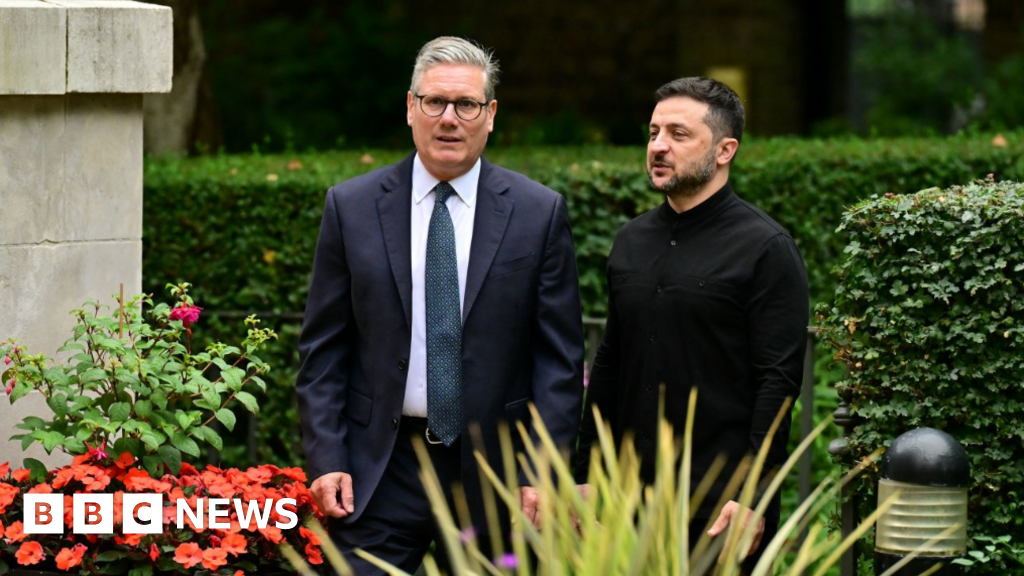
    BBC Prime Minister Sir Keir Starmer (left) and Ukrainian President Volodymyr Zelensky in the garden of number 10 Downing Street.BBC

    Starmer and Zelensky walk through the Downing Street rose garden together

    Prime Minister Sir Keir Starmer has welcomed Ukrainian President Volodymyr Zelensky to Downing Street for private discussions.

    The pair met ahead of a vital summit in Alaska between US President Donald Trump and Russian President Vladimir Putin on Friday to discuss ending the war in Ukraine.

    Sir Keir has said he believes there is a “viable chance” of a ceasefire between Russia and Ukraine and stressed Ukraine’s “territorial integrity” must be protected and international borders “must not be changed by force”.

    Zelensky and other European leaders, who are not attending the meeting in Alaska, held a joint call with Trump on Wednesday to reiterate their position.

    A red carpet was rolled out for Zelensky’s arrival at No 10, and he was pictured strolling through the Downing Street rose garden with the PM in a carefully co-ordinated show of support from the UK, scheduled just 24 hours before the summit in Alaska.

    Neither leader made any comment to waiting reporters.

    The Kremlin has announced that Putin and Trump will hold a joint press conference after their meeting on Friday evening.

    Last week Trump warned there could be “some swapping of territories, to the betterment of both”, leading to fears Ukraine might have to give up some areas in order to end the bloody conflict.

    Moscow wants to maintain control of land it has seized, including Crimea, while Ukraine has insisted that ceding territory would be unacceptable.

    Russia also wants assurances that Ukraine will not join the Nato military alliance and a limit on the size of its army.

    In another development, visiting US Vice-President JD Vance said it was Trump’s mission to “bring peace to Europe once again”.

    Addressing a virtual meeting of the European leaders following the call with Trump, Sir Keir said “any ceasefire would have to be lasting and to be lasting it would need security guarantees”.

    “That is why we set up this coalition of the willing,” he added.

    The coalition is a group of mainly European countries who have pledged to provide military support to Ukraine – including potentially boots on the ground – in order to deter Russia from breaching any agreed peace deal.

    Sir Keir said the coalition had “credible” military plans ready that could be used in the event of a ceasefire.

    He said the leaders of the group were also ready to increase economic pressure on Russia if necessary, for example through increasing sanctions.

    He also praised Trump’s efforts to reach an agreement, saying: “For three-and-a-bit years this conflict has been going on and we haven’t got anywhere near the prospect of an actually a viable solution, a viable way of bringing it to a ceasefire.

    “Now we do have that chance, because of the work the president has put in.”

    Sir Alex Younger, the head of MI6 between 2014 and 2020, told BBC Radio 4’s Today programme: “It’s true that Donald Trump is the only one who can solve this,” but he warned “Putin is playing him”.

    “They’re all talking about the wrong thing,” he said, adding that the US strategy of resetting bilateral relations with Russia was “a total fantasy” that failed to recognise Putin’s aim of the “total subjugation” of Ukraine.

    “This isn’t about territory at all, it’s about sovereignty and whether Ukraine exists – and Putin is determined that it shouldn’t.”

    Vance is currently on a private family holiday in the UK, and also joined the call with Sir Keir and other European leaders on Wednesday.

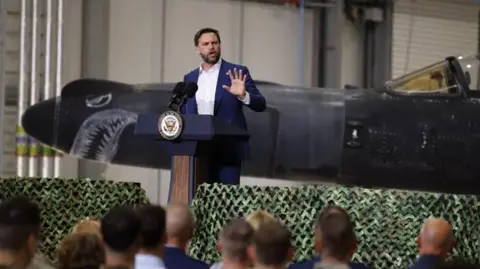
    Later that evening, he gave an address at RAF Fairford in Gloucestershire to American troops stationed in the UK.

    The vice-president said the two countries had a “beautiful alliance” and that the US had “worked with our friends from the United Kingdom to achieve great victories” over the past 100 years.

    “It’s not just about going to war, and it’s not just winning when we do,” Vance added.

    “When we fight together, when we make it clear that we always approach every situation with an open hand – but if things go poorly, we’re willing to do what we have to do, we make it easier to achieve peace and prosperity all over the world.”

    EPA A man with dark hair and a beard makes a speech standing in front of a military aircraft with a face painted on the nose. EPA

    Vance addressed American troops stationed in the UK

    Following the call with European leaders, Trump told a press conference there was a chance of a meeting between Putin and Zelensky.

    He said he would use his initial meeting with Putin to “find out where we are and what we’re doing”, adding: “We’ll have a quick second meeting between President Putin and President Zelensky and myself, if they’d like to have me there.”

    He also warned Putin that he would face “very severe consequences” if he did not agree to end the war after Friday’s summit.

    Zelensky, who joined the call while in Berlin to meet German Chancellor Friedrich Merz, said the US was ready to continue its support of Ukraine and accused Russia of not wanting peace.

    “Putin cannot fool us,” he said.


    Source link

    asdasda

  • Israeli minister announces settlement plans ‘to thwart Palestinian state’

    Israeli minister announces settlement plans ‘to thwart Palestinian state’


    Israeli far-right Finance Minister Bezalel Smotrich has said he will approve plans to build more than 3,000 homes in a controversial settlement project in the occupied West Bank – a move he said will prevent the creation of a Palestinian state.

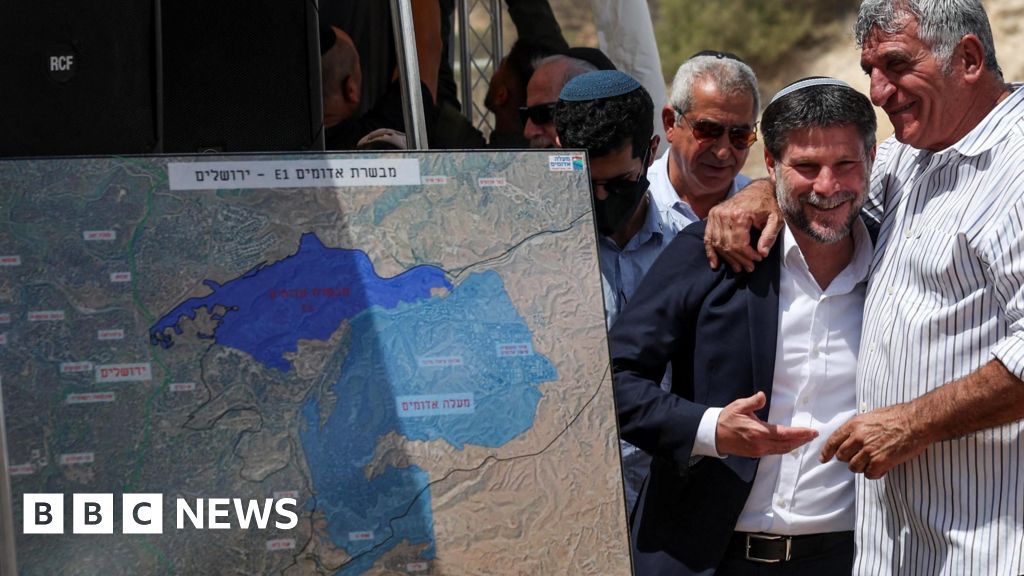
    The so-called E1 project between Jerusalem and Maale Adumim settlement has been frozen for decades amid fierce opposition internationally. Building there would effectively cut off the West Bank from occupied East Jerusalem and significantly obstruct its territorial contiguity.

    “The plan will bury the idea of a Palestinian state,” Smotrich said, according to Israeli media.

    Settlements are considered illegal under international law, though Israel disputes this.

    They are one of the most contentious issues between Israel and the Palestinians. About 700,000 settlers live in approximately 160 settlements in the West Bank and East Jerusalem, according to the Israeli anti-settlement group Peace Now – land Palestinians seek for a future independent state.

    “After decades of international pressure and freezes, we are breaking conventions and connecting Maale Adumim to Jerusalem,” Smotrich said.

    “This is Zionism at its best – building, settling and strengthening our sovereignty in the Land of Israel.”

    It follows declarations in recent days by a growing number of countries of their intention to recognise a Palestinian state in coming months, which Israel has denounced.

    Announcing the plan at a news conference with settler organisation Yesha Council Chairman Israel Ganz and Maale Adumim Mayor Guy Yifrach, Smotrich said the land had been given to the Jews by God.

    When asked by the BBC what message the plans sent to the likes of Britain and France which plan to recognise a State of Palestine later this year, he said: “It’s not going to happen. There will be no state to recognise.”

    Peace Now said: “The Netanyahu government is exploiting every minute to deepen the annexation of the West Bank and prevent the possibility of a two-state solution.

    “It is clear to everyone today that the only solution to the conflict, and the only way to defeat Hamas, is through the establishment of a Palestinian state alongside Israel.

    “The Government of Israel is condemning us to continued bloodshed, instead of working to end it.”

    The Palestinian foreign ministry called the new settlement plan “an extension of crimes of genocide, displacement and annexation”.

    Israel has long rejected such accusations, but leading Israeli human rights organisations have argued that the country’s conduct in the war in Gaza constitutes genocide against the Palestinian population.

    Smotrich, together with national security minister Itamar Ben-Gvir, was sanctioned by the UK in June over “repeated incitements of violence against Palestinian communities” in the occupied West Bank.

    The construction of 3,401 housing units in the E1 area has been frozen for 20 years. Developing the area has long been seen as effectively blocking the establishment of a Palestinian state, because of its strategic position separating areas south of Jerusalem from those to its north, preventing a contiguous Palestinian urban area connecting Ramallah, East Jerusalem and Bethlehem.

    Since Hamas’s attack on Israel on 7 October 2023, Israel’s pressure on West Bank Palestinians has increased sharply, justified as legitimate security measures.

    The vast majority of the international community considers the settlements illegal under international law – a position supported by an advisory opinion of the International Court of Justice (ICJ) last year.


    Source link

    asdasda

  • Israeli minister announces settlement plans ‘to thwart Palestinian state’

    Israeli minister announces settlement plans ‘to thwart Palestinian state’


    Israeli far-right Finance Minister Bezalel Smotrich has said he will approve plans to build more than 3,000 homes in a controversial settlement project in the occupied West Bank – a move he said will prevent the creation of a Palestinian state.

    The so-called E1 project between Jerusalem and Maale Adumim settlement has been frozen for decades amid fierce opposition internationally. Building there would effectively cut off the West Bank from occupied East Jerusalem and significantly obstruct its territorial contiguity.

    “The plan will bury the idea of a Palestinian state,” Smotrich said, according to Israeli media.

    Settlements are considered illegal under international law, though Israel disputes this.

    They are one of the most contentious issues between Israel and the Palestinians. About 700,000 settlers live in approximately 160 settlements in the West Bank and East Jerusalem, according to the Israeli anti-settlement group Peace Now – land Palestinians seek for a future independent state.

    “After decades of international pressure and freezes, we are breaking conventions and connecting Maale Adumim to Jerusalem,” Smotrich said.

    “This is Zionism at its best – building, settling and strengthening our sovereignty in the Land of Israel.”

    It follows declarations in recent days by a growing number of countries of their intention to recognise a Palestinian state in coming months, which Israel has denounced.

    Announcing the plan at a news conference with settler organisation Yesha Council Chairman Israel Ganz and Maale Adumim Mayor Guy Yifrach, Smotrich said the land had been given to the Jews by God.

    When asked by the BBC what message the plans sent to the likes of Britain and France which plan to recognise a State of Palestine later this year, he said: “It’s not going to happen. There will be no state to recognise.”

    Peace Now said: “The Netanyahu government is exploiting every minute to deepen the annexation of the West Bank and prevent the possibility of a two-state solution.

    “It is clear to everyone today that the only solution to the conflict, and the only way to defeat Hamas, is through the establishment of a Palestinian state alongside Israel.

    “The Government of Israel is condemning us to continued bloodshed, instead of working to end it.”

    The Palestinian foreign ministry called the new settlement plan “an extension of crimes of genocide, displacement and annexation”.

    Israel has long rejected such accusations, but leading Israeli human rights organisations have argued that the country’s conduct in the war in Gaza constitutes genocide against the Palestinian population.

    Smotrich, together with national security minister Itamar Ben-Gvir, was sanctioned by the UK in June over “repeated incitements of violence against Palestinian communities” in the occupied West Bank.

    The construction of 3,401 housing units in the E1 area has been frozen for 20 years. Developing the area has long been seen as effectively blocking the establishment of a Palestinian state, because of its strategic position separating areas south of Jerusalem from those to its north, preventing a contiguous Palestinian urban area connecting Ramallah, East Jerusalem and Bethlehem.

    Since Hamas’s attack on Israel on 7 October 2023, Israel’s pressure on West Bank Palestinians has increased sharply, justified as legitimate security measures.

    The vast majority of the international community considers the settlements illegal under international law – a position supported by an advisory opinion of the International Court of Justice (ICJ) last year.


    Source link

    asdasd

  • Kim Jong Un’s powerful sister turns up the volume on loudspeaker standoff with South Korea

    Kim Jong Un’s powerful sister turns up the volume on loudspeaker standoff with South Korea


    The powerful sister of North Korean leader Kim Jong Un on Thursday dismissed South Korean claims the North is removing some of its loudspeakers along the inter-Korean border, mocking the government in Seoul for clinging to hopes of renewed diplomacy between the war-divided rivals.

    South Korea’s military said over the weekend that it had detected the North removing some of its loudspeakers, days after the South dismantled its own front-line speakers used for anti-North propaganda broadcasts in a bid to ease tensions.

    Kim Yo Jong reiterated previous North Korean statements that it has no immediate interest in reviving long-stalled negotiations with Washington and Seoul, citing an upcoming joint military exercise between the allies as proof of their continued hostility toward Pyongyang.

    South Korea’s Joint Chiefs of Staff did not disclose where it spotted the North removing some of its speakers. The North Korean speakers that have been visible from civilian-accessible border areas in the South were still seen by AP photojournalists after the military’s announcement.

    During a Cabinet meeting Tuesday, South Korea’s new liberal President Lee Jae Myung described the North’s alleged steps as a “reciprocal measure” and expressed hope the Koreas could “gradually reopen dialogue and communication.”

    Kim accused Lee’s government of misleading the public, saying that North Koreans “have never removed loudspeakers installed on the border area and are not willing to remove them.”

    The South’s government and military did not immediately respond to Kim’s comments, published by state media.

    She also dismissed South Korean media speculation that the North may use this week’s planned meeting between Russian President Vladimir Putin and U.S. President Donald Trump to convey a message to Washington via Moscow.

    “Why should we send a message to the U.S. side,” she said, adding that the North has no interest in talks with the Americans.

    Since Russia’s invasion of Ukraine in 2022, North Korea has made Russia the priority of its foreign policy and has sent thousands of troops and large supplies of military equipment, including artillery and missiles, to help fuel Russia’s war.

    North Korean and Russian state media said Wednesday that Kim Jong Un and Putin held a phone call to discuss their deepening ties and war efforts against Ukraine.

    Russia’s TASS news agency said Putin also shared with Kim information about his upcoming talks with Trump in Alaska on Friday, but the North Korean reports did not mention the Trump meeting.

    Kim Yo Jong had also released statements in July dismissing Washington and Seoul’s stated desires to restart diplomacy aimed at defusing the North’s nuclear program, which derailed in 2019 following a collapsed summit with Trump during his first term.

    In recent months, South Korean border residents have complained that North Korean speakers blasted irritating sounds, including howling animals and pounding gongs, in a tit-for-tat response to South Korean propaganda broadcasts.

    The South Korean military said the North stopped its broadcasts in June, after Lee ordered to halt South’s broadcasts in his government’s first concrete step toward easing tensions between the war-divided rivals.

    The South’s military began removing its speakers from border areas last week but did not say if they would be redeployed if tensions flared again.

    North Korea, extremely sensitive to any outside criticism of its authoritarian leadership and its third-generation ruler, had seen South Korea’s anti-Pyongyang propaganda broadcasts as a major provocation.

    The South’s previous conservative government resumed daily loudspeaker broadcasts in June last year, following a yearslong pause, in retaliation for North Korea flying trash-laden balloons toward the South.

    The speakers blasted propaganda messages and K-pop songs, a playlist designed to strike a nerve in Pyongyang, where Kim Jong Un has been pushing to eliminate the influence of South Korean pop culture and language among the population, in part of attempts to strengthen his family’s dynastic rule.

    The psychological warfare campaigns further heightened tensions already inflamed by North Korea’s advancing nuclear program and South Korean efforts to expand joint military exercises with the United States and their trilateral security cooperation with Japan.

    Lee, who took office in June after winning an early election to replace ousted conservative Yoon Suk Yeol, wants to improve relations with Pyongyang, which reacted furiously to Yoon’s hard-line policies.

    Experts, however, say the North clearly feels no urgency to resume diplomacy with South Korea and the U.S. anytime soon and remains focused on its alignment with Russia.

    Tensions on the peninsula could rise later this month with the large-scale annual combined U.S.-South Korean military exercises that start Aug. 18.

    North Korea portrays the joint drills as invasion rehearsals and often uses them as a pretext for military demonstrations and weapons tests to advance its nuclear program.


    Source link

    http://wp.bypass.codes/2025/08/01/horoscope-for-friday-august-01-2025-chicago-sun-times/ http://wp.bypass.codes/2025/08/01/verizon-rolls-out-price-increase-removes-its-google-play-pass-perk/