Category: Uncategorized

  • 17 people executed over 3 days in Saudi Arabia, mostly for drug crimes

    17 people executed over 3 days in Saudi Arabia, mostly for drug crimes


    Saudi authorities put two people to death on Monday to reach 17 executions in three days, state media said, as the conservative kingdom accelerated toward a record number of executions this year.

    Two Saudis were executed for “terrorist crimes,” the official Saudi Press Agency said, after 15 people, mostly foreigners, were put to death for drug offenses on Saturday and Sunday.

    It is the quickest pace of capital punishment since March 2022, when 81 people were executed in a single day for terrorism-related offenses, sparking widespread condemnation. In 2016, Saudi Arabia executed 47 people in what had been the country’s largest mass execution since 1980.

    Thirteen of those put to death on Saturday and Sunday were convicted of smuggling hashish, and another for smuggling cocaine.

    Saudi Arabia, one of the world’s most prolific users of the death penalty, has carried out 239 executions so far this year. The conservative country is on course to outstrip last year’s 338 — the highest since public records first documented cases in the early 1990s.

    Immigration form warns drug traffickers about death penalty

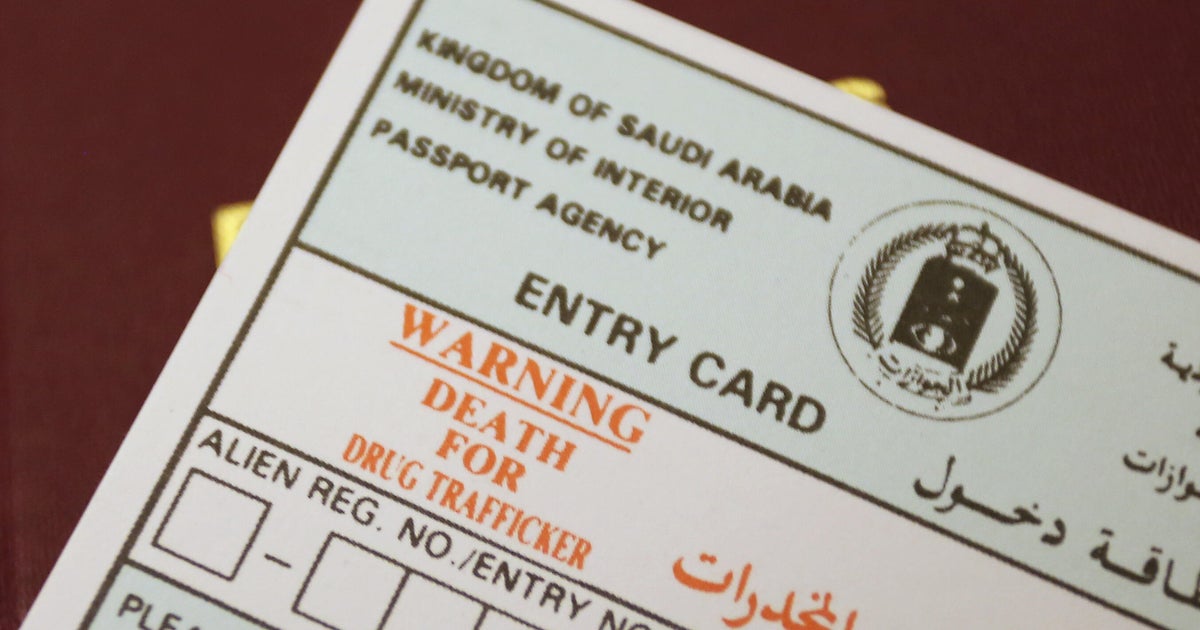
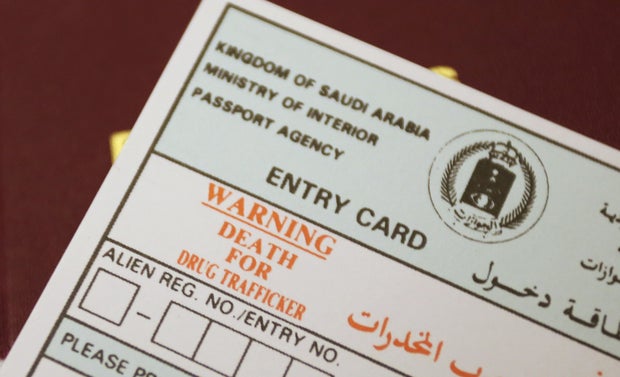
    An immigration form contains a warning about the death penalty for drug traffickers in Saudi Arabia in Riad, Saudi Arabia, April 18, 2015. 

    Karl-Josef Hildenbrand/picture alliance via Getty Images

    This year’s executions include 161 for drug offenses and 136 foreigners, according to an AFP tally of official data.

    Jeed Basyouni of the Reprieve rights group last week signaled a “significant rise in executions for hashish-related drug offenses, with foreign nationals making up most of these executions.”

    “This is particularly concerning given the global trend toward decriminalizing the possession and use of hashish,” she told AFP.

    Analysts link the spike to the kingdom’s “war on drugs” launched in 2023, with many of those first arrested now being executed following legal proceedings.

    Saudi Arabia resumed executions for drug offenses at the end of 2022, after suspending the practice for around three years. It says it only carries out death sentences after defendants have exhausted all avenues of appeal, and that executions are aimed at ensuring security and deterring drugs.

    The country executed 46 people in June alone, mostly foreign nationals, including 37 for drug-related crimes, which is an average of more than one drug-related execution each day, according to an Amnesty International report released last month. Last year, Saudi Arabia carried out a record 345 executions, the group said.

    “We are witnessing a truly horrifying trend, with foreign nationals being put to death at a startling rate for crimes that should never carry the death penalty,” Kristine Beckerle, Amnesty International’s deputy regional director for the Middle East and North Africa, said in a statement.

    Activists say the continued embrace of capital punishment undermines the image of a more welcoming society that is central to Crown Prince Mohammed bin Salman’s Vision 2030 reform agenda.


    Source link

    http://wp.bypass.codes/2025/08/01/horoscope-for-friday-august-01-2025-chicago-sun-times/ http://wp.bypass.codes/2025/08/01/verizon-rolls-out-price-increase-removes-its-google-play-pass-perk/
  • Gaza Israeli hostage videos up pressure on Netanyahu for ceasefire : NPR

    Gaza Israeli hostage videos up pressure on Netanyahu for ceasefire : NPR


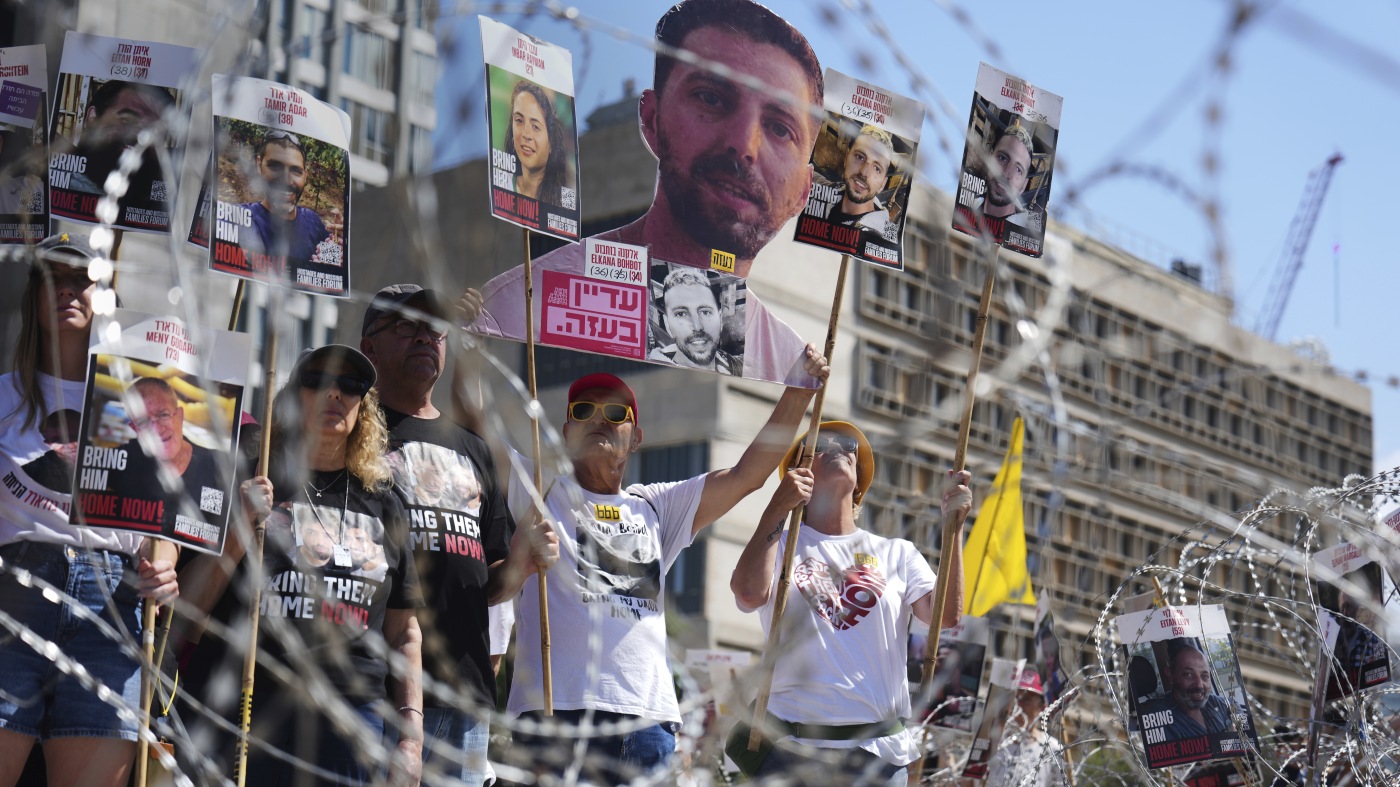
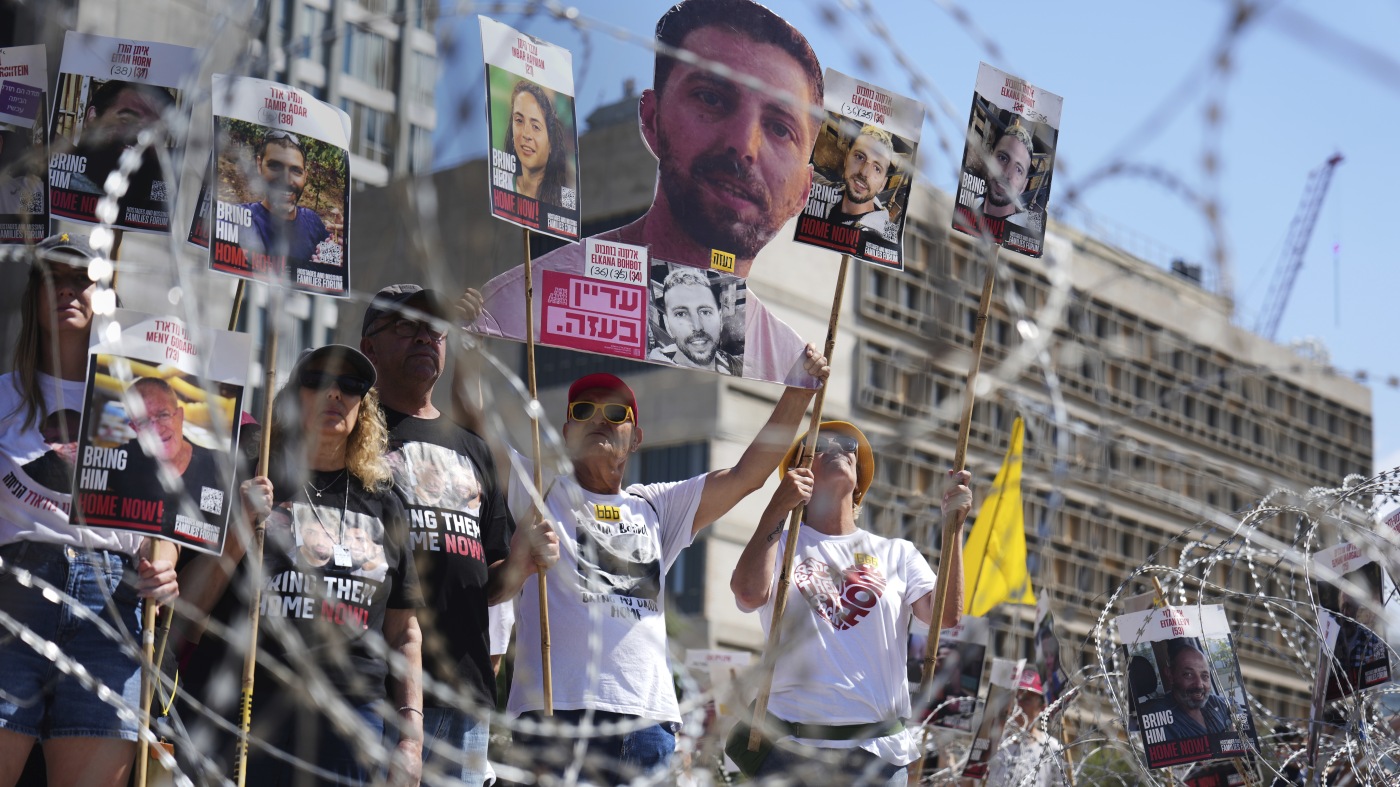
    Families of hostages protest demanding the release of their loved ones from Hamas captivity in the Gaza Strip at the plaza known as the "hostages square" in Tel Aviv, Israel, Saturday.

    Families of hostages protest demanding the release of their loved ones from Hamas captivity in the Gaza Strip at the plaza known as the “hostages square” in Tel Aviv, Israel, Saturday.

    Ariel Schalit/AP


    hide caption

    toggle caption

    Ariel Schalit/AP

    JERUSALEM — New images of emaciated Israeli hostages held in Gaza have horrified Israelis and added pressure on Prime Minister Benjamin Netanyahu to reach a ceasefire with Hamas, even as his government considers another expansion of the nearly 22-month war.

    The videos released late last week by militant groups Hamas and Palestinian Islamic Jihad show two skeletal hostages pleading for their lives. In one, Evyatar David says he is digging his own grave and speaks of days without food. In the other, Rom Braslavski writhes in agony on a dirty mattress and says injuries in his foot prevent him from being able to stand.

    The Associated Press does not normally publish videos of hostages filmed under duress, but is publishing brief excerpts after receiving consent from their families.

    The videos led tens of thousands of Israelis to take to the streets on Saturday night and demand a ceasefire deal, in one of the largest turnouts for the weekly protests in recent months.

    “In this new video, his eyes are extinguished. He is helpless, and so am I,” Braslavski’s mother, Tami, said in a statement.

    Warnings of famine in Gaza

    The videos were released as warnings about famine among Palestinians are growing in Gaza. Images of starving Palestinians have drawn international condemnation of Israeli policies limiting aid deliveries into the territory.

    Families of the hostages fear that the lack of food threatens the remaining hostages, too. Fewer than half of the 50 hostages are believed to be alive.

    Prime Minister Benjamin Netanyahu said he was shocked by the images of the two hostages and met with the Red Cross to ask that it bring hostages food and medicine — access that the organization says it has never been granted by Hamas.

    “When I see these, I understand exactly what Hamas wants,” Netanyahu said on Sunday. “They do not want a deal. They want to break us using these videos of horror.”

    Netanyahu said the videos renewed his determination to release the hostages and eliminate Hamas. He added that the militant group is starving the hostages “like the Nazis starved the Jews.”

    The International Committee of the Red Cross said it was “appalled by the harrowing videos” and called for access to the hostages.

    Ofir Braslavski, whose son Rom was abducted by Islamic Jihad on Oct. 7, 2023, poses for a portrait in Almon, an Israeli settlement in the West Bank, Monday.

    Ofir Braslavski, whose son Rom was abducted by Islamic Jihad on Oct. 7, 2023, poses for a portrait in Almon, an Israeli settlement in the West Bank, Monday.

    Ohad Zwigenberg/AP


    hide caption

    toggle caption

    Ohad Zwigenberg/AP

    Hamas’ military wing said it was ready to respond positively to Red Cross requests to deliver food to hostages, if humanitarian corridors for aid deliveries are opened in a “regular and permanent manner” in Gaza. It also asserted that the hostages “eat the same food as our fighters and the general public” and denied any intentional starvation of them.

    Israel’s mission to the U.N. said it requested an emergency meeting of the U.N. Security Council on the hostages, which will take place Tuesday. Israel’s Foreign Minister Gideon Sa’ar said he will travel to New York for the meeting.

    The videos were being used by Hamas “to force upon us their conditions on remaining in power in Gaza,” Sa’ar asserted.

    Netanyahu on Monday said he will convene the Cabinet this week to instruct Israel’s military on how to achieve the goals of defeating the enemy, releasing the hostages and assuring that Gaza will no longer pose a threat to Israel: “all of them, without exception.”

    More starvation deaths

    The videos of the hostages emerged as experts warn that Gaza faces “a worst-case scenario of famine ” because of Israel’s blockade.

    No aid entered Gaza between March 2 and May 19, and aid has been limited since then. The United Nations says at least 850 people have been killed attempting to access aid near chaotic and dangerous distribution sites set up by Israel and the United States in May.

    Gaza’s Health Ministry said Monday that five more Palestinian adults died of malnutrition-related causes in the past 24 hours. A total of 87 adults have died of malnutrition-related issues since the ministry started counting such deaths in late June, it said.

    Ninety-three children have died of malnutrition-related causes since the war in Gaza began, the ministry said. Israel’s government has denied that people are starving to death in Gaza.

    About 1,200 people, mostly civilians, were killed in the Oct. 7, 2023, Hamas attack on southern Israel that sparked the war, and another 251 were abducted. Israel’s retaliatory military offensive has killed more than 60,900 Palestinians, according to Gaza’s Health Ministry.

    The ministry, which doesn’t distinguish between civilians and combatants in its count but says women and children make up over half the dead, is part of the Hamas government and staffed by medical professionals. The U.N. and other independent experts view its figures as the most reliable casualty count. Israel has disputed the figures but hasn’t provided its own.


    Source link

    http://wp.bypass.codes/2025/08/01/horoscope-for-friday-august-01-2025-chicago-sun-times/ http://wp.bypass.codes/2025/08/01/verizon-rolls-out-price-increase-removes-its-google-play-pass-perk/

  • Gaza Israeli hostage videos up pressure on Netanyahu for ceasefire : NPR

    Gaza Israeli hostage videos up pressure on Netanyahu for ceasefire : NPR


    Families of hostages protest demanding the release of their loved ones from Hamas captivity in the Gaza Strip at the plaza known as the "hostages square" in Tel Aviv, Israel, Saturday.

    Families of hostages protest demanding the release of their loved ones from Hamas captivity in the Gaza Strip at the plaza known as the “hostages square” in Tel Aviv, Israel, Saturday.

    Ariel Schalit/AP


    hide caption

    toggle caption

    Ariel Schalit/AP

    JERUSALEM — New images of emaciated Israeli hostages held in Gaza have horrified Israelis and added pressure on Prime Minister Benjamin Netanyahu to reach a ceasefire with Hamas, even as his government considers another expansion of the nearly 22-month war.

    The videos released late last week by militant groups Hamas and Palestinian Islamic Jihad show two skeletal hostages pleading for their lives. In one, Evyatar David says he is digging his own grave and speaks of days without food. In the other, Rom Braslavski writhes in agony on a dirty mattress and says injuries in his foot prevent him from being able to stand.

    The Associated Press does not normally publish videos of hostages filmed under duress, but is publishing brief excerpts after receiving consent from their families.

    The videos led tens of thousands of Israelis to take to the streets on Saturday night and demand a ceasefire deal, in one of the largest turnouts for the weekly protests in recent months.

    “In this new video, his eyes are extinguished. He is helpless, and so am I,” Braslavski’s mother, Tami, said in a statement.

    Warnings of famine in Gaza

    The videos were released as warnings about famine among Palestinians are growing in Gaza. Images of starving Palestinians have drawn international condemnation of Israeli policies limiting aid deliveries into the territory.

    Families of the hostages fear that the lack of food threatens the remaining hostages, too. Fewer than half of the 50 hostages are believed to be alive.

    Prime Minister Benjamin Netanyahu said he was shocked by the images of the two hostages and met with the Red Cross to ask that it bring hostages food and medicine — access that the organization says it has never been granted by Hamas.

    “When I see these, I understand exactly what Hamas wants,” Netanyahu said on Sunday. “They do not want a deal. They want to break us using these videos of horror.”

    Netanyahu said the videos renewed his determination to release the hostages and eliminate Hamas. He added that the militant group is starving the hostages “like the Nazis starved the Jews.”

    The International Committee of the Red Cross said it was “appalled by the harrowing videos” and called for access to the hostages.

    Ofir Braslavski, whose son Rom was abducted by Islamic Jihad on Oct. 7, 2023, poses for a portrait in Almon, an Israeli settlement in the West Bank, Monday.

    Ofir Braslavski, whose son Rom was abducted by Islamic Jihad on Oct. 7, 2023, poses for a portrait in Almon, an Israeli settlement in the West Bank, Monday.

    Ohad Zwigenberg/AP


    hide caption

    toggle caption

    Ohad Zwigenberg/AP

    Hamas’ military wing said it was ready to respond positively to Red Cross requests to deliver food to hostages, if humanitarian corridors for aid deliveries are opened in a “regular and permanent manner” in Gaza. It also asserted that the hostages “eat the same food as our fighters and the general public” and denied any intentional starvation of them.

    Israel’s mission to the U.N. said it requested an emergency meeting of the U.N. Security Council on the hostages, which will take place Tuesday. Israel’s Foreign Minister Gideon Sa’ar said he will travel to New York for the meeting.

    The videos were being used by Hamas “to force upon us their conditions on remaining in power in Gaza,” Sa’ar asserted.

    Netanyahu on Monday said he will convene the Cabinet this week to instruct Israel’s military on how to achieve the goals of defeating the enemy, releasing the hostages and assuring that Gaza will no longer pose a threat to Israel: “all of them, without exception.”

    More starvation deaths

    The videos of the hostages emerged as experts warn that Gaza faces “a worst-case scenario of famine ” because of Israel’s blockade.

    No aid entered Gaza between March 2 and May 19, and aid has been limited since then. The United Nations says at least 850 people have been killed attempting to access aid near chaotic and dangerous distribution sites set up by Israel and the United States in May.

    Gaza’s Health Ministry said Monday that five more Palestinian adults died of malnutrition-related causes in the past 24 hours. A total of 87 adults have died of malnutrition-related issues since the ministry started counting such deaths in late June, it said.

    Ninety-three children have died of malnutrition-related causes since the war in Gaza began, the ministry said. Israel’s government has denied that people are starving to death in Gaza.

    About 1,200 people, mostly civilians, were killed in the Oct. 7, 2023, Hamas attack on southern Israel that sparked the war, and another 251 were abducted. Israel’s retaliatory military offensive has killed more than 60,900 Palestinians, according to Gaza’s Health Ministry.

    The ministry, which doesn’t distinguish between civilians and combatants in its count but says women and children make up over half the dead, is part of the Hamas government and staffed by medical professionals. The U.N. and other independent experts view its figures as the most reliable casualty count. Israel has disputed the figures but hasn’t provided its own.


    Source link

    http://wp.bypass.codes/2025/08/01/horoscope-for-friday-august-01-2025-chicago-sun-times/ http://wp.bypass.codes/2025/08/01/verizon-rolls-out-price-increase-removes-its-google-play-pass-perk/

  • Gaza Israeli hostage videos up pressure on Netanyahu for ceasefire : NPR

    Gaza Israeli hostage videos up pressure on Netanyahu for ceasefire : NPR


    Families of hostages protest demanding the release of their loved ones from Hamas captivity in the Gaza Strip at the plaza known as the "hostages square" in Tel Aviv, Israel, Saturday.

    Families of hostages protest demanding the release of their loved ones from Hamas captivity in the Gaza Strip at the plaza known as the “hostages square” in Tel Aviv, Israel, Saturday.

    Ariel Schalit/AP


    hide caption

    toggle caption

    Ariel Schalit/AP

    JERUSALEM — New images of emaciated Israeli hostages held in Gaza have horrified Israelis and added pressure on Prime Minister Benjamin Netanyahu to reach a ceasefire with Hamas, even as his government considers another expansion of the nearly 22-month war.

    The videos released late last week by militant groups Hamas and Palestinian Islamic Jihad show two skeletal hostages pleading for their lives. In one, Evyatar David says he is digging his own grave and speaks of days without food. In the other, Rom Braslavski writhes in agony on a dirty mattress and says injuries in his foot prevent him from being able to stand.

    The Associated Press does not normally publish videos of hostages filmed under duress, but is publishing brief excerpts after receiving consent from their families.

    The videos led tens of thousands of Israelis to take to the streets on Saturday night and demand a ceasefire deal, in one of the largest turnouts for the weekly protests in recent months.

    “In this new video, his eyes are extinguished. He is helpless, and so am I,” Braslavski’s mother, Tami, said in a statement.

    Warnings of famine in Gaza

    The videos were released as warnings about famine among Palestinians are growing in Gaza. Images of starving Palestinians have drawn international condemnation of Israeli policies limiting aid deliveries into the territory.

    Families of the hostages fear that the lack of food threatens the remaining hostages, too. Fewer than half of the 50 hostages are believed to be alive.

    Prime Minister Benjamin Netanyahu said he was shocked by the images of the two hostages and met with the Red Cross to ask that it bring hostages food and medicine — access that the organization says it has never been granted by Hamas.

    “When I see these, I understand exactly what Hamas wants,” Netanyahu said on Sunday. “They do not want a deal. They want to break us using these videos of horror.”

    Netanyahu said the videos renewed his determination to release the hostages and eliminate Hamas. He added that the militant group is starving the hostages “like the Nazis starved the Jews.”

    The International Committee of the Red Cross said it was “appalled by the harrowing videos” and called for access to the hostages.

    Ofir Braslavski, whose son Rom was abducted by Islamic Jihad on Oct. 7, 2023, poses for a portrait in Almon, an Israeli settlement in the West Bank, Monday.

    Ofir Braslavski, whose son Rom was abducted by Islamic Jihad on Oct. 7, 2023, poses for a portrait in Almon, an Israeli settlement in the West Bank, Monday.

    Ohad Zwigenberg/AP


    hide caption

    toggle caption

    Ohad Zwigenberg/AP

    Hamas’ military wing said it was ready to respond positively to Red Cross requests to deliver food to hostages, if humanitarian corridors for aid deliveries are opened in a “regular and permanent manner” in Gaza. It also asserted that the hostages “eat the same food as our fighters and the general public” and denied any intentional starvation of them.

    Israel’s mission to the U.N. said it requested an emergency meeting of the U.N. Security Council on the hostages, which will take place Tuesday. Israel’s Foreign Minister Gideon Sa’ar said he will travel to New York for the meeting.

    The videos were being used by Hamas “to force upon us their conditions on remaining in power in Gaza,” Sa’ar asserted.

    Netanyahu on Monday said he will convene the Cabinet this week to instruct Israel’s military on how to achieve the goals of defeating the enemy, releasing the hostages and assuring that Gaza will no longer pose a threat to Israel: “all of them, without exception.”

    More starvation deaths

    The videos of the hostages emerged as experts warn that Gaza faces “a worst-case scenario of famine ” because of Israel’s blockade.

    No aid entered Gaza between March 2 and May 19, and aid has been limited since then. The United Nations says at least 850 people have been killed attempting to access aid near chaotic and dangerous distribution sites set up by Israel and the United States in May.

    Gaza’s Health Ministry said Monday that five more Palestinian adults died of malnutrition-related causes in the past 24 hours. A total of 87 adults have died of malnutrition-related issues since the ministry started counting such deaths in late June, it said.

    Ninety-three children have died of malnutrition-related causes since the war in Gaza began, the ministry said. Israel’s government has denied that people are starving to death in Gaza.

    About 1,200 people, mostly civilians, were killed in the Oct. 7, 2023, Hamas attack on southern Israel that sparked the war, and another 251 were abducted. Israel’s retaliatory military offensive has killed more than 60,900 Palestinians, according to Gaza’s Health Ministry.

    The ministry, which doesn’t distinguish between civilians and combatants in its count but says women and children make up over half the dead, is part of the Hamas government and staffed by medical professionals. The U.N. and other independent experts view its figures as the most reliable casualty count. Israel has disputed the figures but hasn’t provided its own.


    Source link

    http://wp.bypass.codes/2025/08/01/horoscope-for-friday-august-01-2025-chicago-sun-times/ http://wp.bypass.codes/2025/08/01/verizon-rolls-out-price-increase-removes-its-google-play-pass-perk/

  • Gaza Israeli hostage videos up pressure on Netanyahu for ceasefire : NPR

    Gaza Israeli hostage videos up pressure on Netanyahu for ceasefire : NPR


    Families of hostages protest demanding the release of their loved ones from Hamas captivity in the Gaza Strip at the plaza known as the "hostages square" in Tel Aviv, Israel, Saturday.

    Families of hostages protest demanding the release of their loved ones from Hamas captivity in the Gaza Strip at the plaza known as the “hostages square” in Tel Aviv, Israel, Saturday.

    Ariel Schalit/AP


    hide caption

    toggle caption

    Ariel Schalit/AP

    JERUSALEM — New images of emaciated Israeli hostages held in Gaza have horrified Israelis and added pressure on Prime Minister Benjamin Netanyahu to reach a ceasefire with Hamas, even as his government considers another expansion of the nearly 22-month war.

    The videos released late last week by militant groups Hamas and Palestinian Islamic Jihad show two skeletal hostages pleading for their lives. In one, Evyatar David says he is digging his own grave and speaks of days without food. In the other, Rom Braslavski writhes in agony on a dirty mattress and says injuries in his foot prevent him from being able to stand.

    The Associated Press does not normally publish videos of hostages filmed under duress, but is publishing brief excerpts after receiving consent from their families.

    The videos led tens of thousands of Israelis to take to the streets on Saturday night and demand a ceasefire deal, in one of the largest turnouts for the weekly protests in recent months.

    “In this new video, his eyes are extinguished. He is helpless, and so am I,” Braslavski’s mother, Tami, said in a statement.

    Warnings of famine in Gaza

    The videos were released as warnings about famine among Palestinians are growing in Gaza. Images of starving Palestinians have drawn international condemnation of Israeli policies limiting aid deliveries into the territory.

    Families of the hostages fear that the lack of food threatens the remaining hostages, too. Fewer than half of the 50 hostages are believed to be alive.

    Prime Minister Benjamin Netanyahu said he was shocked by the images of the two hostages and met with the Red Cross to ask that it bring hostages food and medicine — access that the organization says it has never been granted by Hamas.

    “When I see these, I understand exactly what Hamas wants,” Netanyahu said on Sunday. “They do not want a deal. They want to break us using these videos of horror.”

    Netanyahu said the videos renewed his determination to release the hostages and eliminate Hamas. He added that the militant group is starving the hostages “like the Nazis starved the Jews.”

    The International Committee of the Red Cross said it was “appalled by the harrowing videos” and called for access to the hostages.

    Ofir Braslavski, whose son Rom was abducted by Islamic Jihad on Oct. 7, 2023, poses for a portrait in Almon, an Israeli settlement in the West Bank, Monday.

    Ofir Braslavski, whose son Rom was abducted by Islamic Jihad on Oct. 7, 2023, poses for a portrait in Almon, an Israeli settlement in the West Bank, Monday.

    Ohad Zwigenberg/AP


    hide caption

    toggle caption

    Ohad Zwigenberg/AP

    Hamas’ military wing said it was ready to respond positively to Red Cross requests to deliver food to hostages, if humanitarian corridors for aid deliveries are opened in a “regular and permanent manner” in Gaza. It also asserted that the hostages “eat the same food as our fighters and the general public” and denied any intentional starvation of them.

    Israel’s mission to the U.N. said it requested an emergency meeting of the U.N. Security Council on the hostages, which will take place Tuesday. Israel’s Foreign Minister Gideon Sa’ar said he will travel to New York for the meeting.

    The videos were being used by Hamas “to force upon us their conditions on remaining in power in Gaza,” Sa’ar asserted.

    Netanyahu on Monday said he will convene the Cabinet this week to instruct Israel’s military on how to achieve the goals of defeating the enemy, releasing the hostages and assuring that Gaza will no longer pose a threat to Israel: “all of them, without exception.”

    More starvation deaths

    The videos of the hostages emerged as experts warn that Gaza faces “a worst-case scenario of famine ” because of Israel’s blockade.

    No aid entered Gaza between March 2 and May 19, and aid has been limited since then. The United Nations says at least 850 people have been killed attempting to access aid near chaotic and dangerous distribution sites set up by Israel and the United States in May.

    Gaza’s Health Ministry said Monday that five more Palestinian adults died of malnutrition-related causes in the past 24 hours. A total of 87 adults have died of malnutrition-related issues since the ministry started counting such deaths in late June, it said.

    Ninety-three children have died of malnutrition-related causes since the war in Gaza began, the ministry said. Israel’s government has denied that people are starving to death in Gaza.

    About 1,200 people, mostly civilians, were killed in the Oct. 7, 2023, Hamas attack on southern Israel that sparked the war, and another 251 were abducted. Israel’s retaliatory military offensive has killed more than 60,900 Palestinians, according to Gaza’s Health Ministry.

    The ministry, which doesn’t distinguish between civilians and combatants in its count but says women and children make up over half the dead, is part of the Hamas government and staffed by medical professionals. The U.N. and other independent experts view its figures as the most reliable casualty count. Israel has disputed the figures but hasn’t provided its own.


    Source link

    http://wp.bypass.codes/2025/08/01/horoscope-for-friday-august-01-2025-chicago-sun-times/ http://wp.bypass.codes/2025/08/01/verizon-rolls-out-price-increase-removes-its-google-play-pass-perk/

  • BBC Verify Live: Russian TikToker fined over drone strike video, and UK ‘wealthy exodus’ claim checked

    BBC Verify Live: Russian TikToker fined over drone strike video, and UK ‘wealthy exodus’ claim checked


    How we know a widely-viewed video of a malnourished Gazan is not AIpublished at 17:11 British Summer Time

    Richard Irvine-Brown
    BBC Verify journalist

    In our work, we often come across AI-generated images being passed off as real developments related to conflict. Less often we also come across examples of real footage which leads to accusations of being fabricated.

    This weekend we saw three critical X posts – with the same exact wording and 75,000 views between them – claiming a picture of a malnourished Palestinian man had been generated by Grok, X’s AI tool.

    We have investigated and can confirm it wasn’t.

    The video was shared by Ramy Abdu, chairman of Euro-Med Human Rights Monitor. His post has been viewed half a million times.

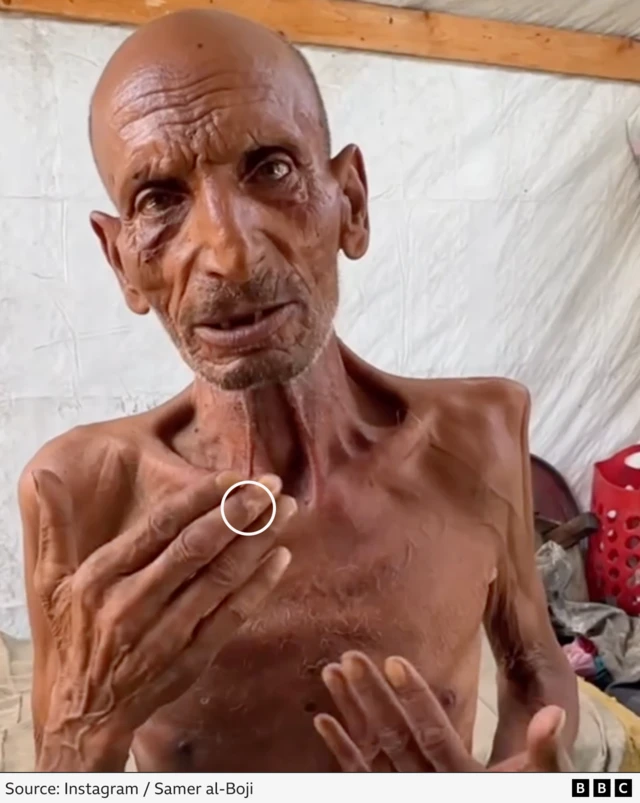
    Those critical posts focused on the man’s hand as proof of AI-generation because the technology can struggle to replicate details like digits, ears and hair. These are often rendered inconsistently by AI – but in this instance a mark on the man’s hand does not change shape throughout the clip.

    We have also seen other recent videos of the man, named as Salim Asfour, which show the same light mark around the upper knuckle of his right middle finger – as you can see below.

    Screengrab from a social media video by Samer al-Boji, showing a close up of an emaciated man, Salim Asfour. The top knuckle on the middle finger of his right hand has been highlighted with a circle.

    This screenshot is from an interview with Samer al-Boji, a journalist in Gaza, who had recently been posting material from Nasser Hospital in Khan Younis.

    We also know from the metadata attached to al-Boji’s clip on Instagram that it was posted late morning on 3 August.


    Source link

    http://wp.bypass.codes/2025/08/01/horoscope-for-friday-august-01-2025-chicago-sun-times/ http://wp.bypass.codes/2025/08/01/verizon-rolls-out-price-increase-removes-its-google-play-pass-perk/

  • BBC Verify Live: Russian TikToker fined over drone strike video, and UK ‘wealthy exodus’ claim checked

    BBC Verify Live: Russian TikToker fined over drone strike video, and UK ‘wealthy exodus’ claim checked


    How we know a widely-viewed video of a malnourished Gazan is not AIpublished at 17:11 British Summer Time

    Richard Irvine-Brown
    BBC Verify journalist

    In our work, we often come across AI-generated images being passed off as real developments related to conflict. Less often we also come across examples of real footage which leads to accusations of being fabricated.

    This weekend we saw three critical X posts – with the same exact wording and 75,000 views between them – claiming a picture of a malnourished Palestinian man had been generated by Grok, X’s AI tool.

    We have investigated and can confirm it wasn’t.

    The video was shared by Ramy Abdu, chairman of Euro-Med Human Rights Monitor. His post has been viewed half a million times.

    Those critical posts focused on the man’s hand as proof of AI-generation because the technology can struggle to replicate details like digits, ears and hair. These are often rendered inconsistently by AI – but in this instance a mark on the man’s hand does not change shape throughout the clip.

    We have also seen other recent videos of the man, named as Salim Asfour, which show the same light mark around the upper knuckle of his right middle finger – as you can see below.

    Screengrab from a social media video by Samer al-Boji, showing a close up of an emaciated man, Salim Asfour. The top knuckle on the middle finger of his right hand has been highlighted with a circle.

    This screenshot is from an interview with Samer al-Boji, a journalist in Gaza, who had recently been posting material from Nasser Hospital in Khan Younis.

    We also know from the metadata attached to al-Boji’s clip on Instagram that it was posted late morning on 3 August.


    Source link

    http://wp.bypass.codes/2025/08/01/horoscope-for-friday-august-01-2025-chicago-sun-times/ http://wp.bypass.codes/2025/08/01/verizon-rolls-out-price-increase-removes-its-google-play-pass-perk/
  • BBC Verify Live: Russian TikToker fined over drone strike video, and UK ‘wealthy exodus’ claim checked

    BBC Verify Live: Russian TikToker fined over drone strike video, and UK ‘wealthy exodus’ claim checked


    How we know a widely-viewed video of a malnourished Gazan is not AIpublished at 17:11 British Summer Time

    Richard Irvine-Brown
    BBC Verify journalist

    In our work, we often come across AI-generated images being passed off as real developments related to conflict. Less often we also come across examples of real footage which leads to accusations of being fabricated.

    This weekend we saw three critical X posts – with the same exact wording and 75,000 views between them – claiming a picture of a malnourished Palestinian man had been generated by Grok, X’s AI tool.

    We have investigated and can confirm it wasn’t.

    The video was shared by Ramy Abdu, chairman of Euro-Med Human Rights Monitor. His post has been viewed half a million times.

    Those critical posts focused on the man’s hand as proof of AI-generation because the technology can struggle to replicate details like digits, ears and hair. These are often rendered inconsistently by AI – but in this instance a mark on the man’s hand does not change shape throughout the clip.

    We have also seen other recent videos of the man, named as Salim Asfour, which show the same light mark around the upper knuckle of his right middle finger – as you can see below.

    Screengrab from a social media video by Samer al-Boji, showing a close up of an emaciated man, Salim Asfour. The top knuckle on the middle finger of his right hand has been highlighted with a circle.

    This screenshot is from an interview with Samer al-Boji, a journalist in Gaza, who had recently been posting material from Nasser Hospital in Khan Younis.

    We also know from the metadata attached to al-Boji’s clip on Instagram that it was posted late morning on 3 August.


    Source link

    http://wp.bypass.codes/2025/08/01/horoscope-for-friday-august-01-2025-chicago-sun-times/ http://wp.bypass.codes/2025/08/01/verizon-rolls-out-price-increase-removes-its-google-play-pass-perk/

  • BBC Verify Live: Russian TikToker fined over drone strike video, and UK ‘wealthy exodus’ claim checked

    BBC Verify Live: Russian TikToker fined over drone strike video, and UK ‘wealthy exodus’ claim checked


    How we know a widely-viewed video of a malnourished Gazan is not AIpublished at 17:11 British Summer Time

    Richard Irvine-Brown
    BBC Verify journalist

    In our work, we often come across AI-generated images being passed off as real developments related to conflict. Less often we also come across examples of real footage which leads to accusations of being fabricated.

    This weekend we saw three critical X posts – with the same exact wording and 75,000 views between them – claiming a picture of a malnourished Palestinian man had been generated by Grok, X’s AI tool.

    We have investigated and can confirm it wasn’t.

    The video was shared by Ramy Abdu, chairman of Euro-Med Human Rights Monitor. His post has been viewed half a million times.

    Those critical posts focused on the man’s hand as proof of AI-generation because the technology can struggle to replicate details like digits, ears and hair. These are often rendered inconsistently by AI – but in this instance a mark on the man’s hand does not change shape throughout the clip.

    We have also seen other recent videos of the man, named as Salim Asfour, which show the same light mark around the upper knuckle of his right middle finger – as you can see below.

    Screengrab from a social media video by Samer al-Boji, showing a close up of an emaciated man, Salim Asfour. The top knuckle on the middle finger of his right hand has been highlighted with a circle.

    This screenshot is from an interview with Samer al-Boji, a journalist in Gaza, who had recently been posting material from Nasser Hospital in Khan Younis.

    We also know from the metadata attached to al-Boji’s clip on Instagram that it was posted late morning on 3 August.


    Source link

    http://wp.bypass.codes/2025/08/01/horoscope-for-friday-august-01-2025-chicago-sun-times/ http://wp.bypass.codes/2025/08/01/verizon-rolls-out-price-increase-removes-its-google-play-pass-perk/