The upcoming Zapad 2025 joint military exercises to be held between Russia and Belarus are expected to include fewer troops than in previous years, Lithuanian intelligence said in a press release on Aug. 22.
“This year, up to 30,000 troops are expected to participate, significantly fewer than in previous exercises. Around 6,000–8,000 will be stationed in Belarus, with several thousand in Russia’s Kaliningrad exclave,” the release said.
Russia has lost over 1,074,320 troops since the beginning of its full-scale war against Ukraine and has relied on North Korean troops to push back at Ukrainian offensives in Kursk Oblast.
Russia and Belarus hold the large-scale Zapad military exercises every four years. Zapad drills were last held in 2021.
Lithuania and its NATO allies will be conducting military exercises of their own and will continue to monitor the situation as the joint Russian-Belarusian drills take place.
Lithuanian intelligence reports no increase in Russian troops at the Zapad 2025 military drills despite rumors of a larger force at the military exercises.
Ukraine’s Foreign Ministry condemned the upcoming drills and warned Belarus not to stage provocations and keep troops away from Ukraine’s border.
“The cooperation between the regimes in Moscow and Minsk poses an immediate threat not only to Ukraine, but also to Poland, the Baltic states, and all of Europe, and also hinders peaceful efforts of the United States President Donald Trump to end the war,” the statement read.
The Foreign Ministry noted that when Zapad drills were last held in 2021, there was a buildup of Russian troops at the border, which were used to invade Ukraine in February 2022.
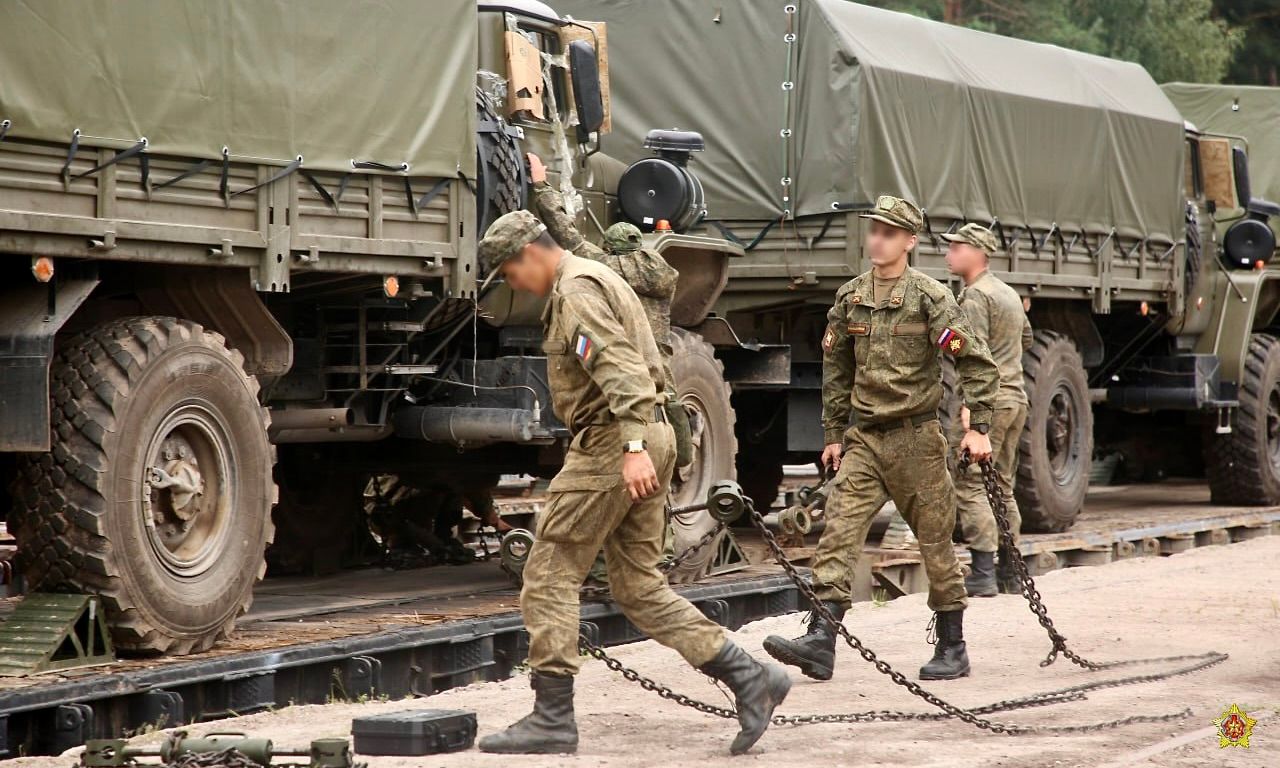
Russian troops and military equipment first arrived in Belarus on Aug. 6 to prepare for the upcoming exercises.
The upcoming Zapad 2025 joint military exercises to be held between Russia and Belarus are expected to include fewer troops than in previous years, Lithuanian intelligence said in a press release on Aug. 22.
“This year, up to 30,000 troops are expected to participate, significantly fewer than in previous exercises. Around 6,000–8,000 will be stationed in Belarus, with several thousand in Russia’s Kaliningrad exclave,” the release said.
Russia has lost over 1,074,320 troops since the beginning of its full-scale war against Ukraine and has relied on North Korean troops to push back at Ukrainian offensives in Kursk Oblast.
Russia and Belarus hold the large-scale Zapad military exercises every four years. Zapad drills were last held in 2021.
Lithuania and its NATO allies will be conducting military exercises of their own and will continue to monitor the situation as the joint Russian-Belarusian drills take place.
Lithuanian intelligence reports no increase in Russian troops at the Zapad 2025 military drills despite rumors of a larger force at the military exercises.
Ukraine’s Foreign Ministry condemned the upcoming drills and warned Belarus not to stage provocations and keep troops away from Ukraine’s border.
“The cooperation between the regimes in Moscow and Minsk poses an immediate threat not only to Ukraine, but also to Poland, the Baltic states, and all of Europe, and also hinders peaceful efforts of the United States President Donald Trump to end the war,” the statement read.
The Foreign Ministry noted that when Zapad drills were last held in 2021, there was a buildup of Russian troops at the border, which were used to invade Ukraine in February 2022.
Russian troops and military equipment first arrived in Belarus on Aug. 6 to prepare for the upcoming exercises.
The upcoming Zapad 2025 joint military exercises to be held between Russia and Belarus are expected to include fewer troops than in previous years, Lithuanian intelligence said in a press release on Aug. 22.
“This year, up to 30,000 troops are expected to participate, significantly fewer than in previous exercises. Around 6,000–8,000 will be stationed in Belarus, with several thousand in Russia’s Kaliningrad exclave,” the release said.
Russia has lost over 1,074,320 troops since the beginning of its full-scale war against Ukraine and has relied on North Korean troops to push back at Ukrainian offensives in Kursk Oblast.
Russia and Belarus hold the large-scale Zapad military exercises every four years. Zapad drills were last held in 2021.
Lithuania and its NATO allies will be conducting military exercises of their own and will continue to monitor the situation as the joint Russian-Belarusian drills take place.
Lithuanian intelligence reports no increase in Russian troops at the Zapad 2025 military drills despite rumors of a larger force at the military exercises.
Ukraine’s Foreign Ministry condemned the upcoming drills and warned Belarus not to stage provocations and keep troops away from Ukraine’s border.
“The cooperation between the regimes in Moscow and Minsk poses an immediate threat not only to Ukraine, but also to Poland, the Baltic states, and all of Europe, and also hinders peaceful efforts of the United States President Donald Trump to end the war,” the statement read.
The Foreign Ministry noted that when Zapad drills were last held in 2021, there was a buildup of Russian troops at the border, which were used to invade Ukraine in February 2022.
Russian troops and military equipment first arrived in Belarus on Aug. 6 to prepare for the upcoming exercises.
The upcoming Zapad 2025 joint military exercises to be held between Russia and Belarus are expected to include fewer troops than in previous years, Lithuanian intelligence said in a press release on Aug. 22.
“This year, up to 30,000 troops are expected to participate, significantly fewer than in previous exercises. Around 6,000–8,000 will be stationed in Belarus, with several thousand in Russia’s Kaliningrad exclave,” the release said.
Russia has lost over 1,074,320 troops since the beginning of its full-scale war against Ukraine and has relied on North Korean troops to push back at Ukrainian offensives in Kursk Oblast.
Russia and Belarus hold the large-scale Zapad military exercises every four years. Zapad drills were last held in 2021.
Lithuania and its NATO allies will be conducting military exercises of their own and will continue to monitor the situation as the joint Russian-Belarusian drills take place.
Lithuanian intelligence reports no increase in Russian troops at the Zapad 2025 military drills despite rumors of a larger force at the military exercises.
Ukraine’s Foreign Ministry condemned the upcoming drills and warned Belarus not to stage provocations and keep troops away from Ukraine’s border.
“The cooperation between the regimes in Moscow and Minsk poses an immediate threat not only to Ukraine, but also to Poland, the Baltic states, and all of Europe, and also hinders peaceful efforts of the United States President Donald Trump to end the war,” the statement read.
The Foreign Ministry noted that when Zapad drills were last held in 2021, there was a buildup of Russian troops at the border, which were used to invade Ukraine in February 2022.
Russian troops and military equipment first arrived in Belarus on Aug. 6 to prepare for the upcoming exercises.
The upcoming Zapad 2025 joint military exercises to be held between Russia and Belarus are expected to include fewer troops than in previous years, Lithuanian intelligence said in a press release on Aug. 22.
“This year, up to 30,000 troops are expected to participate, significantly fewer than in previous exercises. Around 6,000–8,000 will be stationed in Belarus, with several thousand in Russia’s Kaliningrad exclave,” the release said.
Russia has lost over 1,074,320 troops since the beginning of its full-scale war against Ukraine and has relied on North Korean troops to push back at Ukrainian offensives in Kursk Oblast.
Russia and Belarus hold the large-scale Zapad military exercises every four years. Zapad drills were last held in 2021.
Lithuania and its NATO allies will be conducting military exercises of their own and will continue to monitor the situation as the joint Russian-Belarusian drills take place.
Lithuanian intelligence reports no increase in Russian troops at the Zapad 2025 military drills despite rumors of a larger force at the military exercises.
Ukraine’s Foreign Ministry condemned the upcoming drills and warned Belarus not to stage provocations and keep troops away from Ukraine’s border.
“The cooperation between the regimes in Moscow and Minsk poses an immediate threat not only to Ukraine, but also to Poland, the Baltic states, and all of Europe, and also hinders peaceful efforts of the United States President Donald Trump to end the war,” the statement read.
The Foreign Ministry noted that when Zapad drills were last held in 2021, there was a buildup of Russian troops at the border, which were used to invade Ukraine in February 2022.
Russian troops and military equipment first arrived in Belarus on Aug. 6 to prepare for the upcoming exercises.
The upcoming Zapad 2025 joint military exercises to be held between Russia and Belarus are expected to include fewer troops than in previous years, Lithuanian intelligence said in a press release on Aug. 22.
“This year, up to 30,000 troops are expected to participate, significantly fewer than in previous exercises. Around 6,000–8,000 will be stationed in Belarus, with several thousand in Russia’s Kaliningrad exclave,” the release said.
Russia has lost over 1,074,320 troops since the beginning of its full-scale war against Ukraine and has relied on North Korean troops to push back at Ukrainian offensives in Kursk Oblast.
Russia and Belarus hold the large-scale Zapad military exercises every four years. Zapad drills were last held in 2021.
Lithuania and its NATO allies will be conducting military exercises of their own and will continue to monitor the situation as the joint Russian-Belarusian drills take place.
Lithuanian intelligence reports no increase in Russian troops at the Zapad 2025 military drills despite rumors of a larger force at the military exercises.
Ukraine’s Foreign Ministry condemned the upcoming drills and warned Belarus not to stage provocations and keep troops away from Ukraine’s border.
“The cooperation between the regimes in Moscow and Minsk poses an immediate threat not only to Ukraine, but also to Poland, the Baltic states, and all of Europe, and also hinders peaceful efforts of the United States President Donald Trump to end the war,” the statement read.
The Foreign Ministry noted that when Zapad drills were last held in 2021, there was a buildup of Russian troops at the border, which were used to invade Ukraine in February 2022.
Russian troops and military equipment first arrived in Belarus on Aug. 6 to prepare for the upcoming exercises.
Authorities in southeastern Spain were forced to temporarily shut down a popular stretch of sand earlier this week after two venomous sea creatures known as “blue dragons” were spotted.
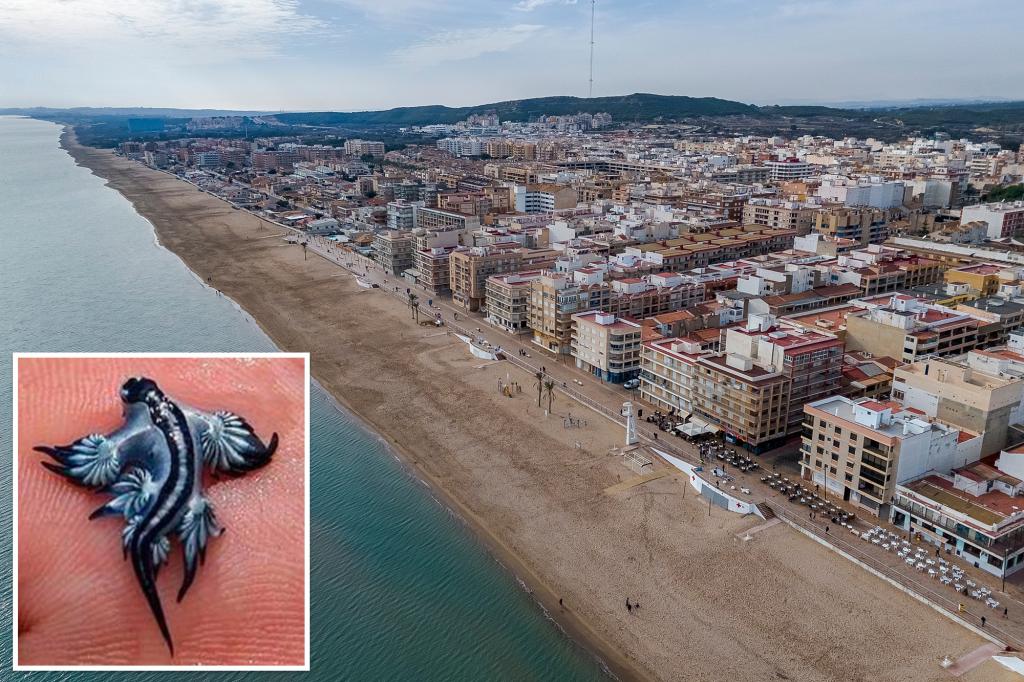
The town of Guardamar del Segura, located just north of Torrevieja on Spain’s Mediterranean Costa Blanca, implemented a swimming ban across all beaches after the rare marine animals — scientifically named Glaucus atlanticus — were discovered in the water near Vivers Beach.
Glaucus atlanticus are venomous sea creatures, otherwise known as “blue dragons.” Policia Local Guardamar / Facebook
“For motives of citizenry safety, we have banned all swimming on all of the municipal beaches until a new order,” the Guardamar police force said in a Facebook post.
Despite its beautiful appearance, the blue dragon is a potentially deadly sort of sea slug.
Measuring just 3 to 4 centimeters in length, these nudibranchs are rarely seen in the Mediterranean and are more commonly found drifting on the surface of tropical and temperate waters in the Atlantic, Pacific and Indian Oceans.
Their vivid blue coloring and wing-like tendrils give them an ethereal look, but their beauty masks a dangerous defense mechanism.
“We have banned all swimming on all of the municipal beaches until a new order,” the Guardamar police force said in response to blue dragon sightings. Policia Local Guardamar / Facebook
The blue dragon feeds on venomous prey like the Portuguese man o’ war and concentrates their stinging cells in its own tissues. This makes it more venomous than its prey, capable of delivering painful stings that can cause nausea, vomiting, skin irritation, and acute allergic reactions in humans.
Mayor José Luis Sáez confirmed the sightings and quickly issued a red flag warning, closing beaches while a “preventive device” was deployed to monitor the shoreline for more of the creatures.
The blue dragon feeds on venomous prey like the Portuguese man o’ war and concentrates their stinging cells in its own tissues. This makes it more venomous than its prey. Cover/Getty Images
Swimmers were told to rinse with saltwater and seek medical attention if they experienced stings or skin irritation.
While rare in this part of the world, their appearance is yet another reminder of the increasing unpredictability of marine ecosystems, possibly linked to climate change and shifting ocean currents.
Guardamar del Segura, known for its sunny climate, rocky cliffs, and golden beaches, draws thousands of tourists each year. The sudden beach closures came at the height of the summer season, but local officials say public safety had to take priority.
Authorities in southeastern Spain were forced to temporarily shut down a popular stretch of sand earlier this week after two venomous sea creatures known as “blue dragons” were spotted.
The town of Guardamar del Segura, located just north of Torrevieja on Spain’s Mediterranean Costa Blanca, implemented a swimming ban across all beaches after the rare marine animals — scientifically named Glaucus atlanticus — were discovered in the water near Vivers Beach.
Glaucus atlanticus are venomous sea creatures, otherwise known as “blue dragons.” Policia Local Guardamar / Facebook
“For motives of citizenry safety, we have banned all swimming on all of the municipal beaches until a new order,” the Guardamar police force said in a Facebook post.
Despite its beautiful appearance, the blue dragon is a potentially deadly sort of sea slug.
Measuring just 3 to 4 centimeters in length, these nudibranchs are rarely seen in the Mediterranean and are more commonly found drifting on the surface of tropical and temperate waters in the Atlantic, Pacific and Indian Oceans.
Their vivid blue coloring and wing-like tendrils give them an ethereal look, but their beauty masks a dangerous defense mechanism.
“We have banned all swimming on all of the municipal beaches until a new order,” the Guardamar police force said in response to blue dragon sightings. Policia Local Guardamar / Facebook
The blue dragon feeds on venomous prey like the Portuguese man o’ war and concentrates their stinging cells in its own tissues. This makes it more venomous than its prey, capable of delivering painful stings that can cause nausea, vomiting, skin irritation, and acute allergic reactions in humans.
Mayor José Luis Sáez confirmed the sightings and quickly issued a red flag warning, closing beaches while a “preventive device” was deployed to monitor the shoreline for more of the creatures.
The blue dragon feeds on venomous prey like the Portuguese man o’ war and concentrates their stinging cells in its own tissues. This makes it more venomous than its prey. Cover/Getty Images
Swimmers were told to rinse with saltwater and seek medical attention if they experienced stings or skin irritation.
While rare in this part of the world, their appearance is yet another reminder of the increasing unpredictability of marine ecosystems, possibly linked to climate change and shifting ocean currents.
Guardamar del Segura, known for its sunny climate, rocky cliffs, and golden beaches, draws thousands of tourists each year. The sudden beach closures came at the height of the summer season, but local officials say public safety had to take priority.