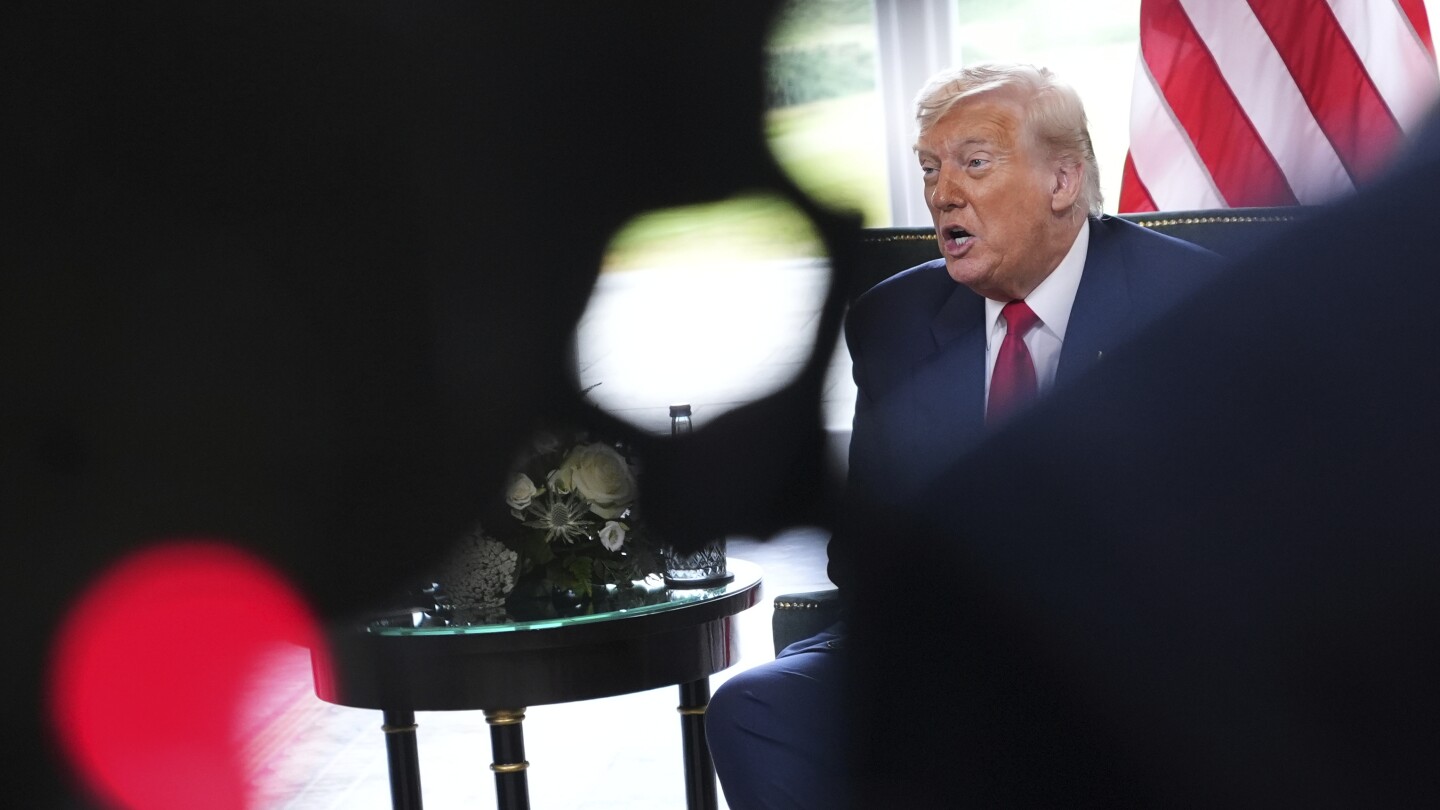
President Donald Trump on Thursday signed an executive order that set new tariffs on a wide swath of U.S. trading partners to go into effect on Aug. 7 — the next step in his trade agenda that will test the global economy and sturdiness of American alliances built up over decades.
The order was issued shortly after 7 p.m. on Thursday. It came after a flurry of tariff-related activity in the last several days, as the White House announced agreements with various nations and blocs ahead of the president’s self-imposed Friday deadline. The tariffs are being implemented at a later date in order for the rates schedule to be harmonized, according to a senior administration official who spoke to reporters on a call on the condition of anonymity.
Other tariff news we’re following:
Wall Street slumps and bond yields sink following weak hiring numbers and new tariffs: Stocks slumped in morning trading on Wall Street Friday and Treasury yields fell sharply after the government reported a sharp slowdown in hiring last month. Markets are also reacting to the latest tariff news. The S&P 500 fell 1.5% and is on track to close the week with a loss. The Dow Jones Industrial Average fell 599 points, or 1.4% as of 9:44 a.m. Eastern. The Nasdaq composite fell 2%.
Dozens of countries with no deals face new tariffs as trade deadline looms: Some of the United States’ biggest trading partners have reached agreements, or at least the outlines of one, including the European Union, the United Kingdom, and Japan. Even so, those countries face much higher tariffs than were in effect before Trump took office. And other large trading partners — most notably China and Mexico — received an extension to keep negotiating, but they will likely end up paying more.
Trump orders a 35% tariff for goods from Canada, citing a lack of cooperation on illicit drugs: Trump has raised the tariff rate on U.S. imports from Canada to 35% from 25%, effective Friday. The announcement from the White House late Thursday said Canada had failed to “do more to arrest, seize, detain or otherwise intercept … traffickers, criminals at large, and illicit drugs.”
President Donald Trump on Thursday signed an executive order that set new tariffs on a wide swath of U.S. trading partners to go into effect on Aug. 7 — the next step in his trade agenda that will test the global economy and sturdiness of American alliances built up over decades.
The order was issued shortly after 7 p.m. on Thursday. It came after a flurry of tariff-related activity in the last several days, as the White House announced agreements with various nations and blocs ahead of the president’s self-imposed Friday deadline. The tariffs are being implemented at a later date in order for the rates schedule to be harmonized, according to a senior administration official who spoke to reporters on a call on the condition of anonymity.
Other tariff news we’re following:
Wall Street slumps and bond yields sink following weak hiring numbers and new tariffs: Stocks slumped in morning trading on Wall Street Friday and Treasury yields fell sharply after the government reported a sharp slowdown in hiring last month. Markets are also reacting to the latest tariff news. The S&P 500 fell 1.5% and is on track to close the week with a loss. The Dow Jones Industrial Average fell 599 points, or 1.4% as of 9:44 a.m. Eastern. The Nasdaq composite fell 2%.
Dozens of countries with no deals face new tariffs as trade deadline looms: Some of the United States’ biggest trading partners have reached agreements, or at least the outlines of one, including the European Union, the United Kingdom, and Japan. Even so, those countries face much higher tariffs than were in effect before Trump took office. And other large trading partners — most notably China and Mexico — received an extension to keep negotiating, but they will likely end up paying more.
Trump orders a 35% tariff for goods from Canada, citing a lack of cooperation on illicit drugs: Trump has raised the tariff rate on U.S. imports from Canada to 35% from 25%, effective Friday. The announcement from the White House late Thursday said Canada had failed to “do more to arrest, seize, detain or otherwise intercept … traffickers, criminals at large, and illicit drugs.”
President Donald Trump on Thursday signed an executive order that set new tariffs on a wide swath of U.S. trading partners to go into effect on Aug. 7 — the next step in his trade agenda that will test the global economy and sturdiness of American alliances built up over decades.
The order was issued shortly after 7 p.m. on Thursday. It came after a flurry of tariff-related activity in the last several days, as the White House announced agreements with various nations and blocs ahead of the president’s self-imposed Friday deadline. The tariffs are being implemented at a later date in order for the rates schedule to be harmonized, according to a senior administration official who spoke to reporters on a call on the condition of anonymity.
Other tariff news we’re following:
Wall Street slumps and bond yields sink following weak hiring numbers and new tariffs: Stocks slumped in morning trading on Wall Street Friday and Treasury yields fell sharply after the government reported a sharp slowdown in hiring last month. Markets are also reacting to the latest tariff news. The S&P 500 fell 1.5% and is on track to close the week with a loss. The Dow Jones Industrial Average fell 599 points, or 1.4% as of 9:44 a.m. Eastern. The Nasdaq composite fell 2%.
Dozens of countries with no deals face new tariffs as trade deadline looms: Some of the United States’ biggest trading partners have reached agreements, or at least the outlines of one, including the European Union, the United Kingdom, and Japan. Even so, those countries face much higher tariffs than were in effect before Trump took office. And other large trading partners — most notably China and Mexico — received an extension to keep negotiating, but they will likely end up paying more.
Trump orders a 35% tariff for goods from Canada, citing a lack of cooperation on illicit drugs: Trump has raised the tariff rate on U.S. imports from Canada to 35% from 25%, effective Friday. The announcement from the White House late Thursday said Canada had failed to “do more to arrest, seize, detain or otherwise intercept … traffickers, criminals at large, and illicit drugs.”
President Donald Trump on Thursday signed an executive order that set new tariffs on a wide swath of U.S. trading partners to go into effect on Aug. 7 — the next step in his trade agenda that will test the global economy and sturdiness of American alliances built up over decades.
The order was issued shortly after 7 p.m. on Thursday. It came after a flurry of tariff-related activity in the last several days, as the White House announced agreements with various nations and blocs ahead of the president’s self-imposed Friday deadline. The tariffs are being implemented at a later date in order for the rates schedule to be harmonized, according to a senior administration official who spoke to reporters on a call on the condition of anonymity.
Other tariff news we’re following:
Wall Street slumps and bond yields sink following weak hiring numbers and new tariffs: Stocks slumped in morning trading on Wall Street Friday and Treasury yields fell sharply after the government reported a sharp slowdown in hiring last month. Markets are also reacting to the latest tariff news. The S&P 500 fell 1.5% and is on track to close the week with a loss. The Dow Jones Industrial Average fell 599 points, or 1.4% as of 9:44 a.m. Eastern. The Nasdaq composite fell 2%.
Dozens of countries with no deals face new tariffs as trade deadline looms: Some of the United States’ biggest trading partners have reached agreements, or at least the outlines of one, including the European Union, the United Kingdom, and Japan. Even so, those countries face much higher tariffs than were in effect before Trump took office. And other large trading partners — most notably China and Mexico — received an extension to keep negotiating, but they will likely end up paying more.
Trump orders a 35% tariff for goods from Canada, citing a lack of cooperation on illicit drugs: Trump has raised the tariff rate on U.S. imports from Canada to 35% from 25%, effective Friday. The announcement from the White House late Thursday said Canada had failed to “do more to arrest, seize, detain or otherwise intercept … traffickers, criminals at large, and illicit drugs.”
President Donald Trump on Thursday signed an executive order that set new tariffs on a wide swath of U.S. trading partners to go into effect on Aug. 7 — the next step in his trade agenda that will test the global economy and sturdiness of American alliances built up over decades.
The order was issued shortly after 7 p.m. on Thursday. It came after a flurry of tariff-related activity in the last several days, as the White House announced agreements with various nations and blocs ahead of the president’s self-imposed Friday deadline. The tariffs are being implemented at a later date in order for the rates schedule to be harmonized, according to a senior administration official who spoke to reporters on a call on the condition of anonymity.
Other tariff news we’re following:
Wall Street slumps and bond yields sink following weak hiring numbers and new tariffs: Stocks slumped in morning trading on Wall Street Friday and Treasury yields fell sharply after the government reported a sharp slowdown in hiring last month. Markets are also reacting to the latest tariff news. The S&P 500 fell 1.5% and is on track to close the week with a loss. The Dow Jones Industrial Average fell 599 points, or 1.4% as of 9:44 a.m. Eastern. The Nasdaq composite fell 2%.
Dozens of countries with no deals face new tariffs as trade deadline looms: Some of the United States’ biggest trading partners have reached agreements, or at least the outlines of one, including the European Union, the United Kingdom, and Japan. Even so, those countries face much higher tariffs than were in effect before Trump took office. And other large trading partners — most notably China and Mexico — received an extension to keep negotiating, but they will likely end up paying more.
Trump orders a 35% tariff for goods from Canada, citing a lack of cooperation on illicit drugs: Trump has raised the tariff rate on U.S. imports from Canada to 35% from 25%, effective Friday. The announcement from the White House late Thursday said Canada had failed to “do more to arrest, seize, detain or otherwise intercept … traffickers, criminals at large, and illicit drugs.”
President Donald Trump on Thursday signed an executive order that set new tariffs on a wide swath of U.S. trading partners to go into effect on Aug. 7 — the next step in his trade agenda that will test the global economy and sturdiness of American alliances built up over decades.
The order was issued shortly after 7 p.m. on Thursday. It came after a flurry of tariff-related activity in the last several days, as the White House announced agreements with various nations and blocs ahead of the president’s self-imposed Friday deadline. The tariffs are being implemented at a later date in order for the rates schedule to be harmonized, according to a senior administration official who spoke to reporters on a call on the condition of anonymity.
Other tariff news we’re following:
Wall Street slumps and bond yields sink following weak hiring numbers and new tariffs: Stocks slumped in morning trading on Wall Street Friday and Treasury yields fell sharply after the government reported a sharp slowdown in hiring last month. Markets are also reacting to the latest tariff news. The S&P 500 fell 1.5% and is on track to close the week with a loss. The Dow Jones Industrial Average fell 599 points, or 1.4% as of 9:44 a.m. Eastern. The Nasdaq composite fell 2%.
Dozens of countries with no deals face new tariffs as trade deadline looms: Some of the United States’ biggest trading partners have reached agreements, or at least the outlines of one, including the European Union, the United Kingdom, and Japan. Even so, those countries face much higher tariffs than were in effect before Trump took office. And other large trading partners — most notably China and Mexico — received an extension to keep negotiating, but they will likely end up paying more.
Trump orders a 35% tariff for goods from Canada, citing a lack of cooperation on illicit drugs: Trump has raised the tariff rate on U.S. imports from Canada to 35% from 25%, effective Friday. The announcement from the White House late Thursday said Canada had failed to “do more to arrest, seize, detain or otherwise intercept … traffickers, criminals at large, and illicit drugs.”
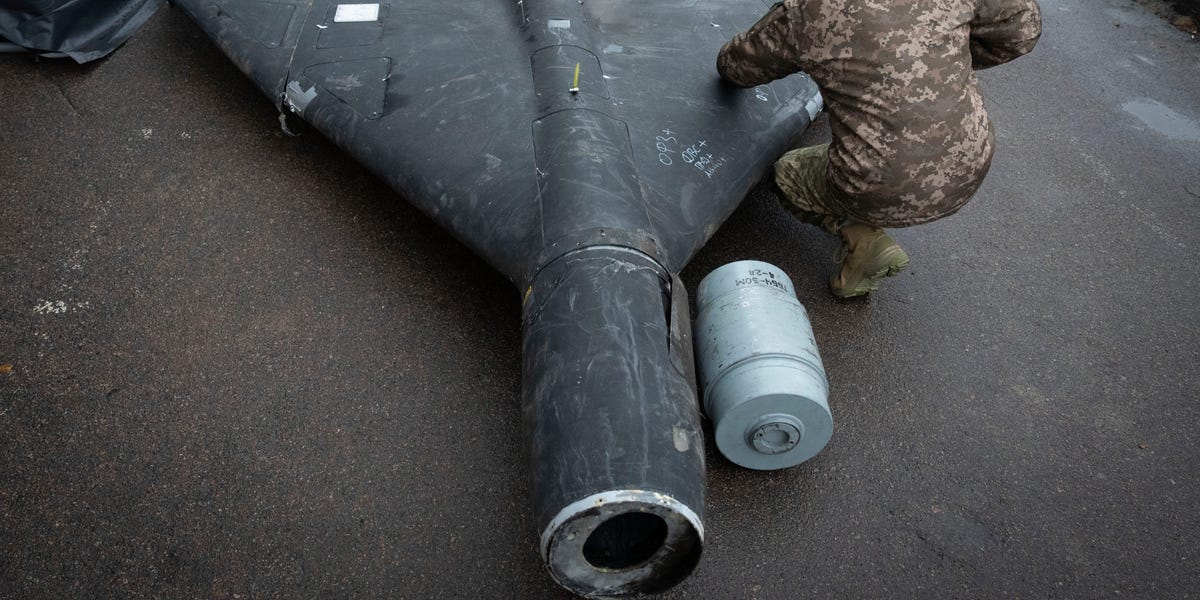
More signs are emerging that Russia is launching a new exploding drone said to fly much faster than its current Shaheds.
Ukraine’s Air Force Command reported on Wednesday that it had encountered jet-powered attack drones while defending its airspace the night before.
“A notable feature of the night attack was the use of up to eight jet-powered UAVs in the northern direction,” it wrote in a regular update.
The announcement marks one of the first official reports of Ukraine’s forces encountering the new loitering munition in combat.
In total, the Air Force Command counted 78 Shahed attack drones launched on Tuesday night.
The statement added that 51 drones were shot down or disabled by electronic warfare, interceptor drones, anti-air missiles, and mobile fire groups, which typically use truck-mounted machine guns.
The Ukrainian air force did not specify if any jet-propelled drones were shot down.
“There were 27 drone impacts recorded at 7 locations, and falling debris from downed drones at 2 locations,” Air Force Command wrote.
On Thursday, a Ukrainian Telegram channel that monitors the flight paths of Russian drones also wrote that it recorded launches of jet-propelled drones.
“On the map we’ve drawn for you, you can see the movement of cruise missiles, jet-powered Shaheds, and regular strike/decoy UAVs,” it wrote. While not an official government channel, it’s widely followed in Ukraine for city-specific alerts on incoming drones.
A major problem for Ukraine’s air defenses
Russian jet-propelled drones are believed to be closely modeled after Iran’s Shahed-238, an upgraded long-range loitering munition Tehran unveiled in November.
Moscow has not officially detailed its own version of the new weapon, but Ukraine’s intelligence and Western analysts have reported that it’s likely building a model with the Tolou‑10/13 jet engine to vastly increase the drone’s speed.
Open-source intelligence sources said as early as January that Ukraine may have shot down at least one Shahed-238-type drone, indicating limited Russian use. In June, images published by Ukrainian Telegram channels appeared to show destroyed fragments of such drones in the country.
Related stories
Business Insider tells the innovative stories you want to know
Business Insider tells the innovative stories you want to know
In both earlier reports and the Air Force Command’s update on Wednesday, it’s unclear if these were prototypes or finalized drones.
But if deployed en masse against Ukraine, the new upgraded drone could pose a major problem for Kyiv’s air defenses.
The Shahed-238 is said to be much faster than the Shahed-136, which is locally produced in Russia as the Geran-2 — the Kremlin’s main attack drone against Ukraine.
While the Shahed-136 is known to fly at top speeds of 115 mph, a Russian general told state media in December that the Shahed-238 could fly as fast as 500 mph. Extended independent analyses on the drone’s still aren’t publicly available, and it’s possible that the munition can only fly that fast while diving.
At such speed, however, the jet-powered drone would be nearly as fast as a cruise missile.
That would be a nearly impossible target for Ukraine’s mobile fire groups, or the vehicle-mounted machine gun crews it’s relied on to fight off Shahed-136s.
This year, mobile fire groups are already being overwhelmed by the sheer number of Russian Shahed-136s launched every night. To shore up the gap, Ukraine has started prioritizing interceptor drones, which also risk being rendered obsolete if jet-powered Shaheds become mainstream.
Ukraine has seen limited use of interceptor drones to down the Shahed, but has in recent months been driving hard at development to counter Russia’s growing drone waves.
Wild Hornets/Telegram
Interceptor drones, built secretly by Ukrainian companies, already need to fly much faster than the Shahed-136 since they must catch up to the loitering munition after it’s detected.
A Shahed-238 or Geran-3 moving at 500 mph would require an intercepting drone to fly nearly three times as fast as before.
“In such a case, promising antiaircraft interceptor UAVs, unfortunately, will be powerless,” wrote a Ukrainian military blogger in late June.
Ukraine does have advanced anti-air missile defenses for faster targets, such as the US-made Patriot system, which has even been reported to take down the hypersonic Kinzhal missile.
Still, Ukraine typically reserves these expensive anti-air munitions for ballistic missiles; expending them to neutralize waves of Shahed drones would be unsustainable.
More signs are emerging that Russia is launching a new exploding drone said to fly much faster than its current Shaheds.
Ukraine’s Air Force Command reported on Wednesday that it had encountered jet-powered attack drones while defending its airspace the night before.
“A notable feature of the night attack was the use of up to eight jet-powered UAVs in the northern direction,” it wrote in a regular update.
The announcement marks one of the first official reports of Ukraine’s forces encountering the new loitering munition in combat.
In total, the Air Force Command counted 78 Shahed attack drones launched on Tuesday night.
The statement added that 51 drones were shot down or disabled by electronic warfare, interceptor drones, anti-air missiles, and mobile fire groups, which typically use truck-mounted machine guns.
The Ukrainian air force did not specify if any jet-propelled drones were shot down.
“There were 27 drone impacts recorded at 7 locations, and falling debris from downed drones at 2 locations,” Air Force Command wrote.
On Thursday, a Ukrainian Telegram channel that monitors the flight paths of Russian drones also wrote that it recorded launches of jet-propelled drones.
“On the map we’ve drawn for you, you can see the movement of cruise missiles, jet-powered Shaheds, and regular strike/decoy UAVs,” it wrote. While not an official government channel, it’s widely followed in Ukraine for city-specific alerts on incoming drones.
A major problem for Ukraine’s air defenses
Russian jet-propelled drones are believed to be closely modeled after Iran’s Shahed-238, an upgraded long-range loitering munition Tehran unveiled in November.
Moscow has not officially detailed its own version of the new weapon, but Ukraine’s intelligence and Western analysts have reported that it’s likely building a model with the Tolou‑10/13 jet engine to vastly increase the drone’s speed.
Open-source intelligence sources said as early as January that Ukraine may have shot down at least one Shahed-238-type drone, indicating limited Russian use. In June, images published by Ukrainian Telegram channels appeared to show destroyed fragments of such drones in the country.
Related stories
Business Insider tells the innovative stories you want to know
Business Insider tells the innovative stories you want to know
In both earlier reports and the Air Force Command’s update on Wednesday, it’s unclear if these were prototypes or finalized drones.
But if deployed en masse against Ukraine, the new upgraded drone could pose a major problem for Kyiv’s air defenses.
The Shahed-238 is said to be much faster than the Shahed-136, which is locally produced in Russia as the Geran-2 — the Kremlin’s main attack drone against Ukraine.
While the Shahed-136 is known to fly at top speeds of 115 mph, a Russian general told state media in December that the Shahed-238 could fly as fast as 500 mph. Extended independent analyses on the drone’s still aren’t publicly available, and it’s possible that the munition can only fly that fast while diving.
At such speed, however, the jet-powered drone would be nearly as fast as a cruise missile.
That would be a nearly impossible target for Ukraine’s mobile fire groups, or the vehicle-mounted machine gun crews it’s relied on to fight off Shahed-136s.
This year, mobile fire groups are already being overwhelmed by the sheer number of Russian Shahed-136s launched every night. To shore up the gap, Ukraine has started prioritizing interceptor drones, which also risk being rendered obsolete if jet-powered Shaheds become mainstream.
Ukraine has seen limited use of interceptor drones to down the Shahed, but has in recent months been driving hard at development to counter Russia’s growing drone waves.
Wild Hornets/Telegram
Interceptor drones, built secretly by Ukrainian companies, already need to fly much faster than the Shahed-136 since they must catch up to the loitering munition after it’s detected.
A Shahed-238 or Geran-3 moving at 500 mph would require an intercepting drone to fly nearly three times as fast as before.
“In such a case, promising antiaircraft interceptor UAVs, unfortunately, will be powerless,” wrote a Ukrainian military blogger in late June.
Ukraine does have advanced anti-air missile defenses for faster targets, such as the US-made Patriot system, which has even been reported to take down the hypersonic Kinzhal missile.
Still, Ukraine typically reserves these expensive anti-air munitions for ballistic missiles; expending them to neutralize waves of Shahed drones would be unsustainable.
More signs are emerging that Russia is launching a new exploding drone said to fly much faster than its current Shaheds.
Ukraine’s Air Force Command reported on Wednesday that it had encountered jet-powered attack drones while defending its airspace the night before.
“A notable feature of the night attack was the use of up to eight jet-powered UAVs in the northern direction,” it wrote in a regular update.
The announcement marks one of the first official reports of Ukraine’s forces encountering the new loitering munition in combat.
In total, the Air Force Command counted 78 Shahed attack drones launched on Tuesday night.
The statement added that 51 drones were shot down or disabled by electronic warfare, interceptor drones, anti-air missiles, and mobile fire groups, which typically use truck-mounted machine guns.
The Ukrainian air force did not specify if any jet-propelled drones were shot down.
“There were 27 drone impacts recorded at 7 locations, and falling debris from downed drones at 2 locations,” Air Force Command wrote.
On Thursday, a Ukrainian Telegram channel that monitors the flight paths of Russian drones also wrote that it recorded launches of jet-propelled drones.
“On the map we’ve drawn for you, you can see the movement of cruise missiles, jet-powered Shaheds, and regular strike/decoy UAVs,” it wrote. While not an official government channel, it’s widely followed in Ukraine for city-specific alerts on incoming drones.
A major problem for Ukraine’s air defenses
Russian jet-propelled drones are believed to be closely modeled after Iran’s Shahed-238, an upgraded long-range loitering munition Tehran unveiled in November.
Moscow has not officially detailed its own version of the new weapon, but Ukraine’s intelligence and Western analysts have reported that it’s likely building a model with the Tolou‑10/13 jet engine to vastly increase the drone’s speed.
Open-source intelligence sources said as early as January that Ukraine may have shot down at least one Shahed-238-type drone, indicating limited Russian use. In June, images published by Ukrainian Telegram channels appeared to show destroyed fragments of such drones in the country.
Related stories
Business Insider tells the innovative stories you want to know
Business Insider tells the innovative stories you want to know
In both earlier reports and the Air Force Command’s update on Wednesday, it’s unclear if these were prototypes or finalized drones.
But if deployed en masse against Ukraine, the new upgraded drone could pose a major problem for Kyiv’s air defenses.
The Shahed-238 is said to be much faster than the Shahed-136, which is locally produced in Russia as the Geran-2 — the Kremlin’s main attack drone against Ukraine.
While the Shahed-136 is known to fly at top speeds of 115 mph, a Russian general told state media in December that the Shahed-238 could fly as fast as 500 mph. Extended independent analyses on the drone’s still aren’t publicly available, and it’s possible that the munition can only fly that fast while diving.
At such speed, however, the jet-powered drone would be nearly as fast as a cruise missile.
That would be a nearly impossible target for Ukraine’s mobile fire groups, or the vehicle-mounted machine gun crews it’s relied on to fight off Shahed-136s.
This year, mobile fire groups are already being overwhelmed by the sheer number of Russian Shahed-136s launched every night. To shore up the gap, Ukraine has started prioritizing interceptor drones, which also risk being rendered obsolete if jet-powered Shaheds become mainstream.
Ukraine has seen limited use of interceptor drones to down the Shahed, but has in recent months been driving hard at development to counter Russia’s growing drone waves.
Wild Hornets/Telegram
Interceptor drones, built secretly by Ukrainian companies, already need to fly much faster than the Shahed-136 since they must catch up to the loitering munition after it’s detected.
A Shahed-238 or Geran-3 moving at 500 mph would require an intercepting drone to fly nearly three times as fast as before.
“In such a case, promising antiaircraft interceptor UAVs, unfortunately, will be powerless,” wrote a Ukrainian military blogger in late June.
Ukraine does have advanced anti-air missile defenses for faster targets, such as the US-made Patriot system, which has even been reported to take down the hypersonic Kinzhal missile.
Still, Ukraine typically reserves these expensive anti-air munitions for ballistic missiles; expending them to neutralize waves of Shahed drones would be unsustainable.