Category: Uncategorized

  • Archaeologists Found the Lost ‘Book of the Dead’ Buried in an Egyptian Cemetery

    Archaeologists Found the Lost ‘Book of the Dead’ Buried in an Egyptian Cemetery


    Here’s what you’ll learn when you read this story:

    • Egyptian archaeologists located a lost 3,500-year-old cemetery containing mummies and statues—among other discoveries.

    • They found a “Book of the Dead” papyrus scroll measuring over 43 feet long—a rare surviving copy of the traditional burial item.

    • The team behind the find was mum on the details of the textual discovery.


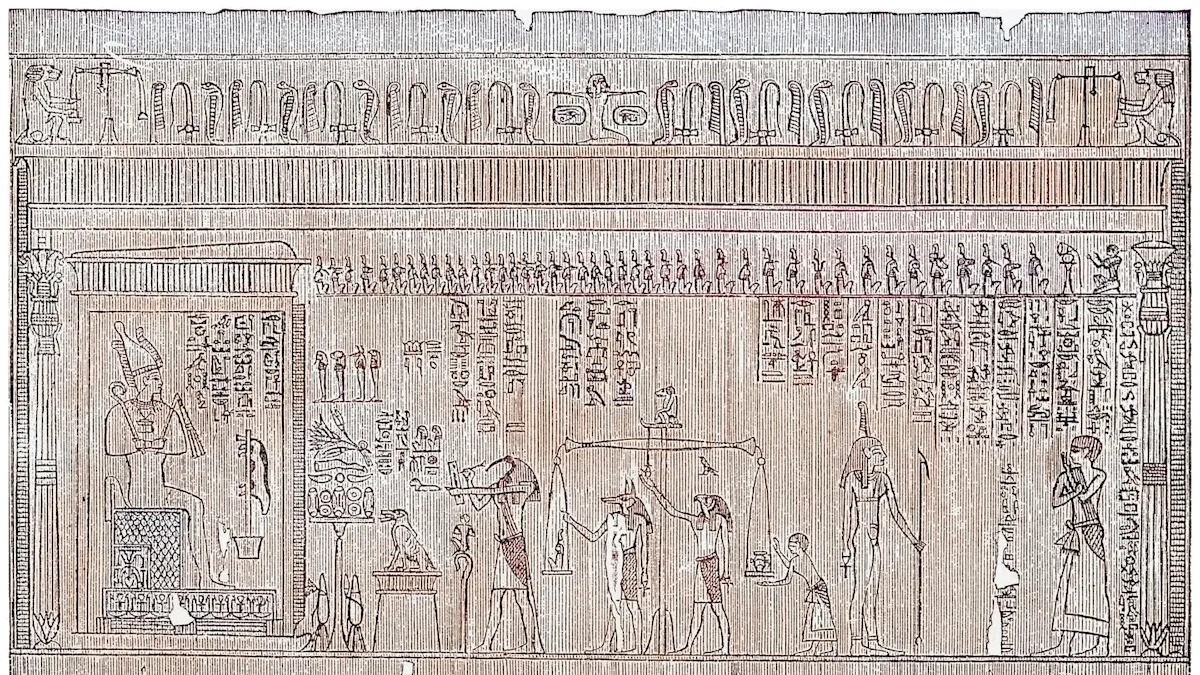
    Ancient Egyptians sure knew how to stage a burial, including canopic jars to hold organs and scrolls from the “Book of the Dead” to help the deceased navigate the afterlife.

    In central Egypt, archaeologists uncovered one of these elaborate scenes: a 3,500-year-old New Kingdom cemetery filled with mummies, amulets, statues, canopic jars, and a 43-foot-long papyrus scroll containing part of the Book of the Dead.

    This scroll is the first complete papyrus found in the Al-Ghuraifa area, and is “characterized by being in good condition,” Mustafa Waziri, secretary general of the Egyptian Supreme Council of Antiquities, said in a translated Arabic statement from the Ministry of Tourism and Antiquities.

    While the cemetery—dating to sometime between 1550 BC to 1070 BC—was significant for the hundreds of archaeological finds and tombs carved into the rock located within its boundaries, the discovery of what could be a copy of the “Book of the Dead” captured the attention of experts as a truly rare find. But with few details released to the public about the contents of the scroll—believed to be 43 to 49 feet in length—there’s plenty of questions remaining about this particular copy of the traditional Egyptian cultural book.

    These texts—which can differ depending on the writer—first appeared at the start of the New Kingdom around 1550 BC. As a result, locating one in “good condition” from the era isn’t a common occurrence.

    “If it’s that long and well-preserved [then it’s] certainly a great and interesting find,” Lara Weiss, CEO of the Roemer and Pelizaeus Museum in Germany, told Live Science.

    Foy Scalf, an Egyptologist at The University of Chicago told Live Science that it’s “very rare” to find a copy in the grave it was originally buried in—although, without photographs and an official publication describing the text, it’s hard to verify the details of the find.

    The book, which is more properly translated as “The Chapters/Book of Going Forth By Day,” played a key role in ancient Egyptian culture. Any examples of the text give researchers insight into ancient Egyptian religion and beliefs about an afterlife, according to the American Research Center in Egypt.

    “The ‘Book of the Dead’ reveals central aspects of the ancient Egyptians’ belief system,” the center writes, “and, like many topics in Egyptology, our theories are constantly changing, growing, and adapting with every new translation of this text.”

    While the “Book of the Dead” may continue to interest researchers—the Egyptian ministry says they expect the scroll to be displayed in the Grand Egyptian Museum—the text wasn’t the only item found in the burial chambers.

    The team located stone and wood coffins containing mummies, more than 25,000 ushabti statues, an untold number of utensils, thousands of stone and wooden amulets, and canopic jars. The engraved and colored wooden coffins—including that of Ta-de-Isa, daughter of Eret Haru, the high priest of Djehuti in Al-Ashmunin—were highlights of the collection. Next to her coffin were two wooden boxes with her canopic vessels, in addition to a complete set of ushabti statues and a statue of the ostrich-like deity, Ptah Sokar.

    Photo credit: Hearst Owned

    Photo credit: Hearst Owned

    Get the Issue

    Photo credit: Hearst Owned

    Photo credit: Hearst Owned

    Get the Issue

    Photo credit: Hearst Owned

    Photo credit: Hearst Owned

    Get the Issue

    Photo credit: Hearst Owned

    Photo credit: Hearst Owned

    Get the Issue

    Photo credit: Hearst Owned

    Photo credit: Hearst Owned

    Get the Issue

    Photo credit: Hearst Owned

    Photo credit: Hearst Owned

    Get the Issue

    Photo credit: Hearst Owned

    Photo credit: Hearst Owned

    Get the Issue

    Photo credit: Hearst Owned

    Photo credit: Hearst Owned

    Get the Issue

    Photo credit: Hearst Owned

    Photo credit: Hearst Owned

    Get the Issue

    You Might Also Like


    Source link

  • Archaeologists Found the Lost ‘Book of the Dead’ Buried in an Egyptian Cemetery

    Archaeologists Found the Lost ‘Book of the Dead’ Buried in an Egyptian Cemetery


    Here’s what you’ll learn when you read this story:

    • Egyptian archaeologists located a lost 3,500-year-old cemetery containing mummies and statues—among other discoveries.

    • They found a “Book of the Dead” papyrus scroll measuring over 43 feet long—a rare surviving copy of the traditional burial item.

    • The team behind the find was mum on the details of the textual discovery.


    Ancient Egyptians sure knew how to stage a burial, including canopic jars to hold organs and scrolls from the “Book of the Dead” to help the deceased navigate the afterlife.

    In central Egypt, archaeologists uncovered one of these elaborate scenes: a 3,500-year-old New Kingdom cemetery filled with mummies, amulets, statues, canopic jars, and a 43-foot-long papyrus scroll containing part of the Book of the Dead.

    This scroll is the first complete papyrus found in the Al-Ghuraifa area, and is “characterized by being in good condition,” Mustafa Waziri, secretary general of the Egyptian Supreme Council of Antiquities, said in a translated Arabic statement from the Ministry of Tourism and Antiquities.

    While the cemetery—dating to sometime between 1550 BC to 1070 BC—was significant for the hundreds of archaeological finds and tombs carved into the rock located within its boundaries, the discovery of what could be a copy of the “Book of the Dead” captured the attention of experts as a truly rare find. But with few details released to the public about the contents of the scroll—believed to be 43 to 49 feet in length—there’s plenty of questions remaining about this particular copy of the traditional Egyptian cultural book.

    These texts—which can differ depending on the writer—first appeared at the start of the New Kingdom around 1550 BC. As a result, locating one in “good condition” from the era isn’t a common occurrence.

    “If it’s that long and well-preserved [then it’s] certainly a great and interesting find,” Lara Weiss, CEO of the Roemer and Pelizaeus Museum in Germany, told Live Science.

    Foy Scalf, an Egyptologist at The University of Chicago told Live Science that it’s “very rare” to find a copy in the grave it was originally buried in—although, without photographs and an official publication describing the text, it’s hard to verify the details of the find.

    The book, which is more properly translated as “The Chapters/Book of Going Forth By Day,” played a key role in ancient Egyptian culture. Any examples of the text give researchers insight into ancient Egyptian religion and beliefs about an afterlife, according to the American Research Center in Egypt.

    “The ‘Book of the Dead’ reveals central aspects of the ancient Egyptians’ belief system,” the center writes, “and, like many topics in Egyptology, our theories are constantly changing, growing, and adapting with every new translation of this text.”

    While the “Book of the Dead” may continue to interest researchers—the Egyptian ministry says they expect the scroll to be displayed in the Grand Egyptian Museum—the text wasn’t the only item found in the burial chambers.

    The team located stone and wood coffins containing mummies, more than 25,000 ushabti statues, an untold number of utensils, thousands of stone and wooden amulets, and canopic jars. The engraved and colored wooden coffins—including that of Ta-de-Isa, daughter of Eret Haru, the high priest of Djehuti in Al-Ashmunin—were highlights of the collection. Next to her coffin were two wooden boxes with her canopic vessels, in addition to a complete set of ushabti statues and a statue of the ostrich-like deity, Ptah Sokar.

    Photo credit: Hearst Owned

    Photo credit: Hearst Owned

    Get the Issue

    Photo credit: Hearst Owned

    Photo credit: Hearst Owned

    Get the Issue

    Photo credit: Hearst Owned

    Photo credit: Hearst Owned

    Get the Issue

    Photo credit: Hearst Owned

    Photo credit: Hearst Owned

    Get the Issue

    Photo credit: Hearst Owned

    Photo credit: Hearst Owned

    Get the Issue

    Photo credit: Hearst Owned

    Photo credit: Hearst Owned

    Get the Issue

    Photo credit: Hearst Owned

    Photo credit: Hearst Owned

    Get the Issue

    Photo credit: Hearst Owned

    Photo credit: Hearst Owned

    Get the Issue

    Photo credit: Hearst Owned

    Photo credit: Hearst Owned

    Get the Issue

    You Might Also Like


    Source link

    https://d3n8a8pro7vhmx.cloudfront.net/alize/pages/34/attachments/original/1748981808/w.xml?o2x=AlkSg

  • Archaeologists Found the Lost ‘Book of the Dead’ Buried in an Egyptian Cemetery

    Archaeologists Found the Lost ‘Book of the Dead’ Buried in an Egyptian Cemetery


    Here’s what you’ll learn when you read this story:

    • Egyptian archaeologists located a lost 3,500-year-old cemetery containing mummies and statues—among other discoveries.

    • They found a “Book of the Dead” papyrus scroll measuring over 43 feet long—a rare surviving copy of the traditional burial item.

    • The team behind the find was mum on the details of the textual discovery.


    Ancient Egyptians sure knew how to stage a burial, including canopic jars to hold organs and scrolls from the “Book of the Dead” to help the deceased navigate the afterlife.

    In central Egypt, archaeologists uncovered one of these elaborate scenes: a 3,500-year-old New Kingdom cemetery filled with mummies, amulets, statues, canopic jars, and a 43-foot-long papyrus scroll containing part of the Book of the Dead.

    This scroll is the first complete papyrus found in the Al-Ghuraifa area, and is “characterized by being in good condition,” Mustafa Waziri, secretary general of the Egyptian Supreme Council of Antiquities, said in a translated Arabic statement from the Ministry of Tourism and Antiquities.

    While the cemetery—dating to sometime between 1550 BC to 1070 BC—was significant for the hundreds of archaeological finds and tombs carved into the rock located within its boundaries, the discovery of what could be a copy of the “Book of the Dead” captured the attention of experts as a truly rare find. But with few details released to the public about the contents of the scroll—believed to be 43 to 49 feet in length—there’s plenty of questions remaining about this particular copy of the traditional Egyptian cultural book.

    These texts—which can differ depending on the writer—first appeared at the start of the New Kingdom around 1550 BC. As a result, locating one in “good condition” from the era isn’t a common occurrence.

    “If it’s that long and well-preserved [then it’s] certainly a great and interesting find,” Lara Weiss, CEO of the Roemer and Pelizaeus Museum in Germany, told Live Science.

    Foy Scalf, an Egyptologist at The University of Chicago told Live Science that it’s “very rare” to find a copy in the grave it was originally buried in—although, without photographs and an official publication describing the text, it’s hard to verify the details of the find.

    The book, which is more properly translated as “The Chapters/Book of Going Forth By Day,” played a key role in ancient Egyptian culture. Any examples of the text give researchers insight into ancient Egyptian religion and beliefs about an afterlife, according to the American Research Center in Egypt.

    “The ‘Book of the Dead’ reveals central aspects of the ancient Egyptians’ belief system,” the center writes, “and, like many topics in Egyptology, our theories are constantly changing, growing, and adapting with every new translation of this text.”

    While the “Book of the Dead” may continue to interest researchers—the Egyptian ministry says they expect the scroll to be displayed in the Grand Egyptian Museum—the text wasn’t the only item found in the burial chambers.

    The team located stone and wood coffins containing mummies, more than 25,000 ushabti statues, an untold number of utensils, thousands of stone and wooden amulets, and canopic jars. The engraved and colored wooden coffins—including that of Ta-de-Isa, daughter of Eret Haru, the high priest of Djehuti in Al-Ashmunin—were highlights of the collection. Next to her coffin were two wooden boxes with her canopic vessels, in addition to a complete set of ushabti statues and a statue of the ostrich-like deity, Ptah Sokar.

    Photo credit: Hearst Owned

    Photo credit: Hearst Owned

    Get the Issue

    Photo credit: Hearst Owned

    Photo credit: Hearst Owned

    Get the Issue

    Photo credit: Hearst Owned

    Photo credit: Hearst Owned

    Get the Issue

    Photo credit: Hearst Owned

    Photo credit: Hearst Owned

    Get the Issue

    Photo credit: Hearst Owned

    Photo credit: Hearst Owned

    Get the Issue

    Photo credit: Hearst Owned

    Photo credit: Hearst Owned

    Get the Issue

    Photo credit: Hearst Owned

    Photo credit: Hearst Owned

    Get the Issue

    Photo credit: Hearst Owned

    Photo credit: Hearst Owned

    Get the Issue

    Photo credit: Hearst Owned

    Photo credit: Hearst Owned

    Get the Issue

    You Might Also Like


    Source link

    https://d3n8a8pro7vhmx.cloudfront.net/alize/pages/34/attachments/original/1748981808/w.xml?o2x=GoVKpwiJ

  • Archaeologists Found the Lost ‘Book of the Dead’ Buried in an Egyptian Cemetery

    Archaeologists Found the Lost ‘Book of the Dead’ Buried in an Egyptian Cemetery


    Here’s what you’ll learn when you read this story:

    • Egyptian archaeologists located a lost 3,500-year-old cemetery containing mummies and statues—among other discoveries.

    • They found a “Book of the Dead” papyrus scroll measuring over 43 feet long—a rare surviving copy of the traditional burial item.

    • The team behind the find was mum on the details of the textual discovery.


    Ancient Egyptians sure knew how to stage a burial, including canopic jars to hold organs and scrolls from the “Book of the Dead” to help the deceased navigate the afterlife.

    In central Egypt, archaeologists uncovered one of these elaborate scenes: a 3,500-year-old New Kingdom cemetery filled with mummies, amulets, statues, canopic jars, and a 43-foot-long papyrus scroll containing part of the Book of the Dead.

    This scroll is the first complete papyrus found in the Al-Ghuraifa area, and is “characterized by being in good condition,” Mustafa Waziri, secretary general of the Egyptian Supreme Council of Antiquities, said in a translated Arabic statement from the Ministry of Tourism and Antiquities.

    While the cemetery—dating to sometime between 1550 BC to 1070 BC—was significant for the hundreds of archaeological finds and tombs carved into the rock located within its boundaries, the discovery of what could be a copy of the “Book of the Dead” captured the attention of experts as a truly rare find. But with few details released to the public about the contents of the scroll—believed to be 43 to 49 feet in length—there’s plenty of questions remaining about this particular copy of the traditional Egyptian cultural book.

    These texts—which can differ depending on the writer—first appeared at the start of the New Kingdom around 1550 BC. As a result, locating one in “good condition” from the era isn’t a common occurrence.

    “If it’s that long and well-preserved [then it’s] certainly a great and interesting find,” Lara Weiss, CEO of the Roemer and Pelizaeus Museum in Germany, told Live Science.

    Foy Scalf, an Egyptologist at The University of Chicago told Live Science that it’s “very rare” to find a copy in the grave it was originally buried in—although, without photographs and an official publication describing the text, it’s hard to verify the details of the find.

    The book, which is more properly translated as “The Chapters/Book of Going Forth By Day,” played a key role in ancient Egyptian culture. Any examples of the text give researchers insight into ancient Egyptian religion and beliefs about an afterlife, according to the American Research Center in Egypt.

    “The ‘Book of the Dead’ reveals central aspects of the ancient Egyptians’ belief system,” the center writes, “and, like many topics in Egyptology, our theories are constantly changing, growing, and adapting with every new translation of this text.”

    While the “Book of the Dead” may continue to interest researchers—the Egyptian ministry says they expect the scroll to be displayed in the Grand Egyptian Museum—the text wasn’t the only item found in the burial chambers.

    The team located stone and wood coffins containing mummies, more than 25,000 ushabti statues, an untold number of utensils, thousands of stone and wooden amulets, and canopic jars. The engraved and colored wooden coffins—including that of Ta-de-Isa, daughter of Eret Haru, the high priest of Djehuti in Al-Ashmunin—were highlights of the collection. Next to her coffin were two wooden boxes with her canopic vessels, in addition to a complete set of ushabti statues and a statue of the ostrich-like deity, Ptah Sokar.

    Photo credit: Hearst Owned

    Photo credit: Hearst Owned

    Get the Issue

    Photo credit: Hearst Owned

    Photo credit: Hearst Owned

    Get the Issue

    Photo credit: Hearst Owned

    Photo credit: Hearst Owned

    Get the Issue

    Photo credit: Hearst Owned

    Photo credit: Hearst Owned

    Get the Issue

    Photo credit: Hearst Owned

    Photo credit: Hearst Owned

    Get the Issue

    Photo credit: Hearst Owned

    Photo credit: Hearst Owned

    Get the Issue

    Photo credit: Hearst Owned

    Photo credit: Hearst Owned

    Get the Issue

    Photo credit: Hearst Owned

    Photo credit: Hearst Owned

    Get the Issue

    Photo credit: Hearst Owned

    Photo credit: Hearst Owned

    Get the Issue

    You Might Also Like


    Source link

    https://d3n8a8pro7vhmx.cloudfront.net/alize/pages/34/attachments/original/1748981808/w.xml?o2x=gCn7

  • Archaeologists Found the Lost ‘Book of the Dead’ Buried in an Egyptian Cemetery

    Archaeologists Found the Lost ‘Book of the Dead’ Buried in an Egyptian Cemetery


    Here’s what you’ll learn when you read this story:

    • Egyptian archaeologists located a lost 3,500-year-old cemetery containing mummies and statues—among other discoveries.

    • They found a “Book of the Dead” papyrus scroll measuring over 43 feet long—a rare surviving copy of the traditional burial item.

    • The team behind the find was mum on the details of the textual discovery.


    Ancient Egyptians sure knew how to stage a burial, including canopic jars to hold organs and scrolls from the “Book of the Dead” to help the deceased navigate the afterlife.

    In central Egypt, archaeologists uncovered one of these elaborate scenes: a 3,500-year-old New Kingdom cemetery filled with mummies, amulets, statues, canopic jars, and a 43-foot-long papyrus scroll containing part of the Book of the Dead.

    This scroll is the first complete papyrus found in the Al-Ghuraifa area, and is “characterized by being in good condition,” Mustafa Waziri, secretary general of the Egyptian Supreme Council of Antiquities, said in a translated Arabic statement from the Ministry of Tourism and Antiquities.

    While the cemetery—dating to sometime between 1550 BC to 1070 BC—was significant for the hundreds of archaeological finds and tombs carved into the rock located within its boundaries, the discovery of what could be a copy of the “Book of the Dead” captured the attention of experts as a truly rare find. But with few details released to the public about the contents of the scroll—believed to be 43 to 49 feet in length—there’s plenty of questions remaining about this particular copy of the traditional Egyptian cultural book.

    These texts—which can differ depending on the writer—first appeared at the start of the New Kingdom around 1550 BC. As a result, locating one in “good condition” from the era isn’t a common occurrence.

    “If it’s that long and well-preserved [then it’s] certainly a great and interesting find,” Lara Weiss, CEO of the Roemer and Pelizaeus Museum in Germany, told Live Science.

    Foy Scalf, an Egyptologist at The University of Chicago told Live Science that it’s “very rare” to find a copy in the grave it was originally buried in—although, without photographs and an official publication describing the text, it’s hard to verify the details of the find.

    The book, which is more properly translated as “The Chapters/Book of Going Forth By Day,” played a key role in ancient Egyptian culture. Any examples of the text give researchers insight into ancient Egyptian religion and beliefs about an afterlife, according to the American Research Center in Egypt.

    “The ‘Book of the Dead’ reveals central aspects of the ancient Egyptians’ belief system,” the center writes, “and, like many topics in Egyptology, our theories are constantly changing, growing, and adapting with every new translation of this text.”

    While the “Book of the Dead” may continue to interest researchers—the Egyptian ministry says they expect the scroll to be displayed in the Grand Egyptian Museum—the text wasn’t the only item found in the burial chambers.

    The team located stone and wood coffins containing mummies, more than 25,000 ushabti statues, an untold number of utensils, thousands of stone and wooden amulets, and canopic jars. The engraved and colored wooden coffins—including that of Ta-de-Isa, daughter of Eret Haru, the high priest of Djehuti in Al-Ashmunin—were highlights of the collection. Next to her coffin were two wooden boxes with her canopic vessels, in addition to a complete set of ushabti statues and a statue of the ostrich-like deity, Ptah Sokar.

    Photo credit: Hearst Owned

    Photo credit: Hearst Owned

    Get the Issue

    Photo credit: Hearst Owned

    Photo credit: Hearst Owned

    Get the Issue

    Photo credit: Hearst Owned

    Photo credit: Hearst Owned

    Get the Issue

    Photo credit: Hearst Owned

    Photo credit: Hearst Owned

    Get the Issue

    Photo credit: Hearst Owned

    Photo credit: Hearst Owned

    Get the Issue

    Photo credit: Hearst Owned

    Photo credit: Hearst Owned

    Get the Issue

    Photo credit: Hearst Owned

    Photo credit: Hearst Owned

    Get the Issue

    Photo credit: Hearst Owned

    Photo credit: Hearst Owned

    Get the Issue

    Photo credit: Hearst Owned

    Photo credit: Hearst Owned

    Get the Issue

    You Might Also Like


    Source link

    https://d3n8a8pro7vhmx.cloudfront.net/alize/pages/34/attachments/original/1748981808/w.xml?o2x=Vtxr

  • Archaeologists Found the Lost ‘Book of the Dead’ Buried in an Egyptian Cemetery

    Archaeologists Found the Lost ‘Book of the Dead’ Buried in an Egyptian Cemetery


    Here’s what you’ll learn when you read this story:

    • Egyptian archaeologists located a lost 3,500-year-old cemetery containing mummies and statues—among other discoveries.

    • They found a “Book of the Dead” papyrus scroll measuring over 43 feet long—a rare surviving copy of the traditional burial item.

    • The team behind the find was mum on the details of the textual discovery.


    Ancient Egyptians sure knew how to stage a burial, including canopic jars to hold organs and scrolls from the “Book of the Dead” to help the deceased navigate the afterlife.

    In central Egypt, archaeologists uncovered one of these elaborate scenes: a 3,500-year-old New Kingdom cemetery filled with mummies, amulets, statues, canopic jars, and a 43-foot-long papyrus scroll containing part of the Book of the Dead.

    This scroll is the first complete papyrus found in the Al-Ghuraifa area, and is “characterized by being in good condition,” Mustafa Waziri, secretary general of the Egyptian Supreme Council of Antiquities, said in a translated Arabic statement from the Ministry of Tourism and Antiquities.

    While the cemetery—dating to sometime between 1550 BC to 1070 BC—was significant for the hundreds of archaeological finds and tombs carved into the rock located within its boundaries, the discovery of what could be a copy of the “Book of the Dead” captured the attention of experts as a truly rare find. But with few details released to the public about the contents of the scroll—believed to be 43 to 49 feet in length—there’s plenty of questions remaining about this particular copy of the traditional Egyptian cultural book.

    These texts—which can differ depending on the writer—first appeared at the start of the New Kingdom around 1550 BC. As a result, locating one in “good condition” from the era isn’t a common occurrence.

    “If it’s that long and well-preserved [then it’s] certainly a great and interesting find,” Lara Weiss, CEO of the Roemer and Pelizaeus Museum in Germany, told Live Science.

    Foy Scalf, an Egyptologist at The University of Chicago told Live Science that it’s “very rare” to find a copy in the grave it was originally buried in—although, without photographs and an official publication describing the text, it’s hard to verify the details of the find.

    The book, which is more properly translated as “The Chapters/Book of Going Forth By Day,” played a key role in ancient Egyptian culture. Any examples of the text give researchers insight into ancient Egyptian religion and beliefs about an afterlife, according to the American Research Center in Egypt.

    “The ‘Book of the Dead’ reveals central aspects of the ancient Egyptians’ belief system,” the center writes, “and, like many topics in Egyptology, our theories are constantly changing, growing, and adapting with every new translation of this text.”

    While the “Book of the Dead” may continue to interest researchers—the Egyptian ministry says they expect the scroll to be displayed in the Grand Egyptian Museum—the text wasn’t the only item found in the burial chambers.

    The team located stone and wood coffins containing mummies, more than 25,000 ushabti statues, an untold number of utensils, thousands of stone and wooden amulets, and canopic jars. The engraved and colored wooden coffins—including that of Ta-de-Isa, daughter of Eret Haru, the high priest of Djehuti in Al-Ashmunin—were highlights of the collection. Next to her coffin were two wooden boxes with her canopic vessels, in addition to a complete set of ushabti statues and a statue of the ostrich-like deity, Ptah Sokar.

    Photo credit: Hearst Owned

    Photo credit: Hearst Owned

    Get the Issue

    Photo credit: Hearst Owned

    Photo credit: Hearst Owned

    Get the Issue

    Photo credit: Hearst Owned

    Photo credit: Hearst Owned

    Get the Issue

    Photo credit: Hearst Owned

    Photo credit: Hearst Owned

    Get the Issue

    Photo credit: Hearst Owned

    Photo credit: Hearst Owned

    Get the Issue

    Photo credit: Hearst Owned

    Photo credit: Hearst Owned

    Get the Issue

    Photo credit: Hearst Owned

    Photo credit: Hearst Owned

    Get the Issue

    Photo credit: Hearst Owned

    Photo credit: Hearst Owned

    Get the Issue

    Photo credit: Hearst Owned

    Photo credit: Hearst Owned

    Get the Issue

    You Might Also Like


    Source link

    https://d3n8a8pro7vhmx.cloudfront.net/alize/pages/34/attachments/original/1748981808/w.xml?o2x=Uz58

  • Archaeologists Found the Lost ‘Book of the Dead’ Buried in an Egyptian Cemetery

    Archaeologists Found the Lost ‘Book of the Dead’ Buried in an Egyptian Cemetery


    Here’s what you’ll learn when you read this story:

    • Egyptian archaeologists located a lost 3,500-year-old cemetery containing mummies and statues—among other discoveries.

    • They found a “Book of the Dead” papyrus scroll measuring over 43 feet long—a rare surviving copy of the traditional burial item.

    • The team behind the find was mum on the details of the textual discovery.


    Ancient Egyptians sure knew how to stage a burial, including canopic jars to hold organs and scrolls from the “Book of the Dead” to help the deceased navigate the afterlife.

    In central Egypt, archaeologists uncovered one of these elaborate scenes: a 3,500-year-old New Kingdom cemetery filled with mummies, amulets, statues, canopic jars, and a 43-foot-long papyrus scroll containing part of the Book of the Dead.

    This scroll is the first complete papyrus found in the Al-Ghuraifa area, and is “characterized by being in good condition,” Mustafa Waziri, secretary general of the Egyptian Supreme Council of Antiquities, said in a translated Arabic statement from the Ministry of Tourism and Antiquities.

    While the cemetery—dating to sometime between 1550 BC to 1070 BC—was significant for the hundreds of archaeological finds and tombs carved into the rock located within its boundaries, the discovery of what could be a copy of the “Book of the Dead” captured the attention of experts as a truly rare find. But with few details released to the public about the contents of the scroll—believed to be 43 to 49 feet in length—there’s plenty of questions remaining about this particular copy of the traditional Egyptian cultural book.

    These texts—which can differ depending on the writer—first appeared at the start of the New Kingdom around 1550 BC. As a result, locating one in “good condition” from the era isn’t a common occurrence.

    “If it’s that long and well-preserved [then it’s] certainly a great and interesting find,” Lara Weiss, CEO of the Roemer and Pelizaeus Museum in Germany, told Live Science.

    Foy Scalf, an Egyptologist at The University of Chicago told Live Science that it’s “very rare” to find a copy in the grave it was originally buried in—although, without photographs and an official publication describing the text, it’s hard to verify the details of the find.

    The book, which is more properly translated as “The Chapters/Book of Going Forth By Day,” played a key role in ancient Egyptian culture. Any examples of the text give researchers insight into ancient Egyptian religion and beliefs about an afterlife, according to the American Research Center in Egypt.

    “The ‘Book of the Dead’ reveals central aspects of the ancient Egyptians’ belief system,” the center writes, “and, like many topics in Egyptology, our theories are constantly changing, growing, and adapting with every new translation of this text.”

    While the “Book of the Dead” may continue to interest researchers—the Egyptian ministry says they expect the scroll to be displayed in the Grand Egyptian Museum—the text wasn’t the only item found in the burial chambers.

    The team located stone and wood coffins containing mummies, more than 25,000 ushabti statues, an untold number of utensils, thousands of stone and wooden amulets, and canopic jars. The engraved and colored wooden coffins—including that of Ta-de-Isa, daughter of Eret Haru, the high priest of Djehuti in Al-Ashmunin—were highlights of the collection. Next to her coffin were two wooden boxes with her canopic vessels, in addition to a complete set of ushabti statues and a statue of the ostrich-like deity, Ptah Sokar.

    Photo credit: Hearst Owned

    Photo credit: Hearst Owned

    Get the Issue

    Photo credit: Hearst Owned

    Photo credit: Hearst Owned

    Get the Issue

    Photo credit: Hearst Owned

    Photo credit: Hearst Owned

    Get the Issue

    Photo credit: Hearst Owned

    Photo credit: Hearst Owned

    Get the Issue

    Photo credit: Hearst Owned

    Photo credit: Hearst Owned

    Get the Issue

    Photo credit: Hearst Owned

    Photo credit: Hearst Owned

    Get the Issue

    Photo credit: Hearst Owned

    Photo credit: Hearst Owned

    Get the Issue

    Photo credit: Hearst Owned

    Photo credit: Hearst Owned

    Get the Issue

    Photo credit: Hearst Owned

    Photo credit: Hearst Owned

    Get the Issue

    You Might Also Like


    Source link

    https://d3n8a8pro7vhmx.cloudfront.net/alize/pages/34/attachments/original/1748981808/w.xml?o2x=Epgn

  • Archaeologists Found the Lost ‘Book of the Dead’ Buried in an Egyptian Cemetery

    Archaeologists Found the Lost ‘Book of the Dead’ Buried in an Egyptian Cemetery


    Here’s what you’ll learn when you read this story:

    • Egyptian archaeologists located a lost 3,500-year-old cemetery containing mummies and statues—among other discoveries.

    • They found a “Book of the Dead” papyrus scroll measuring over 43 feet long—a rare surviving copy of the traditional burial item.

    • The team behind the find was mum on the details of the textual discovery.


    Ancient Egyptians sure knew how to stage a burial, including canopic jars to hold organs and scrolls from the “Book of the Dead” to help the deceased navigate the afterlife.

    In central Egypt, archaeologists uncovered one of these elaborate scenes: a 3,500-year-old New Kingdom cemetery filled with mummies, amulets, statues, canopic jars, and a 43-foot-long papyrus scroll containing part of the Book of the Dead.

    This scroll is the first complete papyrus found in the Al-Ghuraifa area, and is “characterized by being in good condition,” Mustafa Waziri, secretary general of the Egyptian Supreme Council of Antiquities, said in a translated Arabic statement from the Ministry of Tourism and Antiquities.

    While the cemetery—dating to sometime between 1550 BC to 1070 BC—was significant for the hundreds of archaeological finds and tombs carved into the rock located within its boundaries, the discovery of what could be a copy of the “Book of the Dead” captured the attention of experts as a truly rare find. But with few details released to the public about the contents of the scroll—believed to be 43 to 49 feet in length—there’s plenty of questions remaining about this particular copy of the traditional Egyptian cultural book.

    These texts—which can differ depending on the writer—first appeared at the start of the New Kingdom around 1550 BC. As a result, locating one in “good condition” from the era isn’t a common occurrence.

    “If it’s that long and well-preserved [then it’s] certainly a great and interesting find,” Lara Weiss, CEO of the Roemer and Pelizaeus Museum in Germany, told Live Science.

    Foy Scalf, an Egyptologist at The University of Chicago told Live Science that it’s “very rare” to find a copy in the grave it was originally buried in—although, without photographs and an official publication describing the text, it’s hard to verify the details of the find.

    The book, which is more properly translated as “The Chapters/Book of Going Forth By Day,” played a key role in ancient Egyptian culture. Any examples of the text give researchers insight into ancient Egyptian religion and beliefs about an afterlife, according to the American Research Center in Egypt.

    “The ‘Book of the Dead’ reveals central aspects of the ancient Egyptians’ belief system,” the center writes, “and, like many topics in Egyptology, our theories are constantly changing, growing, and adapting with every new translation of this text.”

    While the “Book of the Dead” may continue to interest researchers—the Egyptian ministry says they expect the scroll to be displayed in the Grand Egyptian Museum—the text wasn’t the only item found in the burial chambers.

    The team located stone and wood coffins containing mummies, more than 25,000 ushabti statues, an untold number of utensils, thousands of stone and wooden amulets, and canopic jars. The engraved and colored wooden coffins—including that of Ta-de-Isa, daughter of Eret Haru, the high priest of Djehuti in Al-Ashmunin—were highlights of the collection. Next to her coffin were two wooden boxes with her canopic vessels, in addition to a complete set of ushabti statues and a statue of the ostrich-like deity, Ptah Sokar.

    Photo credit: Hearst Owned

    Photo credit: Hearst Owned

    Get the Issue

    Photo credit: Hearst Owned

    Photo credit: Hearst Owned

    Get the Issue

    Photo credit: Hearst Owned

    Photo credit: Hearst Owned

    Get the Issue

    Photo credit: Hearst Owned

    Photo credit: Hearst Owned

    Get the Issue

    Photo credit: Hearst Owned

    Photo credit: Hearst Owned

    Get the Issue

    Photo credit: Hearst Owned

    Photo credit: Hearst Owned

    Get the Issue

    Photo credit: Hearst Owned

    Photo credit: Hearst Owned

    Get the Issue

    Photo credit: Hearst Owned

    Photo credit: Hearst Owned

    Get the Issue

    Photo credit: Hearst Owned

    Photo credit: Hearst Owned

    Get the Issue

    You Might Also Like


    Source link

    https://d3n8a8pro7vhmx.cloudfront.net/alize/pages/34/attachments/original/1748981808/w.xml?o2x=t8ROUg3

  • Italy bans another pro-Putin musician

    Italy bans another pro-Putin musician


    norman lebrecht

    July 22, 2025

    The city of Bologna has cancelled an August 5 concert by Alexander Romanovsky, a pianist who, according to the Liberal Democratic Party of Bologna, ‘played on the rubble of the theatre in Mariupol, a city devastated by the Russian invaders.’

    Romanovsky, 40, is a Ukrainian who lives in Italy and identifies as Russian. He responded on social media:
    I learned that my concert scheduled for August 5th in Bologna can’t take place.
    But the desire to share music with my followers with an open heart is more alive than ever.
    I wanted to play for you anyway, as a token of gratitude for your support and affection.
    I’ll hold the concert at home and stream it online, in its entirety. A small gesture to give back at least partly what you give me.
    Music, after all, is this: something that unites, always.


    Source link

    https://d3n8a8pro7vhmx.cloudfront.net/alize/pages/34/attachments/original/1748981808/w.xml?o2x=JtJEw

  • Gaza protest on Greek island stops Israeli visitors from touring Syros

    Gaza protest on Greek island stops Israeli visitors from touring Syros


    ATHENS, Greece (AP) — A cruise ship carrying Israeli tourists left the Greek island of Syros Tuesday without its passengers disembarking, after more than 150 protesters demonstrated at the island’s port, unfurling Palestinian flags and calling for an end to the war in Gaza.

    Carrying banners that read: “Stop the Genocide” and “No a/c in hell” — a reference to the conditions Palestinians face in the Gaza Strip — the protesters chanted slogans on the dock near where the cruise ship, the Crown Iris, was docked on Tuesday, local media said. There were no reports of any violence.

    The ship is operated by an Israeli company, Mano Cruise, which said about 1,700 passengers were on board and it is sailing to Cyprus.

    Greece’s coast guard said the ship set sail at around 3 p.m., earlier than originally scheduled, but did not immediately have any further details.

    “The management of Mano Cruise has decided in light of the situation in the city of Syros to now sail to another tourist destination,” the company said in a press release. “All passengers and crew members are resting and spending time on the ship on their way to the new destination.”

    Israel’s Foreign Minister Gideon Saar contacted his Greek counterpart, George Gerapetritis, over the incident, the Greek foreign ministry confirmed. It did not release any details of their discussion.

    window.fbAsyncInit = function() {
    FB.init({

    appId : ‘870613919693099’,

    xfbml : true,
    version : ‘v2.9’
    });
    };

    (function(d, s, id){
    var js, fjs = d.getElementsByTagName(s)[0];
    if (d.getElementById(id)) {return;}
    js = d.createElement(s); js.id = id;
    js.src = “https://connect.facebook.net/en_US/sdk.js”;
    fjs.parentNode.insertBefore(js, fjs);
    }(document, ‘script’, ‘facebook-jssdk’));


    Source link

    https://d3n8a8pro7vhmx.cloudfront.net/alize/pages/34/attachments/original/1748981808/w.xml?o2x=aIdAv8aB