Category: Uncategorized

  • Donald Trump Seems Intent on Sabotaging US Dominance

    Donald Trump Seems Intent on Sabotaging US Dominance


    It is highly debatable whether a strategy of US primacy — meaning, a global power arrangement where the United States is not just one of a number of similarly powerful nations, but by far the most powerful and influential — is even in the country’s best interests. Pursuit of this goal has been devastating for American communities over the past few decades, from free trade deals that hollowed out local industry to endless wars that sent young Americans home in planes full of body bags.

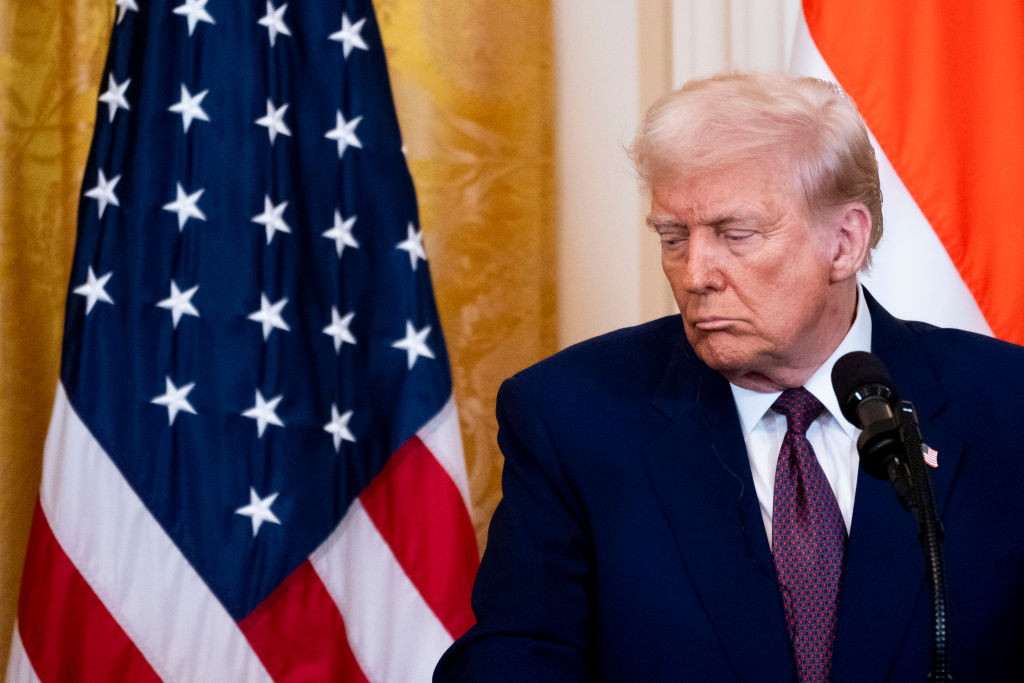
    But winning a permanent US-dominated future is what Donald Trump thinks is in the best interests of the United States. And so far, he is doing everything possible to undermine his own goal.

    Just look at the state of US relations with India, a key US partner and a lynchpin of Washington’s wider strategy to counter a rising China. India is emerging as a major global player and economic powerhouse that, crucially, has spent the past few years at a low point in its relations with China.

    When Trump’s trade war with China necessitated finding a new production base for iPhones to insulate US consumers from what would have been a price explosion, India gamely stepped up, allowing Apple to move the majority of iPhone assembly to its shores. As Trump side-eyes BRICS, the economic partnership not-so-subtly angling to sidestep US dominance, India is the closest thing to Washington’s man on the inside, steadfastly opposing the grouping’s budding efforts to undermine the US dollar supremacy core to global US power. This is the fruit of decades of bipartisan work across multiple administrations to draw India closer to Washington and away from Beijing’s sphere of influence.

    In the space of a little more than a week, Trump has jeopardized all that. Trump is now levying a significantly higher effective tariff rate on India (50 percent), his ostensible partner, than China (30 percent), the country he considers his biggest adversary. This is driven in large part by Trump’s characteristically incoherent desire to punish India for undermining Western sanctions on Russia and buying Moscow’s discounted oil, something India has been doing for years now. The fact that Trump has taken a distinctly soft line on Russia throughout his second term, and the fact that China also buys Russian oil, makes this decision doubly baffling for frustrated Indian officials.

    As a result, Indian relations with the United States are now suddenly strained — and actually improving with China. To retaliate, New Delhi has put a halt on a planned purchase of US weapons and cancelled an upcoming American trip by its defense minister. India’s prime minister, Narendra Modi, is now set to make his first trip to China in seven years, where he will meet with President Xi Jinping.

    India is far from the only example. Trump has likewise been antagonizing Brazil, which has for years been giving China hawks gray hairs as it has inched closer and closer to Beijing, even under previous far-right president Jair Bolsonaro. From the point of view of US policymakers, China deepening its ties with the largest country in South America and the world’s sixth-largest economy, a country practically on the United States’s doorstep, would be a strategic nightmare.

    So naturally, Trump has used the US trade relationship with Brazil to meddle in its internal politics, pushing the country further into the arms of China. Unhappy with the Brazilian supreme court’s prosecution of Bolsonaro, whom Trump considers an ally, for trying to instigate a coup during the last election, Trump has both slapped sanctions on the judge overseeing the case and imposed steep tariffs on Brazil as a whole. Beyond the damage to the Brazilian economy, it is also arguably the most nakedly political use of the United States’s economic heft that we have seen in modern times.

    It has not taken Beijing long to capitalize on the situation, with China’s foreign minister personally assuring the Brazilian government that China will support Brazil in “resisting the bullying practices of arbitrary tariffs.” China has now given the go-ahead for 183 Brazilian companies to sell their coffee, one of the sanctioned goods, in the Chinese market. China’s embassy in Brazil is trumpeting how Chinese and Brazilian firms are increasing their respective presences in each other’s markets.

    In other words, Trump effectively intensified Brazil’s political and economic estrangement from the United States, its largest trading partner at the start of this century, and increased Brazil’s economic reliance on what the United States considers an adversary trying to get a foothold in its backyard. Further twisting the knife, Brazilian president Luiz Inácio Lula da Silva and India’s Modi — leading what are now the two countries hardest hit by Trump’s tariffs — had an hour-long conversation about the matter where they vowed to deepen their trade ties.

    This isn’t the half of it. Less than two weeks ago, Trump triggered howls of outrage throughout Europe over a trade deal that somewhat lowered Trump’s exorbitantly high tariffs in exchange for a host of other trade and regulatory giveaways to the United States. At one point prior to its capitulation, the European Union considered hitting back against Trump’s tariffs with its “anti-coercion instrument” — tellingly, a retaliatory tool it had originally devised to potentially hit back against what it considered its most dangerous adversary, China.

    The EU has swallowed a series of US-imposed humiliations in just seven months of Trump’s second term, including enduring repeated threats to annex a member state’s territory and reluctantly agreeing to massively increase military spending to take the pressure off the United States. The EU is playing the role of loyal poodle so far, but you have to wonder what future seeds of resentment are being sown.

    We could keep going. Trump’s steadfast and, in fact, markedly escalated support for Israel’s ongoing genocide has — together with a variety of other policies, including his administration’s harassment of foreigners and hostility to international students — further run US global standing into the ground. An April survey of more than one hundred thousand people across a hundred countries found that the United States was viewed negatively in most of these countries. It also found that nearly 80 percent of the world has a more favorable view of its chief rival, China.

    At the moment, Trump and his political allies are busy antagonizing friendly countries, including NATO ally and second-biggest trade partner Canada, by hinting at using trade and other mechanisms to punish them for, of all things, their policy toward a foreign government, Israel. It has just been revealed that Trump secretly approved the US military and spy agencies to wage war on drug cartels in Latin America, potentially violating national sovereignty in a region that has long chafed at US meddling in its affairs. At the same time, China is often the largest or second-largest trading partner in Latin America, and has actively been deepening ties with individual countries.

    Trump’s abandonment of multilateralism and his hostility to the UN have opened the door to China, letting Beijing and its partners maneuver their own officials to positions of influence within these bureaucracies. And let’s not forget the way that Trump’s trade war inadvertently laid bare the extent of the United States’s own economic dependence on its rival after decades of neoliberal policy, leading to an embarrassing climbdown — an unforced, self-inflicted blow to global perceptions of US power.

    If the United States had a leader who was actively trying to subvert US global power from the inside and give its chief rival win after win, that leader could hardly do better than Trump has done through seven months of sheer strategic incompetence. In a desperate bid to retain US primacy, Trump, in a pattern not unlike that of the predecessor he always trashes, has abandoned statecraft in favor of blunt force and intimidation. Ironically, that approach is only making the outcome he’s trying to avoid more likely.


    Source link

    http://wp.bypass.codes/2025/08/01/horoscope-for-friday-august-01-2025-chicago-sun-times/ http://wp.bypass.codes/2025/08/01/verizon-rolls-out-price-increase-removes-its-google-play-pass-perk/
  • Germany’s Merz faces backlash over Israel arms embargo

    Germany’s Merz faces backlash over Israel arms embargo


    Alexander Hoffmann, leader of the Christian Social Union (CSU) faction in Bavaria, a sister party to Merz’s conservatives, called the decision contentious and unilateral. “Our party wasn’t involved and it demands at least some explanation,” Hoffmann said, adding that internal coalition discussions would follow in the coming days.

    1 View gallery

    פרידריך מרץ ובנימין נתניהו פרידריך מרץ ובנימין נתניהו

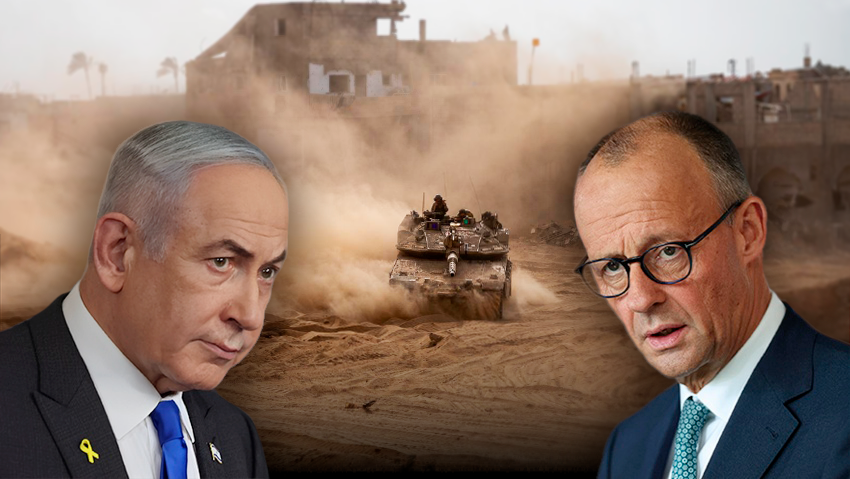
    Prime Minister Benjamin Netanyahu, German Chancellor Friedrich Merz

    (Photo: Sean Gallup/Getty Images, דובר צה”ל, Abir Sultan /Pool via AP)

    Former Interior Minister and CSU honorary chairman Horst Seehofer labeled it a “misguided foreign policy mistake with far-reaching consequences.” CSU parliamentarian Stefan Pilsinger echoed the sentiment, highlighting the benefits Germany reaps from security cooperation with Israel, particularly in air defense and intelligence.

    “We gain far more from this partnership,” he said. Within Merz’s own party, MP Karsten Müller condemned the move on X, saying, “This decision disregards the military and security cooperation that strengthens Germany’s army and NATO.”

    Berlin’s outgoing culture senator, Joe Chialo, also a party member, wrote in Bild that withholding arms from Israel is arrogant and hypocritical. “If Berlin or Munich were attacked, we’d beg for Iron Dome. This embargo betrays our core values,” he warned.

    Online, users accused Merz of weakening Israel at a critical time, with some calling it a “blow to a democratic ally.” Sven Mayer, a commenter, criticized Merz for abandoning his campaign promise to reverse the previous government’s anti-Israel stance, saying, “Now we’ve got Chancellor Friedrich Baerbock.”

    IDF strikes against terror infrastructures in Gaza

    (Video: IDF Spokesperson’s Unit)

    Another user questioned Merz’s logic, asking how he’d react if Israel restricted Germany’s use of supplied weapons against Russia. Concerns also arose about potential Israeli retaliation.

    Merz’s dramatic statement came hours after Israel’s cabinet approved Prime Minister Benjamin Netanyahu’s Gaza occupation plan. He declared that Germany would suspend all military exports to Israel usable in Gaza until further notice, while affirming Israel’s right to defend itself against Hamas terror.

    “Hamas must have no role in Gaza’s future,” Merz said, but expressed deep concern for Gaza’s civilian population. He argued that the occupation plan complicates efforts to free hostages and disarm Hamas, necessitating the arms embargo. Merz emphasized that ceasefire talks and hostage release remain top priorities, urging Israel to avoid steps toward annexing the West Bank.


    Source link

    http://wp.bypass.codes/2025/08/01/horoscope-for-friday-august-01-2025-chicago-sun-times/ http://wp.bypass.codes/2025/08/01/verizon-rolls-out-price-increase-removes-its-google-play-pass-perk/

  • Germany’s Merz faces backlash over Israel arms embargo

    Germany’s Merz faces backlash over Israel arms embargo


    Alexander Hoffmann, leader of the Christian Social Union (CSU) faction in Bavaria, a sister party to Merz’s conservatives, called the decision contentious and unilateral. “Our party wasn’t involved and it demands at least some explanation,” Hoffmann said, adding that internal coalition discussions would follow in the coming days.

    1 View gallery

    פרידריך מרץ ובנימין נתניהו פרידריך מרץ ובנימין נתניהו

    Prime Minister Benjamin Netanyahu, German Chancellor Friedrich Merz

    (Photo: Sean Gallup/Getty Images, דובר צה”ל, Abir Sultan /Pool via AP)

    Former Interior Minister and CSU honorary chairman Horst Seehofer labeled it a “misguided foreign policy mistake with far-reaching consequences.” CSU parliamentarian Stefan Pilsinger echoed the sentiment, highlighting the benefits Germany reaps from security cooperation with Israel, particularly in air defense and intelligence.

    “We gain far more from this partnership,” he said. Within Merz’s own party, MP Karsten Müller condemned the move on X, saying, “This decision disregards the military and security cooperation that strengthens Germany’s army and NATO.”

    Berlin’s outgoing culture senator, Joe Chialo, also a party member, wrote in Bild that withholding arms from Israel is arrogant and hypocritical. “If Berlin or Munich were attacked, we’d beg for Iron Dome. This embargo betrays our core values,” he warned.

    Online, users accused Merz of weakening Israel at a critical time, with some calling it a “blow to a democratic ally.” Sven Mayer, a commenter, criticized Merz for abandoning his campaign promise to reverse the previous government’s anti-Israel stance, saying, “Now we’ve got Chancellor Friedrich Baerbock.”

    IDF strikes against terror infrastructures in Gaza

    (Video: IDF Spokesperson’s Unit)

    Another user questioned Merz’s logic, asking how he’d react if Israel restricted Germany’s use of supplied weapons against Russia. Concerns also arose about potential Israeli retaliation.

    Merz’s dramatic statement came hours after Israel’s cabinet approved Prime Minister Benjamin Netanyahu’s Gaza occupation plan. He declared that Germany would suspend all military exports to Israel usable in Gaza until further notice, while affirming Israel’s right to defend itself against Hamas terror.

    “Hamas must have no role in Gaza’s future,” Merz said, but expressed deep concern for Gaza’s civilian population. He argued that the occupation plan complicates efforts to free hostages and disarm Hamas, necessitating the arms embargo. Merz emphasized that ceasefire talks and hostage release remain top priorities, urging Israel to avoid steps toward annexing the West Bank.


    Source link

    http://wp.bypass.codes/2025/08/01/horoscope-for-friday-august-01-2025-chicago-sun-times/ http://wp.bypass.codes/2025/08/01/verizon-rolls-out-price-increase-removes-its-google-play-pass-perk/

  • Germany’s Merz faces backlash over Israel arms embargo

    Germany’s Merz faces backlash over Israel arms embargo


    Alexander Hoffmann, leader of the Christian Social Union (CSU) faction in Bavaria, a sister party to Merz’s conservatives, called the decision contentious and unilateral. “Our party wasn’t involved and it demands at least some explanation,” Hoffmann said, adding that internal coalition discussions would follow in the coming days.

    1 View gallery

    פרידריך מרץ ובנימין נתניהו פרידריך מרץ ובנימין נתניהו

    Prime Minister Benjamin Netanyahu, German Chancellor Friedrich Merz

    (Photo: Sean Gallup/Getty Images, דובר צה”ל, Abir Sultan /Pool via AP)

    Former Interior Minister and CSU honorary chairman Horst Seehofer labeled it a “misguided foreign policy mistake with far-reaching consequences.” CSU parliamentarian Stefan Pilsinger echoed the sentiment, highlighting the benefits Germany reaps from security cooperation with Israel, particularly in air defense and intelligence.

    “We gain far more from this partnership,” he said. Within Merz’s own party, MP Karsten Müller condemned the move on X, saying, “This decision disregards the military and security cooperation that strengthens Germany’s army and NATO.”

    Berlin’s outgoing culture senator, Joe Chialo, also a party member, wrote in Bild that withholding arms from Israel is arrogant and hypocritical. “If Berlin or Munich were attacked, we’d beg for Iron Dome. This embargo betrays our core values,” he warned.

    Online, users accused Merz of weakening Israel at a critical time, with some calling it a “blow to a democratic ally.” Sven Mayer, a commenter, criticized Merz for abandoning his campaign promise to reverse the previous government’s anti-Israel stance, saying, “Now we’ve got Chancellor Friedrich Baerbock.”

    IDF strikes against terror infrastructures in Gaza

    (Video: IDF Spokesperson’s Unit)

    Another user questioned Merz’s logic, asking how he’d react if Israel restricted Germany’s use of supplied weapons against Russia. Concerns also arose about potential Israeli retaliation.

    Merz’s dramatic statement came hours after Israel’s cabinet approved Prime Minister Benjamin Netanyahu’s Gaza occupation plan. He declared that Germany would suspend all military exports to Israel usable in Gaza until further notice, while affirming Israel’s right to defend itself against Hamas terror.

    “Hamas must have no role in Gaza’s future,” Merz said, but expressed deep concern for Gaza’s civilian population. He argued that the occupation plan complicates efforts to free hostages and disarm Hamas, necessitating the arms embargo. Merz emphasized that ceasefire talks and hostage release remain top priorities, urging Israel to avoid steps toward annexing the West Bank.


    Source link

    http://wp.bypass.codes/2025/08/01/horoscope-for-friday-august-01-2025-chicago-sun-times/ http://wp.bypass.codes/2025/08/01/verizon-rolls-out-price-increase-removes-its-google-play-pass-perk/
  • Germany’s Merz faces backlash over Israel arms embargo

    Germany’s Merz faces backlash over Israel arms embargo


    Alexander Hoffmann, leader of the Christian Social Union (CSU) faction in Bavaria, a sister party to Merz’s conservatives, called the decision contentious and unilateral. “Our party wasn’t involved and it demands at least some explanation,” Hoffmann said, adding that internal coalition discussions would follow in the coming days.

    1 View gallery

    פרידריך מרץ ובנימין נתניהו פרידריך מרץ ובנימין נתניהו

    Prime Minister Benjamin Netanyahu, German Chancellor Friedrich Merz

    (Photo: Sean Gallup/Getty Images, דובר צה”ל, Abir Sultan /Pool via AP)

    Former Interior Minister and CSU honorary chairman Horst Seehofer labeled it a “misguided foreign policy mistake with far-reaching consequences.” CSU parliamentarian Stefan Pilsinger echoed the sentiment, highlighting the benefits Germany reaps from security cooperation with Israel, particularly in air defense and intelligence.

    “We gain far more from this partnership,” he said. Within Merz’s own party, MP Karsten Müller condemned the move on X, saying, “This decision disregards the military and security cooperation that strengthens Germany’s army and NATO.”

    Berlin’s outgoing culture senator, Joe Chialo, also a party member, wrote in Bild that withholding arms from Israel is arrogant and hypocritical. “If Berlin or Munich were attacked, we’d beg for Iron Dome. This embargo betrays our core values,” he warned.

    Online, users accused Merz of weakening Israel at a critical time, with some calling it a “blow to a democratic ally.” Sven Mayer, a commenter, criticized Merz for abandoning his campaign promise to reverse the previous government’s anti-Israel stance, saying, “Now we’ve got Chancellor Friedrich Baerbock.”

    IDF strikes against terror infrastructures in Gaza

    (Video: IDF Spokesperson’s Unit)

    Another user questioned Merz’s logic, asking how he’d react if Israel restricted Germany’s use of supplied weapons against Russia. Concerns also arose about potential Israeli retaliation.

    Merz’s dramatic statement came hours after Israel’s cabinet approved Prime Minister Benjamin Netanyahu’s Gaza occupation plan. He declared that Germany would suspend all military exports to Israel usable in Gaza until further notice, while affirming Israel’s right to defend itself against Hamas terror.

    “Hamas must have no role in Gaza’s future,” Merz said, but expressed deep concern for Gaza’s civilian population. He argued that the occupation plan complicates efforts to free hostages and disarm Hamas, necessitating the arms embargo. Merz emphasized that ceasefire talks and hostage release remain top priorities, urging Israel to avoid steps toward annexing the West Bank.


    Source link

    http://wp.bypass.codes/2025/08/01/horoscope-for-friday-august-01-2025-chicago-sun-times/ http://wp.bypass.codes/2025/08/01/verizon-rolls-out-price-increase-removes-its-google-play-pass-perk/
  • Germany’s Merz faces backlash over Israel arms embargo

    Germany’s Merz faces backlash over Israel arms embargo


    Alexander Hoffmann, leader of the Christian Social Union (CSU) faction in Bavaria, a sister party to Merz’s conservatives, called the decision contentious and unilateral. “Our party wasn’t involved and it demands at least some explanation,” Hoffmann said, adding that internal coalition discussions would follow in the coming days.

    1 View gallery

    פרידריך מרץ ובנימין נתניהו פרידריך מרץ ובנימין נתניהו

    Prime Minister Benjamin Netanyahu, German Chancellor Friedrich Merz

    (Photo: Sean Gallup/Getty Images, דובר צה”ל, Abir Sultan /Pool via AP)

    Former Interior Minister and CSU honorary chairman Horst Seehofer labeled it a “misguided foreign policy mistake with far-reaching consequences.” CSU parliamentarian Stefan Pilsinger echoed the sentiment, highlighting the benefits Germany reaps from security cooperation with Israel, particularly in air defense and intelligence.

    “We gain far more from this partnership,” he said. Within Merz’s own party, MP Karsten Müller condemned the move on X, saying, “This decision disregards the military and security cooperation that strengthens Germany’s army and NATO.”

    Berlin’s outgoing culture senator, Joe Chialo, also a party member, wrote in Bild that withholding arms from Israel is arrogant and hypocritical. “If Berlin or Munich were attacked, we’d beg for Iron Dome. This embargo betrays our core values,” he warned.

    Online, users accused Merz of weakening Israel at a critical time, with some calling it a “blow to a democratic ally.” Sven Mayer, a commenter, criticized Merz for abandoning his campaign promise to reverse the previous government’s anti-Israel stance, saying, “Now we’ve got Chancellor Friedrich Baerbock.”

    IDF strikes against terror infrastructures in Gaza

    (Video: IDF Spokesperson’s Unit)

    Another user questioned Merz’s logic, asking how he’d react if Israel restricted Germany’s use of supplied weapons against Russia. Concerns also arose about potential Israeli retaliation.

    Merz’s dramatic statement came hours after Israel’s cabinet approved Prime Minister Benjamin Netanyahu’s Gaza occupation plan. He declared that Germany would suspend all military exports to Israel usable in Gaza until further notice, while affirming Israel’s right to defend itself against Hamas terror.

    “Hamas must have no role in Gaza’s future,” Merz said, but expressed deep concern for Gaza’s civilian population. He argued that the occupation plan complicates efforts to free hostages and disarm Hamas, necessitating the arms embargo. Merz emphasized that ceasefire talks and hostage release remain top priorities, urging Israel to avoid steps toward annexing the West Bank.


    Source link

    http://wp.bypass.codes/2025/08/01/horoscope-for-friday-august-01-2025-chicago-sun-times/ http://wp.bypass.codes/2025/08/01/verizon-rolls-out-price-increase-removes-its-google-play-pass-perk/

  • North Korea is removing some of its speakers from their tense border, South Korea military says

    North Korea is removing some of its speakers from their tense border, South Korea military says


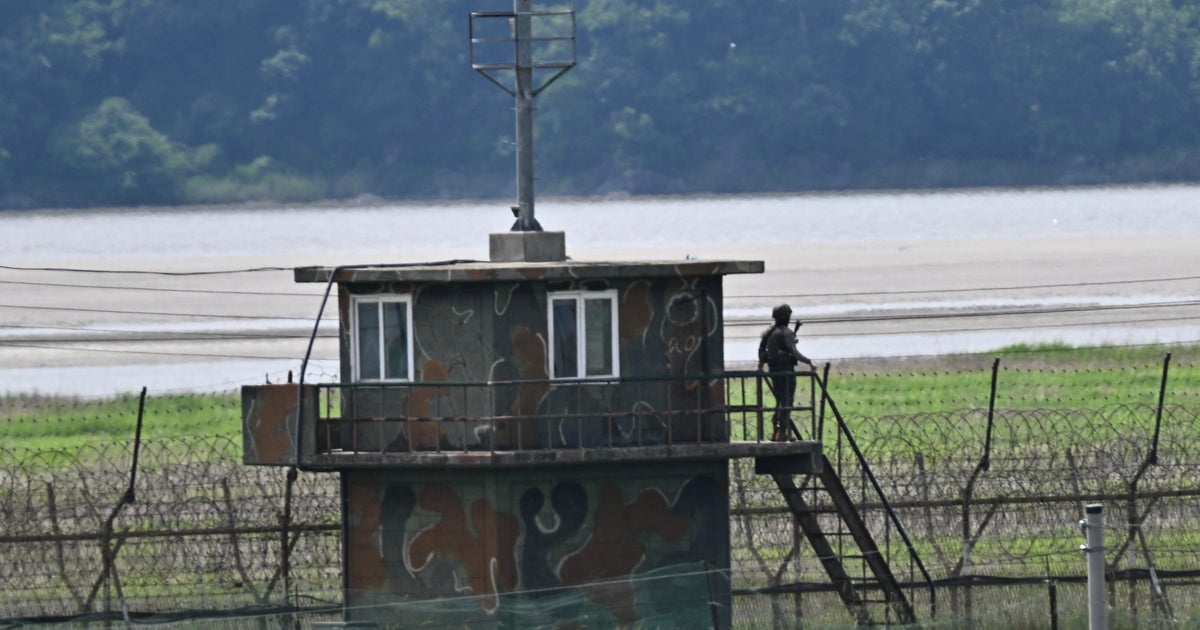
    Seoul, South Korea – South Korea’s military said Saturday it detected North Korea removing some of its loudspeakers from the inter-Korean border, days after the South dismantled its own front-line speakers used for anti-North Korean propaganda broadcasts, in a bid to ease tensions.

    South Korea’s Joint Chiefs of Staff didn’t disclose the sites where the North Koreans were removing speakers and said it wasn’t immediately clear whether the North would take all of them down.

    In recent months, South Korean border residents have complained that North Korean speakers blasted irritating sounds, including howling animals and pounding gongs, in a tit-for-tat response to South Korean propaganda broadcasts.

    The South Korean military said the North stopped its broadcasts in June after Seoul’s new liberal president, Lee Jae Myung, halted the South’s broadcasts in his government’s first concrete step toward easing tensions between the war-divided rivals. South Korea’s military began removing its speakers from border areas on Monday but didn’t specify how they would be stored or whether they could be quickly redeployed if tensions flared again.

    North Korea, which is extremely sensitive to any outside criticism of its authoritarian leadership and its third-generation ruler, Kim Jong Un, didn’t immediately confirm it was taking down its speakers.

    South Korea’s previous conservative government resumed daily loudspeaker broadcasts in June last year, following a yearslong pause, in retaliation for North Korea flying trash-laden balloons toward the South.

    The speakers blasted propaganda messages and K-pop songs, a playlist designed to strike a nerve in Pyongyang, where Kim has been pushing an intense campaign to eliminate the influence of South Korean pop culture and language among the population in a bid to strengthen his family’s dynastic rule.

    The Cold War-style psychological warfare campaigns further heightened tensions already inflamed by North Korea’s advancing nuclear program and South Korean efforts to expand joint military exercises with the United States and their trilateral security cooperation with Japan.

    Lee, who took office in June after winning an early election to replace ousted conservative Yoon Suk Yeol, wants to improve relations with Pyongyang, which reacted furiously to Yoon’s hard-line policies and shunned dialogue.

    But Kim Yo Jong, the influential sister of the North Korean leader, rebuffed overtures by Lee’s government in late July, saying that Seoul’s “blind trust” in the country’s alliance with the United States makes it no different from its conservative predecessor.

    She later issued a separate statement dismissing the Trump administration’s intent to resume diplomacy on North Korea’s denuclearization, suggesting that Pyongyang – now focused on expanding ties with Russia over the war in Ukraine – sees little urgency in resuming talks with Seoul or Washington.

    Tensions between the Koreas can possibly rise again later this month, when South Korea and the United States proceed with their annual large-scale combined military exercises, which begin on Aug. 18. North Korea labels the allies’ joint drills as invasion rehearsals and often uses them as a pretext to dial up military demonstrations and weapons tests aimed at advancing its nuclear program.


    Source link

    http://wp.bypass.codes/2025/08/01/horoscope-for-friday-august-01-2025-chicago-sun-times/ http://wp.bypass.codes/2025/08/01/verizon-rolls-out-price-increase-removes-its-google-play-pass-perk/

  • North Korea is removing some of its speakers from their tense border, South Korea military says

    North Korea is removing some of its speakers from their tense border, South Korea military says


    Seoul, South Korea – South Korea’s military said Saturday it detected North Korea removing some of its loudspeakers from the inter-Korean border, days after the South dismantled its own front-line speakers used for anti-North Korean propaganda broadcasts, in a bid to ease tensions.

    South Korea’s Joint Chiefs of Staff didn’t disclose the sites where the North Koreans were removing speakers and said it wasn’t immediately clear whether the North would take all of them down.

    In recent months, South Korean border residents have complained that North Korean speakers blasted irritating sounds, including howling animals and pounding gongs, in a tit-for-tat response to South Korean propaganda broadcasts.

    The South Korean military said the North stopped its broadcasts in June after Seoul’s new liberal president, Lee Jae Myung, halted the South’s broadcasts in his government’s first concrete step toward easing tensions between the war-divided rivals. South Korea’s military began removing its speakers from border areas on Monday but didn’t specify how they would be stored or whether they could be quickly redeployed if tensions flared again.

    North Korea, which is extremely sensitive to any outside criticism of its authoritarian leadership and its third-generation ruler, Kim Jong Un, didn’t immediately confirm it was taking down its speakers.

    South Korea’s previous conservative government resumed daily loudspeaker broadcasts in June last year, following a yearslong pause, in retaliation for North Korea flying trash-laden balloons toward the South.

    The speakers blasted propaganda messages and K-pop songs, a playlist designed to strike a nerve in Pyongyang, where Kim has been pushing an intense campaign to eliminate the influence of South Korean pop culture and language among the population in a bid to strengthen his family’s dynastic rule.

    The Cold War-style psychological warfare campaigns further heightened tensions already inflamed by North Korea’s advancing nuclear program and South Korean efforts to expand joint military exercises with the United States and their trilateral security cooperation with Japan.

    Lee, who took office in June after winning an early election to replace ousted conservative Yoon Suk Yeol, wants to improve relations with Pyongyang, which reacted furiously to Yoon’s hard-line policies and shunned dialogue.

    But Kim Yo Jong, the influential sister of the North Korean leader, rebuffed overtures by Lee’s government in late July, saying that Seoul’s “blind trust” in the country’s alliance with the United States makes it no different from its conservative predecessor.

    She later issued a separate statement dismissing the Trump administration’s intent to resume diplomacy on North Korea’s denuclearization, suggesting that Pyongyang – now focused on expanding ties with Russia over the war in Ukraine – sees little urgency in resuming talks with Seoul or Washington.

    Tensions between the Koreas can possibly rise again later this month, when South Korea and the United States proceed with their annual large-scale combined military exercises, which begin on Aug. 18. North Korea labels the allies’ joint drills as invasion rehearsals and often uses them as a pretext to dial up military demonstrations and weapons tests aimed at advancing its nuclear program.


    Source link

    http://wp.bypass.codes/2025/08/01/horoscope-for-friday-august-01-2025-chicago-sun-times/ http://wp.bypass.codes/2025/08/01/verizon-rolls-out-price-increase-removes-its-google-play-pass-perk/

  • Fire extinguished in Spain’s Cordoba Mosque-Cathedral – DW – 08/09/2025

    Fire extinguished in Spain’s Cordoba Mosque-Cathedral – DW – 08/09/2025


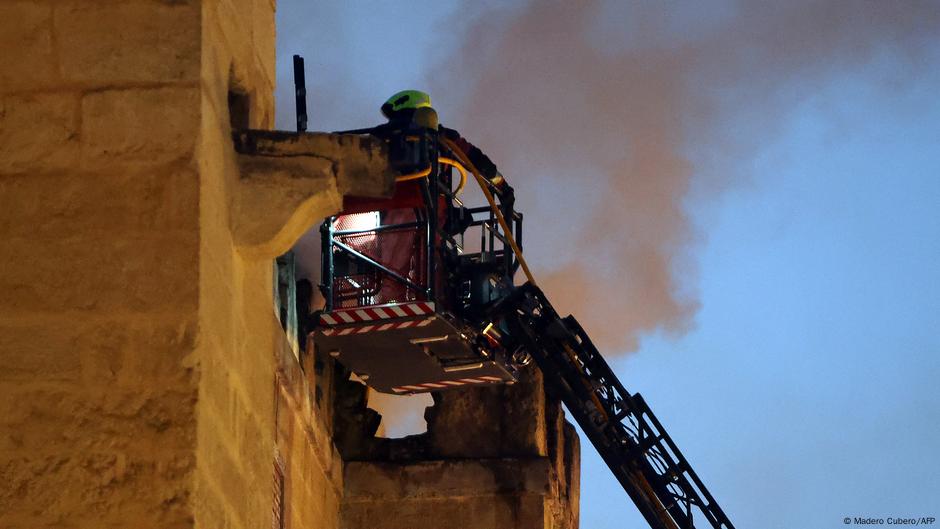
    Firefighters have extinguished a massive blaze that was burning in the historic mosque-turned-cathedral in the southern Spanish city of Cordoba.

    The “rapid and magnificent intervention” of firefighters “averted a catastrophe,” Cordoba Mayor Jose Mara Bellido posted on X.

    The fire is out, he said, adding that firefighters and police would remain on site overnight.

    A spokesman for the cathedral confirmed to AFP news agency that the site had reopened to the public on Saturday morning.

    Widely shared videos had shown flames and smoke billowing from inside the monument, which was declared a UNESCO World Heritage Site in 1984 and is a major tourist attraction.

    The blaze broke out around 9 p.m. local time (19:00 GMT) in one of the chapels in the Almanzor naves, according to Spain‘s El Mundo newspaper.

    It may have been caused by a short circuit in an electric sweeper, El Mundo and local media reported without elaborating on why.

    Three fire teams managed to control the fire and extinguished it within a short period.

    An inside view of Corduba's mosque-cathedral columns surmounted by striped arches.
    A feature of the stunning Mosque-Cathedral of Cordoba is its 1,200 columns, of which some 850 are original, framed by tiered archesImage: Sylvestre/MAXPPP/IMAGO

    After putting the fire out, firefighters continued to cool the monument’s walls and roofs to prevent the fire from reigniting, El Mundo said.

    Now a cathedral, the building was originally a mosque between the 8th and 10th centuries that is considered a jewel of Islamic architecture.

    After Christians reconquered Spain in the 13th century under King Ferdinand III of Castile, the building was converted into a cathedral and architectural alterations were made over following centuries.

    The Mosque-Cathedral of Cordoba is illuminsted against the skyline in Spain.
    Cordoba’s Mosque-Cathedral was visited by over 2 million people in 2024Image: Cristina Quicler/AFP

    The blaze evoked memories of the 2019 fire that ravaged Notre Dame in Paris, which formally reopenedin late 2024.

    Edited by: Sean Sinico


    Source link

    http://wp.bypass.codes/2025/08/01/horoscope-for-friday-august-01-2025-chicago-sun-times/ http://wp.bypass.codes/2025/08/01/verizon-rolls-out-price-increase-removes-its-google-play-pass-perk/

  • Fire extinguished in Spain’s Cordoba Mosque-Cathedral – DW – 08/09/2025

    Fire extinguished in Spain’s Cordoba Mosque-Cathedral – DW – 08/09/2025


    Firefighters have extinguished a massive blaze that was burning in the historic mosque-turned-cathedral in the southern Spanish city of Cordoba.

    The “rapid and magnificent intervention” of firefighters “averted a catastrophe,” Cordoba Mayor Jose Mara Bellido posted on X.

    The fire is out, he said, adding that firefighters and police would remain on site overnight.

    A spokesman for the cathedral confirmed to AFP news agency that the site had reopened to the public on Saturday morning.

    Widely shared videos had shown flames and smoke billowing from inside the monument, which was declared a UNESCO World Heritage Site in 1984 and is a major tourist attraction.

    The blaze broke out around 9 p.m. local time (19:00 GMT) in one of the chapels in the Almanzor naves, according to Spain‘s El Mundo newspaper.

    It may have been caused by a short circuit in an electric sweeper, El Mundo and local media reported without elaborating on why.

    Three fire teams managed to control the fire and extinguished it within a short period.

    An inside view of Corduba's mosque-cathedral columns surmounted by striped arches.
    A feature of the stunning Mosque-Cathedral of Cordoba is its 1,200 columns, of which some 850 are original, framed by tiered archesImage: Sylvestre/MAXPPP/IMAGO

    After putting the fire out, firefighters continued to cool the monument’s walls and roofs to prevent the fire from reigniting, El Mundo said.

    Now a cathedral, the building was originally a mosque between the 8th and 10th centuries that is considered a jewel of Islamic architecture.

    After Christians reconquered Spain in the 13th century under King Ferdinand III of Castile, the building was converted into a cathedral and architectural alterations were made over following centuries.

    The Mosque-Cathedral of Cordoba is illuminsted against the skyline in Spain.
    Cordoba’s Mosque-Cathedral was visited by over 2 million people in 2024Image: Cristina Quicler/AFP

    The blaze evoked memories of the 2019 fire that ravaged Notre Dame in Paris, which formally reopenedin late 2024.

    Edited by: Sean Sinico


    Source link

    http://wp.bypass.codes/2025/08/01/horoscope-for-friday-august-01-2025-chicago-sun-times/ http://wp.bypass.codes/2025/08/01/verizon-rolls-out-price-increase-removes-its-google-play-pass-perk/