Author: admin-to-del

  • Samsung’s new $29,999 Micro RGB TV looks ridiculously good

    Samsung’s new $29,999 Micro RGB TV looks ridiculously good


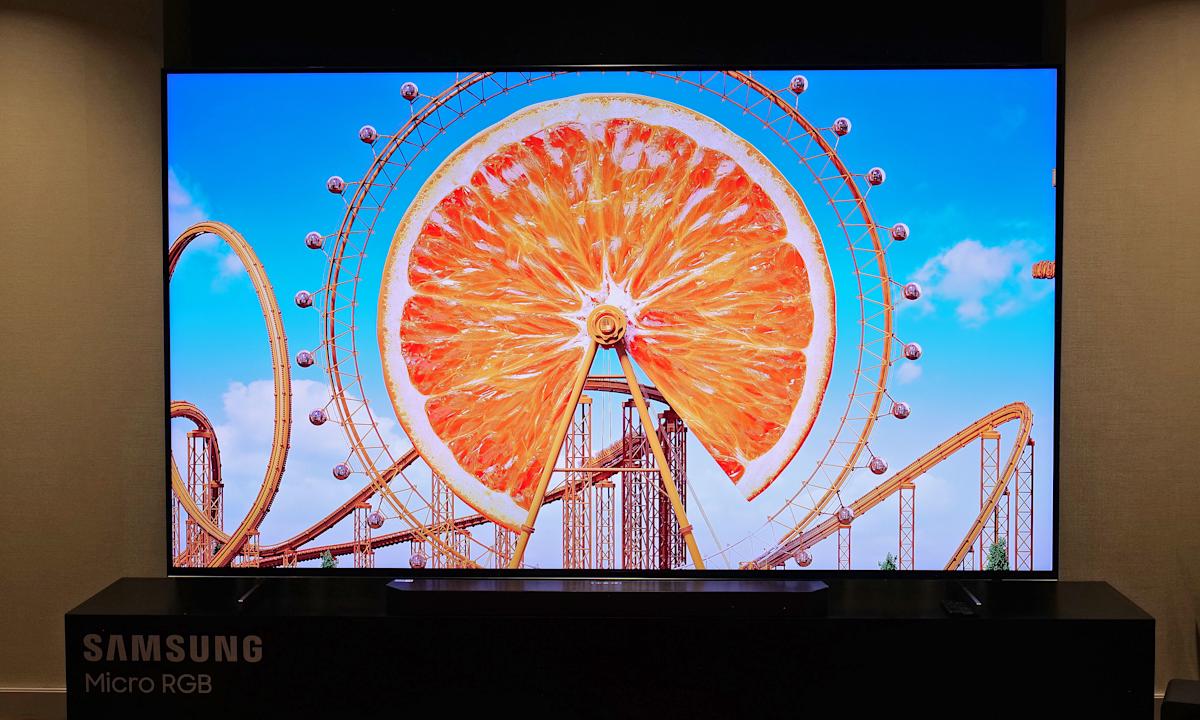
    Last week, Samsung and while it sounded fantastic on paper, you can never really get a good sense of what a fresh display looks like until you see it in person. But after going to Samsung’s new headquarters in New Jersey, I can attest that it is truly a sight to behold.

    Now, before we get to the TV itself, it’s probably a good idea to dive into what’s going on with Samsung’s latest panel tech. In many ways, Micro RGB is a step up from current Mini LED screens. On a technical level, the Micro LEDs and the self-emissive pixels of Samsung’s The Wall probably remain the more sophisticated end goal for next-gen TVs.

    At its core, Micro RGB is still based on LCD tech, the difference is that instead of using blue or white backlighting like a lot of sets today, it features individually controlled red, green and blue Micro LEDs (hence the name Micro RGB) to produce an even wider range of colors. The result is that Samsung claims this is the first TV to cover 100 percent of the BT.2020 standard. For context, that covers more than 75 percent of the visible spectrum and has an even wider color range than what you get from DCI-P3, which is one of the most commonly used high-end standards for modern filmmaking.

    In person, that means the TV can produce stunningly rich and vivid colors that put Samsung’s other top-tier TVs to shame, including the new which starts at a whopping $26,999. Like its sibling, Samsung’s Micro RGB TV is only available in one size (115 inches) and has a similar design, while its panel features a 144Hz refresh rate and a matte glare-free coating. But that’s kind of where the similarities end, because this new flagship model features four times the number of dimming zones. Furthermore, because the Micro RGB LEDs require more computing power to manage all those pixels, Samsung had to create a new RGB Engine AI processor to properly control everything.

    In short, this is a lot of words to describe what might be the best-looking TV I’ve ever seen. While I only got to view some demo footage (which admittedly is designed to make the set look its best), I couldn’t help but appreciate the sheer intensity of the hues and shades on display. When the video loop shifted to primarily blue and green scenes, the TV’s color depth was almost overwhelming. That said, due to the immense size of the panel, when you get up close, it’s easy to see individual pixels. However, when you’re sitting in its sweet spot (about 11.5 feet from the display), everything looks ridiculously sharp and overflows with detail. And even for those off-center, there appeared to be no falloff in brightness or saturation.

    While Samsung's $26,999 Neo QLED QN90F boasts a price tag that's nearly as expensive as the $29,999 Micro RGB TV, there's still a very obvious difference in color.

    While Samsung’s $26,999 Neo QLED QN90F boasts a price tag that’s nearly as expensive as the $29,999 Micro RGB TV, there’s still a very obvious difference in color.

    (Sam Rutherford for Engadget)

    Now, of course, the major downside of Samsung’s new Micro RGB TV is that at $29,999, it makes everything but The Wall (which starts at a cool $40,000) seem cheap. But the funny thing is that when compared to the Neo QLED QN90F, which Samsung also had on display in a nearby room, the difference in quality and color was immediately obvious. This sort of makes me wonder why anyone with super deep pockets would even consider the latter just to save a few thousand dollars, because when you see them in person, there’s no doubt which set is superior.

    Unfortunately, the Micro RGB’s full glory doesn’t translate across the internet due to the much more limited specs of the web. It’s one of those things you need to see for yourself to fully grasp. But if you’re the kind of person with enough money that you don’t need to care about price tags, Samsung’s latest flagship should be an immediate contender as the centerpiece in your mansion.



    Source link

  • Samsung’s new $29,999 Micro RGB TV looks ridiculously good

    Samsung’s new $29,999 Micro RGB TV looks ridiculously good


    Last week, Samsung and while it sounded fantastic on paper, you can never really get a good sense of what a fresh display looks like until you see it in person. But after going to Samsung’s new headquarters in New Jersey, I can attest that it is truly a sight to behold.

    Now, before we get to the TV itself, it’s probably a good idea to dive into what’s going on with Samsung’s latest panel tech. In many ways, Micro RGB is a step up from current Mini LED screens. On a technical level, the Micro LEDs and the self-emissive pixels of Samsung’s The Wall probably remain the more sophisticated end goal for next-gen TVs.

    At its core, Micro RGB is still based on LCD tech, the difference is that instead of using blue or white backlighting like a lot of sets today, it features individually controlled red, green and blue Micro LEDs (hence the name Micro RGB) to produce an even wider range of colors. The result is that Samsung claims this is the first TV to cover 100 percent of the BT.2020 standard. For context, that covers more than 75 percent of the visible spectrum and has an even wider color range than what you get from DCI-P3, which is one of the most commonly used high-end standards for modern filmmaking.

    In person, that means the TV can produce stunningly rich and vivid colors that put Samsung’s other top-tier TVs to shame, including the new which starts at a whopping $26,999. Like its sibling, Samsung’s Micro RGB TV is only available in one size (115 inches) and has a similar design, while its panel features a 144Hz refresh rate and a matte glare-free coating. But that’s kind of where the similarities end, because this new flagship model features four times the number of dimming zones. Furthermore, because the Micro RGB LEDs require more computing power to manage all those pixels, Samsung had to create a new RGB Engine AI processor to properly control everything.

    In short, this is a lot of words to describe what might be the best-looking TV I’ve ever seen. While I only got to view some demo footage (which admittedly is designed to make the set look its best), I couldn’t help but appreciate the sheer intensity of the hues and shades on display. When the video loop shifted to primarily blue and green scenes, the TV’s color depth was almost overwhelming. That said, due to the immense size of the panel, when you get up close, it’s easy to see individual pixels. However, when you’re sitting in its sweet spot (about 11.5 feet from the display), everything looks ridiculously sharp and overflows with detail. And even for those off-center, there appeared to be no falloff in brightness or saturation.

    While Samsung's $26,999 Neo QLED QN90F boasts a price tag that's nearly as expensive as the $29,999 Micro RGB TV, there's still a very obvious difference in color.

    While Samsung’s $26,999 Neo QLED QN90F boasts a price tag that’s nearly as expensive as the $29,999 Micro RGB TV, there’s still a very obvious difference in color.

    (Sam Rutherford for Engadget)

    Now, of course, the major downside of Samsung’s new Micro RGB TV is that at $29,999, it makes everything but The Wall (which starts at a cool $40,000) seem cheap. But the funny thing is that when compared to the Neo QLED QN90F, which Samsung also had on display in a nearby room, the difference in quality and color was immediately obvious. This sort of makes me wonder why anyone with super deep pockets would even consider the latter just to save a few thousand dollars, because when you see them in person, there’s no doubt which set is superior.

    Unfortunately, the Micro RGB’s full glory doesn’t translate across the internet due to the much more limited specs of the web. It’s one of those things you need to see for yourself to fully grasp. But if you’re the kind of person with enough money that you don’t need to care about price tags, Samsung’s latest flagship should be an immediate contender as the centerpiece in your mansion.


    Source link

  • Samsung’s new $29,999 Micro RGB TV looks ridiculously good

    Samsung’s new $29,999 Micro RGB TV looks ridiculously good


    Last week, Samsung and while it sounded fantastic on paper, you can never really get a good sense of what a fresh display looks like until you see it in person. But after going to Samsung’s new headquarters in New Jersey, I can attest that it is truly a sight to behold.

    Now, before we get to the TV itself, it’s probably a good idea to dive into what’s going on with Samsung’s latest panel tech. In many ways, Micro RGB is a step up from current Mini LED screens. On a technical level, the Micro LEDs and the self-emissive pixels of Samsung’s The Wall probably remain the more sophisticated end goal for next-gen TVs.

    At its core, Micro RGB is still based on LCD tech, the difference is that instead of using blue or white backlighting like a lot of sets today, it features individually controlled red, green and blue Micro LEDs (hence the name Micro RGB) to produce an even wider range of colors. The result is that Samsung claims this is the first TV to cover 100 percent of the BT.2020 standard. For context, that covers more than 75 percent of the visible spectrum and has an even wider color range than what you get from DCI-P3, which is one of the most commonly used high-end standards for modern filmmaking.

    In person, that means the TV can produce stunningly rich and vivid colors that put Samsung’s other top-tier TVs to shame, including the new which starts at a whopping $26,999. Like its sibling, Samsung’s Micro RGB TV is only available in one size (115 inches) and has a similar design, while its panel features a 144Hz refresh rate and a matte glare-free coating. But that’s kind of where the similarities end, because this new flagship model features four times the number of dimming zones. Furthermore, because the Micro RGB LEDs require more computing power to manage all those pixels, Samsung had to create a new RGB Engine AI processor to properly control everything.

    In short, this is a lot of words to describe what might be the best-looking TV I’ve ever seen. While I only got to view some demo footage (which admittedly is designed to make the set look its best), I couldn’t help but appreciate the sheer intensity of the hues and shades on display. When the video loop shifted to primarily blue and green scenes, the TV’s color depth was almost overwhelming. That said, due to the immense size of the panel, when you get up close, it’s easy to see individual pixels. However, when you’re sitting in its sweet spot (about 11.5 feet from the display), everything looks ridiculously sharp and overflows with detail. And even for those off-center, there appeared to be no falloff in brightness or saturation.

    While Samsung's $26,999 Neo QLED QN90F boasts a price tag that's nearly as expensive as the $29,999 Micro RGB TV, there's still a very obvious difference in color.

    While Samsung’s $26,999 Neo QLED QN90F boasts a price tag that’s nearly as expensive as the $29,999 Micro RGB TV, there’s still a very obvious difference in color.

    (Sam Rutherford for Engadget)

    Now, of course, the major downside of Samsung’s new Micro RGB TV is that at $29,999, it makes everything but The Wall (which starts at a cool $40,000) seem cheap. But the funny thing is that when compared to the Neo QLED QN90F, which Samsung also had on display in a nearby room, the difference in quality and color was immediately obvious. This sort of makes me wonder why anyone with super deep pockets would even consider the latter just to save a few thousand dollars, because when you see them in person, there’s no doubt which set is superior.

    Unfortunately, the Micro RGB’s full glory doesn’t translate across the internet due to the much more limited specs of the web. It’s one of those things you need to see for yourself to fully grasp. But if you’re the kind of person with enough money that you don’t need to care about price tags, Samsung’s latest flagship should be an immediate contender as the centerpiece in your mansion.


    Source link

  • Samsung’s new $29,999 Micro RGB TV looks ridiculously good

    Samsung’s new $29,999 Micro RGB TV looks ridiculously good


    Last week, Samsung and while it sounded fantastic on paper, you can never really get a good sense of what a fresh display looks like until you see it in person. But after going to Samsung’s new headquarters in New Jersey, I can attest that it is truly a sight to behold.

    Now, before we get to the TV itself, it’s probably a good idea to dive into what’s going on with Samsung’s latest panel tech. In many ways, Micro RGB is a step up from current Mini LED screens. On a technical level, the Micro LEDs and the self-emissive pixels of Samsung’s The Wall probably remain the more sophisticated end goal for next-gen TVs.

    At its core, Micro RGB is still based on LCD tech, the difference is that instead of using blue or white backlighting like a lot of sets today, it features individually controlled red, green and blue Micro LEDs (hence the name Micro RGB) to produce an even wider range of colors. The result is that Samsung claims this is the first TV to cover 100 percent of the BT.2020 standard. For context, that covers more than 75 percent of the visible spectrum and has an even wider color range than what you get from DCI-P3, which is one of the most commonly used high-end standards for modern filmmaking.

    In person, that means the TV can produce stunningly rich and vivid colors that put Samsung’s other top-tier TVs to shame, including the new which starts at a whopping $26,999. Like its sibling, Samsung’s Micro RGB TV is only available in one size (115 inches) and has a similar design, while its panel features a 144Hz refresh rate and a matte glare-free coating. But that’s kind of where the similarities end, because this new flagship model features four times the number of dimming zones. Furthermore, because the Micro RGB LEDs require more computing power to manage all those pixels, Samsung had to create a new RGB Engine AI processor to properly control everything.

    In short, this is a lot of words to describe what might be the best-looking TV I’ve ever seen. While I only got to view some demo footage (which admittedly is designed to make the set look its best), I couldn’t help but appreciate the sheer intensity of the hues and shades on display. When the video loop shifted to primarily blue and green scenes, the TV’s color depth was almost overwhelming. That said, due to the immense size of the panel, when you get up close, it’s easy to see individual pixels. However, when you’re sitting in its sweet spot (about 11.5 feet from the display), everything looks ridiculously sharp and overflows with detail. And even for those off-center, there appeared to be no falloff in brightness or saturation.

    While Samsung's $26,999 Neo QLED QN90F boasts a price tag that's nearly as expensive as the $29,999 Micro RGB TV, there's still a very obvious difference in color.

    While Samsung’s $26,999 Neo QLED QN90F boasts a price tag that’s nearly as expensive as the $29,999 Micro RGB TV, there’s still a very obvious difference in color.

    (Sam Rutherford for Engadget)

    Now, of course, the major downside of Samsung’s new Micro RGB TV is that at $29,999, it makes everything but The Wall (which starts at a cool $40,000) seem cheap. But the funny thing is that when compared to the Neo QLED QN90F, which Samsung also had on display in a nearby room, the difference in quality and color was immediately obvious. This sort of makes me wonder why anyone with super deep pockets would even consider the latter just to save a few thousand dollars, because when you see them in person, there’s no doubt which set is superior.

    Unfortunately, the Micro RGB’s full glory doesn’t translate across the internet due to the much more limited specs of the web. It’s one of those things you need to see for yourself to fully grasp. But if you’re the kind of person with enough money that you don’t need to care about price tags, Samsung’s latest flagship should be an immediate contender as the centerpiece in your mansion.


    Source link

  • Samsung’s new $29,999 Micro RGB TV looks ridiculously good

    Samsung’s new $29,999 Micro RGB TV looks ridiculously good


    Last week, Samsung and while it sounded fantastic on paper, you can never really get a good sense of what a fresh display looks like until you see it in person. But after going to Samsung’s new headquarters in New Jersey, I can attest that it is truly a sight to behold.

    Now, before we get to the TV itself, it’s probably a good idea to dive into what’s going on with Samsung’s latest panel tech. In many ways, Micro RGB is a step up from current Mini LED screens. On a technical level, the Micro LEDs and the self-emissive pixels of Samsung’s The Wall probably remain the more sophisticated end goal for next-gen TVs.

    At its core, Micro RGB is still based on LCD tech, the difference is that instead of using blue or white backlighting like a lot of sets today, it features individually controlled red, green and blue Micro LEDs (hence the name Micro RGB) to produce an even wider range of colors. The result is that Samsung claims this is the first TV to cover 100 percent of the BT.2020 standard. For context, that covers more than 75 percent of the visible spectrum and has an even wider color range than what you get from DCI-P3, which is one of the most commonly used high-end standards for modern filmmaking.

    In person, that means the TV can produce stunningly rich and vivid colors that put Samsung’s other top-tier TVs to shame, including the new which starts at a whopping $26,999. Like its sibling, Samsung’s Micro RGB TV is only available in one size (115 inches) and has a similar design, while its panel features a 144Hz refresh rate and a matte glare-free coating. But that’s kind of where the similarities end, because this new flagship model features four times the number of dimming zones. Furthermore, because the Micro RGB LEDs require more computing power to manage all those pixels, Samsung had to create a new RGB Engine AI processor to properly control everything.

    In short, this is a lot of words to describe what might be the best-looking TV I’ve ever seen. While I only got to view some demo footage (which admittedly is designed to make the set look its best), I couldn’t help but appreciate the sheer intensity of the hues and shades on display. When the video loop shifted to primarily blue and green scenes, the TV’s color depth was almost overwhelming. That said, due to the immense size of the panel, when you get up close, it’s easy to see individual pixels. However, when you’re sitting in its sweet spot (about 11.5 feet from the display), everything looks ridiculously sharp and overflows with detail. And even for those off-center, there appeared to be no falloff in brightness or saturation.

    While Samsung's $26,999 Neo QLED QN90F boasts a price tag that's nearly as expensive as the $29,999 Micro RGB TV, there's still a very obvious difference in color.

    While Samsung’s $26,999 Neo QLED QN90F boasts a price tag that’s nearly as expensive as the $29,999 Micro RGB TV, there’s still a very obvious difference in color.

    (Sam Rutherford for Engadget)

    Now, of course, the major downside of Samsung’s new Micro RGB TV is that at $29,999, it makes everything but The Wall (which starts at a cool $40,000) seem cheap. But the funny thing is that when compared to the Neo QLED QN90F, which Samsung also had on display in a nearby room, the difference in quality and color was immediately obvious. This sort of makes me wonder why anyone with super deep pockets would even consider the latter just to save a few thousand dollars, because when you see them in person, there’s no doubt which set is superior.

    Unfortunately, the Micro RGB’s full glory doesn’t translate across the internet due to the much more limited specs of the web. It’s one of those things you need to see for yourself to fully grasp. But if you’re the kind of person with enough money that you don’t need to care about price tags, Samsung’s latest flagship should be an immediate contender as the centerpiece in your mansion.


    Source link

  • Samsung’s new $29,999 Micro RGB TV looks ridiculously good

    Samsung’s new $29,999 Micro RGB TV looks ridiculously good


    Last week, Samsung and while it sounded fantastic on paper, you can never really get a good sense of what a fresh display looks like until you see it in person. But after going to Samsung’s new headquarters in New Jersey, I can attest that it is truly a sight to behold.

    Now, before we get to the TV itself, it’s probably a good idea to dive into what’s going on with Samsung’s latest panel tech. In many ways, Micro RGB is a step up from current Mini LED screens. On a technical level, the Micro LEDs and the self-emissive pixels of Samsung’s The Wall probably remain the more sophisticated end goal for next-gen TVs.

    At its core, Micro RGB is still based on LCD tech, the difference is that instead of using blue or white backlighting like a lot of sets today, it features individually controlled red, green and blue Micro LEDs (hence the name Micro RGB) to produce an even wider range of colors. The result is that Samsung claims this is the first TV to cover 100 percent of the BT.2020 standard. For context, that covers more than 75 percent of the visible spectrum and has an even wider color range than what you get from DCI-P3, which is one of the most commonly used high-end standards for modern filmmaking.

    In person, that means the TV can produce stunningly rich and vivid colors that put Samsung’s other top-tier TVs to shame, including the new which starts at a whopping $26,999. Like its sibling, Samsung’s Micro RGB TV is only available in one size (115 inches) and has a similar design, while its panel features a 144Hz refresh rate and a matte glare-free coating. But that’s kind of where the similarities end, because this new flagship model features four times the number of dimming zones. Furthermore, because the Micro RGB LEDs require more computing power to manage all those pixels, Samsung had to create a new RGB Engine AI processor to properly control everything.

    In short, this is a lot of words to describe what might be the best-looking TV I’ve ever seen. While I only got to view some demo footage (which admittedly is designed to make the set look its best), I couldn’t help but appreciate the sheer intensity of the hues and shades on display. When the video loop shifted to primarily blue and green scenes, the TV’s color depth was almost overwhelming. That said, due to the immense size of the panel, when you get up close, it’s easy to see individual pixels. However, when you’re sitting in its sweet spot (about 11.5 feet from the display), everything looks ridiculously sharp and overflows with detail. And even for those off-center, there appeared to be no falloff in brightness or saturation.

    While Samsung's $26,999 Neo QLED QN90F boasts a price tag that's nearly as expensive as the $29,999 Micro RGB TV, there's still a very obvious difference in color.

    While Samsung’s $26,999 Neo QLED QN90F boasts a price tag that’s nearly as expensive as the $29,999 Micro RGB TV, there’s still a very obvious difference in color.

    (Sam Rutherford for Engadget)

    Now, of course, the major downside of Samsung’s new Micro RGB TV is that at $29,999, it makes everything but The Wall (which starts at a cool $40,000) seem cheap. But the funny thing is that when compared to the Neo QLED QN90F, which Samsung also had on display in a nearby room, the difference in quality and color was immediately obvious. This sort of makes me wonder why anyone with super deep pockets would even consider the latter just to save a few thousand dollars, because when you see them in person, there’s no doubt which set is superior.

    Unfortunately, the Micro RGB’s full glory doesn’t translate across the internet due to the much more limited specs of the web. It’s one of those things you need to see for yourself to fully grasp. But if you’re the kind of person with enough money that you don’t need to care about price tags, Samsung’s latest flagship should be an immediate contender as the centerpiece in your mansion.


    Source link

  • Samsung’s new $29,999 Micro RGB TV looks ridiculously good

    Samsung’s new $29,999 Micro RGB TV looks ridiculously good


    Last week, Samsung and while it sounded fantastic on paper, you can never really get a good sense of what a fresh display looks like until you see it in person. But after going to Samsung’s new headquarters in New Jersey, I can attest that it is truly a sight to behold.

    Now, before we get to the TV itself, it’s probably a good idea to dive into what’s going on with Samsung’s latest panel tech. In many ways, Micro RGB is a step up from current Mini LED screens. On a technical level, the Micro LEDs and the self-emissive pixels of Samsung’s The Wall probably remain the more sophisticated end goal for next-gen TVs.

    At its core, Micro RGB is still based on LCD tech, the difference is that instead of using blue or white backlighting like a lot of sets today, it features individually controlled red, green and blue Micro LEDs (hence the name Micro RGB) to produce an even wider range of colors. The result is that Samsung claims this is the first TV to cover 100 percent of the BT.2020 standard. For context, that covers more than 75 percent of the visible spectrum and has an even wider color range than what you get from DCI-P3, which is one of the most commonly used high-end standards for modern filmmaking.

    In person, that means the TV can produce stunningly rich and vivid colors that put Samsung’s other top-tier TVs to shame, including the new which starts at a whopping $26,999. Like its sibling, Samsung’s Micro RGB TV is only available in one size (115 inches) and has a similar design, while its panel features a 144Hz refresh rate and a matte glare-free coating. But that’s kind of where the similarities end, because this new flagship model features four times the number of dimming zones. Furthermore, because the Micro RGB LEDs require more computing power to manage all those pixels, Samsung had to create a new RGB Engine AI processor to properly control everything.

    In short, this is a lot of words to describe what might be the best-looking TV I’ve ever seen. While I only got to view some demo footage (which admittedly is designed to make the set look its best), I couldn’t help but appreciate the sheer intensity of the hues and shades on display. When the video loop shifted to primarily blue and green scenes, the TV’s color depth was almost overwhelming. That said, due to the immense size of the panel, when you get up close, it’s easy to see individual pixels. However, when you’re sitting in its sweet spot (about 11.5 feet from the display), everything looks ridiculously sharp and overflows with detail. And even for those off-center, there appeared to be no falloff in brightness or saturation.

    While Samsung's $26,999 Neo QLED QN90F boasts a price tag that's nearly as expensive as the $29,999 Micro RGB TV, there's still a very obvious difference in color.

    While Samsung’s $26,999 Neo QLED QN90F boasts a price tag that’s nearly as expensive as the $29,999 Micro RGB TV, there’s still a very obvious difference in color.

    (Sam Rutherford for Engadget)

    Now, of course, the major downside of Samsung’s new Micro RGB TV is that at $29,999, it makes everything but The Wall (which starts at a cool $40,000) seem cheap. But the funny thing is that when compared to the Neo QLED QN90F, which Samsung also had on display in a nearby room, the difference in quality and color was immediately obvious. This sort of makes me wonder why anyone with super deep pockets would even consider the latter just to save a few thousand dollars, because when you see them in person, there’s no doubt which set is superior.

    Unfortunately, the Micro RGB’s full glory doesn’t translate across the internet due to the much more limited specs of the web. It’s one of those things you need to see for yourself to fully grasp. But if you’re the kind of person with enough money that you don’t need to care about price tags, Samsung’s latest flagship should be an immediate contender as the centerpiece in your mansion.


    Source link

  • Samsung’s new $29,999 Micro RGB TV looks ridiculously good

    Samsung’s new $29,999 Micro RGB TV looks ridiculously good


    Last week, Samsung and while it sounded fantastic on paper, you can never really get a good sense of what a fresh display looks like until you see it in person. But after going to Samsung’s new headquarters in New Jersey, I can attest that it is truly a sight to behold.

    Now, before we get to the TV itself, it’s probably a good idea to dive into what’s going on with Samsung’s latest panel tech. In many ways, Micro RGB is a step up from current Mini LED screens. On a technical level, the Micro LEDs and the self-emissive pixels of Samsung’s The Wall probably remain the more sophisticated end goal for next-gen TVs.

    At its core, Micro RGB is still based on LCD tech, the difference is that instead of using blue or white backlighting like a lot of sets today, it features individually controlled red, green and blue Micro LEDs (hence the name Micro RGB) to produce an even wider range of colors. The result is that Samsung claims this is the first TV to cover 100 percent of the BT.2020 standard. For context, that covers more than 75 percent of the visible spectrum and has an even wider color range than what you get from DCI-P3, which is one of the most commonly used high-end standards for modern filmmaking.

    In person, that means the TV can produce stunningly rich and vivid colors that put Samsung’s other top-tier TVs to shame, including the new which starts at a whopping $26,999. Like its sibling, Samsung’s Micro RGB TV is only available in one size (115 inches) and has a similar design, while its panel features a 144Hz refresh rate and a matte glare-free coating. But that’s kind of where the similarities end, because this new flagship model features four times the number of dimming zones. Furthermore, because the Micro RGB LEDs require more computing power to manage all those pixels, Samsung had to create a new RGB Engine AI processor to properly control everything.

    In short, this is a lot of words to describe what might be the best-looking TV I’ve ever seen. While I only got to view some demo footage (which admittedly is designed to make the set look its best), I couldn’t help but appreciate the sheer intensity of the hues and shades on display. When the video loop shifted to primarily blue and green scenes, the TV’s color depth was almost overwhelming. That said, due to the immense size of the panel, when you get up close, it’s easy to see individual pixels. However, when you’re sitting in its sweet spot (about 11.5 feet from the display), everything looks ridiculously sharp and overflows with detail. And even for those off-center, there appeared to be no falloff in brightness or saturation.

    While Samsung's $26,999 Neo QLED QN90F boasts a price tag that's nearly as expensive as the $29,999 Micro RGB TV, there's still a very obvious difference in color.

    While Samsung’s $26,999 Neo QLED QN90F boasts a price tag that’s nearly as expensive as the $29,999 Micro RGB TV, there’s still a very obvious difference in color.

    (Sam Rutherford for Engadget)

    Now, of course, the major downside of Samsung’s new Micro RGB TV is that at $29,999, it makes everything but The Wall (which starts at a cool $40,000) seem cheap. But the funny thing is that when compared to the Neo QLED QN90F, which Samsung also had on display in a nearby room, the difference in quality and color was immediately obvious. This sort of makes me wonder why anyone with super deep pockets would even consider the latter just to save a few thousand dollars, because when you see them in person, there’s no doubt which set is superior.

    Unfortunately, the Micro RGB’s full glory doesn’t translate across the internet due to the much more limited specs of the web. It’s one of those things you need to see for yourself to fully grasp. But if you’re the kind of person with enough money that you don’t need to care about price tags, Samsung’s latest flagship should be an immediate contender as the centerpiece in your mansion.


    Source link

  • Discounty Review (PS5) | Push Square

    Discounty Review (PS5) | Push Square


    When it comes to the 2D pixel art cozy genre that Stardew Valley has owned over nearly the last decade, there are a ton of imitators.

    In the case of Discounty, we’ve got that focus on becoming part of a community mixed with addictive supermarket management that really stands out in this crowd. All of it comes together to make an enjoyable game that can make the time fly by.

    Like so many other games, your character arrives in a new small town that wouldn’t register for anyone not living there.

    This time, your aunt has a new supermarket named Discounty that she’s opened up, and you quickly become the lone employee, doing all you can to grow that business. Pretty much everything you do revolves around the idea of making the store better.

    Luckily, the management side of the game is rather compelling. Moving shelves around and stocking them with products is simple and fun, while the occasional upgrades you get are always that carrot on the end of the stick that keeps you going.

    You’re forced to spend a lot of time behind the register. This will be more or less enjoyable depending on your affinity with quick math, because you are required to count up the price for the customer.

    Using the DualSense joystick to operate the calculator is a little wonky at times, making it hard to press the right button, but it isn’t a dealbreaker or anything.

    The DualSense does make noises to convey that supermarket feeling sometimes, which is a nice touch.

    Outside of the store, your life still revolves around work. Even when you talk to members of the community and do missions for them, it largely ends in the store benefitting from it.

    Working out trade deals, recycling trash, and interacting with villagers don’t overstay their welcome, but they also don’t necessarily make a big enough impact to stick with you.

    Overall, Discounty is a supermarket take on the Stardew Valley formula that’s fun, has a good art style, and will have you coming back to make sure the store is in tip-top shape.

    It doesn’t do anything that’ll have you absolutely amazed, but the time you spend getting to know your surroundings here will be a worthy venture as your store expands and gets more products.


    Source link

  • As the PS5’s Price Increases in USA, Big Deals Are Revealed for China

    As the PS5’s Price Increases in USA, Big Deals Are Revealed for China


    As the PS5's Price Increases in USA, Big Deals Are Revealed for China 1
    Image: Push Square

    Sony raised the price of the PS5 in the US this week blaming a “challenging economic environment”.

    Look, we don’t want to get too deeply into the politics of it all, but we know the uncertain situation caused by tariffs is playing a huge role in all of this. PlayStation did shield itself from the turbulence for a little time by increasing console shipments to the US before the tariffs went into action, but that was only ever going to buy it time, which has now run out.

    The irony is that while the price has gone up in the US, the platform holder is running a promotion in China to coincide with the release of the locally developed Lost Soul Aside.

    From now through the end of the month, you’ll be able to get a PS5 Digital Edition for RMB 2,799 (~$390) and a PS5 with a Blu-ray drive for RMB 3,399 (~$474). That’s obviously a fair bit less than the new US prices, and should help Sony sell a few extra consoles in the region.

    Some games and controllers are also discounted.

    Of course, the PS5 is still extraordinarily expensive for a system that’s nearing its fifth anniversary. This has been a challenging generation for Sony, starting with the turmoil of the pandemic and now these new tariffs. It’s going to be fascinating to see how the manufacturer keeps hardware sales flowing with the prices now so abnormally high around the world.


    Source link