Blog

  • UN expands blacklist of companies linked to Palestinian rights violations

    UN expands blacklist of companies linked to Palestinian rights violations


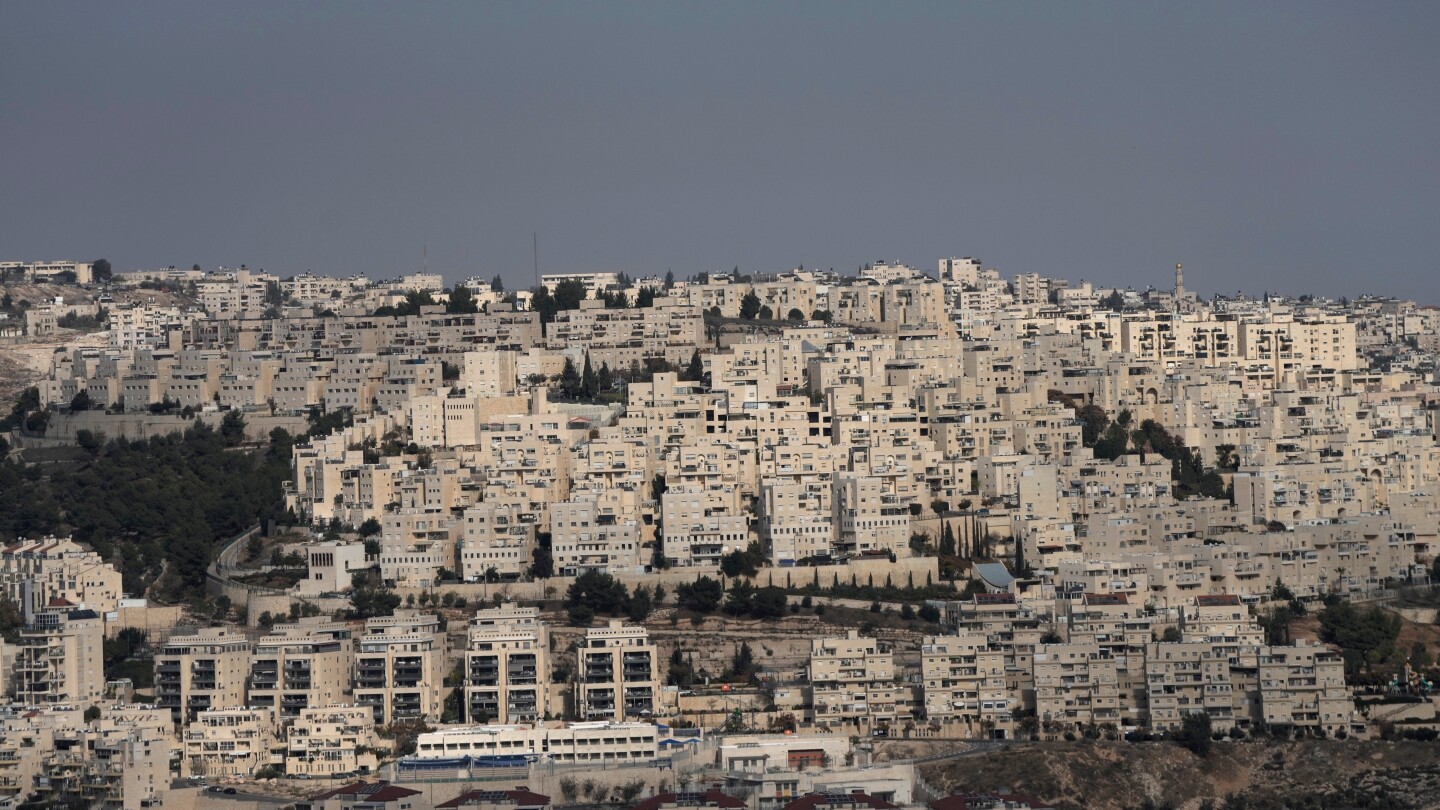
    GENEVA (AP) — The United Nations has added nearly 70 more companies to a blacklist of firms from 11 countries that it says are complicit in violating Palestinian human rights through their business ties to Israeli settlements in the occupied West Bank.

    The new list spotlights companies that do business that’s deemed supportive of the settlements, which are considered by many to be illegal under international law. It includes an array of companies like vendors of construction materials and earth-movers, as well as providers of security, travel and financial services.

    “Businesses working in contexts of conflict have a due diligence responsibility to ensure their activities do not contribute to human rights abuses,” said Ravina Shamdasani, spokesperson of the U.N. human rights office. “We call on businesses to take appropriate action to address the adverse human rights impacts of their activities.”

    The list now contains 158 companies — the vast majority Israeli. The others are from the United States, Canada, China, Britain, France, Germany, Spain, Portugal, the Netherlands and Luxembourg.

    Israel said it “categorically rejects” the publication. “This database is meant to serve as a blacklist against businesses that have committed no wrongdoing,” the Israeli diplomatic mission in Geneva said in a statement. “We call on friends not to yield to this ugly attempt to blacklist Israeli firms.”

    The U.N. office said it had advised the companies of their listing and given them a right of reply.

    The blacklist was born of a vote by the U.N.’s Human Rights Council, which has no legal authority or ability to force companies to act. Its main goal is to name and shame businesses with ties to the settlements. It is not clear what impact inclusion on the blacklist has had on companies’ bottom lines.

    Some companies added to list, some removed

    Newcomers to the list include German building-materials company Heidelberg Materials, Portuguese rail systems provider Steconfer, and Spanish transportation engineering firm Ineco. Among those still on the list are travel-sector companies U.S.-based Expedia Group, Booking Holdings Inc. and Airbnb, Inc.

    Heidelberg Materials said in an email to The Associated Press that it and subsidiary Hanson Israel — which was also added — were not active in the occupied Palestinian territories, and that as a result it considered their inclusion to be “not justified.”

    Steconfer protested that it has a “neutral, apolitical role” as a business and asked the U.N. rights office to reconsider. Its work on a Jerusalem rail transport project is “technical, indirect, and strictly limited to improving public transportation for all residents, without discrimination,” it added in a statement.

    Ineco said it has provided technical expertise for transport engineering projects serving civilians “strictly within internationally recognised territories” in Israel, where it has been active since 2005.

    Following Israel’s “escalation of violence” in Gaza after Hamas’ Oct. 7, 2023, attack, Ineco said it began a review of its strategy in the country and began a process of disengagement. That resulted in “a clear decision” not to pursue new contracts with Israeli authorities or companies while honoring existing contractual obligations, it said in a statement.

    While 68 new companies were added Friday, seven were taken off. A total of 215 business enterprises were assessed in this round, but hundreds more could get a look in the future.

    Among the seven companies taken off the list were French transportation company Alstom and travel service providers eDreams, of Spain, and Opodo, of Britain.

    Israel’s growing isolation

    The rights council passed a resolution nearly a decade ago to create the list, and Israel has sharply criticized it since. The revision could further isolate Israel at a time when some of its European allies have recognized an independent Palestinian state over Israel’s conduct of its war against Hamas in Gaza.

    Months in the making, the revised list comes as Israel has made veiled threats to annex parts or all of the West Bank and has approved plans to build thousands of new settlement homes there.

    The government approved a controversial settlement project last month that would effectively split the West Bank in two, a step that would all but bury hopes for a Palestinian state in the territory.

    The international community says dividing the territory as part of a two-state solution would leave Israel as a country with a solid Jewish majority and allow the Palestinians to realize their dreams of self determination.

    The alternative, many say, is an apartheid-like country divided roughly evenly between Israelis and Palestinians in which Jews would rule over the Palestinians.

    Gathering and assessing claims

    This is the first revision to the list since 2023, when 97 companies were listed — down from 112 in the original list published in 2020. Among those taken off last time was U.S.-based food and cereal giant General Mills.

    The council decided that 10 business activities in the settlements could merit inclusion of a company in the list, such as dumping pollution in Palestinian areas, supplying bulldozing equipment, surveillance gear, and even helping people book travel or lodging in the settlements.

    The U.N. has budgeted enough funding for a single full-time staffer to handle the painstaking, sensitive work of gathering and assessing claims and communicating with companies in question. Claims about hundreds of other companies are awaiting assessment.

    With broad international backing, the Palestinians claim the West Bank, east Jerusalem and Gaza for a future independent state.

    Israel has said it has no intention of dismantling any of its West Bank settlements.

    Over 500,000 Israelis live in the West Bank, in addition to more than 200,000 in east Jerusalem. The postwar future of Gaza, which has suffered massive destruction, remains unclear, though Israeli Prime Minister Benjamin Netanyahu has ruled out an independent Palestinian state.

    Israel and the U.S. regularly accuse the Human Rights Council of anti-Israel bias, and the Trump administration has pulled the United States out.

    ___

    Josef Federman in Jerusalem; Suman Naishadham in Madrid and Helena Alves in Lisbon, Portugal, contributed to this report.

    window.fbAsyncInit = function() {
    FB.init({

    appId : ‘870613919693099’,

    xfbml : true,
    version : ‘v2.9’
    });
    };

    (function(d, s, id){
    var js, fjs = d.getElementsByTagName(s)[0];
    if (d.getElementById(id)) {return;}
    js = d.createElement(s); js.id = id;
    js.src = “https://connect.facebook.net/en_US/sdk.js”;
    fjs.parentNode.insertBefore(js, fjs);
    }(document, ‘script’, ‘facebook-jssdk’));


    Source link

    News

  • Stock Market today: Live updates

    Stock Market today: Live updates


    Traders work on the floor of the New York Stock Exchange during morning trading on February 24, 2026 in New York City.

    Michael M. Santiago | Getty Images

    Stock futures rallied after President Donald Trump said the U.S. and Iran have held talks and that he was halting strikes on Iranian power plants and energy infrastructure, giving investors hope that the Middle East conflict that spiked oil prices and raised fears of a global recession was nearing an end.

    Dow Jones Industrial Average futures jumped 950 points, or 2.1%. S&P 500 futures rose 1.9%, while Nasdaq-100 futures gained 2.1%. Before Trump’s comments, futures were pointing to more losses for equity markets under siege from skyrocketing oil prices and uncertainty about when the duration of the Iran conflict.

    Crude prices dropped after Trump’s post with West Texas Intermediate futures falling more than 9% to around $89 a barrel. International benchmark Brent fell more than 9% to $101 a barrel.

    “I am pleased to report that the United States of America, and the country of Iran, have had, over the last two days, very good and productive conversations regarding a complete and total resolution of our hostilities in the Middle East,” wrote Trump in a Truth Social post.

    “Based on the tenor and tone of these in depth, detailed, and constructive conversations, which will continue throughout the week, I have instructed the Department of War to postpone any and all military strikes against Iranian power plants and energy infrastructure for a five day period, subject to the success of the ongoing meetings and discussions,” the president added.

    Stock Chart IconStock chart icon

    hide content

    Dow futures, 1 day

    Stock futures were off their highest levels of the session after Iranian state media said there were no direct talks between the U.S. and Iran.

    Trump’s announcement came as the Iran war entered its fifth week, with tensions escalating over the weekend on an ultimatum from the president. Trump had threatened an attack on Iranian power plants in 48 hours if the Strait of Hormuz — a key shipping route for oil and other energy products — wasn’t reopened. Iran in turn said it would target U.S. infrastructure, including energy and desalination facilities ​in the Gulf, if the U.S. carried out its threat.

    “Equity markets finally found an off-ramp to the dramatic uncertainty and significantly oversold conditions due to the Iranian conflict,” wrote Jeff Kilburg, founder and CEO of KKM Financial and manager of the Essential 40 Stock ETF (ESN). “If this proves to be a foundation for peace in the Middle East, equities could get back to all-time highs.”

    Before Monday’s rebound, the Dow and Nasdaq Composite were each threatening to fall into correction territory — a 10% pullback — with both down around 9.8% from their record levels through Friday. The S&P 500 was off by 7% from its high before Monday’s turnaround.

    It was a broad rebound in early trading, with cyclical shares like banks and industrials surging as well as technology shares. JPMorgan Chase and Morgan Stanley were each 2% higher in premarket trading. Caterpillar and Deere added 2% apiece. Nvidia and Apple were also both 2% higher. Airline stocks such as Delta Air Lines and United Airlines were each up more than 4% as the price of oil slid.

    Energy stocks were among the few shares in the red, with Exxon Mobil and Chevron lower.

    The Dow and Nasdaq fell around 2% each last week, while the S&P 500 lost 1.5% as the Iran conflict continued to drag down markets. For the Dow, it was the first four-week losing streak since 2023.

    “The market has been desperate for any good news, and this appears to be, at least on the surface, the best news we can expect,” said Art Hogan, chief market strategist at B. Riley Wealth Management. “If we were able to see any downward pressure on energy prices, the market is like a coiled spring looking for a reason to move higher.”

    CNBC’s Fred Imbert contributing reporting.


    Source link

    News

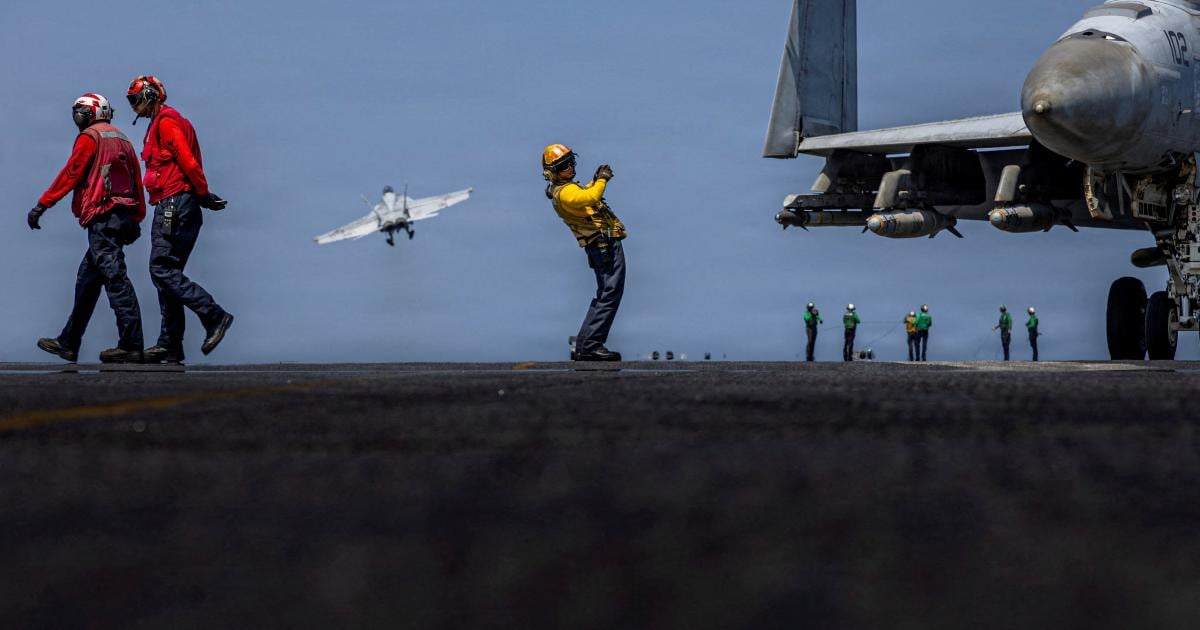
  • America Has No Good Options in Iran

    America Has No Good Options in Iran


    Three weeks into the joint U.S.-Israeli war on Iran, the outlines of a familiar and dangerous pattern are emerging. The current conflict may for now be significantly different than American wars in Afghanistan, Iraq, or Vietnam—it has not yet drawn in U.S. ground forces in great numbers. But the Iran war shares a deeper strategic reality with these predecessors. Washington is once again fighting a weaker regional power without having clear objectives, a defined theory of victory, and a viable exit strategy.

    The result is a different kind of quagmire, but a quagmire nonetheless. U.S. forces may get bogged down in air and sea operations that drag on for months or years, impose mounting costs on the global economy, destabilize the wider Middle East, and exact a growing toll on civilian populations in Iran, Israel, Lebanon, and beyond. As in past conflicts, the asymmetry at the heart of the war favors the weaker party. For the United States to win, it must achieve expansive and ambiguous goals—regime change or an Iran so weak that it cannot destabilize the region or disrupt global oil markets. For Iran, victory may simply mean survival and the ability to impose costs on the global economy through intermittent attacks that dramatically limit passage through the Strait of Hormuz or damage delicate and vital oil infrastructure in the Gulf states.

    It is becoming increasingly clear that the current U.S.-Israeli campaign of missile and drone strikes is not about to topple the entrenched regime. Nor will it entirely knock out Iran’s conventional capacities such that Tehran cannot interfere with passage through the Strait of Hormuz or threaten facilities vital to the global energy trade.The United States might now feel the urge to escalate, potentially using ground forces to seize Iranian facilities and territory or backing separatist forces around the country. But the risks of these forms of escalation far outweigh their possible gains. At this point, with the global economy jittering and the Middle East in convulsions, Washington’s best bet is not to further commit to a war it entered recklessly but to find a way out.

    NO VICTORY IN SIGHT

    From the outset, the American war effort has been defined by strategic incoherence. When President Donald Trump launched military operations, he did so without preparing the American public or articulating a clear set of achievable objectives. His initial remarks, delivered in the middle of the night, called on the Iranian people to rise up and overthrow their government, effectively setting regime change as the bar for success. That was an extraordinarily high—and likely unattainable—standard. It also handed the Iranian leadership a simple path to victory: endure.

    Early developments suggest that, if anything, actions by the United States and Israel have actually consolidated hard-line control. If Washington and Jerusalem expected the deaths of top Iranian leaders to lead to the collapse of the Islamic Republic, they have been proved wrong. No doubt the killing of Supreme Leader Ali Khamenei and other top officials has led to some increasing challenges for the regime, but there are few indications of security forces starting to stand down or turn against their commanders. Iran’s war effort is still coherent and demonstrates clear structures of command and control. The regime has developed a web of institutions that have continued to function in the face of an assault on its leaders. It has decentralized authority to launch attacks, allowing the Iranian military to continue the war effort even as commanders and leaders get picked off.

    Indeed, killing Khamenei may have made it harder, not easier, to loosen the regime’s grip on the country. Prior to the war, many analysts believed that Khamenei’s eventual death (he was sickly and 86 years old) could open space for internal recalibration. That may not have resulted in a democratic transformation, but it could have engineered a shift toward more pragmatic leadership that reconsidered Iran’s regional posture and nuclear ambitions with the larger aim of improving the country’s economic position—as well as the Islamic Republic’s odds for long-term survival.

    That possibility has now almost certainly been foreclosed. By forcing a leadership transition under conditions of extreme duress, the war has empowered the most hard-line elements in Iran. Khamenei’s son Mojtaba is now the supreme leader. He is a hard-liner with close ties to the Islamic Revolutionary Guard Corps. And he has lost much of his family to Israeli strikes. His appointment as supreme leader is not a step toward change or any softening of the regime but a guarantee of entrenchment.

    It is increasingly clear that the U.S.-Israeli campaign is not about to topple the Iranian regime.

    Regime change now seems less likely in the near term, but many proponents of the joint U.S.-Israeli campaign still think that it can succeed in the coming weeks in neutering Iran as a military threat. From the start of the war, the U.S. military, unlike the president, emphasized more limited objectives. It has insisted that it is focused on degrading Iran’s military capabilities, including Iranian missile forces, naval assets, and the nuclear program, as well as Tehran’s ability to arm and train its regional proxies. This framing is more realistic than Trump’s bid for regime change, but it recalls a familiar problem that the United States faced in the past in Iraq and Afghanistan.

    To wage counterinsurgency campaigns in those countries, the United States discovered that it needed to achieve near-total control of territory, governance, and security in order to demonstrate to the population that they could trust U.S. forces and their local partners. The Taliban in Afghanistan and the Sunni insurgency in Iraq, by contrast, needed only to hide among the population and sustain violence at a level that undercut the population’s confidence and security. A similar dynamic is now emerging in the Middle East, albeit in a different domain.

    For Washington and its partners, success requires ensuring the free flow of energy, protecting critical infrastructure (especially that related to oil in the Gulf), and maintaining regional stability. For Tehran, it may be enough to periodically attack an occasional tanker in the Strait of Hormuz and bring transport through the narrow passage to a halt, strike energy facilities in the Gulf, or launch occasional missile or drone attacks that penetrate the defenses of Gulf states. Even if 90 percent of Iranian attacks are intercepted, the remaining ten percent can have outsize economic and psychological effects. A single successful strike on a tanker, an oil facility, or a commercial hub ruffles global markets and alters perceptions of risk.

    This is not a war that Iran needs to win decisively. It just needs to demonstrate that the more limited U.S. objective of improving regional security—one well short of regime change—is failing. Thus far, Iran has been able to sustain consistent missile and drone attacks for three weeks. Even if it runs out of long-range missiles and launchers, there are few indications that the United States and Israel are capable of degrading Iran’s drones, short-range missiles, and mines to the point where it cannot wreak havoc in its immediate vicinity and across the Gulf. The aftermath of the 12-Day war last June is instructive. After pounding Iranian targets, Israel and the United States declared Iran’s capabilities dramatically set back. But they soon discovered that Iran was rearming at a much faster rate than they had imagined possible.

    ESCALATION TRAPS

    Faced with this dynamic, the United States may be tempted to escalate to more dramatically set back the nuclear program, compel Iran to cease its attacks on its neighbors, or try to overtly topple the regime. In past conflicts, such as in Iraq and Vietnam, the United States often addressed a deteriorating situation by committing more resources to the fight to try to pull victory from the jaws of defeat. In this case, as in most, the available options are unattractive.

    By taking possession of Iran’s highly enriched uranium, Trump could try to give himself a pathway for declaring victory by striking directly at Iran’s nuclear program and Iran’s ability to quickly build a nuclear weapon. U.S. forces could directly seize the portion of Iran’s stockpile of highly enriched uranium currently stored in tunnels in Isfahan. This would at least allow the United States to claim a clear strategic achievement: depriving Iran of essential nuclear components and dealing a major blow to the nuclear program, long a central focus of U.S. policy if not the focus of this war.

    But this would be far from a simple operation. According to public reporting, the uranium is stored in gas form in canisters that are difficult to transport and must be moved delicately given the nature of the material. Moreover, it is unclear how accessible the tunnels are after previous strikes last June blocked the entrances. This would not be a quick operation, like the raid that killed Osama bin Laden in 2011 or the removal of Venezuelan President Nicolás Maduro in January. It would likely require U.S. forces on the ground for hours or even days.

    It would also take place hundreds of miles inside Iran, in what is likely one of the most heavily defended facilities in the country. Any U.S. action would almost certainly not enjoy the element of surprise since Iran is very likely expecting such an operation. Iranian forces would converge on the area, forcing the United States to establish and hold a land perimeter deep inside hostile territory surrounded by hundreds of thousands of Iranian soldiers. It is not clear that such an operation is feasible, much less prudent.

    Another way to break the resistance of the regime could be to target Iran’s economic lifeline. The United States could seize Kharg Island, in the Persian Gulf, through which roughly 90 percent of Iran’s oil exports flow. U.S. and Israeli forces have already conducted strikes against military defenses on the island and Trump and a number of his allies have been publicly musing about the possibility of taking Kharg. Unlike an inland operation, an attack on Kharg could be conducted through an amphibious or airborne assault, and since the island is not deep inside Iran, it is harder for Tehran to defend and easier for U.S. forces to hold.

    But the downsides of trying to take the island are substantial. First, it would require a major military land operation to take a well-fortified territory one-third the size of Manhattan. Although entirely doable, the operation would certainly imperil U.S. forces, who could suffer significant casualties. Second, fighting on Kharg could significantly damage Iran’s oil infrastructure, driving global prices even higher, an outcome the United States has been trying to avoid.

    More important, it is unclear what taking the island would achieve strategically. The theory underlying such a gambit is that economic pressure would force Iran to change its behavior or accept U.S. terms. But the regime has shown a willingness to absorb severe economic pain, as it has demonstrated for years after being on the receiving end of U.S. sanctions. It is far more likely that Iran would respond by escalating attacks on regional energy infrastructure.

    For the United States, the risks of escalation far outweigh possible gains.

    Events in recent weeks offer a preview of this dynamic. After Israeli strikes on Iran’s South Pars gas field, Iran retaliated by targeting Qatar’s liquefied natural gas infrastructure, knocking out 17 percent of its production capacity for three to five years. An attack on Kharg might trigger an even more aggressive Iranian response of this kind.

    Iran has also demonstrated an acute awareness of U.S. sensitivity to oil prices. The Trump administration’s own actions, which even include easing sanctions on Iranian oil to placate global markets, signals just how alarmed Trump is by the rise in oil prices precipitated by the war. Iran has a clear incentive to continue targeting energy markets.

    Another version of the Kharg operation, but conducted without ground forces, could look much like what Trump threatened to do on March 22: target Iran’s power plants with the hope of compelling a change in Tehran’s behavior. In addition to needlessly hurting civilians and potentially violating the laws of war, such an action would not achieve what Washington hopes it does; rather than accede to Trump’s demands, Iran would more likely respond by targeting similar facilities in the Gulf states. 

    If trying to decisively eliminate the Iranian nuclear program and cripple its oil production are not viable strategies, U.S. officials could consider another escalatory option: intensifying efforts to destabilize the regime from within by arming and supporting internal opposition groups. These groups could include Kurdish forces in northwestern Iran, Baluchi groups on the Pakistani border, and other dissident factions. The United States could also try to exploit divisions within the regime itself, perhaps finding a disgruntled general in the Islamic Revolutionary Guard Corps to work with.

    But this approach carries the risk of producing not regime change but fragmentation and civil war. The likely outcome is not a clean transition but a protracted multisided conflict similar to the chaos that has unfolded in Syria and Libya.

    Other external actors would almost certainly intervene in a war-torn Iran. Turkey would not stand aside if Iranian Kurdish groups gained strength. Pakistan would have concerns about Baluchi militancy. Gulf states would back their own preferred actors. The result could be a flood of weapons and funding into Iran, creating a chaotic and highly unstable environment.

    Israel might be happy to see a fractured and convulsed Iran. But for the United States, such an outcome would be a nightmare. Iran sits at the center of a region that includes Afghanistan, Iraq, and Pakistan. A major internal collapse could create space for terrorist groups, disrupt regional trade, and generate instability that spills across borders.

    THE CASE FOR A LIMITED EXIT

    Three weeks into the war, the United States faces a stark choice: continue escalating in pursuit of ill-defined objectives or recalibrate and seek a way out. The most prudent course is the latter. Trump should declare that the U.S. military has substantially achieved the more limited set of military objectives—degrading Iran’s capabilities—and signal a willingness to halt further escalation. He should pair this message with assurances and public statements that the United States will rein in Israel and will support future attacks on Iran only if Tehran restarts its nuclear program or strikes regional partners.

    Iran may reject such an offer initially. But over time, a U.S. posture oriented toward de-escalation could shift international pressure onto Tehran. Key global actors, including China, Europe, and Gulf states, all of whom have strong interests in stabilizing energy markets, would have incentives to push for an end to the conflict; they would apply greater pressure on Iran to de-escalate as well.

    To be sure, none of this would constitute a clear victory. The United States would remain entangled in the region, managing a weakened but more aggressive Iran. Relations with Gulf partners strained by the economic and security fallout of a war they did not seek may never be the same. And the resources diverted to the Middle East to contain Iran in the aftermath of the war as well as the resources expended during the war would put the U.S. military more broadly on the back foot, particularly in the Indo-Pacific.

    The task ahead is not to rescue an elusive victory but to limit the damage.

    But the alternative—doubling down in search of a decisive outcome—risks a far worse result. American history offers repeated examples of wars entered with confidence and exited with difficulty. In Vietnam, Iraq, and Afghanistan, U.S. leaders escalated in the hope of salvaging success, only to deepen their strategic predicament. Fear of failure and the sunk cost fallacy plunged the United States further into the mire.

    The current conflict presents a similar temptation. But it also offers an opportunity to break the pattern. The Iran war was a choice—one made without a clear plan for what would follow. The consequences of that decision are now becoming apparent. The task ahead is not to rescue an elusive victory but to limit the damage to U.S. interests, to regional stability, and to the lives of civilians across the Middle East.

    That will require accepting an uncomfortable truth. In wars such as this one, the most responsible course is not to press forward in search of a win but to recognize when the costs outweigh the gains—and to step back before a limited conflict becomes an engulfing quagmire.

    Loading…
    Please enable JavaScript for this site to function properly.


    Source link

  • The world just lived through the 11 hottest years on record — what now?

    The world just lived through the 11 hottest years on record — what now?


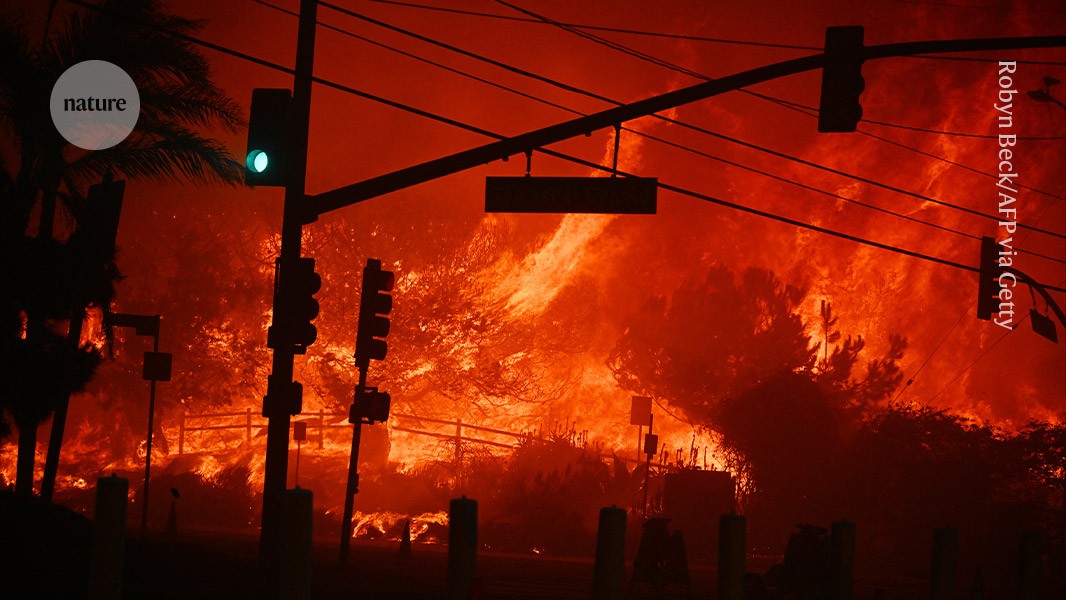
    The past 11 years have been the hottest on record, with 2025 being the second or third hottest year since observations began, according to a report released today by the World Meteorological Organization (WMO).

    The State of the Global Climate 2025 report , which tracks major climate indicators, found atmospheric carbon dioxide and ocean heat reached record levels in 2025. Global surface temperatures were slightly lower in 2025 than the previous year — the hottest on record — but “continue a run of exceptionally high temperatures”, the report states. Sea-ice levels in the Antarctic and the Arctic were among the lowest since 1979.

    The speed at which temperatures are rising, the ocean is heating up and glacial ice mass is melting is concerning, says Mandy Freund, a climate scientist at the University of Melbourne, Australia.

    “We seem to be entering this new era where temperatures will be significantly higher than what they were ten years ago,” says climate scientist Sarah Perkins-Kirkpatrick, from the Australian National University in Canberra. The past three years have seen a step change in temperature that could only be a result of climate change, she adds.

    Energy imbalance

    For the first time, the report includes a measure of the accumulation of heat on Earth and in the atmosphere. The indicator, called the Earth’s energy imbalance (EEI), has been used by climate scientists for at least a decade, and is the difference between incoming energy from the Sun and the amount radiated back into space and allows scientists to monitor the rate of global warming. A positive EEI value means that the total amount of heat stored on Earth is increasing.

    In 2025, EEI reached its highest-level since observations started in 1960, the report states. The increased concentration of greenhouse gases in the atmosphere trap heat, reducing the amount that is radiated back into space.

    Thomas Mortlock, a climate analyst at UNSW, Sydney, says that the inclusion of EEI in the WMO report is significant. Typically, it’s the rise in surface temperatures that makes headlines, but the atmosphere absorbs just 1% of the planet’s excess heat so using it to gauge the severity of global warming is “quite misleading,” he says. More than “91% of all of the excess heat that has been received by the Earth since the 1970s has been absorbed in the oceans”, he adds.

    The planet’s energy imbalance is a much better descriptor to understand the true impact of global warming, he says.

    Freund adds that EEI is also a clearer measure of the long-term changes than comparing average temperatures, which can fluctuate year to year due to events with short-term impacts such as volcanic eruptions or La Niña events.

    Record greenhouse gases


    Source link

  • China Didn’t Want You to See This Video of Xi and Putin. So Reuters Deleted It.

    China Didn’t Want You to See This Video of Xi and Putin. So Reuters Deleted It.


    When two world leaders were caught on a hot mic having a bizarre conversation about living forever, the news agency Reuters realized it was a big story.

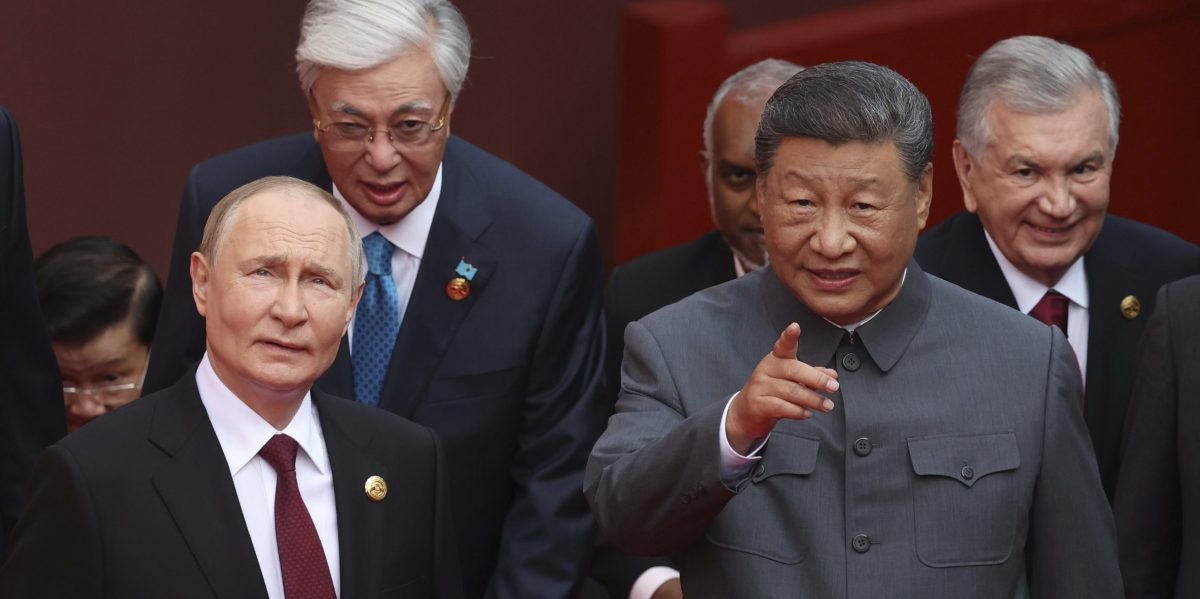
    Reuters reported on and aired the footage of Russia’s Vladimir Putin and China’s Xi Jinping discussing organ transplantation as a means of life extension and perhaps immortality during a September 3 Victory Day Parade in China, a procession celebrating the end of the Second Sino-Japanese War.

    But two days later, Reuters yanked the video off its website, retracted the footage from its wire service, and erased clips from its social media feeds.

    The reason: a takedown letter from a China Central Television, China’s state-controlled television network, which had licensed footage of the event to Reuters.

    Last Friday, CCTV lawyer HE Danning wrote to Reuters demanding the video be taken down. “The editorial treatment applied to this material has resulted in a clear misrepresentation of the facts and statements contained within the licensed feed.”

    Reuters, whose parent company Thomson Reuters conducts a variety of business operations in China, complied.

    “Reuters removed the video from its website and issued a ‘kill’ order to its clients on Friday,” the media company wrote in a statement published on its website, explaining its decision to withdraw the footage from a portal used by other news organizations that rely on Reuters as a wire service.

    The initial Reuters article about the hot mic moment now contains a note that “story has been corrected to withdraw videos, with no changes to text.”

    Reuters didn’t just remove the full four-minute event video from its systems, but also a 38-second annotated clip of the exchange that it had previously posted across its social media platforms, including TikTok, Facebook, and LinkedIn. A Reuters World News podcast episode, which features a short audio clip of the exchange, is still online.

    Footage of the event remains online elsewhere — but not all clips capture the conversation between Xi and Putin as clearly as the Reuters recording. A version of the event footage on CCTV’s official YouTube channel includes audio of an announcer speaking and music playing, obscuring the conversation about life extension between Xi and Putin.

    In the version of the video Reuters posted to TikTok (and later deleted), Xi and Putin stroll around like old chums as they discuss, through translators, “immortality in a conversation caught on a hot mic,” as Reuters summarized in the opening title card. 

    During the conversation, as seen in the Reuters clip, Xi says: “In the past people rarely lived longer than 70 years, but today they say that at 70 you are still a child.”

    “Human organs can be continuously transplanted. The longer you live, the younger you become and even achieve immortality.”

    The Russian state-funded outlet RT later posted Bloomberg’s version of the video, which remains online and features a similar translation of Xi’s remarks over the same 38-second sequence, which Bloomberg credits to CCTV’s “live transmission” of the parade; RT’s thread also featured an English-dubbed video of Putin confirming the exchange at a press conference.

    Putin responds, “Human organs can be continuously transplanted. The longer you live, the younger you become and even achieve immortality.” Xi then says, “Some predict this century humans may live up to 150 years old.”

    In a statement, Reuters expressed that they “stand by the accuracy of what we published” and that “we have carefully reviewed the published footage, and we have found no reason to believe Reuters longstanding commitment to accurate, unbiased journalism has been compromised.”

    “Reuters withdrew these videos because it no longer held the legal permission to publish this copyrighted material, and as a global news agency, we are committed to respecting the intellectual property rights of others,” Reuters spokesperson Heather Carpenter told The Intercept.

    Thomson Reuters, headquartered in Toronto, engages in an assortment of business ventures in China, such as an AI-based legal “co-counsel” bot, “global trade solutions,” and legal research on Chinese law through its Westlaw product. The company maintains several offices in China, including in Shanghai, Beijing, and a Reuters news bureau in Shenzhen. The news organization is currently hiring for a researcher position at its Beijing bureau.

    Reuters did not respond specifically when asked if its business interests played any interest in complying with the removal request.

    This isn’t the first time Reuters has taken down content at the behest of international authorities. In 2023, Reuters published an exposé about the Indian cyber-espionage firm Appin. An Indian court deemed the article to be “indicative of defamation” and ordered that the article be removed. As the Freedom of the Press Foundation highlighted, even though Indian courts don’t have jurisdiction outside of India, Reuters removed the article not just in India but also worldwide. Once the injunction expired, Reuters reinstated the article.

    The Chinese government has in the past blocked Reuters news websites on occasion for unspecified reasons.

    Seth Stern, director of advocacy at Freedom of the Press Foundation, said Reuters’ decision to remove the video is a blow to press freedom at a critical juncture.

    “International news outlets have a responsibility to uphold press rights internationally, especially in times like these where press freedom is backsliding almost everywhere. Otherwise, journalism’s independence sinks to the lowest common denominator whenever news of global importance breaks in a country governed by a repressive regime.”

    He cautioned that compliance with takedown requests is a slippery slope.

    “What makes [Reuters] think the next censorial regime that might not like what it prints isn’t taking notes?” he asked.


    Source link

    Test

  • China Didn’t Want You to See This Video of Xi and Putin. So Reuters Deleted It.

    China Didn’t Want You to See This Video of Xi and Putin. So Reuters Deleted It.


    When two world leaders were caught on a hot mic having a bizarre conversation about living forever, the news agency Reuters realized it was a big story.

    Reuters reported on and aired the footage of Russia’s Vladimir Putin and China’s Xi Jinping discussing organ transplantation as a means of life extension and perhaps immortality during a September 3 Victory Day Parade in China, a procession celebrating the end of the Second Sino-Japanese War.

    But two days later, Reuters yanked the video off its website, retracted the footage from its wire service, and erased clips from its social media feeds.

    The reason: a takedown letter from a China Central Television, China’s state-controlled television network, which had licensed footage of the event to Reuters.

    Last Friday, CCTV lawyer HE Danning wrote to Reuters demanding the video be taken down. “The editorial treatment applied to this material has resulted in a clear misrepresentation of the facts and statements contained within the licensed feed.”

    Reuters, whose parent company Thomson Reuters conducts a variety of business operations in China, complied.

    “Reuters removed the video from its website and issued a ‘kill’ order to its clients on Friday,” the media company wrote in a statement published on its website, explaining its decision to withdraw the footage from a portal used by other news organizations that rely on Reuters as a wire service.

    The initial Reuters article about the hot mic moment now contains a note that “story has been corrected to withdraw videos, with no changes to text.”

    Reuters didn’t just remove the full four-minute event video from its systems, but also a 38-second annotated clip of the exchange that it had previously posted across its social media platforms, including TikTok, Facebook, and LinkedIn. A Reuters World News podcast episode, which features a short audio clip of the exchange, is still online.

    Footage of the event remains online elsewhere — but not all clips capture the conversation between Xi and Putin as clearly as the Reuters recording. A version of the event footage on CCTV’s official YouTube channel includes audio of an announcer speaking and music playing, obscuring the conversation about life extension between Xi and Putin.

    In the version of the video Reuters posted to TikTok (and later deleted), Xi and Putin stroll around like old chums as they discuss, through translators, “immortality in a conversation caught on a hot mic,” as Reuters summarized in the opening title card. 

    During the conversation, as seen in the Reuters clip, Xi says: “In the past people rarely lived longer than 70 years, but today they say that at 70 you are still a child.”

    “Human organs can be continuously transplanted. The longer you live, the younger you become and even achieve immortality.”

    The Russian state-funded outlet RT later posted Bloomberg’s version of the video, which remains online and features a similar translation of Xi’s remarks over the same 38-second sequence, which Bloomberg credits to CCTV’s “live transmission” of the parade; RT’s thread also featured an English-dubbed video of Putin confirming the exchange at a press conference.

    Putin responds, “Human organs can be continuously transplanted. The longer you live, the younger you become and even achieve immortality.” Xi then says, “Some predict this century humans may live up to 150 years old.”

    In a statement, Reuters expressed that they “stand by the accuracy of what we published” and that “we have carefully reviewed the published footage, and we have found no reason to believe Reuters longstanding commitment to accurate, unbiased journalism has been compromised.”

    “Reuters withdrew these videos because it no longer held the legal permission to publish this copyrighted material, and as a global news agency, we are committed to respecting the intellectual property rights of others,” Reuters spokesperson Heather Carpenter told The Intercept.

    Thomson Reuters, headquartered in Toronto, engages in an assortment of business ventures in China, such as an AI-based legal “co-counsel” bot, “global trade solutions,” and legal research on Chinese law through its Westlaw product. The company maintains several offices in China, including in Shanghai, Beijing, and a Reuters news bureau in Shenzhen. The news organization is currently hiring for a researcher position at its Beijing bureau.

    Reuters did not respond specifically when asked if its business interests played any interest in complying with the removal request.

    This isn’t the first time Reuters has taken down content at the behest of international authorities. In 2023, Reuters published an exposé about the Indian cyber-espionage firm Appin. An Indian court deemed the article to be “indicative of defamation” and ordered that the article be removed. As the Freedom of the Press Foundation highlighted, even though Indian courts don’t have jurisdiction outside of India, Reuters removed the article not just in India but also worldwide. Once the injunction expired, Reuters reinstated the article.

    The Chinese government has in the past blocked Reuters news websites on occasion for unspecified reasons.

    Seth Stern, director of advocacy at Freedom of the Press Foundation, said Reuters’ decision to remove the video is a blow to press freedom at a critical juncture.

    “International news outlets have a responsibility to uphold press rights internationally, especially in times like these where press freedom is backsliding almost everywhere. Otherwise, journalism’s independence sinks to the lowest common denominator whenever news of global importance breaks in a country governed by a repressive regime.”

    He cautioned that compliance with takedown requests is a slippery slope.

    “What makes [Reuters] think the next censorial regime that might not like what it prints isn’t taking notes?” he asked.


    Source link

    teasaasfafs