Blog

  • Rubio Says Halting Deportations to South Sudan Could Harm Foreign Aid

    Rubio Says Halting Deportations to South Sudan Could Harm Foreign Aid


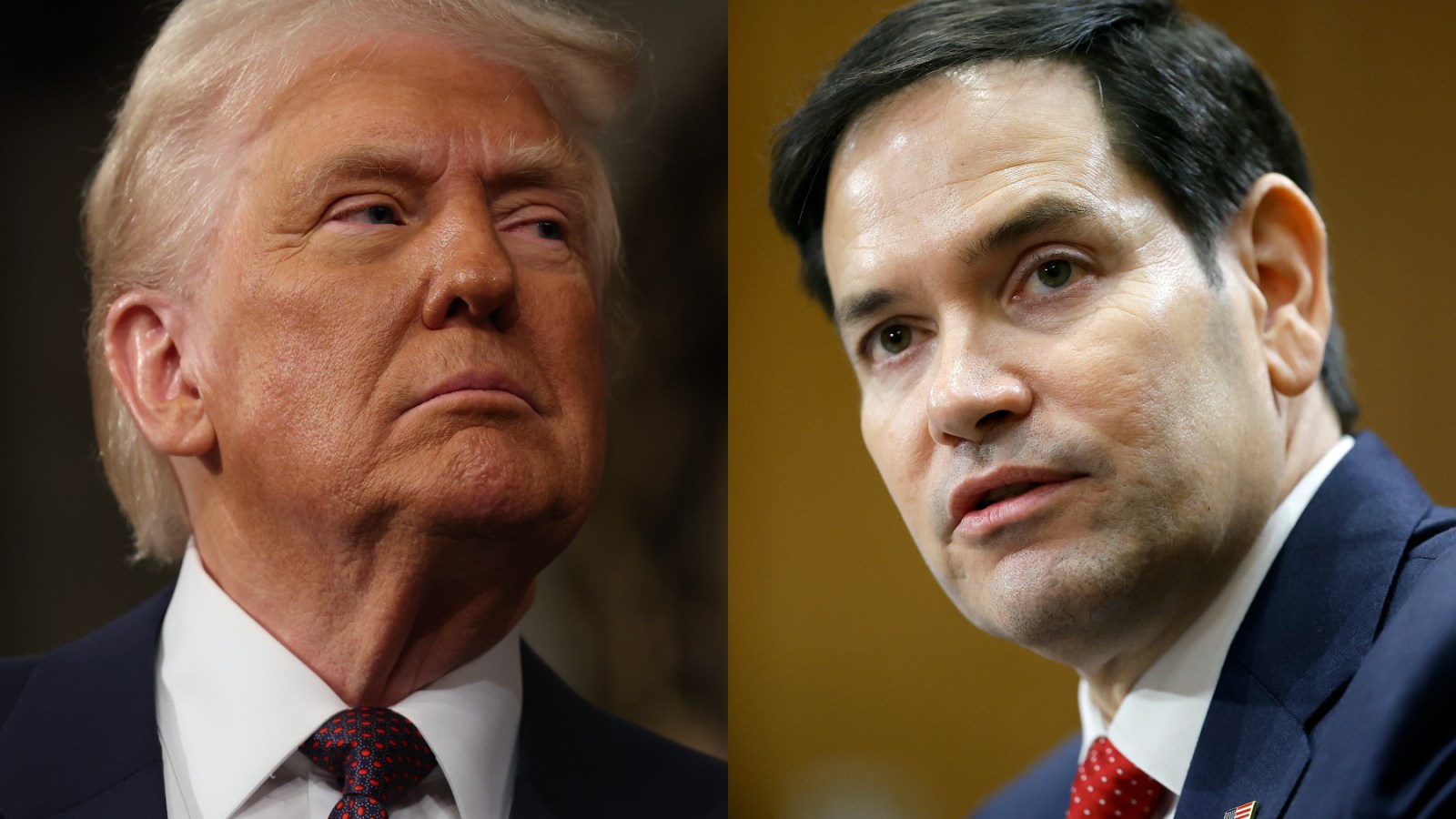
    A judge ruled this week that Donald Trump’s administration violated his order barring officials from deporting people to third countries by attempting to send a group of Asian immigrants to South Sudan — and directed them to maintain custody of the immigrants at a U.S. military base.

    On Friday night, Trump’s Justice Department and Secretary of State Marco Rubio unveiled a wild new argument as they demanded Judge Brian Murphy either reconsider or pause his orders so they can appeal them. The Trump officials argued that blocking the president’s attempt to deport immigrants to war-torn South Sudan will harm efforts to distribute humanitarian aid in the region. 

    “In South Sudan, the orders threaten to derail significant efforts to quietly rebuild a productive working relationship with the government in Juba,” Rubio wrote in a declaration filed alongside the Justice Department’s motion. He continued: “Cooperation between the U.S. and South Sudan is critical, both in terms of removals but also to advance the U.S. government’s humanitarian efforts in the country. Without South Sudan’s cooperation, moving humanitarian relief — food, medicine, etc. — into the region becomes more difficult. It is almost certain the court’s interjection will result in delayed or significantly reduced humanitarian efforts.”

    It’s a rich argument, considering that the Trump administration has gutted the government’s humanitarian efforts, starting with the elimination of the U.S. Agency for International Development. The scraps of USAID, America’s foreign aid bureau, have been folded into Rubio’s State Department.

    Last month, the nonprofit aid group Save the Children reported that it had closed seven free health facilities in South Sudan as a result of foreign aid cuts. The organization told The Washington Post that the Trump administration had terminated about $13 million in funding for South Sudan. The money had come from the State Department and U.S.-funded United Nations programs.

    According to Save the Children, five children with cholera and three adults died last month as they attempted to travel three hours — in 104-degree weather and with “no access to clean water, shade, or medicines” — to the organization’s nearest health facility after the aid cuts forced closures.

    Several projects relating to South Sudan were included in a recent list of canceled USAID contracts and programs, including a $40 million contract labeled, “USAID South Sudan Gender Aware Sustainable Water, Sanitation, and Hygiene Activity,” and a $30 million contract listed as “The Resilience through Agriculture in South Sudan.” 

    As part of its campaign to send immigrants to inhumane locations, the Trump administration earlier this week attempted to deport eight men, whom it accused of significant crimes, to South Sudan, one of the world’s most dangerous countries, with little notice. The immigrants are currently being held on a U.S. military base in Djibouti. 

    Murphy, a Massachusetts district judge, found the attempted deportations to South Sudan violated his previous order barring the Trump administration from deporting noncitizens to a country that is not their country of origin without due process, and without giving them a meaningful opportunity to demonstrate they fear being persecuted, tortured, or killed if they are sent there.

    The Justice Department argued Friday that it had, in fact, complied with the judge’s order as it moved to carry out the deportations to South Sudan. 

    U.S. Immigration and Customs Enforcement (ICE) “provided notice ‘shortly before’ removing these criminal aliens and that notice was ‘meaningful’ and sufficient to comply with this court’s injunction as written,” the Justice Department argued. “These criminal aliens needed only state that they had a fear of removal to South Sudan to receive the other procedures required by the court’s April 18, 2025 injunction. The aliens did not do so.”

    ICE official Garrett Ripa wrote in a declaration, “ICE generally provides an alien 24r hours, depending on exigency, following service of the Notice of Removal for the alien to raise a fear of torture if they are removed to the third country or express an intent to file” a claim under the Convention Against Torture.

    The Trump administration previously tried to deport migrant detainees to Libya, another dangerous and war-torn country, before Murphy clarified such a move would violate his order. 

    Rubio wrote in his declaration that the court’s orders “have interfered with quiet diplomatic efforts and exacerbated internal political and security divisions in Libya.” He suggested the orders had played a role in “the most serious street fighting in Tripoli since 2022,” which “forced a postponement in the announcement of a significant commercial deal to expand activities of a U.S. energy company in Libya.”

    He suggested the judge had caused headaches in dealing with officials in Djibouti, in the Horn of Africa, home to an essential military base for U.S. aircraft. 

    Trending Stories

    “The order interrupted the transit process and required that the aircraft and the eight individuals removed, including convicted felons, temporarily remain in Djibouti,” Rubio wrote. “That action required our government to re-engage the Djiboutians to explain that the mission they had approved had subsequently changed.” 

    He then claimed the judge’s demands have affected “counter-terrorism operations and both United States and multinational military movements.”

    Source link

  • Kyiv comes under large-scale Russian drone and missile attack with explosions heard across the city

    Kyiv comes under large-scale Russian drone and missile attack with explosions heard across the city


    KYIV, Ukraine (AP) — Ukraine’s capital came under a large-scale Russian drone and missile attack overnight and into early Saturday that left at least 15 people injured, according to Ukrainian officials. Explosions and machine gun fire were heard throughout Kyiv as many sought shelter in subway stations.

    The attack came hours after Russia and Ukraine began a major prisoner exchange of hundreds of soldiers and civilians, the first phase of a swap agreed on by the two sides at a meeting in Istanbul last week.

    The second phase is expected to happen later on Saturday.

    In talks held in Istanbul earlier this month that marked the first time the two sides met face to face for peace talks since Russia’s 2022 full-scale invasion, Kyiv and Moscow agreed to swap 1,000 prisoners of war and civilian detainees each. It was a rare moment of cooperation in otherwise failed efforts to reach a ceasefire in the 3-year-old war.

    ‘A difficult night’

    Russia attacked Ukraine with 14 ballistic missiles and 250 Shahed drones overnight, officials said, adding that Ukrainian forces shot down 6 missiles and neutralized 245 drones — 128 drones were shot down and 117 were thwarted using electronic warfare.

    The Kyiv City Military Administration said it was one of the most massive combined missile and drone attacks on the capital.

    “A difficult night for all of us,” the administration said in a statement.

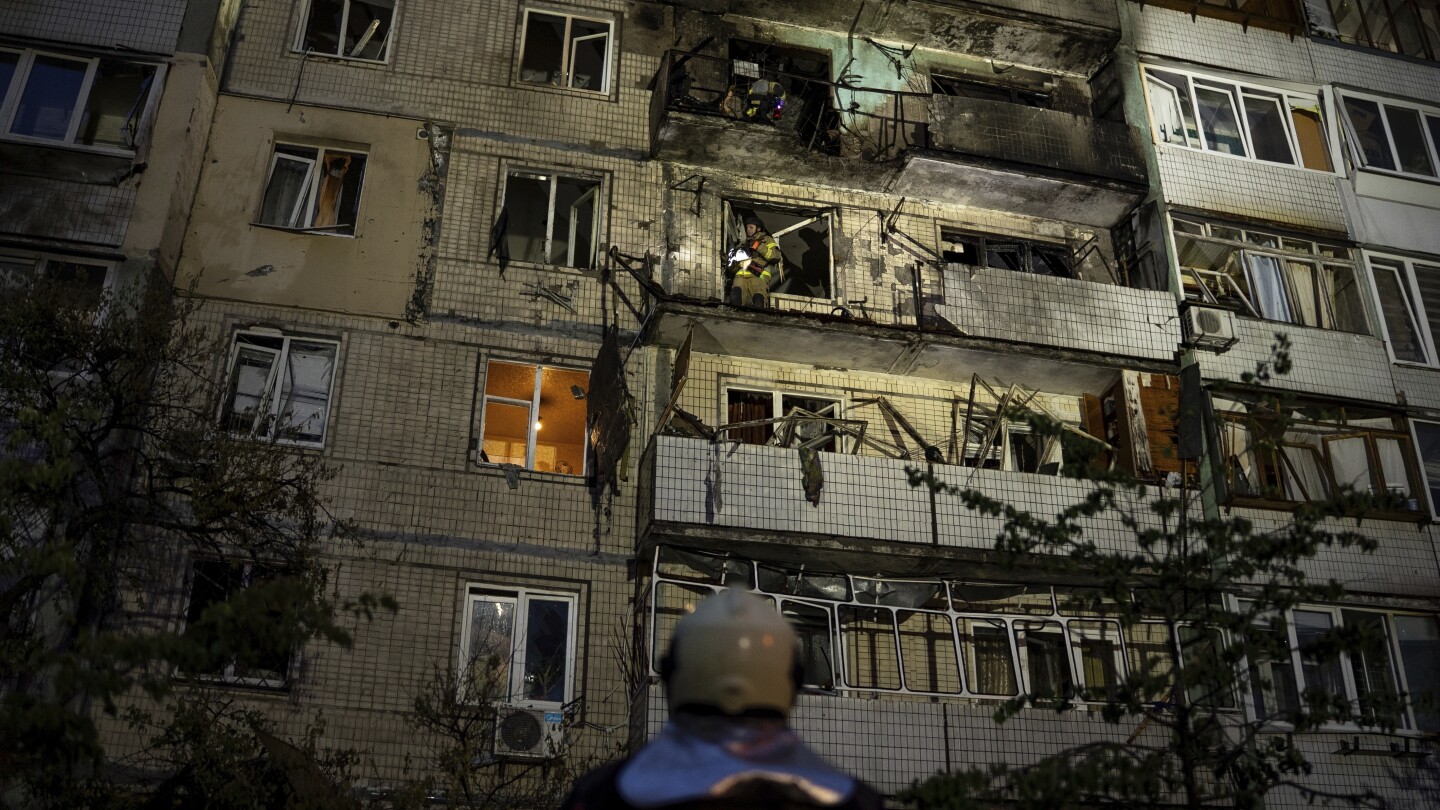
    The debris of intercepted missiles and drones fell in at least six city districts of the Ukrainian capital. According to the acting head of Kyiv’s military administration, Tymur Tkachenko, six people required medical care after the attack and two fires were sparked in the Solomianskyi district of Kyiv.

    The Obolon district, where a residential building was heavily damaged in the attack, was the hardest hit. There were at least five wounded in the area, the administration said.

    Yurii Bondarchuk, a local resident, said the air raid siren “started as usual, then the drones started to fly around as they constantly do.”

    Moments later, he heard a boom and saw shattered glass fly through the air.

    “The balcony is totally wiped out, as well as the windows and the doors,” he said, describing the damage to his apartment as he stood in the dark of the night, smoking a cigarette to calm his nerves while firefighters worked to extinguish the flames.

    The air raid alert in Kyiv lasted more than seven hours, warning of incoming missiles and drones.

    Kyiv’s mayor, Vitalii Klitschko, warned residents ahead of the attack that more than 20 Russian strike drones were heading toward the city. As the attack continued, he said drone debris fell on a shopping mall and a residential building in Obolon district of Kyiv. Emergency services were headed to the site, Klitschko said.

    A complex deal

    The prisoner swap on Friday was the first phase of a complicated deal involving the exchange of 1,000 prisoners from each side.

    Ukrainian President Volodymyr Zelenskyy said the first phase of the deal brought home 390 Ukrainians, with further releases expected over the weekend, which will make it the largest swap of the war. Russia’s Defense Ministry said it received the same number of people from Ukraine.

    The swap took place at the border with Belarus, in northern Ukraine, according to a Ukrainian official who spoke on condition of anonymity because he was not authorized to speak publicly.

    The released Russians were taken to Belarus for medical treatment, the Russian Defense Ministry said.

    However, the exchange — the latest of dozens of swaps since the war began and the biggest involving Ukrainian civilians so far — did not herald a halt in the fighting.

    Battles continued along the roughly 1,000-kilometer (620-mile) front line, where tens of thousands of soldiers have been killed, and neither country has relented in its deep strikes.

    After the May 16 Istanbul meeting, Turkish Foreign Minister Hakan Fidan called the prisoner swap a “confidence-building measure” and said the parties had agreed in principle to meet again.

    But Kremlin spokesman Dmitry Peskov said on Friday that there has been no agreement yet on the venue for the next round of talks as diplomatic maneuvering continued.

    Russian Foreign Minister Sergey Lavrov said Moscow would give Ukraine a draft document outlining its conditions for a “sustainable, long-term, comprehensive” peace agreement, once the ongoing prisoner exchange had finished.

    European leaders have accused Russian President Vladimir Putin of dragging his feet in peace efforts while he tries to press his larger army’s battlefield initiative and capture more Ukrainian land.

    The Istanbul meeting revealed that both sides remained far apart on key conditions for ending the fighting. One such condition for Ukraine, backed by its Western allies, is a temporary ceasefire as a first step toward a peaceful settlement.

    Russia’s Defense Ministry said it had shot down 788 Ukrainian drones away from the battlefield between May 20 and May 23.

    Ukraine’s air force said Russia fired 175 Shahed and decoy drones, as well as a ballistic missile since late Thursday.

    ___

    Follow AP’s coverage of the war in Ukraine at https://apnews.com/hub/russia-ukraine


    Source link

  • Israel’s use of human shields in Gaza is widespread, sources say

    Israel’s use of human shields in Gaza is widespread, sources say


    TEL AVIV, Israel (AP) — The only times the Palestinian man wasn’t bound or blindfolded, he said, was when he was used by Israeli soldiers as their human shield.

    Dressed in army fatigues with a camera fixed to his forehead, Ayman Abu Hamadan was forced into houses in the Gaza Strip to make sure they were clear of bombs and gunmen, he said. When one unit finished with him, he was passed to the next.

    “They beat me and told me: ‘You have no other option; do this or we’ll kill you,’” the 36-year-old told The Associated Press, describing the 2 1/2 weeks he was held last summer by the Israeli military in northern Gaza.

    Orders often came from the top, and at times nearly every platoon used a Palestinian to clear locations, said an Israeli officer, speaking on condition of anonymity for fear of reprisal.

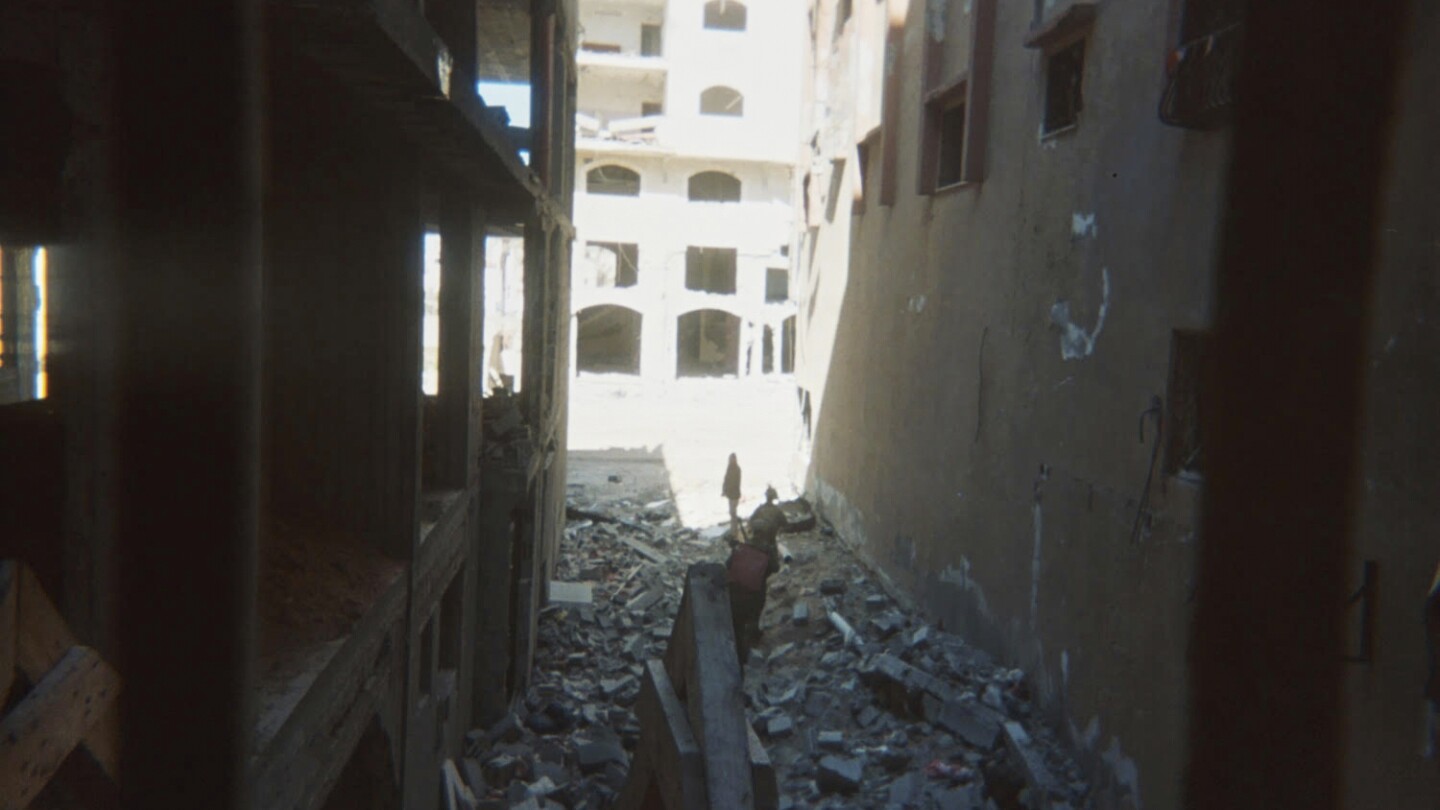
    Several Palestinians and soldiers told the AP that Israeli troops are systematically forcing Palestinians to act as human shields in Gaza, sending them into buildings and tunnels to check for explosives or militants. The dangerous practice has become ubiquitous during 19 months of war, they said.

    In response to these allegations, Israel’s military says it strictly prohibits using civilians as shields — a practice it has long accused Hamas of using in Gaza. Israeli officials blame the militants for the civilian death toll in its offensive that has killed tens of thousands of Palestinians.

    In a statement to the AP, the military said it also bans otherwise coercing civilians to participate in operations, and “all such orders are routinely emphasized to the forces.”

    The military said it’s investigating several cases alleging that Palestinians were involved in missions, but wouldn’t provide details. It didn’t answer questions about the reach of the practice or any orders from commanding officers.

    The AP spoke with seven Palestinians who described being used as shields in Gaza and the occupied West Bank and with two members of Israel’s military who said they engaged in the practice, which is prohibited by international law. Rights groups are ringing the alarm, saying it’s become standard procedure increasingly used in the war.

    “These are not isolated accounts; they point to a systemic failure and a horrifying moral collapse,” said Nadav Weiman, executive director of Breaking the Silence — a whistleblower group of former Israeli soldiers that has collected testimonies about the practice from within the military. “Israel rightly condemns Hamas for using civilians as human shields, but our own soldiers describe doing the very same.”

    Abu Hamadan said he was detained in August after being separated from his family, and soldiers told him he’d help with a “special mission.” He was forced, for 17 days, to search houses and inspect every hole in the ground for tunnels, he said.

    Soldiers stood behind him and, once it was clear, entered the buildings to damage or destroy them, he said. He spent each night bound in a dark room, only to wake up and do it again.

    The use of human shields ‘caught on like fire’

    Rights groups say Israel has used Palestinians as shields in Gaza and the West Bank for decades. The Supreme Court outlawed the practice in 2005. But the groups continued to document violations.

    Still, experts say this war is the first time in decades the practice — and the debate around it — has been so widespread.

    The two Israeli soldiers who spoke to the AP — and a third who provided testimony to Breaking the Silence — said commanders were aware of the use of human shields and tolerated it, with some giving orders to do so. Some said it was referred to as the “mosquito protocol” and that Palestinians were also referred to as “wasps” and other dehumanizing terms.

    The soldiers — who said they’re no longer serving in Gaza — said the practice sped up operations, saved ammunition, and spared combat dogs from injury or death.

    The soldiers said they first became aware human shields were being used shortly after the war erupted on Oct. 7, 2023, when Hamas attacked Israel, and that it became widespread by the middle of 2024. Orders to “bring a mosquito” often came via radio, they said — shorthand everyone understood. Soldiers acted on commanding officers’ orders, according to the officer who spoke to the AP.

    He said that by the end of his nine months in Gaza, every infantry unit used a Palestinian to clear houses before entering.

    “Once this idea was initiated, it caught on like fire in a field,” the 26-year-old said. “People saw how effective and easy it was.”

    He described a 2024 planning meeting where a brigade commander presented to the division commander a slide reading “get a mosquito” and a suggestion they might “just catch one off the streets.”

    The officer wrote two incident reports to the brigade commander detailing the use of human shields, reports that would have been escalated to the division chief, he said. The military said it had no comment when asked whether it received them.

    One report documented the accidental killing of a Palestinian, he said — troops didn’t realize another unit was using him as a shield and shot him as he ran into a house. The officer recommended the Palestinians be dressed in army clothes to avoid misidentification.

    He said he knew of at least one other Palestinian who died while used as a shield — he passed out in a tunnel.

    Troops unsuccessfully pushed back, a sergeant says

    Convincing soldiers to operate lawfully when they see their enemy using questionable practices is difficult, said Michael Schmitt, a distinguished professor of international law at the U.S. Military Academy at West Point. Israeli officials and other observers say Hamas uses civilians as shields as it embeds itself in communities, hiding fighters in hospitals and schools.

    “It’s really a heavy lift to look at your own soldiers and say you have to comply,” Schmitt said.

    One soldier told the AP his unit tried to refuse to use human shields in mid-2024 but were told they had no choice, with a high-ranking officer saying they shouldn’t worry about international humanitarian law.

    The sergeant — speaking on condition of anonymity for fear of reprisal — said the troops used a 16-year-old and a 30-year-old for a few days.

    The boy shook constantly, he said, and both repeated “Rafah, Rafah” — Gaza’s southernmost city, where more than 1 million Palestinians had fled from fighting elsewhere at that point in the war.

    It seemed they were begging to be freed, the sergeant said.

    ‘I have children,’ one man says he pleaded

    Masoud Abu Saeed said he was used as a shield for two weeks in March 2024 in the southern city of Khan Younis.

    “This is extremely dangerous,” he recounted telling a soldier. “I have children and want to reunite with them.”

    The 36-year-old said he was forced into houses, buildings and a hospital to dig up suspected tunnels and clear areas. He said he wore a first-responder vest for easy identification, carrying a phone, hammer and chain cutters.

    During one operation, he bumped into his brother, used as a shield by another unit, he said.

    They hugged. “I thought Israel’s army had executed him,” he said.

    Palestinians also report being used as shields in the West Bank.

    Hazar Estity said soldiers took her Jenin refugee camp home in November, forcing her to film inside several apartments and clear them before troops entered.

    She said she pleaded to return to her 21-month-old son, but soldiers didn’t listen.

    “I was most afraid that they would kill me,” she said. “And that I wouldn’t see my son again.”

    ___

    Magdy reported from Cairo.


    Source link

  • Hello world!

    Welcome to WordPress. This is your first post. Edit or delete it, then start writing!