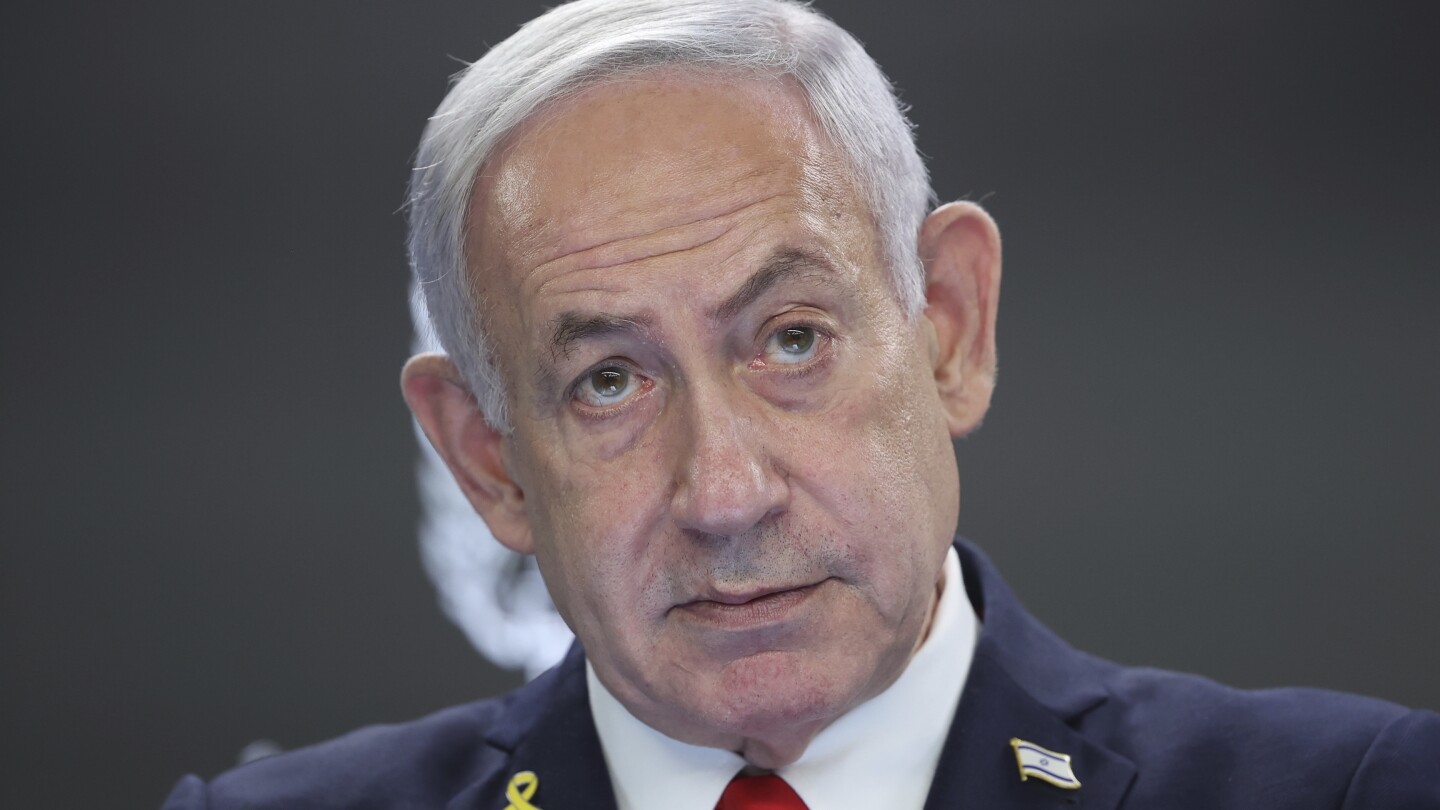
Blog

  • Mossad said to have refused to carry out ground op to kill Hamas leaders in Qatar

    Mossad said to have refused to carry out ground op to kill Hamas leaders in Qatar


    The Mossad spy agency refused to carry out a planned ground operation to kill Hamas’s leaders in Doha, fearing that the operation would doom hostage-ceasefire talks and damage the agency’s ties with Qatar, a key Mideast mediator, the Washington Post reported Friday.

    Instead, Israel was forced to carry out airstrikes, which Israel’s security establishment now increasingly believes failed to kill any of Hamas’s top brass who were gathered at the site of  Tuesday’s strike in Doha.

    That assessment was strengthened Friday, when Hamas announced that its Qatar-based leader Khalil al-Hayya performed funeral rites for his “martyred” son Hammam, effectively negating initial rumors that the terror group’s chief was killed in the attack.

    Amid the fallout from the apparent failed strike, reports began to emerge of significant opposition to the plan, both in the way it was carried out and the timing amid ongoing hostage talks.

    A senior official with knowledge of talks on the hostage release-ceasefire deal told Channel 12 that most of the defense establishment recommended that the attack be put off.

    “The position was clear — there is a deal for the return of the hostages on the table, and the negotiations should be exhausted. Everyone understood the consequences for the hostages and that an operation like this at the current time could harm this possibility,” the official said.
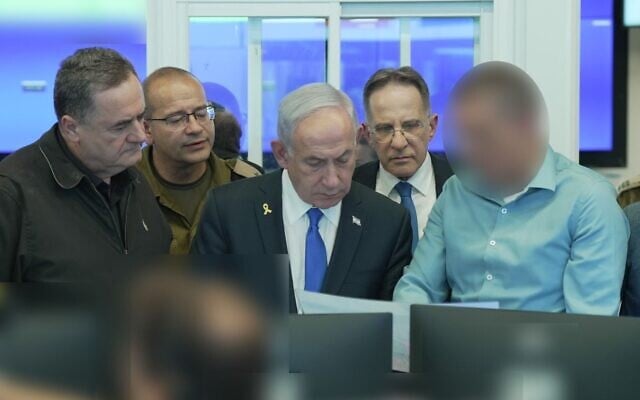
    L-R: Defense Minister Israel Katz, Military Secretary to the Prime Minister Maj. Gen. Roman Gofman, Prime Minister Benjamin Netanyahu, Netanyahu’s chief of staff Tzachi Braverman, and acting Shin Bet head “Mem” are seen at the agency’s command center during strikes on Hamas in Qatar, September 9, 2025. (Shin Bet)

    Channel 12 reported that the plan was opposed by IDF chief of staff Eyal Zamir, Mossad chief David Barnea and National Security Adviser Tzachi Hanegbi.

    It said that Prime Minister Benjamin Netanyahu, Defense Minister Israel Katz, acting Shin Bet chief known as “Mem,” and Strategic Affairs Minister Ron Dermer were in favor of the attack.

    Nitzan Alon, who heads the hostage negotiations, was reportedly not invited to the discussion on the operation, with top officials assuming he would object to any action that could endanger the hostages.

    The Mossad spy agency even declined to carry out a ground operation it had itself drawn up in recent weeks to assassinate the Hamas leaders, forcing the adoption of an air strike, two Israelis familiar with the matter told The Washington Post on Friday.

    Mossad chief Barnea opposed killing the leaders in Qatar due to the spy agency’s relationship with Doha as well as its role as a mediator in talks with Hamas, the sources said.
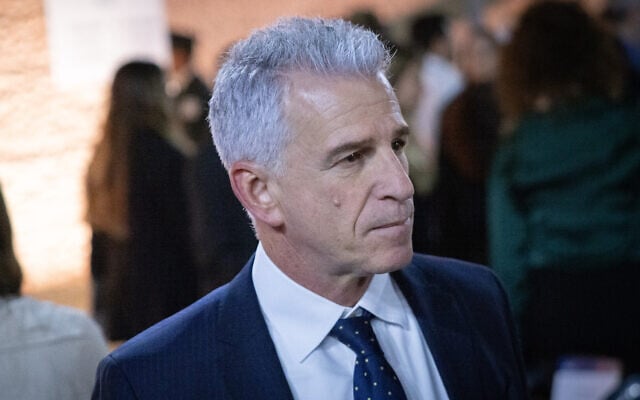
    Mossad chief David Barnea attends a ceremony at the Yad Vashem Holocaust Memorial Museum in Jerusalem on April 23, 2025. (Chaim Goldberg/Flash90)

    Israel’s announcement of the strike said it had been carried out by the Air Force, in conjunction with the Shin Bet security service. The operation was even monitored from a Shin Bet command center.

    The Shin Bet is normally tasked with domestic security, while the Mossad handles operations abroad.

    The Washington Post report noted that it was the Mossad that killed Hamas leader Ismail Haniyeh in Tehran last year. The agency was also heavily involved in Israel’s surprise attack on Iran earlier this year and famously spearheaded the exploding pager operation on thousands of Hezbollah operatives.

    “This time, Mossad was unwilling to do it on the ground,” the Washington Post quoted one of the Israelis as saying, adding that the agency viewed Qatar as an important intermediary in talks with Hamas.

    Another Israeli familiar with the dissent from the Mossad questioned Netanyahu’s timing. “We can get them in one, two, or four years from now, and the Mossad knows how to do it,” he said, referring to the possibility of covertly assassinating Hamas leaders anywhere in the world. “Why do it now?”
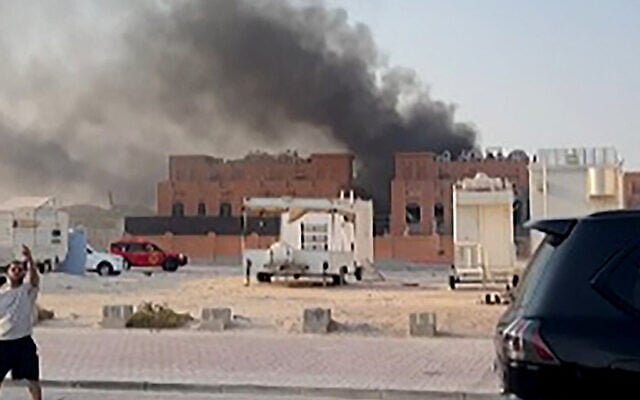
    This frame grab taken from an AFPTV footage shows smoke billowing after an Israeli strike in Doha’s capital Qatar on September 9, 2025. (Photo by Jacqueline PENNEY / AFPTV / AFP)

    The Post said that the Mossad did not respond to a request for comment. The prime minister’s office, which oversees the Mossad, did not respond to requests for comment.

    A separate report Friday by the Wall Street Journal revealed new operational details about the strike, which relied on air-launched ballistic missiles fired from over the Red Sea.

    The newspaper, which cited interviews with senior US officials briefed on the operation, said the strike was designed to avoid having Israeli fighter jets enter Saudi airspace and to be carried out swiftly so the Trump administration would have less time to object.

    According to the report, eight F-15s and four F-35s took part in the operation, flying south from Israel over the Red Sea before launching ballistic missiles toward Qatar from the opposite side of the Arabian Peninsula.

    Israel reportedly didn’t tip off the US until minutes before the strike was launched or give precise details on the target, which the US was able to determine was the Qatari capital using space-based sensors that detected the missiles’ heat signatures. By the time the US alerted Qatar, the missiles had struck 10 minutes earlier.

    “Notice was given so close to actual launching of missiles that there was no way to reverse or halt the order,” a senior American defense official was quoted as saying, while describing the operation as “absolutely unimaginable.”

    None of the top leaders killed

    As the Israeli security establishment increasingly believes that none of Hamas’s leadership was killed in the strike, it has begun checking whether the terror group’s top brass was even in the building that was targeted, Channel 12 reported Friday evening.

    The other possibility still being examined is that the Hamas leaders were in a different part of the building than the section that was hit directly, the report said.

    The report noted that Israel, fearing an even greater backlash from Qatar if there had been significant local casualties, had likely used very precise munitions that targeted specific rooms in the building and not ones with larger warheads that could have ensured the destruction of all in the building, as Israel had deployed in Gaza and Lebanon.

    The security establishment believes that one or two Hamas leaders may have been injured — potentially al-Hayya among them. This could explain Hamas’s decision not to release a photo of him in its statement announcing that he is still alive.
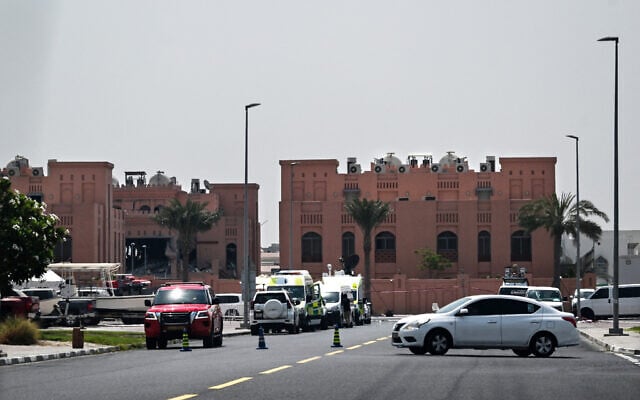
    Damage is seen after an Israeli strike targeted a compound that hosted Hamas’ political leadership in Doha, Qatar on September 10, 2025 (AFP)

    Another scenario being checked is whether the Hamas leaders managed to get a heads-up at the last minute, which enabled them to escape ahead of time, though that would mean that top officials like Hayya didn’t alert his slain son.

    A Hamas source told the Al Araby TV network on Friday that the terror group did not receive any prior warning from an external source over the attack, and that the survival of the Hamas leadership was the result of security arrangements by the terror group and Qatar.

    A defense source cited by Channel 12 tried to paint a more positive picture, charging that the strike “did its job” even though it apparently failed to kill any of the intended targets.

    “Inside Hamas, voices are being heard that Israel is an unexpected enemy, and this scares them. When they see what happened in Qatar, they fear what may happen in Gaza,” the source said.

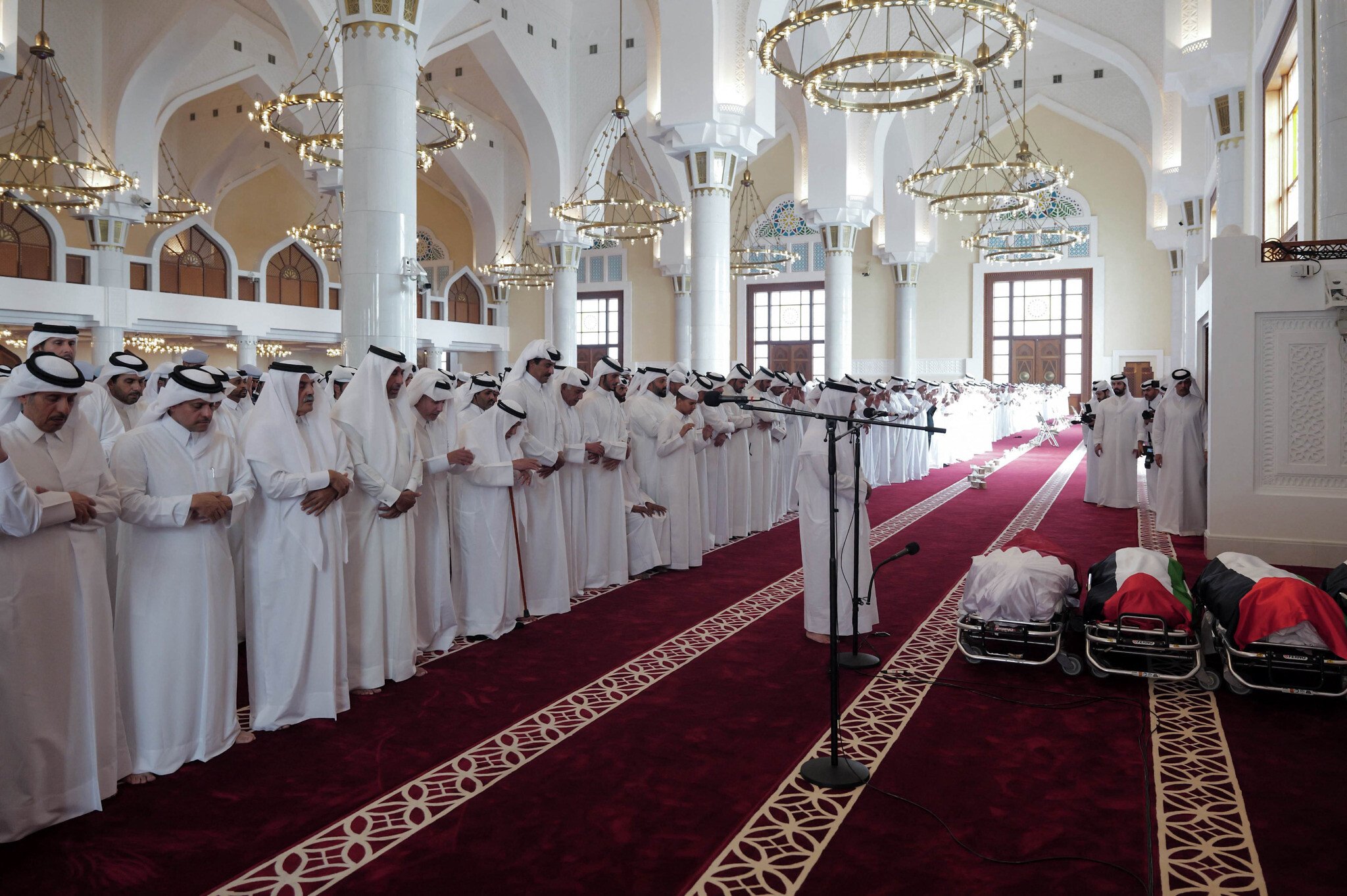
    Hammam and the other acknowledged victims were buried Thursday.
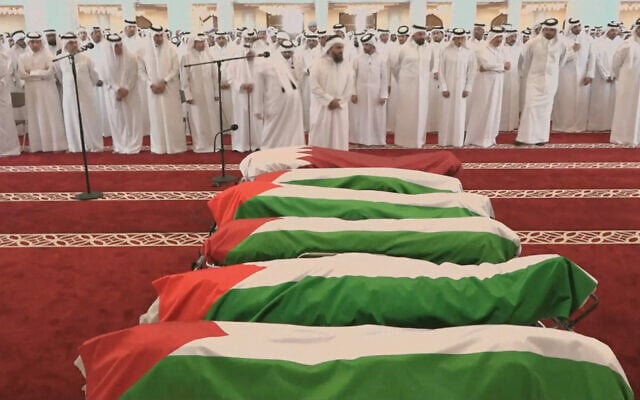
    People attend a funeral held for those killed by an Israeli attack in Doha, including Corporal Badr Saad Mohammed Al-Humaidi Al-Dosari, a member of the Internal Security Force, at the Sheikh Mohammed bin Abdul Wahhab Mosque in Doha, Qatar, September 11, 2025, in this screengrab obtained from a video feed. (Qatar TV/Reuters TV via REUTERS)

    Hamas said al-Hayya was able to hold a ceremony for his son thanks to “special security arrangements” in Qatar. It was not immediately clear if al-Hayya took part in the main ceremony or a separate private one.

    Hamas did not publish a corroborating photo of al-Hayya’s presence and none of the top leaders believed to have been present at the site of the attack have been spotted publicly since the strike, as Hamas and Qatar have tried to maintain an information vacuum since.

    Al-Hayya has been heading Hamas’s hostage negotiating team.
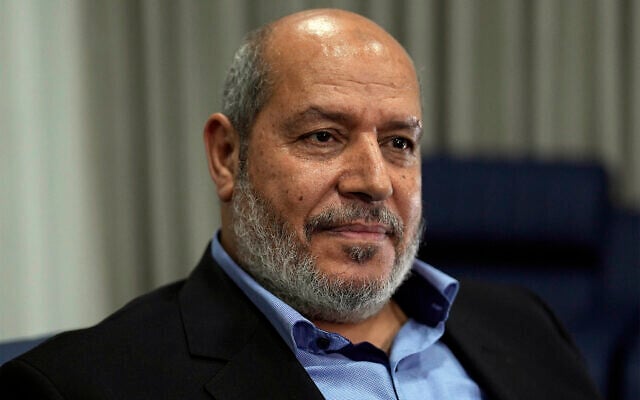
    Hamas’s Khalil al-Hayya during an interview in Istanbul, April 24, 2024. (AP/ Khalil Hamra, File)

    The strike on Qatari soil sparked a fierce diplomatic backlash against Israel, with even US President Donald Trump said upset with Netanyahu.

    Politico reported Thursday that Trump’s administration is growing frustrated with the prime minister, after Israel attempted to eliminate Hamas leaders in Qatar while they were said to be gathered to discuss the US-proposed framework for a hostage release deal earlier in the week.

    Trump himself said Tuesday that he was “very unhappy about every aspect [of the strike]. We’ve got to get the hostages back, but I’m very unhappy about the way that went down.”

    Hamas identified the dead as Jihad Labad, head of the office of top Hamas official Khalil al-Hayya; al-Hayya’s son; and three others described as “associates” — either advisers or bodyguards: Abdallah Abd al-Wahid, Muamen Hassouna and Ahmad Abd al-Malek. In addition, a Qatari security officer, Lance Corporal Badr Saad Mohammed al-Humaidi al-Dosari, was killed.

    Doha will host an emergency Arab-Islamic summit next Sunday and Monday to discuss the Israeli attack, Qatar’s state news agency reported earlier on Thursday.

    !function(f,b,e,v,n,t,s)
    {if(f.fbq)return;n=f.fbq=function(){n.callMethod?
    n.callMethod.apply(n,arguments):n.queue.push(arguments)};
    if(!f._fbq)f._fbq=n;n.push=n;n.loaded=!0;n.version=’2.0′;
    n.queue=[];t=b.createElement(e);t.async=!0;
    t.src=v;s=b.getElementsByTagName(e)[0];
    s.parentNode.insertBefore(t,s)}(window, document,’script’,
    ‘https://connect.facebook.net/en_US/fbevents.js’);
    fbq(‘init’, ‘272776440645465’);
    fbq(‘track’, ‘PageView’);



    Source link

  • Mossad said to have refused to carry out ground op to kill Hamas leaders in Qatar

    Mossad said to have refused to carry out ground op to kill Hamas leaders in Qatar


    The Mossad spy agency refused to carry out a planned ground operation to kill Hamas’s leaders in Doha, fearing that the operation would doom hostage-ceasefire talks and damage the agency’s ties with Qatar, a key Mideast mediator, the Washington Post reported Friday.

    Instead, Israel was forced to carry out airstrikes, which Israel’s security establishment now increasingly believes failed to kill any of Hamas’s top brass who were gathered at the site of  Tuesday’s strike in Doha.

    That assessment was strengthened Friday, when Hamas announced that its Qatar-based leader Khalil al-Hayya performed funeral rites for his “martyred” son Hammam, effectively negating initial rumors that the terror group’s chief was killed in the attack.

    Amid the fallout from the apparent failed strike, reports began to emerge of significant opposition to the plan, both in the way it was carried out and the timing amid ongoing hostage talks.

    A senior official with knowledge of talks on the hostage release-ceasefire deal told Channel 12 that most of the defense establishment recommended that the attack be put off.

    “The position was clear — there is a deal for the return of the hostages on the table, and the negotiations should be exhausted. Everyone understood the consequences for the hostages and that an operation like this at the current time could harm this possibility,” the official said.

    L-R: Defense Minister Israel Katz, Military Secretary to the Prime Minister Maj. Gen. Roman Gofman, Prime Minister Benjamin Netanyahu, Netanyahu’s chief of staff Tzachi Braverman, and acting Shin Bet head “Mem” are seen at the agency’s command center during strikes on Hamas in Qatar, September 9, 2025. (Shin Bet)

    Channel 12 reported that the plan was opposed by IDF chief of staff Eyal Zamir, Mossad chief David Barnea and National Security Adviser Tzachi Hanegbi.

    It said that Prime Minister Benjamin Netanyahu, Defense Minister Israel Katz, acting Shin Bet chief known as “Mem,” and Strategic Affairs Minister Ron Dermer were in favor of the attack.

    Nitzan Alon, who heads the hostage negotiations, was reportedly not invited to the discussion on the operation, with top officials assuming he would object to any action that could endanger the hostages.

    The Mossad spy agency even declined to carry out a ground operation it had itself drawn up in recent weeks to assassinate the Hamas leaders, forcing the adoption of an air strike, two Israelis familiar with the matter told The Washington Post on Friday.

    Mossad chief Barnea opposed killing the leaders in Qatar due to the spy agency’s relationship with Doha as well as its role as a mediator in talks with Hamas, the sources said.

    Mossad chief David Barnea attends a ceremony at the Yad Vashem Holocaust Memorial Museum in Jerusalem on April 23, 2025. (Chaim Goldberg/Flash90)

    Israel’s announcement of the strike said it had been carried out by the Air Force, in conjunction with the Shin Bet security service. The operation was even monitored from a Shin Bet command center.

    The Shin Bet is normally tasked with domestic security, while the Mossad handles operations abroad.

    The Washington Post report noted that it was the Mossad that killed Hamas leader Ismail Haniyeh in Tehran last year. The agency was also heavily involved in Israel’s surprise attack on Iran earlier this year and famously spearheaded the exploding pager operation on thousands of Hezbollah operatives.

    “This time, Mossad was unwilling to do it on the ground,” the Washington Post quoted one of the Israelis as saying, adding that the agency viewed Qatar as an important intermediary in talks with Hamas.

    Another Israeli familiar with the dissent from the Mossad questioned Netanyahu’s timing. “We can get them in one, two, or four years from now, and the Mossad knows how to do it,” he said, referring to the possibility of covertly assassinating Hamas leaders anywhere in the world. “Why do it now?”

    This frame grab taken from an AFPTV footage shows smoke billowing after an Israeli strike in Doha’s capital Qatar on September 9, 2025. (Photo by Jacqueline PENNEY / AFPTV / AFP)

    The Post said that the Mossad did not respond to a request for comment. The prime minister’s office, which oversees the Mossad, did not respond to requests for comment.

    A separate report Friday by the Wall Street Journal revealed new operational details about the strike, which relied on air-launched ballistic missiles fired from over the Red Sea.

    The newspaper, which cited interviews with senior US officials briefed on the operation, said the strike was designed to avoid having Israeli fighter jets enter Saudi airspace and to be carried out swiftly so the Trump administration would have less time to object.

    According to the report, eight F-15s and four F-35s took part in the operation, flying south from Israel over the Red Sea before launching ballistic missiles toward Qatar from the opposite side of the Arabian Peninsula.

    Israel reportedly didn’t tip off the US until minutes before the strike was launched or give precise details on the target, which the US was able to determine was the Qatari capital using space-based sensors that detected the missiles’ heat signatures. By the time the US alerted Qatar, the missiles had struck 10 minutes earlier.

    “Notice was given so close to actual launching of missiles that there was no way to reverse or halt the order,” a senior American defense official was quoted as saying, while describing the operation as “absolutely unimaginable.”

    None of the top leaders killed

    As the Israeli security establishment increasingly believes that none of Hamas’s leadership was killed in the strike, it has begun checking whether the terror group’s top brass was even in the building that was targeted, Channel 12 reported Friday evening.

    The other possibility still being examined is that the Hamas leaders were in a different part of the building than the section that was hit directly, the report said.

    The report noted that Israel, fearing an even greater backlash from Qatar if there had been significant local casualties, had likely used very precise munitions that targeted specific rooms in the building and not ones with larger warheads that could have ensured the destruction of all in the building, as Israel had deployed in Gaza and Lebanon.

    The security establishment believes that one or two Hamas leaders may have been injured — potentially al-Hayya among them. This could explain Hamas’s decision not to release a photo of him in its statement announcing that he is still alive.

    Damage is seen after an Israeli strike targeted a compound that hosted Hamas’ political leadership in Doha, Qatar on September 10, 2025 (AFP)

    Another scenario being checked is whether the Hamas leaders managed to get a heads-up at the last minute, which enabled them to escape ahead of time, though that would mean that top officials like Hayya didn’t alert his slain son.

    A Hamas source told the Al Araby TV network on Friday that the terror group did not receive any prior warning from an external source over the attack, and that the survival of the Hamas leadership was the result of security arrangements by the terror group and Qatar.

    A defense source cited by Channel 12 tried to paint a more positive picture, charging that the strike “did its job” even though it apparently failed to kill any of the intended targets.

    “Inside Hamas, voices are being heard that Israel is an unexpected enemy, and this scares them. When they see what happened in Qatar, they fear what may happen in Gaza,” the source said.

    Hammam and the other acknowledged victims were buried Thursday.

    People attend a funeral held for those killed by an Israeli attack in Doha, including Corporal Badr Saad Mohammed Al-Humaidi Al-Dosari, a member of the Internal Security Force, at the Sheikh Mohammed bin Abdul Wahhab Mosque in Doha, Qatar, September 11, 2025, in this screengrab obtained from a video feed. (Qatar TV/Reuters TV via REUTERS)

    Hamas said al-Hayya was able to hold a ceremony for his son thanks to “special security arrangements” in Qatar. It was not immediately clear if al-Hayya took part in the main ceremony or a separate private one.

    Hamas did not publish a corroborating photo of al-Hayya’s presence and none of the top leaders believed to have been present at the site of the attack have been spotted publicly since the strike, as Hamas and Qatar have tried to maintain an information vacuum since.

    Al-Hayya has been heading Hamas’s hostage negotiating team.

    Hamas’s Khalil al-Hayya during an interview in Istanbul, April 24, 2024. (AP/ Khalil Hamra, File)

    The strike on Qatari soil sparked a fierce diplomatic backlash against Israel, with even US President Donald Trump said upset with Netanyahu.

    Politico reported Thursday that Trump’s administration is growing frustrated with the prime minister, after Israel attempted to eliminate Hamas leaders in Qatar while they were said to be gathered to discuss the US-proposed framework for a hostage release deal earlier in the week.

    Trump himself said Tuesday that he was “very unhappy about every aspect [of the strike]. We’ve got to get the hostages back, but I’m very unhappy about the way that went down.”

    Hamas identified the dead as Jihad Labad, head of the office of top Hamas official Khalil al-Hayya; al-Hayya’s son; and three others described as “associates” — either advisers or bodyguards: Abdallah Abd al-Wahid, Muamen Hassouna and Ahmad Abd al-Malek. In addition, a Qatari security officer, Lance Corporal Badr Saad Mohammed al-Humaidi al-Dosari, was killed.

    Doha will host an emergency Arab-Islamic summit next Sunday and Monday to discuss the Israeli attack, Qatar’s state news agency reported earlier on Thursday.

    !function(f,b,e,v,n,t,s)
    {if(f.fbq)return;n=f.fbq=function(){n.callMethod?
    n.callMethod.apply(n,arguments):n.queue.push(arguments)};
    if(!f._fbq)f._fbq=n;n.push=n;n.loaded=!0;n.version=’2.0′;
    n.queue=[];t=b.createElement(e);t.async=!0;
    t.src=v;s=b.getElementsByTagName(e)[0];
    s.parentNode.insertBefore(t,s)}(window, document,’script’,
    ‘https://connect.facebook.net/en_US/fbevents.js’);
    fbq(‘init’, ‘272776440645465’);
    fbq(‘track’, ‘PageView’);



    Source link

  • Mossad said to have refused to carry out ground op to kill Hamas leaders in Qatar

    Mossad said to have refused to carry out ground op to kill Hamas leaders in Qatar


    The Mossad spy agency refused to carry out a planned ground operation to kill Hamas’s leaders in Doha, fearing that the operation would doom hostage-ceasefire talks and damage the agency’s ties with Qatar, a key Mideast mediator, the Washington Post reported Friday.

    Instead, Israel was forced to carry out airstrikes, which Israel’s security establishment now increasingly believes failed to kill any of Hamas’s top brass who were gathered at the site of  Tuesday’s strike in Doha.

    That assessment was strengthened Friday, when Hamas announced that its Qatar-based leader Khalil al-Hayya performed funeral rites for his “martyred” son Hammam, effectively negating initial rumors that the terror group’s chief was killed in the attack.

    Amid the fallout from the apparent failed strike, reports began to emerge of significant opposition to the plan, both in the way it was carried out and the timing amid ongoing hostage talks.

    A senior official with knowledge of talks on the hostage release-ceasefire deal told Channel 12 that most of the defense establishment recommended that the attack be put off.

    “The position was clear — there is a deal for the return of the hostages on the table, and the negotiations should be exhausted. Everyone understood the consequences for the hostages and that an operation like this at the current time could harm this possibility,” the official said.

    L-R: Defense Minister Israel Katz, Military Secretary to the Prime Minister Maj. Gen. Roman Gofman, Prime Minister Benjamin Netanyahu, Netanyahu’s chief of staff Tzachi Braverman, and acting Shin Bet head “Mem” are seen at the agency’s command center during strikes on Hamas in Qatar, September 9, 2025. (Shin Bet)

    Channel 12 reported that the plan was opposed by IDF chief of staff Eyal Zamir, Mossad chief David Barnea and National Security Adviser Tzachi Hanegbi.

    It said that Prime Minister Benjamin Netanyahu, Defense Minister Israel Katz, acting Shin Bet chief known as “Mem,” and Strategic Affairs Minister Ron Dermer were in favor of the attack.

    Nitzan Alon, who heads the hostage negotiations, was reportedly not invited to the discussion on the operation, with top officials assuming he would object to any action that could endanger the hostages.

    The Mossad spy agency even declined to carry out a ground operation it had itself drawn up in recent weeks to assassinate the Hamas leaders, forcing the adoption of an air strike, two Israelis familiar with the matter told The Washington Post on Friday.

    Mossad chief Barnea opposed killing the leaders in Qatar due to the spy agency’s relationship with Doha as well as its role as a mediator in talks with Hamas, the sources said.

    Mossad chief David Barnea attends a ceremony at the Yad Vashem Holocaust Memorial Museum in Jerusalem on April 23, 2025. (Chaim Goldberg/Flash90)

    Israel’s announcement of the strike said it had been carried out by the Air Force, in conjunction with the Shin Bet security service. The operation was even monitored from a Shin Bet command center.

    The Shin Bet is normally tasked with domestic security, while the Mossad handles operations abroad.

    The Washington Post report noted that it was the Mossad that killed Hamas leader Ismail Haniyeh in Tehran last year. The agency was also heavily involved in Israel’s surprise attack on Iran earlier this year and famously spearheaded the exploding pager operation on thousands of Hezbollah operatives.

    “This time, Mossad was unwilling to do it on the ground,” the Washington Post quoted one of the Israelis as saying, adding that the agency viewed Qatar as an important intermediary in talks with Hamas.

    Another Israeli familiar with the dissent from the Mossad questioned Netanyahu’s timing. “We can get them in one, two, or four years from now, and the Mossad knows how to do it,” he said, referring to the possibility of covertly assassinating Hamas leaders anywhere in the world. “Why do it now?”

    This frame grab taken from an AFPTV footage shows smoke billowing after an Israeli strike in Doha’s capital Qatar on September 9, 2025. (Photo by Jacqueline PENNEY / AFPTV / AFP)

    The Post said that the Mossad did not respond to a request for comment. The prime minister’s office, which oversees the Mossad, did not respond to requests for comment.

    A separate report Friday by the Wall Street Journal revealed new operational details about the strike, which relied on air-launched ballistic missiles fired from over the Red Sea.

    The newspaper, which cited interviews with senior US officials briefed on the operation, said the strike was designed to avoid having Israeli fighter jets enter Saudi airspace and to be carried out swiftly so the Trump administration would have less time to object.

    According to the report, eight F-15s and four F-35s took part in the operation, flying south from Israel over the Red Sea before launching ballistic missiles toward Qatar from the opposite side of the Arabian Peninsula.

    Israel reportedly didn’t tip off the US until minutes before the strike was launched or give precise details on the target, which the US was able to determine was the Qatari capital using space-based sensors that detected the missiles’ heat signatures. By the time the US alerted Qatar, the missiles had struck 10 minutes earlier.

    “Notice was given so close to actual launching of missiles that there was no way to reverse or halt the order,” a senior American defense official was quoted as saying, while describing the operation as “absolutely unimaginable.”

    None of the top leaders killed

    As the Israeli security establishment increasingly believes that none of Hamas’s leadership was killed in the strike, it has begun checking whether the terror group’s top brass was even in the building that was targeted, Channel 12 reported Friday evening.

    The other possibility still being examined is that the Hamas leaders were in a different part of the building than the section that was hit directly, the report said.

    The report noted that Israel, fearing an even greater backlash from Qatar if there had been significant local casualties, had likely used very precise munitions that targeted specific rooms in the building and not ones with larger warheads that could have ensured the destruction of all in the building, as Israel had deployed in Gaza and Lebanon.

    The security establishment believes that one or two Hamas leaders may have been injured — potentially al-Hayya among them. This could explain Hamas’s decision not to release a photo of him in its statement announcing that he is still alive.

    Damage is seen after an Israeli strike targeted a compound that hosted Hamas’ political leadership in Doha, Qatar on September 10, 2025 (AFP)

    Another scenario being checked is whether the Hamas leaders managed to get a heads-up at the last minute, which enabled them to escape ahead of time, though that would mean that top officials like Hayya didn’t alert his slain son.

    A Hamas source told the Al Araby TV network on Friday that the terror group did not receive any prior warning from an external source over the attack, and that the survival of the Hamas leadership was the result of security arrangements by the terror group and Qatar.

    A defense source cited by Channel 12 tried to paint a more positive picture, charging that the strike “did its job” even though it apparently failed to kill any of the intended targets.

    “Inside Hamas, voices are being heard that Israel is an unexpected enemy, and this scares them. When they see what happened in Qatar, they fear what may happen in Gaza,” the source said.

    Hammam and the other acknowledged victims were buried Thursday.

    People attend a funeral held for those killed by an Israeli attack in Doha, including Corporal Badr Saad Mohammed Al-Humaidi Al-Dosari, a member of the Internal Security Force, at the Sheikh Mohammed bin Abdul Wahhab Mosque in Doha, Qatar, September 11, 2025, in this screengrab obtained from a video feed. (Qatar TV/Reuters TV via REUTERS)

    Hamas said al-Hayya was able to hold a ceremony for his son thanks to “special security arrangements” in Qatar. It was not immediately clear if al-Hayya took part in the main ceremony or a separate private one.

    Hamas did not publish a corroborating photo of al-Hayya’s presence and none of the top leaders believed to have been present at the site of the attack have been spotted publicly since the strike, as Hamas and Qatar have tried to maintain an information vacuum since.

    Al-Hayya has been heading Hamas’s hostage negotiating team.

    Hamas’s Khalil al-Hayya during an interview in Istanbul, April 24, 2024. (AP/ Khalil Hamra, File)

    The strike on Qatari soil sparked a fierce diplomatic backlash against Israel, with even US President Donald Trump said upset with Netanyahu.

    Politico reported Thursday that Trump’s administration is growing frustrated with the prime minister, after Israel attempted to eliminate Hamas leaders in Qatar while they were said to be gathered to discuss the US-proposed framework for a hostage release deal earlier in the week.

    Trump himself said Tuesday that he was “very unhappy about every aspect [of the strike]. We’ve got to get the hostages back, but I’m very unhappy about the way that went down.”

    Hamas identified the dead as Jihad Labad, head of the office of top Hamas official Khalil al-Hayya; al-Hayya’s son; and three others described as “associates” — either advisers or bodyguards: Abdallah Abd al-Wahid, Muamen Hassouna and Ahmad Abd al-Malek. In addition, a Qatari security officer, Lance Corporal Badr Saad Mohammed al-Humaidi al-Dosari, was killed.

    Doha will host an emergency Arab-Islamic summit next Sunday and Monday to discuss the Israeli attack, Qatar’s state news agency reported earlier on Thursday.

    !function(f,b,e,v,n,t,s)
    {if(f.fbq)return;n=f.fbq=function(){n.callMethod?
    n.callMethod.apply(n,arguments):n.queue.push(arguments)};
    if(!f._fbq)f._fbq=n;n.push=n;n.loaded=!0;n.version=’2.0′;
    n.queue=[];t=b.createElement(e);t.async=!0;
    t.src=v;s=b.getElementsByTagName(e)[0];
    s.parentNode.insertBefore(t,s)}(window, document,’script’,
    ‘https://connect.facebook.net/en_US/fbevents.js’);
    fbq(‘init’, ‘272776440645465’);
    fbq(‘track’, ‘PageView’);



    Source link

  • Mossad said to have refused to carry out ground op to kill Hamas leaders in Qatar

    Mossad said to have refused to carry out ground op to kill Hamas leaders in Qatar


    The Mossad spy agency refused to carry out a planned ground operation to kill Hamas’s leaders in Doha, fearing that the operation would doom hostage-ceasefire talks and damage the agency’s ties with Qatar, a key Mideast mediator, the Washington Post reported Friday.

    Instead, Israel was forced to carry out airstrikes, which Israel’s security establishment now increasingly believes failed to kill any of Hamas’s top brass who were gathered at the site of  Tuesday’s strike in Doha.

    That assessment was strengthened Friday, when Hamas announced that its Qatar-based leader Khalil al-Hayya performed funeral rites for his “martyred” son Hammam, effectively negating initial rumors that the terror group’s chief was killed in the attack.

    Amid the fallout from the apparent failed strike, reports began to emerge of significant opposition to the plan, both in the way it was carried out and the timing amid ongoing hostage talks.

    A senior official with knowledge of talks on the hostage release-ceasefire deal told Channel 12 that most of the defense establishment recommended that the attack be put off.

    “The position was clear — there is a deal for the return of the hostages on the table, and the negotiations should be exhausted. Everyone understood the consequences for the hostages and that an operation like this at the current time could harm this possibility,” the official said.

    L-R: Defense Minister Israel Katz, Military Secretary to the Prime Minister Maj. Gen. Roman Gofman, Prime Minister Benjamin Netanyahu, Netanyahu’s chief of staff Tzachi Braverman, and acting Shin Bet head “Mem” are seen at the agency’s command center during strikes on Hamas in Qatar, September 9, 2025. (Shin Bet)

    Channel 12 reported that the plan was opposed by IDF chief of staff Eyal Zamir, Mossad chief David Barnea and National Security Adviser Tzachi Hanegbi.

    It said that Prime Minister Benjamin Netanyahu, Defense Minister Israel Katz, acting Shin Bet chief known as “Mem,” and Strategic Affairs Minister Ron Dermer were in favor of the attack.

    Nitzan Alon, who heads the hostage negotiations, was reportedly not invited to the discussion on the operation, with top officials assuming he would object to any action that could endanger the hostages.

    The Mossad spy agency even declined to carry out a ground operation it had itself drawn up in recent weeks to assassinate the Hamas leaders, forcing the adoption of an air strike, two Israelis familiar with the matter told The Washington Post on Friday.

    Mossad chief Barnea opposed killing the leaders in Qatar due to the spy agency’s relationship with Doha as well as its role as a mediator in talks with Hamas, the sources said.

    Mossad chief David Barnea attends a ceremony at the Yad Vashem Holocaust Memorial Museum in Jerusalem on April 23, 2025. (Chaim Goldberg/Flash90)

    Israel’s announcement of the strike said it had been carried out by the Air Force, in conjunction with the Shin Bet security service. The operation was even monitored from a Shin Bet command center.

    The Shin Bet is normally tasked with domestic security, while the Mossad handles operations abroad.

    The Washington Post report noted that it was the Mossad that killed Hamas leader Ismail Haniyeh in Tehran last year. The agency was also heavily involved in Israel’s surprise attack on Iran earlier this year and famously spearheaded the exploding pager operation on thousands of Hezbollah operatives.

    “This time, Mossad was unwilling to do it on the ground,” the Washington Post quoted one of the Israelis as saying, adding that the agency viewed Qatar as an important intermediary in talks with Hamas.

    Another Israeli familiar with the dissent from the Mossad questioned Netanyahu’s timing. “We can get them in one, two, or four years from now, and the Mossad knows how to do it,” he said, referring to the possibility of covertly assassinating Hamas leaders anywhere in the world. “Why do it now?”

    This frame grab taken from an AFPTV footage shows smoke billowing after an Israeli strike in Doha’s capital Qatar on September 9, 2025. (Photo by Jacqueline PENNEY / AFPTV / AFP)

    The Post said that the Mossad did not respond to a request for comment. The prime minister’s office, which oversees the Mossad, did not respond to requests for comment.

    A separate report Friday by the Wall Street Journal revealed new operational details about the strike, which relied on air-launched ballistic missiles fired from over the Red Sea.

    The newspaper, which cited interviews with senior US officials briefed on the operation, said the strike was designed to avoid having Israeli fighter jets enter Saudi airspace and to be carried out swiftly so the Trump administration would have less time to object.

    According to the report, eight F-15s and four F-35s took part in the operation, flying south from Israel over the Red Sea before launching ballistic missiles toward Qatar from the opposite side of the Arabian Peninsula.

    Israel reportedly didn’t tip off the US until minutes before the strike was launched or give precise details on the target, which the US was able to determine was the Qatari capital using space-based sensors that detected the missiles’ heat signatures. By the time the US alerted Qatar, the missiles had struck 10 minutes earlier.

    “Notice was given so close to actual launching of missiles that there was no way to reverse or halt the order,” a senior American defense official was quoted as saying, while describing the operation as “absolutely unimaginable.”

    None of the top leaders killed

    As the Israeli security establishment increasingly believes that none of Hamas’s leadership was killed in the strike, it has begun checking whether the terror group’s top brass was even in the building that was targeted, Channel 12 reported Friday evening.

    The other possibility still being examined is that the Hamas leaders were in a different part of the building than the section that was hit directly, the report said.

    The report noted that Israel, fearing an even greater backlash from Qatar if there had been significant local casualties, had likely used very precise munitions that targeted specific rooms in the building and not ones with larger warheads that could have ensured the destruction of all in the building, as Israel had deployed in Gaza and Lebanon.

    The security establishment believes that one or two Hamas leaders may have been injured — potentially al-Hayya among them. This could explain Hamas’s decision not to release a photo of him in its statement announcing that he is still alive.

    Damage is seen after an Israeli strike targeted a compound that hosted Hamas’ political leadership in Doha, Qatar on September 10, 2025 (AFP)

    Another scenario being checked is whether the Hamas leaders managed to get a heads-up at the last minute, which enabled them to escape ahead of time, though that would mean that top officials like Hayya didn’t alert his slain son.

    A Hamas source told the Al Araby TV network on Friday that the terror group did not receive any prior warning from an external source over the attack, and that the survival of the Hamas leadership was the result of security arrangements by the terror group and Qatar.

    A defense source cited by Channel 12 tried to paint a more positive picture, charging that the strike “did its job” even though it apparently failed to kill any of the intended targets.

    “Inside Hamas, voices are being heard that Israel is an unexpected enemy, and this scares them. When they see what happened in Qatar, they fear what may happen in Gaza,” the source said.

    Hammam and the other acknowledged victims were buried Thursday.

    People attend a funeral held for those killed by an Israeli attack in Doha, including Corporal Badr Saad Mohammed Al-Humaidi Al-Dosari, a member of the Internal Security Force, at the Sheikh Mohammed bin Abdul Wahhab Mosque in Doha, Qatar, September 11, 2025, in this screengrab obtained from a video feed. (Qatar TV/Reuters TV via REUTERS)

    Hamas said al-Hayya was able to hold a ceremony for his son thanks to “special security arrangements” in Qatar. It was not immediately clear if al-Hayya took part in the main ceremony or a separate private one.

    Hamas did not publish a corroborating photo of al-Hayya’s presence and none of the top leaders believed to have been present at the site of the attack have been spotted publicly since the strike, as Hamas and Qatar have tried to maintain an information vacuum since.

    Al-Hayya has been heading Hamas’s hostage negotiating team.

    Hamas’s Khalil al-Hayya during an interview in Istanbul, April 24, 2024. (AP/ Khalil Hamra, File)

    The strike on Qatari soil sparked a fierce diplomatic backlash against Israel, with even US President Donald Trump said upset with Netanyahu.

    Politico reported Thursday that Trump’s administration is growing frustrated with the prime minister, after Israel attempted to eliminate Hamas leaders in Qatar while they were said to be gathered to discuss the US-proposed framework for a hostage release deal earlier in the week.

    Trump himself said Tuesday that he was “very unhappy about every aspect [of the strike]. We’ve got to get the hostages back, but I’m very unhappy about the way that went down.”

    Hamas identified the dead as Jihad Labad, head of the office of top Hamas official Khalil al-Hayya; al-Hayya’s son; and three others described as “associates” — either advisers or bodyguards: Abdallah Abd al-Wahid, Muamen Hassouna and Ahmad Abd al-Malek. In addition, a Qatari security officer, Lance Corporal Badr Saad Mohammed al-Humaidi al-Dosari, was killed.

    Doha will host an emergency Arab-Islamic summit next Sunday and Monday to discuss the Israeli attack, Qatar’s state news agency reported earlier on Thursday.

    !function(f,b,e,v,n,t,s)
    {if(f.fbq)return;n=f.fbq=function(){n.callMethod?
    n.callMethod.apply(n,arguments):n.queue.push(arguments)};
    if(!f._fbq)f._fbq=n;n.push=n;n.loaded=!0;n.version=’2.0′;
    n.queue=[];t=b.createElement(e);t.async=!0;
    t.src=v;s=b.getElementsByTagName(e)[0];
    s.parentNode.insertBefore(t,s)}(window, document,’script’,
    ‘https://connect.facebook.net/en_US/fbevents.js’);
    fbq(‘init’, ‘272776440645465’);
    fbq(‘track’, ‘PageView’);


    Source link

  • World’s first AI minister will eliminate corruption, says Albania’s PM

    World’s first AI minister will eliminate corruption, says Albania’s PM


    Guy DelauneyBBC Balkans correspondent

    ADNAN BECI/AFP A woman holds a mobile phone with the AI image of a woman dressed in a white veilADNAN BECI/AFP

    The new minister, named Diella, has already been active as a bot, guiding applicants through a process to obtain official documents.

    For government officials, being called “heartless” is an occupational hazard. But Albania has chosen to turn that insult into a positive quality, by appointing an AI minister.

    Not a minister for artificial intelligence. Rather, a cabinet member who is, literally, the work of AI.

    The new addition is, like a pop star, known simply by the single name: Diella.

    Prime Minister Edi Rama introduced her as a member of his new cabinet on Thursday, four months after securing his fourth term in office in May elections.

    However, the move was symbolic rather than official, as Albania’s constitution insists that government ministers must be mentally competent citizens aged at least 18.

    Still, the advantages of appointing a bot over a human are obvious.

    Diella, whose name means sun in Albanian, is unlikely to be the source of any unflattering leaks about the government. She will only be power-hungry in the sense of the electricity she consumes. And a damaging expenses scandal would appear to be out of the question.

    In fact, corruption was uppermost in Rama’s mind when he made Diella part of his team as minister for public procurement.

    Her role will be to ensure that Albania will become “a country where public tenders are 100% free of corruption”.

    “We’re working with a brilliant team, which is not only Albanian but also international, to come out with the first full AI model in public procurement,” the prime minister told the BBC.

    “Not only will we wipe out every potential influence on public biddings – we will also make the process much faster, much more efficient and totally accountable.”

    Diella had already been working in Albania even before the government “appointment”. Her first incarnation was as an AI-powered virtual assistant, guiding applicants through the process to obtain official documents.

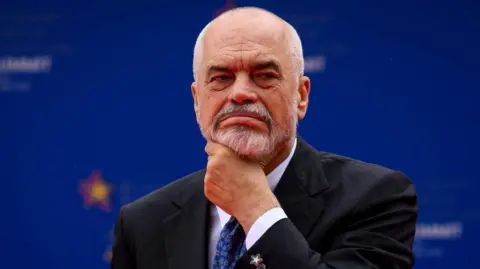
    Reuters A man with a grey beard and moustache puts his hand on his chin and frownsReuters

    Albania’s prime minister, Edi Rama, won a fourth term in office in May and introduced his cabinet on Thursday

    Rama boasts that Diella has “helped more than a million applications” on the e-Albania platform. But his vision for AI’s government role is a lot grander than a mere chatbot.

    He talks of “leapfrogging” bigger, more advanced countries, which are still locked into “traditional ways of working”.

    Reactions to Diella’s new role are, understandably, mixed. The opposition Democratic Party has labelled the initiative “ridiculous” and “unconstitutional”.

    But others are cautiously optimistic.

    The founder of financial services company Balkans Capital, Aneida Bajraktari Bicja, notes that Edi Rama “often mixes reform with theatrics, so it’s natural people wonder if this is symbolism”. But she says the “‘AI minister’ could be constructive if it develops into real systems that improve transparency and trust in public procurement”.

    Anti-corruption experts have also noted the potential for AI to be deployed to minimise graft.

    “AI is still a new tool – but if it is programmed correctly, when you put a bid in online, you can see clearly and more closely if a company meets the conditions and the criteria,” says Dr Andi Hoxhaj of King’s College London, a specialist in the Western Balkans, corruption and the rule of law.

    He believes Albania’s rapid progress in EU accession talks and encouragement from Brussels to complete the negotiations by 2027 mean that the country has a powerful incentive to tackle graft.

    “There’s a lot at stake,” he says. “The main precondition from the EU has been to address corruption. If [Diella] is a vehicle or mechanism that could be used towards that goal, it’s worth exploring.”

    Edi Rama does not deny that there is an element of a publicity stunt to his latest wheeze. But he insists that there is serious intent behind the playful presentation.

    “It puts pressure on other members of the cabinet and national agencies to run and think differently. This is the biggest advantage I’m expecting from this minister,” he says.

    In other words, ministers beware: AI could be coming for their jobs as well.


    Source link

  • World’s first AI minister will eliminate corruption, says Albania’s PM

    World’s first AI minister will eliminate corruption, says Albania’s PM


    Guy DelauneyBBC Balkans correspondent

    ADNAN BECI/AFP A woman holds a mobile phone with the AI image of a woman dressed in a white veilADNAN BECI/AFP

    The new minister, named Diella, has already been active as a bot, guiding applicants through a process to obtain official documents.

    For government officials, being called “heartless” is an occupational hazard. But Albania has chosen to turn that insult into a positive quality, by appointing an AI minister.

    Not a minister for artificial intelligence. Rather, a cabinet member who is, literally, the work of AI.

    The new addition is, like a pop star, known simply by the single name: Diella.

    Prime Minister Edi Rama introduced her as a member of his new cabinet on Thursday, four months after securing his fourth term in office in May elections.

    However, the move was symbolic rather than official, as Albania’s constitution insists that government ministers must be mentally competent citizens aged at least 18.

    Still, the advantages of appointing a bot over a human are obvious.

    Diella, whose name means sun in Albanian, is unlikely to be the source of any unflattering leaks about the government. She will only be power-hungry in the sense of the electricity she consumes. And a damaging expenses scandal would appear to be out of the question.

    In fact, corruption was uppermost in Rama’s mind when he made Diella part of his team as minister for public procurement.

    Her role will be to ensure that Albania will become “a country where public tenders are 100% free of corruption”.

    “We’re working with a brilliant team, which is not only Albanian but also international, to come out with the first full AI model in public procurement,” the prime minister told the BBC.

    “Not only will we wipe out every potential influence on public biddings – we will also make the process much faster, much more efficient and totally accountable.”

    Diella had already been working in Albania even before the government “appointment”. Her first incarnation was as an AI-powered virtual assistant, guiding applicants through the process to obtain official documents.

    Reuters A man with a grey beard and moustache puts his hand on his chin and frownsReuters

    Albania’s prime minister, Edi Rama, won a fourth term in office in May and introduced his cabinet on Thursday

    Rama boasts that Diella has “helped more than a million applications” on the e-Albania platform. But his vision for AI’s government role is a lot grander than a mere chatbot.

    He talks of “leapfrogging” bigger, more advanced countries, which are still locked into “traditional ways of working”.

    Reactions to Diella’s new role are, understandably, mixed. The opposition Democratic Party has labelled the initiative “ridiculous” and “unconstitutional”.

    But others are cautiously optimistic.

    The founder of financial services company Balkans Capital, Aneida Bajraktari Bicja, notes that Edi Rama “often mixes reform with theatrics, so it’s natural people wonder if this is symbolism”. But she says the “‘AI minister’ could be constructive if it develops into real systems that improve transparency and trust in public procurement”.

    Anti-corruption experts have also noted the potential for AI to be deployed to minimise graft.

    “AI is still a new tool – but if it is programmed correctly, when you put a bid in online, you can see clearly and more closely if a company meets the conditions and the criteria,” says Dr Andi Hoxhaj of King’s College London, a specialist in the Western Balkans, corruption and the rule of law.

    He believes Albania’s rapid progress in EU accession talks and encouragement from Brussels to complete the negotiations by 2027 mean that the country has a powerful incentive to tackle graft.

    “There’s a lot at stake,” he says. “The main precondition from the EU has been to address corruption. If [Diella] is a vehicle or mechanism that could be used towards that goal, it’s worth exploring.”

    Edi Rama does not deny that there is an element of a publicity stunt to his latest wheeze. But he insists that there is serious intent behind the playful presentation.

    “It puts pressure on other members of the cabinet and national agencies to run and think differently. This is the biggest advantage I’m expecting from this minister,” he says.

    In other words, ministers beware: AI could be coming for their jobs as well.


    Source link

  • World’s first AI minister will eliminate corruption, says Albania’s PM

    World’s first AI minister will eliminate corruption, says Albania’s PM


    Guy DelauneyBBC Balkans correspondent

    ADNAN BECI/AFP A woman holds a mobile phone with the AI image of a woman dressed in a white veilADNAN BECI/AFP

    The new minister, named Diella, has already been active as a bot, guiding applicants through a process to obtain official documents.

    For government officials, being called “heartless” is an occupational hazard. But Albania has chosen to turn that insult into a positive quality, by appointing an AI minister.

    Not a minister for artificial intelligence. Rather, a cabinet member who is, literally, the work of AI.

    The new addition is, like a pop star, known simply by the single name: Diella.

    Prime Minister Edi Rama introduced her as a member of his new cabinet on Thursday, four months after securing his fourth term in office in May elections.

    However, the move was symbolic rather than official, as Albania’s constitution insists that government ministers must be mentally competent citizens aged at least 18.

    Still, the advantages of appointing a bot over a human are obvious.

    Diella, whose name means sun in Albanian, is unlikely to be the source of any unflattering leaks about the government. She will only be power-hungry in the sense of the electricity she consumes. And a damaging expenses scandal would appear to be out of the question.

    In fact, corruption was uppermost in Rama’s mind when he made Diella part of his team as minister for public procurement.

    Her role will be to ensure that Albania will become “a country where public tenders are 100% free of corruption”.

    “We’re working with a brilliant team, which is not only Albanian but also international, to come out with the first full AI model in public procurement,” the prime minister told the BBC.

    “Not only will we wipe out every potential influence on public biddings – we will also make the process much faster, much more efficient and totally accountable.”

    Diella had already been working in Albania even before the government “appointment”. Her first incarnation was as an AI-powered virtual assistant, guiding applicants through the process to obtain official documents.

    Reuters A man with a grey beard and moustache puts his hand on his chin and frownsReuters

    Albania’s prime minister, Edi Rama, won a fourth term in office in May and introduced his cabinet on Thursday

    Rama boasts that Diella has “helped more than a million applications” on the e-Albania platform. But his vision for AI’s government role is a lot grander than a mere chatbot.

    He talks of “leapfrogging” bigger, more advanced countries, which are still locked into “traditional ways of working”.

    Reactions to Diella’s new role are, understandably, mixed. The opposition Democratic Party has labelled the initiative “ridiculous” and “unconstitutional”.

    But others are cautiously optimistic.

    The founder of financial services company Balkans Capital, Aneida Bajraktari Bicja, notes that Edi Rama “often mixes reform with theatrics, so it’s natural people wonder if this is symbolism”. But she says the “‘AI minister’ could be constructive if it develops into real systems that improve transparency and trust in public procurement”.

    Anti-corruption experts have also noted the potential for AI to be deployed to minimise graft.

    “AI is still a new tool – but if it is programmed correctly, when you put a bid in online, you can see clearly and more closely if a company meets the conditions and the criteria,” says Dr Andi Hoxhaj of King’s College London, a specialist in the Western Balkans, corruption and the rule of law.

    He believes Albania’s rapid progress in EU accession talks and encouragement from Brussels to complete the negotiations by 2027 mean that the country has a powerful incentive to tackle graft.

    “There’s a lot at stake,” he says. “The main precondition from the EU has been to address corruption. If [Diella] is a vehicle or mechanism that could be used towards that goal, it’s worth exploring.”

    Edi Rama does not deny that there is an element of a publicity stunt to his latest wheeze. But he insists that there is serious intent behind the playful presentation.

    “It puts pressure on other members of the cabinet and national agencies to run and think differently. This is the biggest advantage I’m expecting from this minister,” he says.

    In other words, ministers beware: AI could be coming for their jobs as well.


    Source link

  • Spain summons Israel’s acting ambassador over comments made by Israel’s Prime Minister’s office

    Spain summons Israel’s acting ambassador over comments made by Israel’s Prime Minister’s office


    MADRID (AP) — Spain summoned Israel’s acting ambassador in Madrid Friday in response to comments made by the Israeli Prime Minister’s office that accused the European nation’s prime minister of threatening Israel.

    Spanish Foreign Minister José Manuel Albares called in Dana Erlich, Israel’s charge d’affaires in Spain and the highest-ranking diplomat in the country “to categorically reject the false and slanderous statements from the Israeli Prime Minister’s office,” an official at Spain’s Foreign Ministry said.

    The Foreign Ministry official was not authorized to speak publicly and declined to be named.

    It’s the latest development in an ongoing diplomatic tit-for-tat between the two countries that ensued after Spain’s prime minister announced measures Monday to pressure Israel to end the Gaza war.

    In a post Thursday on social platform X, Israeli Prime Minister Benjamin Netanyahu’s office said Spain’s Prime Minister Pedro Sánchez had made a “blatant genocidal threat,” in reference to comments made by the Spanish leader when he announced the steps the Spanish government was taking.

    “Spain, as you know, doesn’t have nuclear bombs, nor aircraft carriers or large oil reserves. We alone can’t stop the Israeli offensive,” Sánchez said in a televised address Monday.

    The measures included an embargo on weapons, ammunition and military equipment sold to or from Israel and blocking Israel-bound fuel deliveries from passing through Spanish ports.

    Since then, Israel and Spain have each banned a pair of ministers from the opposite country.

    Spain’s government has been an outspoken critic of Israel’s war in Gaza, which began after Hamas-led militants killed around 1,200 people, mostly civilians, on Oct. 7, 2023, and abducted 251 hostages.

    Israel’s offensive has killed more than 64,000 Palestinians, according to the Gaza Health Ministry, which does not say how many were civilians or combatants.

    ____

    Find more of AP’s Israel-Hamas coverage at https://apnews.com/hub/israel-hamas-war

    window.fbAsyncInit = function() {
    FB.init({

    appId : ‘870613919693099’,

    xfbml : true,
    version : ‘v2.9’
    });
    };

    (function(d, s, id){
    var js, fjs = d.getElementsByTagName(s)[0];
    if (d.getElementById(id)) {return;}
    js = d.createElement(s); js.id = id;
    js.src = “https://connect.facebook.net/en_US/sdk.js”;
    fjs.parentNode.insertBefore(js, fjs);
    }(document, ‘script’, ‘facebook-jssdk’));


    Source link

  • Spain summons Israel’s acting ambassador over comments made by Israel’s Prime Minister’s office

    Spain summons Israel’s acting ambassador over comments made by Israel’s Prime Minister’s office


    MADRID (AP) — Spain summoned Israel’s acting ambassador in Madrid Friday in response to comments made by the Israeli Prime Minister’s office that accused the European nation’s prime minister of threatening Israel.

    Spanish Foreign Minister José Manuel Albares called in Dana Erlich, Israel’s charge d’affaires in Spain and the highest-ranking diplomat in the country “to categorically reject the false and slanderous statements from the Israeli Prime Minister’s office,” an official at Spain’s Foreign Ministry said.

    The Foreign Ministry official was not authorized to speak publicly and declined to be named.

    It’s the latest development in an ongoing diplomatic tit-for-tat between the two countries that ensued after Spain’s prime minister announced measures Monday to pressure Israel to end the Gaza war.

    In a post Thursday on social platform X, Israeli Prime Minister Benjamin Netanyahu’s office said Spain’s Prime Minister Pedro Sánchez had made a “blatant genocidal threat,” in reference to comments made by the Spanish leader when he announced the steps the Spanish government was taking.

    “Spain, as you know, doesn’t have nuclear bombs, nor aircraft carriers or large oil reserves. We alone can’t stop the Israeli offensive,” Sánchez said in a televised address Monday.

    The measures included an embargo on weapons, ammunition and military equipment sold to or from Israel and blocking Israel-bound fuel deliveries from passing through Spanish ports.

    Since then, Israel and Spain have each banned a pair of ministers from the opposite country.

    Spain’s government has been an outspoken critic of Israel’s war in Gaza, which began after Hamas-led militants killed around 1,200 people, mostly civilians, on Oct. 7, 2023, and abducted 251 hostages.

    Israel’s offensive has killed more than 64,000 Palestinians, according to the Gaza Health Ministry, which does not say how many were civilians or combatants.

    ____

    Find more of AP’s Israel-Hamas coverage at https://apnews.com/hub/israel-hamas-war

    window.fbAsyncInit = function() {
    FB.init({

    appId : ‘870613919693099’,

    xfbml : true,
    version : ‘v2.9’
    });
    };

    (function(d, s, id){
    var js, fjs = d.getElementsByTagName(s)[0];
    if (d.getElementById(id)) {return;}
    js = d.createElement(s); js.id = id;
    js.src = “https://connect.facebook.net/en_US/sdk.js”;
    fjs.parentNode.insertBefore(js, fjs);
    }(document, ‘script’, ‘facebook-jssdk’));


    Source link

  • Spain summons Israel’s acting ambassador over comments made by Israel’s Prime Minister’s office

    Spain summons Israel’s acting ambassador over comments made by Israel’s Prime Minister’s office


    MADRID (AP) — Spain summoned Israel’s acting ambassador in Madrid Friday in response to comments made by the Israeli Prime Minister’s office that accused the European nation’s prime minister of threatening Israel.

    Spanish Foreign Minister José Manuel Albares called in Dana Erlich, Israel’s charge d’affaires in Spain and the highest-ranking diplomat in the country “to categorically reject the false and slanderous statements from the Israeli Prime Minister’s office,” an official at Spain’s Foreign Ministry said.

    The Foreign Ministry official was not authorized to speak publicly and declined to be named.

    It’s the latest development in an ongoing diplomatic tit-for-tat between the two countries that ensued after Spain’s prime minister announced measures Monday to pressure Israel to end the Gaza war.

    In a post Thursday on social platform X, Israeli Prime Minister Benjamin Netanyahu’s office said Spain’s Prime Minister Pedro Sánchez had made a “blatant genocidal threat,” in reference to comments made by the Spanish leader when he announced the steps the Spanish government was taking.

    “Spain, as you know, doesn’t have nuclear bombs, nor aircraft carriers or large oil reserves. We alone can’t stop the Israeli offensive,” Sánchez said in a televised address Monday.

    The measures included an embargo on weapons, ammunition and military equipment sold to or from Israel and blocking Israel-bound fuel deliveries from passing through Spanish ports.

    Since then, Israel and Spain have each banned a pair of ministers from the opposite country.

    Spain’s government has been an outspoken critic of Israel’s war in Gaza, which began after Hamas-led militants killed around 1,200 people, mostly civilians, on Oct. 7, 2023, and abducted 251 hostages.

    Israel’s offensive has killed more than 64,000 Palestinians, according to the Gaza Health Ministry, which does not say how many were civilians or combatants.

    ____

    Find more of AP’s Israel-Hamas coverage at https://apnews.com/hub/israel-hamas-war

    window.fbAsyncInit = function() {
    FB.init({

    appId : ‘870613919693099’,

    xfbml : true,
    version : ‘v2.9’
    });
    };

    (function(d, s, id){
    var js, fjs = d.getElementsByTagName(s)[0];
    if (d.getElementById(id)) {return;}
    js = d.createElement(s); js.id = id;
    js.src = “https://connect.facebook.net/en_US/sdk.js”;
    fjs.parentNode.insertBefore(js, fjs);
    }(document, ‘script’, ‘facebook-jssdk’));


    Source link