Category: Uncategorized

  • Singapore is ranked No. 1

    Singapore is ranked No. 1


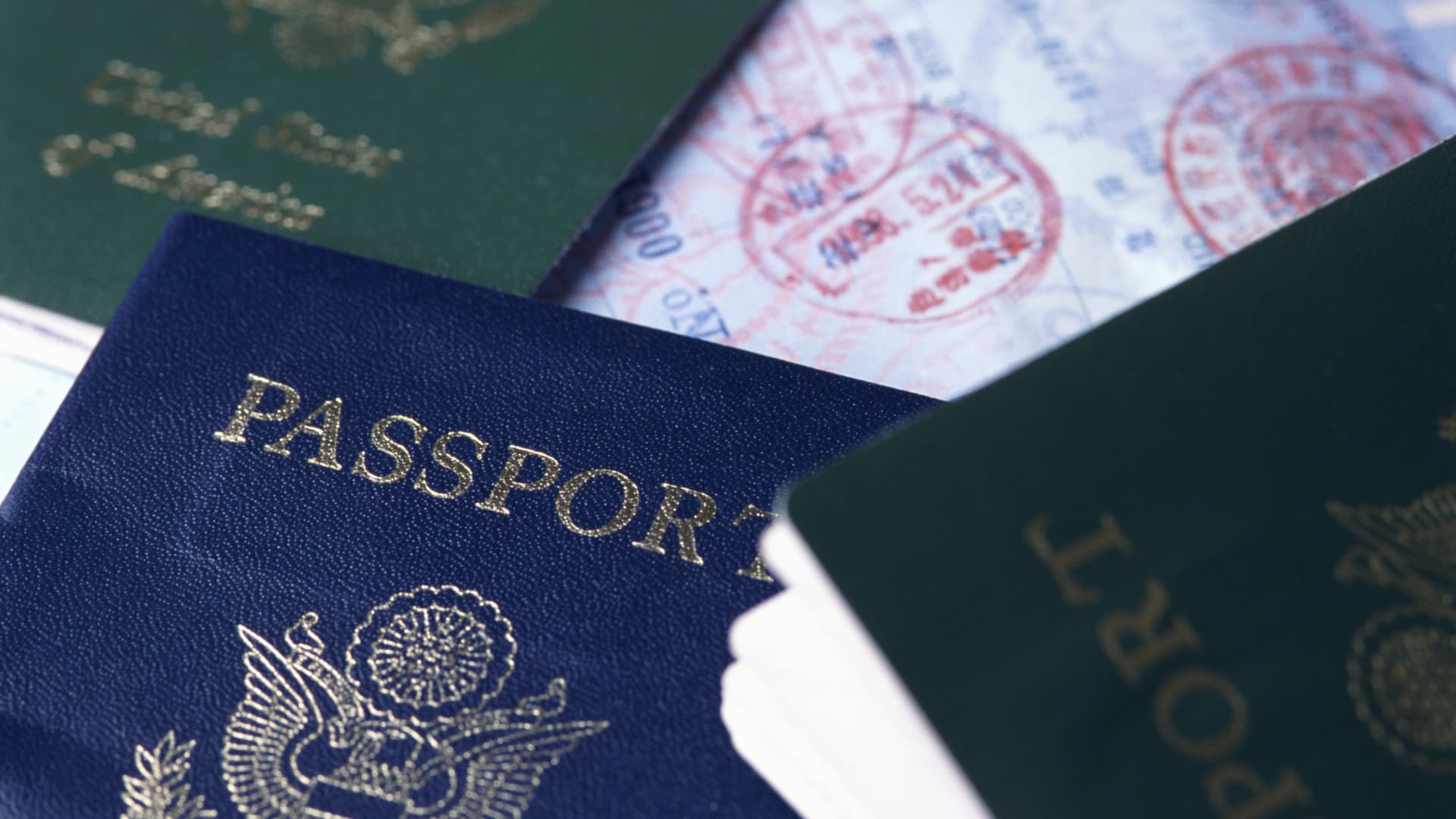
    Singapore has the world’s strongest passport — again, according to the latest Henley Passport Index.

    The ranking, released Tuesday, shows the small nation-state retaining the top spot in the index, after it broke a six-way tie for the accolade earlier this year.

    In 2024, Singapore shared the top ranking with Japan, Germany, Italy, Spain and France.

    The latest ranking shows Japan and South Korea tied for second place, with the other former No. 1 contenders tied for third place with Denmark, Finland and Ireland.

    The Henley Passport Index is a widely followed ranking of global passports, which assesses passport strength by one metric — the number of destinations holders can visit without needing to obtain a prior visa. The index ranks countries according to data provided by the International Air Transport Association, it said.

    The ranking focuses mainly on ease of travel, while another ranking closely monitored by CNBC Travel, the Nomad Passport Index, ranks passports by five criteria, including taxation, and is more focused on global citizenship.

    Henley’s latest ranking shows the U.S. passport slipping to 10th place from 9th.The United Kingdom’s passport also moved down the list, landing in sixth place from fifth, it showed.

    This represents a continuation of a “long-term downward trend” for the two countries — both of which were once considered the most powerful passports in the world, according to Henley & Partners.

    “Notably, the U.S. is now on the brink of exiting the Top 10 altogether for the first time in the index’s 20-year history,” the company said in a statement.

    The top 10 list shows a ranking mostly dominated by European countries, but led by three key Asian economies:

    1 Singapore
    2. Japan
    2. South Korea
    3. Denmark
    3. Finland
    3. France
    3. Germany
    3. Ireland
    3. Italy
    3. Spain
    4. Austria
    4. Belgium
    4. Luxembourg
    4. Netherlands
    4. Norway
    4. Portugal
    4. Sweden
    5. Greece
    5. New Zealand
    5. Switzerland
    6. United Kingdom
    7. Australia
    7. Czechia
    7. Hungary
    7. Malta
    7. Poland
    8. Canada
    8. Estonia
    8. United Arab Emirates
    9. Croatia
    9. Latvia
    9. Slovakia
    9. Slovenia
    10. Iceland
    10. Lithuania
    10. United States

    Singaporeans can access 193 countries without needing a visa, while the countries tied for the 10th spot can access 182, according to the ranking.

    Biggest movers

    India’s passport jumped the most of any country in the past six months, rising to 77th from 85th, according to Henley & Partners.

    An analysis of the ranking over the past decade showed the UAE rising 34 places in the ranking, the company said. It is the only “big riser” to break into the top 10 during this time, it said.

    China also rose 34 spots in the past 10 years, the company said, a move it called “particularly impressive” considering that China doesn’t have visa-free access to Europe’s Schengen Area.

    Afghanistan’s passport remained in last place on the list, granting visa-free access to just 25 countries worldwide, the company said.

    Source link

  • Singapore is ranked No. 1

    Singapore is ranked No. 1


    Singapore has the world’s strongest passport — again, according to the latest Henley Passport Index.

    The ranking, released Tuesday, shows the small nation-state retaining the top spot in the index, after it broke a six-way tie for the accolade earlier this year.

    In 2024, Singapore shared the top ranking with Japan, Germany, Italy, Spain and France.

    The latest ranking shows Japan and South Korea tied for second place, with the other former No. 1 contenders tied for third place with Denmark, Finland and Ireland.

    The Henley Passport Index is a widely followed ranking of global passports, which assesses passport strength by one metric — the number of destinations holders can visit without needing to obtain a prior visa. The index ranks countries according to data provided by the International Air Transport Association, it said.

    The ranking focuses mainly on ease of travel, while another ranking closely monitored by CNBC Travel, the Nomad Passport Index, ranks passports by five criteria, including taxation, and is more focused on global citizenship.

    Henley’s latest ranking shows the U.S. passport slipping to 10th place from 9th.The United Kingdom’s passport also moved down the list, landing in sixth place from fifth, it showed.

    This represents a continuation of a “long-term downward trend” for the two countries — both of which were once considered the most powerful passports in the world, according to Henley & Partners.

    “Notably, the U.S. is now on the brink of exiting the Top 10 altogether for the first time in the index’s 20-year history,” the company said in a statement.

    The top 10 list shows a ranking mostly dominated by European countries, but led by three key Asian economies:

    1 Singapore
    2. Japan
    2. South Korea
    3. Denmark
    3. Finland
    3. France
    3. Germany
    3. Ireland
    3. Italy
    3. Spain
    4. Austria
    4. Belgium
    4. Luxembourg
    4. Netherlands
    4. Norway
    4. Portugal
    4. Sweden
    5. Greece
    5. New Zealand
    5. Switzerland
    6. United Kingdom
    7. Australia
    7. Czechia
    7. Hungary
    7. Malta
    7. Poland
    8. Canada
    8. Estonia
    8. United Arab Emirates
    9. Croatia
    9. Latvia
    9. Slovakia
    9. Slovenia
    10. Iceland
    10. Lithuania
    10. United States

    Singaporeans can access 193 countries without needing a visa, while the countries tied for the 10th spot can access 182, according to the ranking.

    Biggest movers

    India’s passport jumped the most of any country in the past six months, rising to 77th from 85th, according to Henley & Partners.

    An analysis of the ranking over the past decade showed the UAE rising 34 places in the ranking, the company said. It is the only “big riser” to break into the top 10 during this time, it said.

    China also rose 34 spots in the past 10 years, the company said, a move it called “particularly impressive” considering that China doesn’t have visa-free access to Europe’s Schengen Area.

    Afghanistan’s passport remained in last place on the list, granting visa-free access to just 25 countries worldwide, the company said.


    Source link

  • 250-year-old shipwreck discovered on Scottish island

    250-year-old shipwreck discovered on Scottish island


    LONDON — When a schoolboy going for a run found the ribs of a wooden ship poking through the dunes of a remote Scottish beach, it sparked a hunt by archaeologists, scientists and local historians to uncover its story.

    Through a mix of high-tech science and community research, they have an answer. Researchers announced Wednesday that the vessel is very likely the Earl of Chatham, an 18th-century warship that saw action in the American War of Independence before a second life hunting whales in the Arctic — and then a stormy demise.

    “I would regard it as a lucky ship, which is a strange thing to say about a ship that’s wrecked,” said Ben Saunders, senior marine archaeologist at Wessex Archaeology, a charity that helped community researchers conduct the investigation.

    “I think if it had been found in many other places, it wouldn’t necessarily have had that community drive, that desire to recover and study that material, and also the community spirit to do it,” Saunders said.

    The wreck was discovered in February 2024 after a storm swept away sand covering it on Sanday, one of the rugged Orkney Islands that lie off Scotland’s northern tip.

    It excited interest on the island of 500 people, whose history is bound up with the sea and its dangers. Around 270 shipwrecks have been recorded around the 20-square-mile (50-square-kilometer) island since the 15th century.

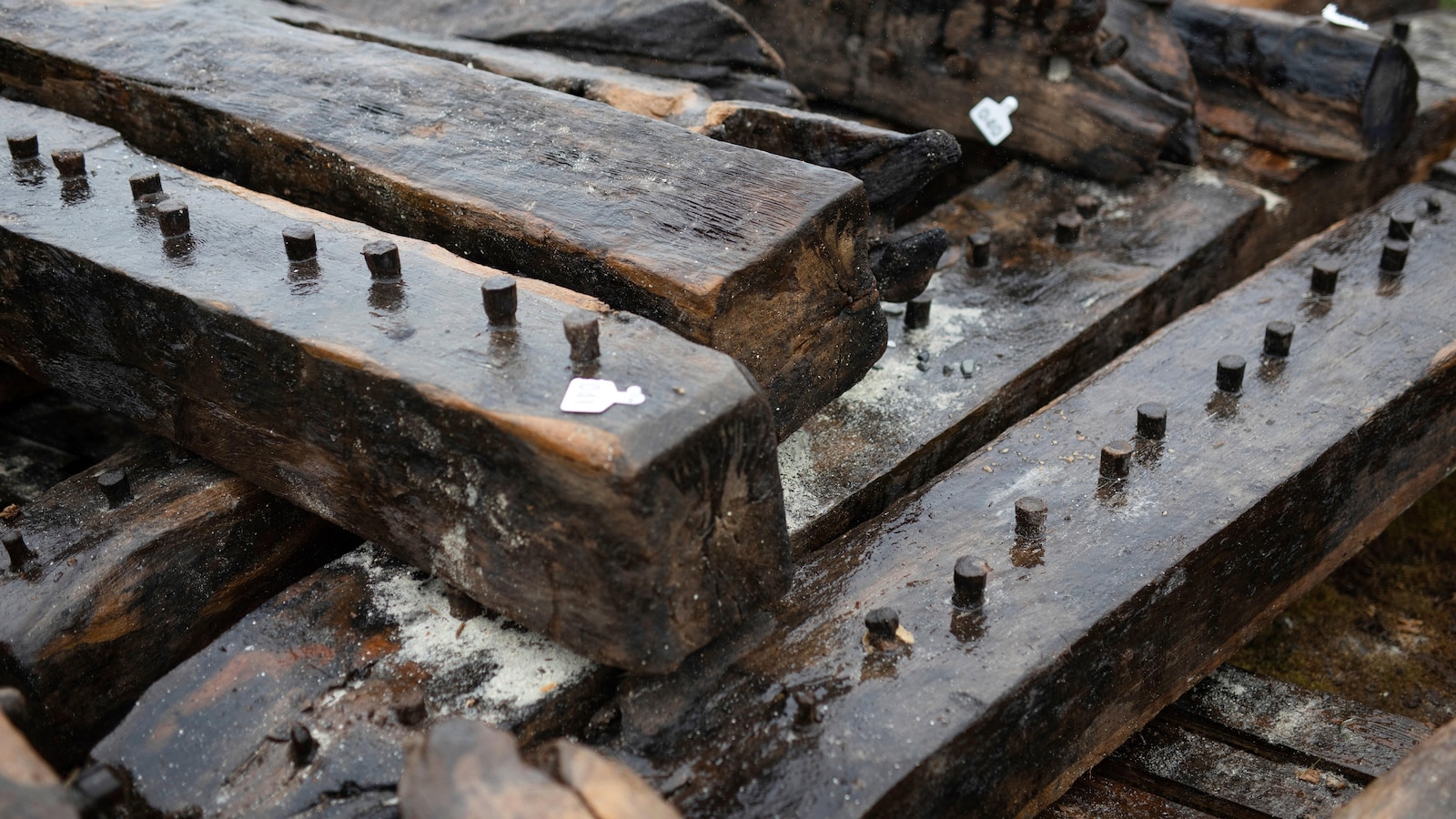
    Local farmers used their tractors and trailers to haul the 12 tons of oak timbers off the beach, before local researchers set to work trying to identify it.

    “That was really good fun, and it was such a good feeling about the community – everybody pulling together to get it back,” said Sylvia Thorne, one of the island’s community researchers. “Quite a few people are really getting interested in it and becoming experts.”

    Dendrochronology — the science of dating wood from tree rings — showed the timber came from southern England in the middle of the 18th century. That was one bit of luck, Saunders said, because it coincides with “the point where British bureaucracy’s really starting to kick off” and detailed records were being kept.

    “And so we can then start to look at the archive evidence that we have for the wrecks in Orkney,” Saunders said. “It becomes a process of elimination.

    “You remove ones that are Northern European as opposed to British, you remove wrecks that are too small or operating out of the north of England and you really are down to two or three … and Earl of Chatham is the last one left.”

    Further research found that before it was the Earl of Chatham, the ship was HMS Hind, a 24-gun Royal Navy frigate built in Chichester on England’s south coast in 1749.

    Its military career saw it play a part in the expansion — and contraction — of the British Empire. It helped Britain wrest control of Canada from France during the sieges of Louisbourg and Quebec in the 1750s, and in the 1770s served as a convoy escort during Britain’s failed effort to hold onto its American colonies.

    Sold off by the navy in 1784 and renamed, the vessel became a whaling ship, hunting the huge mammals in the Arctic waters off Greenland.

    Whale oil was an essential fuel of the Industrial Revolution, used to lubricate machinery, soften fabric and light city streets. Saunders said that in 1787 there were 120 London-based whaling ships in the Greenland Sea, the Earl of Chatham among them.

    A year later, while heading out to the whaling ground, it was wrecked in bad weather off Sanday. All 56 crew members survived — more evidence, Saunders says, that this was a vessel blessed with luck.

    The ship’s timbers are being preserved in a freshwater tank at the Sanday Heritage Centre while plans are discussed to put it on permanent display.

    Saunders said that the project is a model of community involvement in archaeology.

    “The community have been so keen, have been so desirous to be involved and to find out things to learn, and they’re so proud of it. It’s down to them it was discovered, it’s down to them it was recovered and it’s been stabilized and been protected,” he said.

    For locals, it’s a link to the island’s maritime past — and future. Finding long-buried wrecks could become more common as climate change alters the wind patterns around Britain and reshapes the coastline.

    “One of the biggest things I’ve got out of this project is realizing how much the past in Sanday is just constantly with you — either visible or just under the surface,” said Ruth Peace, another community researcher.


    Source link

  • 250-year-old shipwreck discovered on Scottish island

    250-year-old shipwreck discovered on Scottish island


    LONDON — When a schoolboy going for a run found the ribs of a wooden ship poking through the dunes of a remote Scottish beach, it sparked a hunt by archaeologists, scientists and local historians to uncover its story.

    Through a mix of high-tech science and community research, they have an answer. Researchers announced Wednesday that the vessel is very likely the Earl of Chatham, an 18th-century warship that saw action in the American War of Independence before a second life hunting whales in the Arctic — and then a stormy demise.

    “I would regard it as a lucky ship, which is a strange thing to say about a ship that’s wrecked,” said Ben Saunders, senior marine archaeologist at Wessex Archaeology, a charity that helped community researchers conduct the investigation.

    “I think if it had been found in many other places, it wouldn’t necessarily have had that community drive, that desire to recover and study that material, and also the community spirit to do it,” Saunders said.

    The wreck was discovered in February 2024 after a storm swept away sand covering it on Sanday, one of the rugged Orkney Islands that lie off Scotland’s northern tip.

    It excited interest on the island of 500 people, whose history is bound up with the sea and its dangers. Around 270 shipwrecks have been recorded around the 20-square-mile (50-square-kilometer) island since the 15th century.

    Local farmers used their tractors and trailers to haul the 12 tons of oak timbers off the beach, before local researchers set to work trying to identify it.

    “That was really good fun, and it was such a good feeling about the community – everybody pulling together to get it back,” said Sylvia Thorne, one of the island’s community researchers. “Quite a few people are really getting interested in it and becoming experts.”

    Dendrochronology — the science of dating wood from tree rings — showed the timber came from southern England in the middle of the 18th century. That was one bit of luck, Saunders said, because it coincides with “the point where British bureaucracy’s really starting to kick off” and detailed records were being kept.

    “And so we can then start to look at the archive evidence that we have for the wrecks in Orkney,” Saunders said. “It becomes a process of elimination.

    “You remove ones that are Northern European as opposed to British, you remove wrecks that are too small or operating out of the north of England and you really are down to two or three … and Earl of Chatham is the last one left.”

    Further research found that before it was the Earl of Chatham, the ship was HMS Hind, a 24-gun Royal Navy frigate built in Chichester on England’s south coast in 1749.

    Its military career saw it play a part in the expansion — and contraction — of the British Empire. It helped Britain wrest control of Canada from France during the sieges of Louisbourg and Quebec in the 1750s, and in the 1770s served as a convoy escort during Britain’s failed effort to hold onto its American colonies.

    Sold off by the navy in 1784 and renamed, the vessel became a whaling ship, hunting the huge mammals in the Arctic waters off Greenland.

    Whale oil was an essential fuel of the Industrial Revolution, used to lubricate machinery, soften fabric and light city streets. Saunders said that in 1787 there were 120 London-based whaling ships in the Greenland Sea, the Earl of Chatham among them.

    A year later, while heading out to the whaling ground, it was wrecked in bad weather off Sanday. All 56 crew members survived — more evidence, Saunders says, that this was a vessel blessed with luck.

    The ship’s timbers are being preserved in a freshwater tank at the Sanday Heritage Centre while plans are discussed to put it on permanent display.

    Saunders said that the project is a model of community involvement in archaeology.

    “The community have been so keen, have been so desirous to be involved and to find out things to learn, and they’re so proud of it. It’s down to them it was discovered, it’s down to them it was recovered and it’s been stabilized and been protected,” he said.

    For locals, it’s a link to the island’s maritime past — and future. Finding long-buried wrecks could become more common as climate change alters the wind patterns around Britain and reshapes the coastline.

    “One of the biggest things I’ve got out of this project is realizing how much the past in Sanday is just constantly with you — either visible or just under the surface,” said Ruth Peace, another community researcher.


    Source link

  • 250-year-old shipwreck discovered on Scottish island

    250-year-old shipwreck discovered on Scottish island


    LONDON — When a schoolboy going for a run found the ribs of a wooden ship poking through the dunes of a remote Scottish beach, it sparked a hunt by archaeologists, scientists and local historians to uncover its story.

    Through a mix of high-tech science and community research, they have an answer. Researchers announced Wednesday that the vessel is very likely the Earl of Chatham, an 18th-century warship that saw action in the American War of Independence before a second life hunting whales in the Arctic — and then a stormy demise.

    “I would regard it as a lucky ship, which is a strange thing to say about a ship that’s wrecked,” said Ben Saunders, senior marine archaeologist at Wessex Archaeology, a charity that helped community researchers conduct the investigation.

    “I think if it had been found in many other places, it wouldn’t necessarily have had that community drive, that desire to recover and study that material, and also the community spirit to do it,” Saunders said.

    The wreck was discovered in February 2024 after a storm swept away sand covering it on Sanday, one of the rugged Orkney Islands that lie off Scotland’s northern tip.

    It excited interest on the island of 500 people, whose history is bound up with the sea and its dangers. Around 270 shipwrecks have been recorded around the 20-square-mile (50-square-kilometer) island since the 15th century.

    Local farmers used their tractors and trailers to haul the 12 tons of oak timbers off the beach, before local researchers set to work trying to identify it.

    “That was really good fun, and it was such a good feeling about the community – everybody pulling together to get it back,” said Sylvia Thorne, one of the island’s community researchers. “Quite a few people are really getting interested in it and becoming experts.”

    Dendrochronology — the science of dating wood from tree rings — showed the timber came from southern England in the middle of the 18th century. That was one bit of luck, Saunders said, because it coincides with “the point where British bureaucracy’s really starting to kick off” and detailed records were being kept.

    “And so we can then start to look at the archive evidence that we have for the wrecks in Orkney,” Saunders said. “It becomes a process of elimination.

    “You remove ones that are Northern European as opposed to British, you remove wrecks that are too small or operating out of the north of England and you really are down to two or three … and Earl of Chatham is the last one left.”

    Further research found that before it was the Earl of Chatham, the ship was HMS Hind, a 24-gun Royal Navy frigate built in Chichester on England’s south coast in 1749.

    Its military career saw it play a part in the expansion — and contraction — of the British Empire. It helped Britain wrest control of Canada from France during the sieges of Louisbourg and Quebec in the 1750s, and in the 1770s served as a convoy escort during Britain’s failed effort to hold onto its American colonies.

    Sold off by the navy in 1784 and renamed, the vessel became a whaling ship, hunting the huge mammals in the Arctic waters off Greenland.

    Whale oil was an essential fuel of the Industrial Revolution, used to lubricate machinery, soften fabric and light city streets. Saunders said that in 1787 there were 120 London-based whaling ships in the Greenland Sea, the Earl of Chatham among them.

    A year later, while heading out to the whaling ground, it was wrecked in bad weather off Sanday. All 56 crew members survived — more evidence, Saunders says, that this was a vessel blessed with luck.

    The ship’s timbers are being preserved in a freshwater tank at the Sanday Heritage Centre while plans are discussed to put it on permanent display.

    Saunders said that the project is a model of community involvement in archaeology.

    “The community have been so keen, have been so desirous to be involved and to find out things to learn, and they’re so proud of it. It’s down to them it was discovered, it’s down to them it was recovered and it’s been stabilized and been protected,” he said.

    For locals, it’s a link to the island’s maritime past — and future. Finding long-buried wrecks could become more common as climate change alters the wind patterns around Britain and reshapes the coastline.

    “One of the biggest things I’ve got out of this project is realizing how much the past in Sanday is just constantly with you — either visible or just under the surface,” said Ruth Peace, another community researcher.


    Source link

  • 250-year-old shipwreck discovered on Scottish island

    250-year-old shipwreck discovered on Scottish island


    LONDON — When a schoolboy going for a run found the ribs of a wooden ship poking through the dunes of a remote Scottish beach, it sparked a hunt by archaeologists, scientists and local historians to uncover its story.

    Through a mix of high-tech science and community research, they have an answer. Researchers announced Wednesday that the vessel is very likely the Earl of Chatham, an 18th-century warship that saw action in the American War of Independence before a second life hunting whales in the Arctic — and then a stormy demise.

    “I would regard it as a lucky ship, which is a strange thing to say about a ship that’s wrecked,” said Ben Saunders, senior marine archaeologist at Wessex Archaeology, a charity that helped community researchers conduct the investigation.

    “I think if it had been found in many other places, it wouldn’t necessarily have had that community drive, that desire to recover and study that material, and also the community spirit to do it,” Saunders said.

    The wreck was discovered in February 2024 after a storm swept away sand covering it on Sanday, one of the rugged Orkney Islands that lie off Scotland’s northern tip.

    It excited interest on the island of 500 people, whose history is bound up with the sea and its dangers. Around 270 shipwrecks have been recorded around the 20-square-mile (50-square-kilometer) island since the 15th century.

    Local farmers used their tractors and trailers to haul the 12 tons of oak timbers off the beach, before local researchers set to work trying to identify it.

    “That was really good fun, and it was such a good feeling about the community – everybody pulling together to get it back,” said Sylvia Thorne, one of the island’s community researchers. “Quite a few people are really getting interested in it and becoming experts.”

    Dendrochronology — the science of dating wood from tree rings — showed the timber came from southern England in the middle of the 18th century. That was one bit of luck, Saunders said, because it coincides with “the point where British bureaucracy’s really starting to kick off” and detailed records were being kept.

    “And so we can then start to look at the archive evidence that we have for the wrecks in Orkney,” Saunders said. “It becomes a process of elimination.

    “You remove ones that are Northern European as opposed to British, you remove wrecks that are too small or operating out of the north of England and you really are down to two or three … and Earl of Chatham is the last one left.”

    Further research found that before it was the Earl of Chatham, the ship was HMS Hind, a 24-gun Royal Navy frigate built in Chichester on England’s south coast in 1749.

    Its military career saw it play a part in the expansion — and contraction — of the British Empire. It helped Britain wrest control of Canada from France during the sieges of Louisbourg and Quebec in the 1750s, and in the 1770s served as a convoy escort during Britain’s failed effort to hold onto its American colonies.

    Sold off by the navy in 1784 and renamed, the vessel became a whaling ship, hunting the huge mammals in the Arctic waters off Greenland.

    Whale oil was an essential fuel of the Industrial Revolution, used to lubricate machinery, soften fabric and light city streets. Saunders said that in 1787 there were 120 London-based whaling ships in the Greenland Sea, the Earl of Chatham among them.

    A year later, while heading out to the whaling ground, it was wrecked in bad weather off Sanday. All 56 crew members survived — more evidence, Saunders says, that this was a vessel blessed with luck.

    The ship’s timbers are being preserved in a freshwater tank at the Sanday Heritage Centre while plans are discussed to put it on permanent display.

    Saunders said that the project is a model of community involvement in archaeology.

    “The community have been so keen, have been so desirous to be involved and to find out things to learn, and they’re so proud of it. It’s down to them it was discovered, it’s down to them it was recovered and it’s been stabilized and been protected,” he said.

    For locals, it’s a link to the island’s maritime past — and future. Finding long-buried wrecks could become more common as climate change alters the wind patterns around Britain and reshapes the coastline.

    “One of the biggest things I’ve got out of this project is realizing how much the past in Sanday is just constantly with you — either visible or just under the surface,” said Ruth Peace, another community researcher.


    Source link

  • Iran’s detainees in ‘unbearable’ conditions after Israeli strikes

    Iran’s detainees in ‘unbearable’ conditions after Israeli strikes


    Ghoncheh Habibiazad

    BBC Persian, World Service reporter

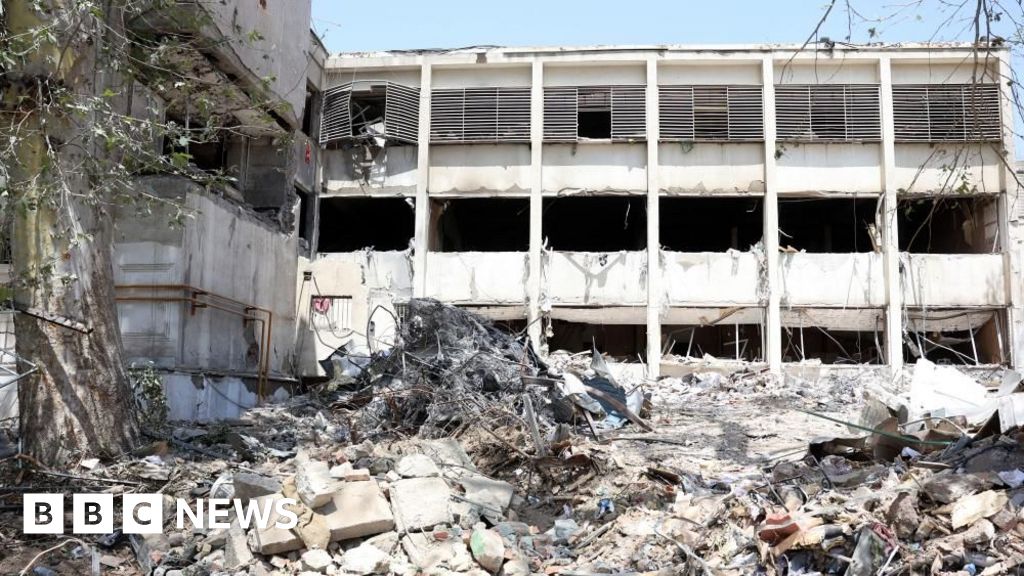
    EPA A white building with blown out windows is seen after an Israeli strikes on Evin prison in Iran. There is rubble piled high in front of the building, with piles of metal and concrete seen. In the foreground is a tree branch.EPA

    Parts of Evin prison were badly damaged in the Israeli strikes

    One month on from deadly Israeli air strikes on a notorious Iranian prison during the war between the two countries, inmates say they are being kept under unbearable and inhumane conditions after being moved to other prisons.

    Despite promises by the authorities, some of those transferred from Evin Prison in Tehran say they continue to face difficulties such as overcrowded cells, lack of beds and air conditioning, limited number of toilets and showers, and insect infestations.

    The BBC has received accounts from the family members of prisoners moved from Evin, who agreed to speak on condition of anonymity out of concern for the safety of themselves and the prisoners.

    Israel targeted Evin on 23 June. According to the Iranian authorities, the attack killed 80 people, including five prisoners, 41 prison staff and 13 military conscripts.

    The prison held thousands of men and women, including prominent political dissidents, human rights defenders, journalists and dual and foreign nationals, as well as members of religious and ethnic minorities.

    All inmates were subsequently moved out and sent to other prisons following the attack.

    Verified videos and satellite imagery confirm damage to several buildings within the complex, including the medical clinic, the visitor centre, the prosecutor’s office and an administrative building.

    After the attack, the Israeli military described the prison as “a symbol of oppression for the Iranian people”. It said it carried out the strikes in a “precise manner to mitigate harm to civilians” imprisoned there.

    Iran has labelled the attack a “war crime”.

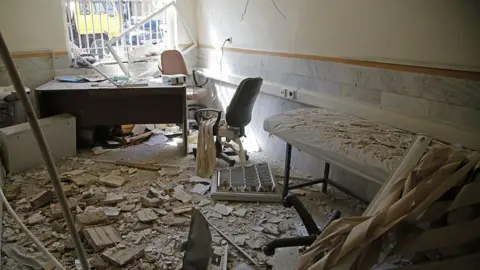
    Fatemeh Bahrami/Anadolu via Getty Images A view of Evin prison is seen in the wake of an Israeli strikes on the site in June. A cot can be seen covered in debris, and rubble covers the floor. A barred window is seen with light shining through it. Wires hang from the walls and ceiling.Fatemeh Bahrami/Anadolu via Getty Images

    Evin prison held thousands of Iranian detainees before it was targeted in an Israeli strikes on 23 June

    Israel’s military also said that Evin was used for “intelligence operations against Israel, including counter-espionage”. It did not comment further when asked to provide evidence for the claim.

    Amnesty International said on Tuesday that, following an in-depth investigation, the attack constituted “a serious violation of international humanitarian law and must be criminally investigated as war crimes”.

    “Under international humanitarian law, a prison or place of detention is presumed a civilian object and there is no credible evidence in this case that Evin prison constituted a lawful military objective,” it added.

    Through his family members, one political prisoner who was sent to the Greater Tehran Central Penitentiary, also known as Fashafouyeh Prison, said that fellow inmates told him conditions there were inhumane even before Evin detainees were transferred.

    He said that the prison was in such a remote and dangerous area outside the capital that his wife had not been able to visit him since he moved there.

    Compared to Evin, which is in an accessible, residential area in north Tehran, Fashafouyeh is located 20 miles (32km) south of Tehran, in a desert with nothing around it but a road, according to the family members.

    The prisoner told his family that many inmates were still sleeping on the floor at Fashafouyeh in overcrowded cells without air conditioning, although the authorities have said repeatedly that they will improve the situation.

    A video from inside the prison, which has been verified by the BBC, shows a cell crowded with prisoners lying on beds and on the floor.

    At one point, a group affiliated with the authorities came to the prison to film a video intended to show that prisoners were doing well, but other inmates began chanting “death to the dictator” – a popular protest slogan among Iranian opposition groups directed at the Supreme Leader, Ayatollah Ali Khamenei – and stopped them from filming, the family of the prisoner said.

    Families of inmates in Fashafouyeh said that political prisoners were now staying in the same cell as those accused or convicted of violent crimes. This is a tactic that rights groups say Iran uses to intimidate political prisoners and is against the United Nations’ rules on the treatment of inmates.

    Another political detainee transferred to Fashafouyeh described his cell to his family as being unbearable due to lack of hygiene, with bedbugs and cockroaches all around, adding that the prison lacks basic amenities even compared to Evin.

    Human Rights Watch has previously accused the Iranian authorities of using threats of torture and indefinite imprisonment, along with lengthy interrogations and the denial of medical care for detainees. Iran has rejected these reports.

    Although Evin has long drawn condemnation from human rights groups over alleged torture and threats, conditions at Fashafouyeh had been “underreported”, prisoners told the BBC.

    Prominent Iranian journalist Mehdi Mahmoodian, who was also transferred from Evin to Fashafouyeh, said in a letter published on his Instagram page that due to the non-political nature of prisoners who were held there, they had been “long forgotten” and subjected to “years of humiliation, neglect, and oppression” because “they have no voice”.

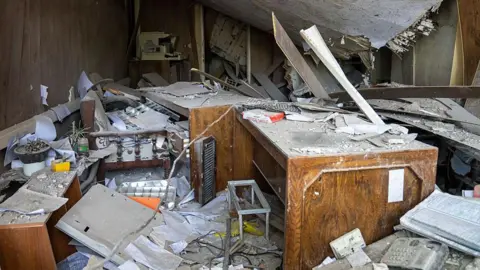
    Majid Saeedi/Getty Images Damaged office equipment sits among the destruction at Evin Prison after it was hit by an Israeli air strikes. The ceiling is collapsed and piles of paperwork are strewn about. A wooden desk is in the centre of the room.Majid Saeedi/Getty Images

    Several areas of the prison were damaged in the strikes

    Fariba Kamalabadi, a 62-year-old Baha’i detainee who was transferred from Evin to Qarchak Prison, south of the capital, has said that she “would rather have died in the attack than be transferred to such a prison”.

    Iran’s minority Baha’i community has long faced systematic discrimination and persecution, denied constitutional recognition and basic rights like education, public employment and religious freedom, because the Islamic Republic does not recognise it as a religion.

    “Fariba has to live in Qarchak in an overcrowded cell, where it is so cramped that people have to take turns to eat food around the table, and then return to their beds afterwards because of the lack of space”, said her daughter, Alhan Taefi, who lives in the UK.

    “Some of the roughly 60 prisoners who have been transferred from Evin with her are elderly women, and they do not receive proper medical care. There are flies everywhere in the cell. Her son-in-law and grandchildren, who are six and nine, were allowed to visit her in Evin but have not been granted permission to visit her yet, as they are not considered immediate family.”

    The BBC has contacted the Iranian embassy in London for comment on the conditions of prisoners who have been transferred from Evin.

    Civilian deaths

    In the month since the strikes, the BBC has verified the deaths of seven civilians related to the attack on Evin, including a five-year-old boy, a doctor, and a painter.

    Family members of Mehrangiz Imenpour, 61, a painter and mother of two who lived near the prison complex, told the BBC that she was “caught in the tragedy” of the attack.

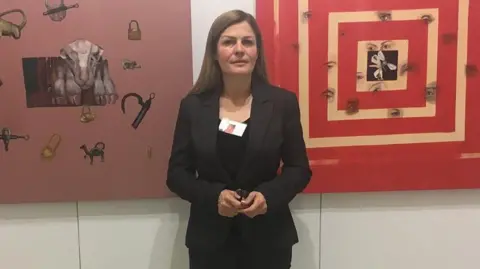
    Family Handout Mehrangiz Imenpour is wearing a black suit with a vistor tag clipped to her shirt. She stands in front of a beige wall with two pieces of red art hanging on it.Family Handout

    Mehrangiz Imenpour left home to use a cash machine and was killed in Israel’s strikes on Evin prison

    She left home to use a cash machine and happened to be walking on a street adjacent to the prison’s visitor centre as Israel struck the complex, a family member said. She was killed by the impact of the explosion.

    Her children are devastated, a relative recounted to the BBC.

    “When two states engage in a conflict, people are the ones who pay the price. Both states are guilty, both are responsible, and both must be held to account”, the relative said.

    Additional reporting by Shayan Sardarizadeh, BBC Verify


    Source link

  • Iran’s detainees in ‘unbearable’ conditions after Israeli strikes

    Iran’s detainees in ‘unbearable’ conditions after Israeli strikes


    Ghoncheh Habibiazad

    BBC Persian, World Service reporter

    EPA A white building with blown out windows is seen after an Israeli strikes on Evin prison in Iran. There is rubble piled high in front of the building, with piles of metal and concrete seen. In the foreground is a tree branch.EPA

    Parts of Evin prison were badly damaged in the Israeli strikes

    One month on from deadly Israeli air strikes on a notorious Iranian prison during the war between the two countries, inmates say they are being kept under unbearable and inhumane conditions after being moved to other prisons.

    Despite promises by the authorities, some of those transferred from Evin Prison in Tehran say they continue to face difficulties such as overcrowded cells, lack of beds and air conditioning, limited number of toilets and showers, and insect infestations.

    The BBC has received accounts from the family members of prisoners moved from Evin, who agreed to speak on condition of anonymity out of concern for the safety of themselves and the prisoners.

    Israel targeted Evin on 23 June. According to the Iranian authorities, the attack killed 80 people, including five prisoners, 41 prison staff and 13 military conscripts.

    The prison held thousands of men and women, including prominent political dissidents, human rights defenders, journalists and dual and foreign nationals, as well as members of religious and ethnic minorities.

    All inmates were subsequently moved out and sent to other prisons following the attack.

    Verified videos and satellite imagery confirm damage to several buildings within the complex, including the medical clinic, the visitor centre, the prosecutor’s office and an administrative building.

    After the attack, the Israeli military described the prison as “a symbol of oppression for the Iranian people”. It said it carried out the strikes in a “precise manner to mitigate harm to civilians” imprisoned there.

    Iran has labelled the attack a “war crime”.

    Fatemeh Bahrami/Anadolu via Getty Images A view of Evin prison is seen in the wake of an Israeli strikes on the site in June. A cot can be seen covered in debris, and rubble covers the floor. A barred window is seen with light shining through it. Wires hang from the walls and ceiling.Fatemeh Bahrami/Anadolu via Getty Images

    Evin prison held thousands of Iranian detainees before it was targeted in an Israeli strikes on 23 June

    Israel’s military also said that Evin was used for “intelligence operations against Israel, including counter-espionage”. It did not comment further when asked to provide evidence for the claim.

    Amnesty International said on Tuesday that, following an in-depth investigation, the attack constituted “a serious violation of international humanitarian law and must be criminally investigated as war crimes”.

    “Under international humanitarian law, a prison or place of detention is presumed a civilian object and there is no credible evidence in this case that Evin prison constituted a lawful military objective,” it added.

    Through his family members, one political prisoner who was sent to the Greater Tehran Central Penitentiary, also known as Fashafouyeh Prison, said that fellow inmates told him conditions there were inhumane even before Evin detainees were transferred.

    He said that the prison was in such a remote and dangerous area outside the capital that his wife had not been able to visit him since he moved there.

    Compared to Evin, which is in an accessible, residential area in north Tehran, Fashafouyeh is located 20 miles (32km) south of Tehran, in a desert with nothing around it but a road, according to the family members.

    The prisoner told his family that many inmates were still sleeping on the floor at Fashafouyeh in overcrowded cells without air conditioning, although the authorities have said repeatedly that they will improve the situation.

    A video from inside the prison, which has been verified by the BBC, shows a cell crowded with prisoners lying on beds and on the floor.

    At one point, a group affiliated with the authorities came to the prison to film a video intended to show that prisoners were doing well, but other inmates began chanting “death to the dictator” – a popular protest slogan among Iranian opposition groups directed at the Supreme Leader, Ayatollah Ali Khamenei – and stopped them from filming, the family of the prisoner said.

    Families of inmates in Fashafouyeh said that political prisoners were now staying in the same cell as those accused or convicted of violent crimes. This is a tactic that rights groups say Iran uses to intimidate political prisoners and is against the United Nations’ rules on the treatment of inmates.

    Another political detainee transferred to Fashafouyeh described his cell to his family as being unbearable due to lack of hygiene, with bedbugs and cockroaches all around, adding that the prison lacks basic amenities even compared to Evin.

    Human Rights Watch has previously accused the Iranian authorities of using threats of torture and indefinite imprisonment, along with lengthy interrogations and the denial of medical care for detainees. Iran has rejected these reports.

    Although Evin has long drawn condemnation from human rights groups over alleged torture and threats, conditions at Fashafouyeh had been “underreported”, prisoners told the BBC.

    Prominent Iranian journalist Mehdi Mahmoodian, who was also transferred from Evin to Fashafouyeh, said in a letter published on his Instagram page that due to the non-political nature of prisoners who were held there, they had been “long forgotten” and subjected to “years of humiliation, neglect, and oppression” because “they have no voice”.

    Majid Saeedi/Getty Images Damaged office equipment sits among the destruction at Evin Prison after it was hit by an Israeli air strikes. The ceiling is collapsed and piles of paperwork are strewn about. A wooden desk is in the centre of the room.Majid Saeedi/Getty Images

    Several areas of the prison were damaged in the strikes

    Fariba Kamalabadi, a 62-year-old Baha’i detainee who was transferred from Evin to Qarchak Prison, south of the capital, has said that she “would rather have died in the attack than be transferred to such a prison”.

    Iran’s minority Baha’i community has long faced systematic discrimination and persecution, denied constitutional recognition and basic rights like education, public employment and religious freedom, because the Islamic Republic does not recognise it as a religion.

    “Fariba has to live in Qarchak in an overcrowded cell, where it is so cramped that people have to take turns to eat food around the table, and then return to their beds afterwards because of the lack of space”, said her daughter, Alhan Taefi, who lives in the UK.

    “Some of the roughly 60 prisoners who have been transferred from Evin with her are elderly women, and they do not receive proper medical care. There are flies everywhere in the cell. Her son-in-law and grandchildren, who are six and nine, were allowed to visit her in Evin but have not been granted permission to visit her yet, as they are not considered immediate family.”

    The BBC has contacted the Iranian embassy in London for comment on the conditions of prisoners who have been transferred from Evin.

    Civilian deaths

    In the month since the strikes, the BBC has verified the deaths of seven civilians related to the attack on Evin, including a five-year-old boy, a doctor, and a painter.

    Family members of Mehrangiz Imenpour, 61, a painter and mother of two who lived near the prison complex, told the BBC that she was “caught in the tragedy” of the attack.

    Family Handout Mehrangiz Imenpour is wearing a black suit with a vistor tag clipped to her shirt. She stands in front of a beige wall with two pieces of red art hanging on it.Family Handout

    Mehrangiz Imenpour left home to use a cash machine and was killed in Israel’s strikes on Evin prison

    She left home to use a cash machine and happened to be walking on a street adjacent to the prison’s visitor centre as Israel struck the complex, a family member said. She was killed by the impact of the explosion.

    Her children are devastated, a relative recounted to the BBC.

    “When two states engage in a conflict, people are the ones who pay the price. Both states are guilty, both are responsible, and both must be held to account”, the relative said.

    Additional reporting by Shayan Sardarizadeh, BBC Verify


    Source link

  • Iran’s detainees in ‘unbearable’ conditions after Israeli strikes

    Iran’s detainees in ‘unbearable’ conditions after Israeli strikes


    Ghoncheh Habibiazad

    BBC Persian, World Service reporter

    EPA A white building with blown out windows is seen after an Israeli strikes on Evin prison in Iran. There is rubble piled high in front of the building, with piles of metal and concrete seen. In the foreground is a tree branch.EPA

    Parts of Evin prison were badly damaged in the Israeli strikes

    One month on from deadly Israeli air strikes on a notorious Iranian prison during the war between the two countries, inmates say they are being kept under unbearable and inhumane conditions after being moved to other prisons.

    Despite promises by the authorities, some of those transferred from Evin Prison in Tehran say they continue to face difficulties such as overcrowded cells, lack of beds and air conditioning, limited number of toilets and showers, and insect infestations.

    The BBC has received accounts from the family members of prisoners moved from Evin, who agreed to speak on condition of anonymity out of concern for the safety of themselves and the prisoners.

    Israel targeted Evin on 23 June. According to the Iranian authorities, the attack killed 80 people, including five prisoners, 41 prison staff and 13 military conscripts.

    The prison held thousands of men and women, including prominent political dissidents, human rights defenders, journalists and dual and foreign nationals, as well as members of religious and ethnic minorities.

    All inmates were subsequently moved out and sent to other prisons following the attack.

    Verified videos and satellite imagery confirm damage to several buildings within the complex, including the medical clinic, the visitor centre, the prosecutor’s office and an administrative building.

    After the attack, the Israeli military described the prison as “a symbol of oppression for the Iranian people”. It said it carried out the strikes in a “precise manner to mitigate harm to civilians” imprisoned there.

    Iran has labelled the attack a “war crime”.

    Fatemeh Bahrami/Anadolu via Getty Images A view of Evin prison is seen in the wake of an Israeli strikes on the site in June. A cot can be seen covered in debris, and rubble covers the floor. A barred window is seen with light shining through it. Wires hang from the walls and ceiling.Fatemeh Bahrami/Anadolu via Getty Images

    Evin prison held thousands of Iranian detainees before it was targeted in an Israeli strikes on 23 June

    Israel’s military also said that Evin was used for “intelligence operations against Israel, including counter-espionage”. It did not comment further when asked to provide evidence for the claim.

    Amnesty International said on Tuesday that, following an in-depth investigation, the attack constituted “a serious violation of international humanitarian law and must be criminally investigated as war crimes”.

    “Under international humanitarian law, a prison or place of detention is presumed a civilian object and there is no credible evidence in this case that Evin prison constituted a lawful military objective,” it added.

    Through his family members, one political prisoner who was sent to the Greater Tehran Central Penitentiary, also known as Fashafouyeh Prison, said that fellow inmates told him conditions there were inhumane even before Evin detainees were transferred.

    He said that the prison was in such a remote and dangerous area outside the capital that his wife had not been able to visit him since he moved there.

    Compared to Evin, which is in an accessible, residential area in north Tehran, Fashafouyeh is located 20 miles (32km) south of Tehran, in a desert with nothing around it but a road, according to the family members.

    The prisoner told his family that many inmates were still sleeping on the floor at Fashafouyeh in overcrowded cells without air conditioning, although the authorities have said repeatedly that they will improve the situation.

    A video from inside the prison, which has been verified by the BBC, shows a cell crowded with prisoners lying on beds and on the floor.

    At one point, a group affiliated with the authorities came to the prison to film a video intended to show that prisoners were doing well, but other inmates began chanting “death to the dictator” – a popular protest slogan among Iranian opposition groups directed at the Supreme Leader, Ayatollah Ali Khamenei – and stopped them from filming, the family of the prisoner said.

    Families of inmates in Fashafouyeh said that political prisoners were now staying in the same cell as those accused or convicted of violent crimes. This is a tactic that rights groups say Iran uses to intimidate political prisoners and is against the United Nations’ rules on the treatment of inmates.

    Another political detainee transferred to Fashafouyeh described his cell to his family as being unbearable due to lack of hygiene, with bedbugs and cockroaches all around, adding that the prison lacks basic amenities even compared to Evin.

    Human Rights Watch has previously accused the Iranian authorities of using threats of torture and indefinite imprisonment, along with lengthy interrogations and the denial of medical care for detainees. Iran has rejected these reports.

    Although Evin has long drawn condemnation from human rights groups over alleged torture and threats, conditions at Fashafouyeh had been “underreported”, prisoners told the BBC.

    Prominent Iranian journalist Mehdi Mahmoodian, who was also transferred from Evin to Fashafouyeh, said in a letter published on his Instagram page that due to the non-political nature of prisoners who were held there, they had been “long forgotten” and subjected to “years of humiliation, neglect, and oppression” because “they have no voice”.

    Majid Saeedi/Getty Images Damaged office equipment sits among the destruction at Evin Prison after it was hit by an Israeli air strikes. The ceiling is collapsed and piles of paperwork are strewn about. A wooden desk is in the centre of the room.Majid Saeedi/Getty Images

    Several areas of the prison were damaged in the strikes

    Fariba Kamalabadi, a 62-year-old Baha’i detainee who was transferred from Evin to Qarchak Prison, south of the capital, has said that she “would rather have died in the attack than be transferred to such a prison”.

    Iran’s minority Baha’i community has long faced systematic discrimination and persecution, denied constitutional recognition and basic rights like education, public employment and religious freedom, because the Islamic Republic does not recognise it as a religion.

    “Fariba has to live in Qarchak in an overcrowded cell, where it is so cramped that people have to take turns to eat food around the table, and then return to their beds afterwards because of the lack of space”, said her daughter, Alhan Taefi, who lives in the UK.

    “Some of the roughly 60 prisoners who have been transferred from Evin with her are elderly women, and they do not receive proper medical care. There are flies everywhere in the cell. Her son-in-law and grandchildren, who are six and nine, were allowed to visit her in Evin but have not been granted permission to visit her yet, as they are not considered immediate family.”

    The BBC has contacted the Iranian embassy in London for comment on the conditions of prisoners who have been transferred from Evin.

    Civilian deaths

    In the month since the strikes, the BBC has verified the deaths of seven civilians related to the attack on Evin, including a five-year-old boy, a doctor, and a painter.

    Family members of Mehrangiz Imenpour, 61, a painter and mother of two who lived near the prison complex, told the BBC that she was “caught in the tragedy” of the attack.

    Family Handout Mehrangiz Imenpour is wearing a black suit with a vistor tag clipped to her shirt. She stands in front of a beige wall with two pieces of red art hanging on it.Family Handout

    Mehrangiz Imenpour left home to use a cash machine and was killed in Israel’s strikes on Evin prison

    She left home to use a cash machine and happened to be walking on a street adjacent to the prison’s visitor centre as Israel struck the complex, a family member said. She was killed by the impact of the explosion.

    Her children are devastated, a relative recounted to the BBC.

    “When two states engage in a conflict, people are the ones who pay the price. Both states are guilty, both are responsible, and both must be held to account”, the relative said.

    Additional reporting by Shayan Sardarizadeh, BBC Verify


    Source link

  • Iran’s detainees in ‘unbearable’ conditions after Israeli strikes

    Iran’s detainees in ‘unbearable’ conditions after Israeli strikes


    Ghoncheh Habibiazad

    BBC Persian, World Service reporter

    EPA A white building with blown out windows is seen after an Israeli strikes on Evin prison in Iran. There is rubble piled high in front of the building, with piles of metal and concrete seen. In the foreground is a tree branch.EPA

    Parts of Evin prison were badly damaged in the Israeli strikes

    One month on from deadly Israeli air strikes on a notorious Iranian prison during the war between the two countries, inmates say they are being kept under unbearable and inhumane conditions after being moved to other prisons.

    Despite promises by the authorities, some of those transferred from Evin Prison in Tehran say they continue to face difficulties such as overcrowded cells, lack of beds and air conditioning, limited number of toilets and showers, and insect infestations.

    The BBC has received accounts from the family members of prisoners moved from Evin, who agreed to speak on condition of anonymity out of concern for the safety of themselves and the prisoners.

    Israel targeted Evin on 23 June. According to the Iranian authorities, the attack killed 80 people, including five prisoners, 41 prison staff and 13 military conscripts.

    The prison held thousands of men and women, including prominent political dissidents, human rights defenders, journalists and dual and foreign nationals, as well as members of religious and ethnic minorities.

    All inmates were subsequently moved out and sent to other prisons following the attack.

    Verified videos and satellite imagery confirm damage to several buildings within the complex, including the medical clinic, the visitor centre, the prosecutor’s office and an administrative building.

    After the attack, the Israeli military described the prison as “a symbol of oppression for the Iranian people”. It said it carried out the strikes in a “precise manner to mitigate harm to civilians” imprisoned there.

    Iran has labelled the attack a “war crime”.

    Fatemeh Bahrami/Anadolu via Getty Images A view of Evin prison is seen in the wake of an Israeli strikes on the site in June. A cot can be seen covered in debris, and rubble covers the floor. A barred window is seen with light shining through it. Wires hang from the walls and ceiling.Fatemeh Bahrami/Anadolu via Getty Images

    Evin prison held thousands of Iranian detainees before it was targeted in an Israeli strikes on 23 June

    Israel’s military also said that Evin was used for “intelligence operations against Israel, including counter-espionage”. It did not comment further when asked to provide evidence for the claim.

    Amnesty International said on Tuesday that, following an in-depth investigation, the attack constituted “a serious violation of international humanitarian law and must be criminally investigated as war crimes”.

    “Under international humanitarian law, a prison or place of detention is presumed a civilian object and there is no credible evidence in this case that Evin prison constituted a lawful military objective,” it added.

    Through his family members, one political prisoner who was sent to the Greater Tehran Central Penitentiary, also known as Fashafouyeh Prison, said that fellow inmates told him conditions there were inhumane even before Evin detainees were transferred.

    He said that the prison was in such a remote and dangerous area outside the capital that his wife had not been able to visit him since he moved there.

    Compared to Evin, which is in an accessible, residential area in north Tehran, Fashafouyeh is located 20 miles (32km) south of Tehran, in a desert with nothing around it but a road, according to the family members.

    The prisoner told his family that many inmates were still sleeping on the floor at Fashafouyeh in overcrowded cells without air conditioning, although the authorities have said repeatedly that they will improve the situation.

    A video from inside the prison, which has been verified by the BBC, shows a cell crowded with prisoners lying on beds and on the floor.

    At one point, a group affiliated with the authorities came to the prison to film a video intended to show that prisoners were doing well, but other inmates began chanting “death to the dictator” – a popular protest slogan among Iranian opposition groups directed at the Supreme Leader, Ayatollah Ali Khamenei – and stopped them from filming, the family of the prisoner said.

    Families of inmates in Fashafouyeh said that political prisoners were now staying in the same cell as those accused or convicted of violent crimes. This is a tactic that rights groups say Iran uses to intimidate political prisoners and is against the United Nations’ rules on the treatment of inmates.

    Another political detainee transferred to Fashafouyeh described his cell to his family as being unbearable due to lack of hygiene, with bedbugs and cockroaches all around, adding that the prison lacks basic amenities even compared to Evin.

    Human Rights Watch has previously accused the Iranian authorities of using threats of torture and indefinite imprisonment, along with lengthy interrogations and the denial of medical care for detainees. Iran has rejected these reports.

    Although Evin has long drawn condemnation from human rights groups over alleged torture and threats, conditions at Fashafouyeh had been “underreported”, prisoners told the BBC.

    Prominent Iranian journalist Mehdi Mahmoodian, who was also transferred from Evin to Fashafouyeh, said in a letter published on his Instagram page that due to the non-political nature of prisoners who were held there, they had been “long forgotten” and subjected to “years of humiliation, neglect, and oppression” because “they have no voice”.

    Majid Saeedi/Getty Images Damaged office equipment sits among the destruction at Evin Prison after it was hit by an Israeli air strikes. The ceiling is collapsed and piles of paperwork are strewn about. A wooden desk is in the centre of the room.Majid Saeedi/Getty Images

    Several areas of the prison were damaged in the strikes

    Fariba Kamalabadi, a 62-year-old Baha’i detainee who was transferred from Evin to Qarchak Prison, south of the capital, has said that she “would rather have died in the attack than be transferred to such a prison”.

    Iran’s minority Baha’i community has long faced systematic discrimination and persecution, denied constitutional recognition and basic rights like education, public employment and religious freedom, because the Islamic Republic does not recognise it as a religion.

    “Fariba has to live in Qarchak in an overcrowded cell, where it is so cramped that people have to take turns to eat food around the table, and then return to their beds afterwards because of the lack of space”, said her daughter, Alhan Taefi, who lives in the UK.

    “Some of the roughly 60 prisoners who have been transferred from Evin with her are elderly women, and they do not receive proper medical care. There are flies everywhere in the cell. Her son-in-law and grandchildren, who are six and nine, were allowed to visit her in Evin but have not been granted permission to visit her yet, as they are not considered immediate family.”

    The BBC has contacted the Iranian embassy in London for comment on the conditions of prisoners who have been transferred from Evin.

    Civilian deaths

    In the month since the strikes, the BBC has verified the deaths of seven civilians related to the attack on Evin, including a five-year-old boy, a doctor, and a painter.

    Family members of Mehrangiz Imenpour, 61, a painter and mother of two who lived near the prison complex, told the BBC that she was “caught in the tragedy” of the attack.

    Family Handout Mehrangiz Imenpour is wearing a black suit with a vistor tag clipped to her shirt. She stands in front of a beige wall with two pieces of red art hanging on it.Family Handout

    Mehrangiz Imenpour left home to use a cash machine and was killed in Israel’s strikes on Evin prison

    She left home to use a cash machine and happened to be walking on a street adjacent to the prison’s visitor centre as Israel struck the complex, a family member said. She was killed by the impact of the explosion.

    Her children are devastated, a relative recounted to the BBC.

    “When two states engage in a conflict, people are the ones who pay the price. Both states are guilty, both are responsible, and both must be held to account”, the relative said.

    Additional reporting by Shayan Sardarizadeh, BBC Verify


    Source link