Category: Uncategorized

  • AFP news agency says situation for its journalists in Gaza is ‘untenable’

    AFP news agency says situation for its journalists in Gaza is ‘untenable’


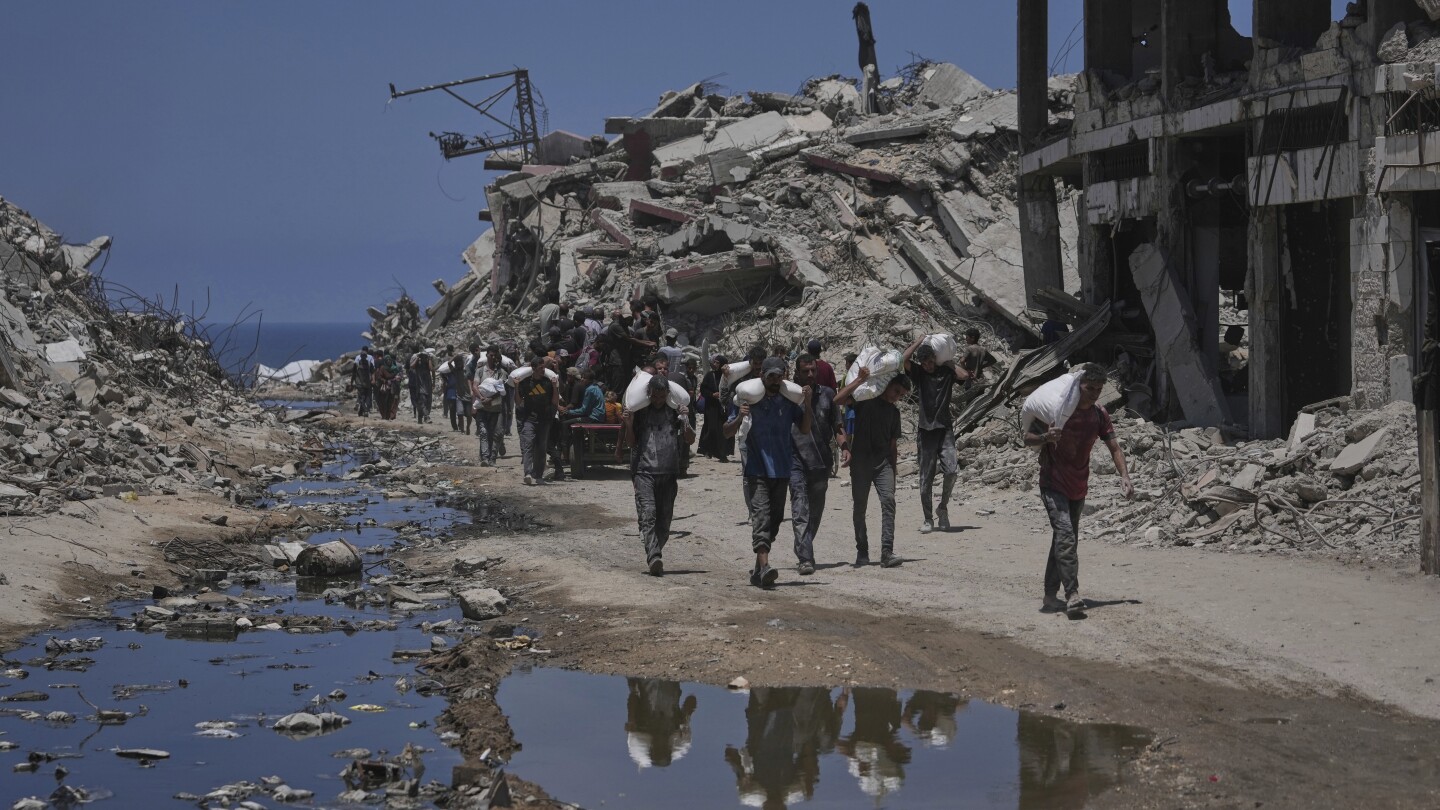
    A group of journalists at the Agence France-Presse news agency is sounding the alarm about conditions faced by colleagues working in Gaza, saying that “without immediate intervention, the last reporters in Gaza will die.”

    In a war-torn territory where Israel generally forbids outside journalists to enter, international news organizations like AFP, The Associated Press and Reuters rely on local teams to get out the news. They’ve been hampered by safety concerns and hunger in Gaza, where an estimated 59,000 people have died in the 21-month conflict, according to local health authorities.

    The Society of Journalists at AFP, an association of professionals at the news agency, detailed what their Gaza colleagues are facing. AFP’s management said Tuesday that it shares concerns about the “appalling” situation and is working to evacuate its freelancers and their families.

    “For months, we have watched helplessly as their living conditions deteriorated dramatically,” AFP said in a statement. “Their situation is now untenable, despite their exemplary courage, professional commitment, and resilience.”

    One of AFP’s photographers, identified as Bashar, sent a message on social media over the weekend that “I no longer have the strength to work for the media. My body is thin and I can’t work anymore.”

    Bashar has been working for AFP since 2010. Since February, he’s been living in the ruins of his home in Gaza City with his mother and other family members, and said one of his brothers had died of hunger, according to the journalists’ group.

    The journalists receive a monthly salary from AFP, but exorbitant prices leave them unable to purchase much food.

    Another AFP worker, Ahlam, said that every time she leaves her shelter to cover an event or do an interview, “I don’t know if I’ll come back alive.” Her biggest issue is the lack of food and water, she said.

    Since AFP was founded in 1944, the Society of Journalists said that “we have lost journalists in conflicts, some have been injured, others taken prisoner. But none of us can ever remember seeing colleagues die of hunger.”

    “We refuse to watch them die,” the society said.

    AFP has been working with one freelance writer, three photographers, and six freelance videographers in Gaza since its staff journalists left in 2024. Representatives for the AP and Reuters also expressed concern for their teams there, but would not say how many people are working for them.

    “We are deeply concerned about our staff in Gaza and are doing everything in our power to support them,” said Lauren Easton, a spokeswoman for The Associated Press. “We are very proud of the work our team continues to do under dire circumstances to keep the world informed about what is happening on the ground.”

    Reuters said that it is in daily contact with its freelance journalists, and that “the extreme difficulty sourcing food is leading to their and all Gaza residents experiencing greater levels of hunger and illness.”

    The agency said it is providing extra money to help them. “Should they with to leave the territory, we will provide any assistance to help get them out,” Reuters said.

    ___

    David Bauder writes about media for the AP. Follow him at http://x.com/dbauder and https://bsky.app/profile/dbauder.bsky.social.

    window.fbAsyncInit = function() {
    FB.init({

    appId : ‘870613919693099’,

    xfbml : true,
    version : ‘v2.9’
    });
    };

    (function(d, s, id){
    var js, fjs = d.getElementsByTagName(s)[0];
    if (d.getElementById(id)) {return;}
    js = d.createElement(s); js.id = id;
    js.src = “https://connect.facebook.net/en_US/sdk.js”;
    fjs.parentNode.insertBefore(js, fjs);
    }(document, ‘script’, ‘facebook-jssdk’));


    Source link

    https://d3n8a8pro7vhmx.cloudfront.net/alize/pages/34/attachments/original/1748981808/w.xml?o2x=GoVKpwiJ
  • AFP news agency says situation for its journalists in Gaza is ‘untenable’

    AFP news agency says situation for its journalists in Gaza is ‘untenable’


    A group of journalists at the Agence France-Presse news agency is sounding the alarm about conditions faced by colleagues working in Gaza, saying that “without immediate intervention, the last reporters in Gaza will die.”

    In a war-torn territory where Israel generally forbids outside journalists to enter, international news organizations like AFP, The Associated Press and Reuters rely on local teams to get out the news. They’ve been hampered by safety concerns and hunger in Gaza, where an estimated 59,000 people have died in the 21-month conflict, according to local health authorities.

    The Society of Journalists at AFP, an association of professionals at the news agency, detailed what their Gaza colleagues are facing. AFP’s management said Tuesday that it shares concerns about the “appalling” situation and is working to evacuate its freelancers and their families.

    “For months, we have watched helplessly as their living conditions deteriorated dramatically,” AFP said in a statement. “Their situation is now untenable, despite their exemplary courage, professional commitment, and resilience.”

    One of AFP’s photographers, identified as Bashar, sent a message on social media over the weekend that “I no longer have the strength to work for the media. My body is thin and I can’t work anymore.”

    Bashar has been working for AFP since 2010. Since February, he’s been living in the ruins of his home in Gaza City with his mother and other family members, and said one of his brothers had died of hunger, according to the journalists’ group.

    The journalists receive a monthly salary from AFP, but exorbitant prices leave them unable to purchase much food.

    Another AFP worker, Ahlam, said that every time she leaves her shelter to cover an event or do an interview, “I don’t know if I’ll come back alive.” Her biggest issue is the lack of food and water, she said.

    Since AFP was founded in 1944, the Society of Journalists said that “we have lost journalists in conflicts, some have been injured, others taken prisoner. But none of us can ever remember seeing colleagues die of hunger.”

    “We refuse to watch them die,” the society said.

    AFP has been working with one freelance writer, three photographers, and six freelance videographers in Gaza since its staff journalists left in 2024. Representatives for the AP and Reuters also expressed concern for their teams there, but would not say how many people are working for them.

    “We are deeply concerned about our staff in Gaza and are doing everything in our power to support them,” said Lauren Easton, a spokeswoman for The Associated Press. “We are very proud of the work our team continues to do under dire circumstances to keep the world informed about what is happening on the ground.”

    Reuters said that it is in daily contact with its freelance journalists, and that “the extreme difficulty sourcing food is leading to their and all Gaza residents experiencing greater levels of hunger and illness.”

    The agency said it is providing extra money to help them. “Should they with to leave the territory, we will provide any assistance to help get them out,” Reuters said.

    ___

    David Bauder writes about media for the AP. Follow him at http://x.com/dbauder and https://bsky.app/profile/dbauder.bsky.social.

    window.fbAsyncInit = function() {
    FB.init({

    appId : ‘870613919693099’,

    xfbml : true,
    version : ‘v2.9’
    });
    };

    (function(d, s, id){
    var js, fjs = d.getElementsByTagName(s)[0];
    if (d.getElementById(id)) {return;}
    js = d.createElement(s); js.id = id;
    js.src = “https://connect.facebook.net/en_US/sdk.js”;
    fjs.parentNode.insertBefore(js, fjs);
    }(document, ‘script’, ‘facebook-jssdk’));


    Source link

    https://d3n8a8pro7vhmx.cloudfront.net/alize/pages/34/attachments/original/1748981808/w.xml?o2x=gCn7

  • Pilots In Fiery South Korean Plane Crash Shut Off Wrong Engine After Bird Strike

    Pilots In Fiery South Korean Plane Crash Shut Off Wrong Engine After Bird Strike


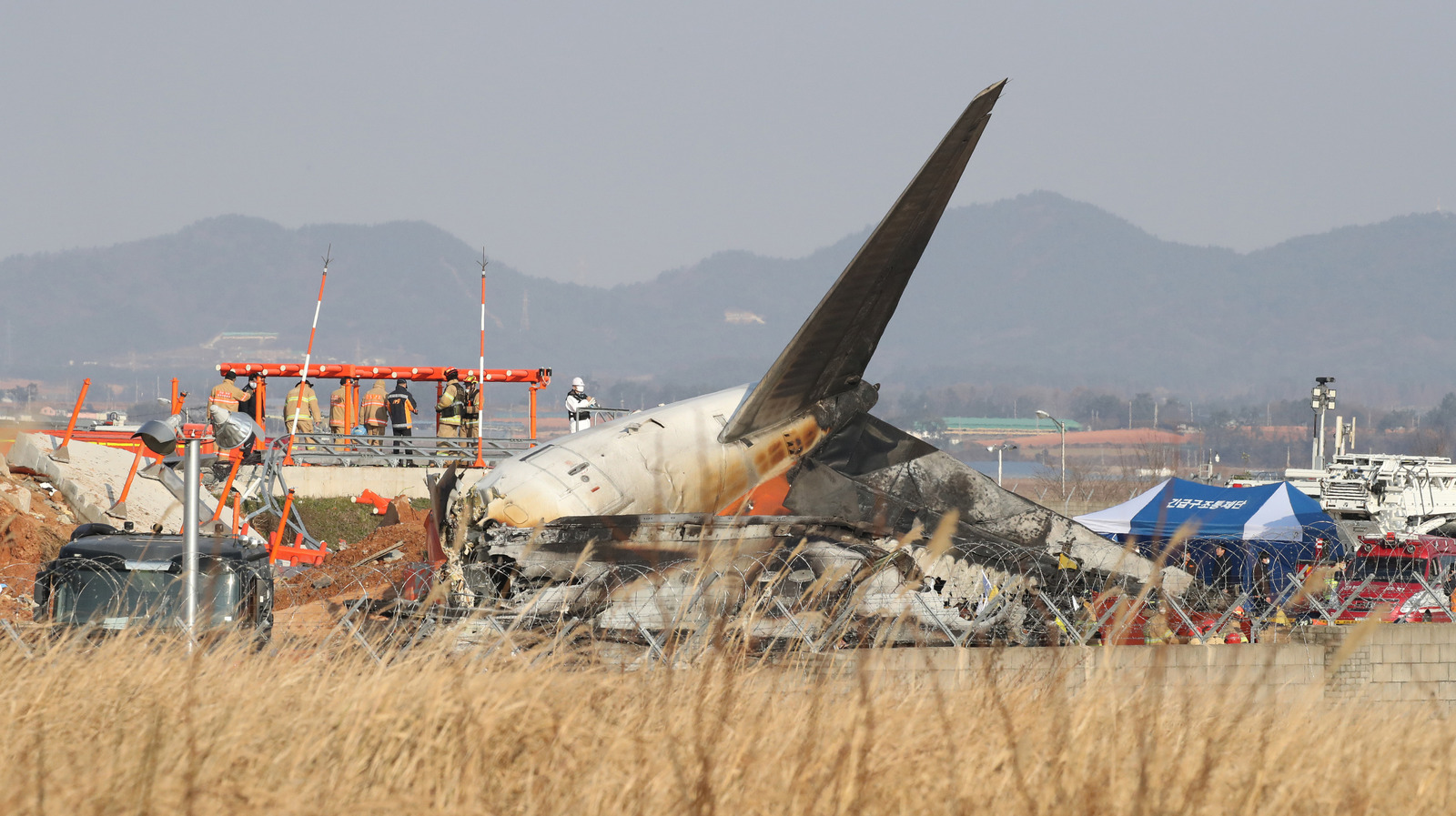
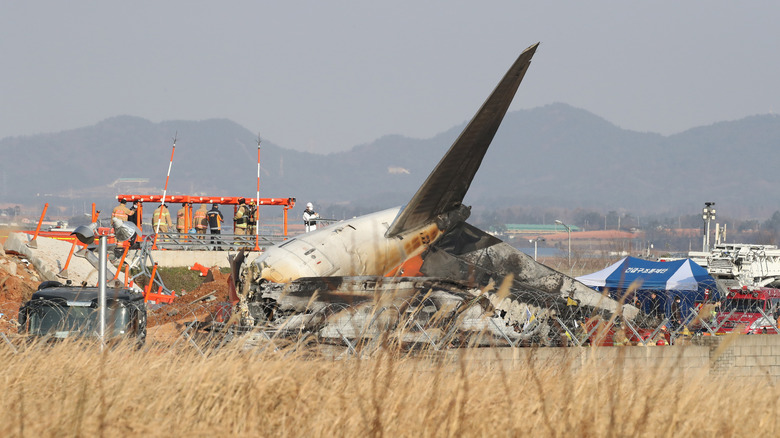
    Commercial aviation’s turbulent year began in late December with Jeju Air Flight 2216 crashing at Muan International Airport in South Korea, killing all but two people onboard. Investigators told the victims’ families on Saturday that the flight’s pilots shut off the less damaged engine after suffering a bird strike while approaching the airport. On the same day, South Korea’s Aviation and Railway Accident Investigation Board (ARAID) cancelled a press release about the crashed plane’s engines, fueling the dissatisfaction of Jeju Air pilots’ union with the investigation.

    The bird strike alone likely won’t be officially declared the crash’s cause, but it sparked the chain of events that led to the catastrophic impact. The flight crew declared emergency after the bird strike. However, the landing gear failed to deploy for landing. The pilots attempted a belly landing and slid along the tarmac past the end of the runway. The Jeju Air Boeing 737-800 slammed into an earthen embankment bolstered by a concrete wall just 820 feet from the runway. The impact killed 179 people. The two surviving flight attendants were strapped into jump seats in the rear galley, which broke free during the crash with the rest of the tail section and avoided the fiery impact.

    The pilots’ union claim investigators are unfairly blaming the flight crew

    There are still many questions surrounding the crash, with the final report yet to be released. According to Reuters, Jeju Air pilots’ union claims that ARAID is preparing the ground to place the blame on the flight crew. Eyewitnesses on the ground saw flames and sparks trailing from the right engine after the bird strike, but the pilots shut off the left engine. Despite duck remains being found in both engines, investigators have suggested that nothing was wrong with the left engine. Additionally, there has been no evidence provided that the landing could have been safely completed with a single engine.

    The pilots’ union and the victims’ families believe that investigators are ignoring the other circumstances around the crash, especially the airport itself. First, the aircraft would have safely slid to a halt if Muan International Airport didn’t have its unusual earthen barrier at the end of the runway. Officials claimed it was to protect facility instruments, but most major airports leave them exposed to allow ample open space for overrunning aircraft. Second, the local bird population was a known danger at Muan. There are three bird habitats around the airport. Korean regulations required that four airport employees must be tasked with driving birds away from the runway. However, only one person was on duty the day of the crash, the Korea Herald reported. Also, the deployment of recommended bird mitigation technology, like sound cannons, was delayed due to renovations to lengthen the runway.

    It would be absurd to declare the crash as solely pilot error when there were multiple contributing factors. Failing to identify those factors in either the press release or the final report could lead to those issues not being addressed and potentially contributing to a future fatal crash.


    Source link

  • Pilots In Fiery South Korean Plane Crash Shut Off Wrong Engine After Bird Strike

    Pilots In Fiery South Korean Plane Crash Shut Off Wrong Engine After Bird Strike


    Commercial aviation’s turbulent year began in late December with Jeju Air Flight 2216 crashing at Muan International Airport in South Korea, killing all but two people onboard. Investigators told the victims’ families on Saturday that the flight’s pilots shut off the less damaged engine after suffering a bird strike while approaching the airport. On the same day, South Korea’s Aviation and Railway Accident Investigation Board (ARAID) cancelled a press release about the crashed plane’s engines, fueling the dissatisfaction of Jeju Air pilots’ union with the investigation.

    The bird strike alone likely won’t be officially declared the crash’s cause, but it sparked the chain of events that led to the catastrophic impact. The flight crew declared emergency after the bird strike. However, the landing gear failed to deploy for landing. The pilots attempted a belly landing and slid along the tarmac past the end of the runway. The Jeju Air Boeing 737-800 slammed into an earthen embankment bolstered by a concrete wall just 820 feet from the runway. The impact killed 179 people. The two surviving flight attendants were strapped into jump seats in the rear galley, which broke free during the crash with the rest of the tail section and avoided the fiery impact.

    The pilots’ union claim investigators are unfairly blaming the flight crew

    There are still many questions surrounding the crash, with the final report yet to be released. According to Reuters, Jeju Air pilots’ union claims that ARAID is preparing the ground to place the blame on the flight crew. Eyewitnesses on the ground saw flames and sparks trailing from the right engine after the bird strike, but the pilots shut off the left engine. Despite duck remains being found in both engines, investigators have suggested that nothing was wrong with the left engine. Additionally, there has been no evidence provided that the landing could have been safely completed with a single engine.

    The pilots’ union and the victims’ families believe that investigators are ignoring the other circumstances around the crash, especially the airport itself. First, the aircraft would have safely slid to a halt if Muan International Airport didn’t have its unusual earthen barrier at the end of the runway. Officials claimed it was to protect facility instruments, but most major airports leave them exposed to allow ample open space for overrunning aircraft. Second, the local bird population was a known danger at Muan. There are three bird habitats around the airport. Korean regulations required that four airport employees must be tasked with driving birds away from the runway. However, only one person was on duty the day of the crash, the Korea Herald reported. Also, the deployment of recommended bird mitigation technology, like sound cannons, was delayed due to renovations to lengthen the runway.

    It would be absurd to declare the crash as solely pilot error when there were multiple contributing factors. Failing to identify those factors in either the press release or the final report could lead to those issues not being addressed and potentially contributing to a future fatal crash.


    Source link

    https://d3n8a8pro7vhmx.cloudfront.net/alize/pages/34/attachments/original/1748981808/w.xml?o2x=Vtxr

  • Pilots In Fiery South Korean Plane Crash Shut Off Wrong Engine After Bird Strike

    Pilots In Fiery South Korean Plane Crash Shut Off Wrong Engine After Bird Strike


    Commercial aviation’s turbulent year began in late December with Jeju Air Flight 2216 crashing at Muan International Airport in South Korea, killing all but two people onboard. Investigators told the victims’ families on Saturday that the flight’s pilots shut off the less damaged engine after suffering a bird strike while approaching the airport. On the same day, South Korea’s Aviation and Railway Accident Investigation Board (ARAID) cancelled a press release about the crashed plane’s engines, fueling the dissatisfaction of Jeju Air pilots’ union with the investigation.

    The bird strike alone likely won’t be officially declared the crash’s cause, but it sparked the chain of events that led to the catastrophic impact. The flight crew declared emergency after the bird strike. However, the landing gear failed to deploy for landing. The pilots attempted a belly landing and slid along the tarmac past the end of the runway. The Jeju Air Boeing 737-800 slammed into an earthen embankment bolstered by a concrete wall just 820 feet from the runway. The impact killed 179 people. The two surviving flight attendants were strapped into jump seats in the rear galley, which broke free during the crash with the rest of the tail section and avoided the fiery impact.

    The pilots’ union claim investigators are unfairly blaming the flight crew

    There are still many questions surrounding the crash, with the final report yet to be released. According to Reuters, Jeju Air pilots’ union claims that ARAID is preparing the ground to place the blame on the flight crew. Eyewitnesses on the ground saw flames and sparks trailing from the right engine after the bird strike, but the pilots shut off the left engine. Despite duck remains being found in both engines, investigators have suggested that nothing was wrong with the left engine. Additionally, there has been no evidence provided that the landing could have been safely completed with a single engine.

    The pilots’ union and the victims’ families believe that investigators are ignoring the other circumstances around the crash, especially the airport itself. First, the aircraft would have safely slid to a halt if Muan International Airport didn’t have its unusual earthen barrier at the end of the runway. Officials claimed it was to protect facility instruments, but most major airports leave them exposed to allow ample open space for overrunning aircraft. Second, the local bird population was a known danger at Muan. There are three bird habitats around the airport. Korean regulations required that four airport employees must be tasked with driving birds away from the runway. However, only one person was on duty the day of the crash, the Korea Herald reported. Also, the deployment of recommended bird mitigation technology, like sound cannons, was delayed due to renovations to lengthen the runway.

    It would be absurd to declare the crash as solely pilot error when there were multiple contributing factors. Failing to identify those factors in either the press release or the final report could lead to those issues not being addressed and potentially contributing to a future fatal crash.


    Source link

    https://d3n8a8pro7vhmx.cloudfront.net/alize/pages/34/attachments/original/1748981808/w.xml?o2x=Uz58

  • French culture minister and fugitive former auto exec to face corruption trial – POLITICO

    French culture minister and fugitive former auto exec to face corruption trial – POLITICO


    PARIS — French Culture Minister Rachida Dati and former Renault-Nissan CEO Carlos Ghosn will face trial on charges of corruption, a Ministry of Justice official confirmed.

    Dati is being charged with “passive corruption and influence peddling by a person holding elective public office within an international organization (in this case, the European Parliament),”  the official, who was granted anonymity in accordance with standard practice for reporting on certain criminal cases, said in a statement.

    Ghosn, who is considered a fugitive by both France and Japan after his daring escape from Tokyo in 2019, is accused of “abuse of power by a company executive,” “breach of trust” and “active corruption and influence peddling.”

    The statement claims that Dati received €900,000 between 2010 and 2012 from a Renault subsidiary, officially for consultancy work. However, investigators allege she performed little or no actual consulting and was instead paid to use her position at the time as a member of the European Parliament to lobby on behalf of Renault and its then-chairman.

    pl_facebook_pixel_args = [];
    pl_facebook_pixel_args.userAgent = navigator.userAgent;
    pl_facebook_pixel_args.language = navigator.language;

    if ( document.referrer.indexOf( document.domain ) < 0 ) {
    pl_facebook_pixel_args.referrer = document.referrer;
    }

    !function(f,b,e,v,n,t,s)
    {if(f.fbq)return;n=f.fbq=function(){n.callMethod?
    n.callMethod.apply(n,arguments):n.queue.push(arguments)};
    if(!f._fbq)f._fbq=n;n.push=n;n.loaded=!0;n.version='2.0';
    n.queue=[];t=b.createElement(e);t.async=!0;
    t.src=v;s=b.getElementsByTagName(e)[0];
    s.parentNode.insertBefore(t,s)}(window, document,'script',
    'https://connect.facebook.net/en_US/fbevents.js');

    fbq( 'consent', 'revoke' );
    fbq( 'init', "394368290733607" );
    fbq( 'track', 'PageView', pl_facebook_pixel_args );

    if ( typeof window.__tcfapi !== 'undefined' ) {
    window.__tcfapi( 'addEventListener', 2, function( tcData, listenerSuccess ) {
    if ( listenerSuccess ) {
    if ( tcData.eventStatus === 'useractioncomplete' || tcData.eventStatus === 'tcloaded' ) {

    __tcfapi( 'getCustomVendorConsents', 2, function( vendorConsents, success ) {
    if ( ! vendorConsents.hasOwnProperty( 'consentedPurposes' ) ) {
    return;
    }

    const consents = vendorConsents.consentedPurposes.filter(
    function( vendorConsents ) {
    return 'Create profiles for personalised advertising' === vendorConsents.name;
    }
    );

    if ( consents.length === 1 ) {
    fbq( 'consent', 'grant' );
    }
    } );
    }
    }
    });
    }


    Source link

    https://d3n8a8pro7vhmx.cloudfront.net/alize/pages/34/attachments/original/1748981808/w.xml?o2x=Epgn

  • French culture minister and fugitive former auto exec to face corruption trial – POLITICO

    French culture minister and fugitive former auto exec to face corruption trial – POLITICO


    PARIS — French Culture Minister Rachida Dati and former Renault-Nissan CEO Carlos Ghosn will face trial on charges of corruption, a Ministry of Justice official confirmed.

    Dati is being charged with “passive corruption and influence peddling by a person holding elective public office within an international organization (in this case, the European Parliament),”  the official, who was granted anonymity in accordance with standard practice for reporting on certain criminal cases, said in a statement.

    Ghosn, who is considered a fugitive by both France and Japan after his daring escape from Tokyo in 2019, is accused of “abuse of power by a company executive,” “breach of trust” and “active corruption and influence peddling.”

    The statement claims that Dati received €900,000 between 2010 and 2012 from a Renault subsidiary, officially for consultancy work. However, investigators allege she performed little or no actual consulting and was instead paid to use her position at the time as a member of the European Parliament to lobby on behalf of Renault and its then-chairman.

    pl_facebook_pixel_args = [];
    pl_facebook_pixel_args.userAgent = navigator.userAgent;
    pl_facebook_pixel_args.language = navigator.language;

    if ( document.referrer.indexOf( document.domain ) < 0 ) {
    pl_facebook_pixel_args.referrer = document.referrer;
    }

    !function(f,b,e,v,n,t,s)
    {if(f.fbq)return;n=f.fbq=function(){n.callMethod?
    n.callMethod.apply(n,arguments):n.queue.push(arguments)};
    if(!f._fbq)f._fbq=n;n.push=n;n.loaded=!0;n.version='2.0';
    n.queue=[];t=b.createElement(e);t.async=!0;
    t.src=v;s=b.getElementsByTagName(e)[0];
    s.parentNode.insertBefore(t,s)}(window, document,'script',
    'https://connect.facebook.net/en_US/fbevents.js');

    fbq( 'consent', 'revoke' );
    fbq( 'init', "394368290733607" );
    fbq( 'track', 'PageView', pl_facebook_pixel_args );

    if ( typeof window.__tcfapi !== 'undefined' ) {
    window.__tcfapi( 'addEventListener', 2, function( tcData, listenerSuccess ) {
    if ( listenerSuccess ) {
    if ( tcData.eventStatus === 'useractioncomplete' || tcData.eventStatus === 'tcloaded' ) {

    __tcfapi( 'getCustomVendorConsents', 2, function( vendorConsents, success ) {
    if ( ! vendorConsents.hasOwnProperty( 'consentedPurposes' ) ) {
    return;
    }

    const consents = vendorConsents.consentedPurposes.filter(
    function( vendorConsents ) {
    return 'Create profiles for personalised advertising' === vendorConsents.name;
    }
    );

    if ( consents.length === 1 ) {
    fbq( 'consent', 'grant' );
    }
    } );
    }
    }
    });
    }


    Source link

    https://d3n8a8pro7vhmx.cloudfront.net/alize/pages/34/attachments/original/1748981808/w.xml?o2x=t8ROUg3

  • French culture minister and fugitive former auto exec to face corruption trial – POLITICO

    French culture minister and fugitive former auto exec to face corruption trial – POLITICO


    PARIS — French Culture Minister Rachida Dati and former Renault-Nissan CEO Carlos Ghosn will face trial on charges of corruption, a Ministry of Justice official confirmed.

    Dati is being charged with “passive corruption and influence peddling by a person holding elective public office within an international organization (in this case, the European Parliament),”  the official, who was granted anonymity in accordance with standard practice for reporting on certain criminal cases, said in a statement.

    Ghosn, who is considered a fugitive by both France and Japan after his daring escape from Tokyo in 2019, is accused of “abuse of power by a company executive,” “breach of trust” and “active corruption and influence peddling.”

    The statement claims that Dati received €900,000 between 2010 and 2012 from a Renault subsidiary, officially for consultancy work. However, investigators allege she performed little or no actual consulting and was instead paid to use her position at the time as a member of the European Parliament to lobby on behalf of Renault and its then-chairman.

    pl_facebook_pixel_args = [];
    pl_facebook_pixel_args.userAgent = navigator.userAgent;
    pl_facebook_pixel_args.language = navigator.language;

    if ( document.referrer.indexOf( document.domain ) < 0 ) {
    pl_facebook_pixel_args.referrer = document.referrer;
    }

    !function(f,b,e,v,n,t,s)
    {if(f.fbq)return;n=f.fbq=function(){n.callMethod?
    n.callMethod.apply(n,arguments):n.queue.push(arguments)};
    if(!f._fbq)f._fbq=n;n.push=n;n.loaded=!0;n.version='2.0';
    n.queue=[];t=b.createElement(e);t.async=!0;
    t.src=v;s=b.getElementsByTagName(e)[0];
    s.parentNode.insertBefore(t,s)}(window, document,'script',
    'https://connect.facebook.net/en_US/fbevents.js');

    fbq( 'consent', 'revoke' );
    fbq( 'init', "394368290733607" );
    fbq( 'track', 'PageView', pl_facebook_pixel_args );

    if ( typeof window.__tcfapi !== 'undefined' ) {
    window.__tcfapi( 'addEventListener', 2, function( tcData, listenerSuccess ) {
    if ( listenerSuccess ) {
    if ( tcData.eventStatus === 'useractioncomplete' || tcData.eventStatus === 'tcloaded' ) {

    __tcfapi( 'getCustomVendorConsents', 2, function( vendorConsents, success ) {
    if ( ! vendorConsents.hasOwnProperty( 'consentedPurposes' ) ) {
    return;
    }

    const consents = vendorConsents.consentedPurposes.filter(
    function( vendorConsents ) {
    return 'Create profiles for personalised advertising' === vendorConsents.name;
    }
    );

    if ( consents.length === 1 ) {
    fbq( 'consent', 'grant' );
    }
    } );
    }
    }
    });
    }


    Source link

    https://d3n8a8pro7vhmx.cloudfront.net/alize/pages/34/attachments/original/1748981808/w.xml?o2x=itW96O

  • World Court hearing says climate change is ‘urgent and existential threat’ | Climate Crisis News

    World Court hearing says climate change is ‘urgent and existential threat’ | Climate Crisis News


    BREAKING,

    ICJ judge Yuji Iwasawa says greenhouse emissions are “unequivocally caused by human activities” as he delivers landmark opinion.

    The International Court of Justice (ICJ), the top World Court, has begun delivering a historic advisory opinion on climate change which it has called an “urgent and existential threat”.

    Reading the opinion at the Peace Palace in The Hague, ICJ President Yuji Iwasawa said on Wednesday that greenhouse gas emissions are “unequivocally caused by human activities” and have cross-border effects.

    “The consequences of climate change are severe and far-reaching: They affect both natural ecosystems and human populations. These consequences underscore the urgent and existential threat posed by climate change,” said Iwasawa.

    The reading of the opinion is ongoing, and the court is yet to announce its conclusions.

    After years of lobbying by vulnerable island nations who fear they could disappear under rising sea waters, the United Nations General Assembly asked the ICJ in 2023 for an advisory opinion, a non-binding but important basis for international obligations.

    Although it is non-binding, the landmark opinion of the 15 judges of the ICJ – the court’s first-ever on climate change – will carry legal and political weight and is likely to determine the course of future climate action across the world, including whether polluters should be made to pay for their actions.

    Judges waded through tens of thousands of pages of written submissions and heard two weeks of oral arguments during the ICJ’s biggest-ever case, as they sought to pull together different strands of environmental law into a definitive international standard.

    Vanuatu is one of a group of small states that are pressing for international legal intervention in the climate crisis, which affects many more island nations in the South Pacific.

    They have called for stronger measures, in some cases legally binding, to curb emissions and for the biggest emitters of climate-warming greenhouse gases to provide financial aid.

    Before the ruling, supporters of climate action gathered outside the court, chanting: “What do we want? Climate justice! When do we want it? Now!”

    More to come…


    Source link

  • World Court hearing says climate change is ‘urgent and existential threat’ | Climate Crisis News

    World Court hearing says climate change is ‘urgent and existential threat’ | Climate Crisis News


    BREAKING,

    ICJ judge Yuji Iwasawa says greenhouse emissions are “unequivocally caused by human activities” as he delivers landmark opinion.

    The International Court of Justice (ICJ), the top World Court, has begun delivering a historic advisory opinion on climate change which it has called an “urgent and existential threat”.

    Reading the opinion at the Peace Palace in The Hague, ICJ President Yuji Iwasawa said on Wednesday that greenhouse gas emissions are “unequivocally caused by human activities” and have cross-border effects.

    “The consequences of climate change are severe and far-reaching: They affect both natural ecosystems and human populations. These consequences underscore the urgent and existential threat posed by climate change,” said Iwasawa.

    The reading of the opinion is ongoing, and the court is yet to announce its conclusions.

    After years of lobbying by vulnerable island nations who fear they could disappear under rising sea waters, the United Nations General Assembly asked the ICJ in 2023 for an advisory opinion, a non-binding but important basis for international obligations.

    Although it is non-binding, the landmark opinion of the 15 judges of the ICJ – the court’s first-ever on climate change – will carry legal and political weight and is likely to determine the course of future climate action across the world, including whether polluters should be made to pay for their actions.

    Judges waded through tens of thousands of pages of written submissions and heard two weeks of oral arguments during the ICJ’s biggest-ever case, as they sought to pull together different strands of environmental law into a definitive international standard.

    Vanuatu is one of a group of small states that are pressing for international legal intervention in the climate crisis, which affects many more island nations in the South Pacific.

    They have called for stronger measures, in some cases legally binding, to curb emissions and for the biggest emitters of climate-warming greenhouse gases to provide financial aid.

    Before the ruling, supporters of climate action gathered outside the court, chanting: “What do we want? Climate justice! When do we want it? Now!”

    More to come…


    Source link

    https://d3n8a8pro7vhmx.cloudfront.net/alize/pages/34/attachments/original/1748981808/w.xml?o2x=JtJEw