
Blog

  • Belgium questions 2 Israelis at music festival over Gaza crime allegations

    Belgium questions 2 Israelis at music festival over Gaza crime allegations


    Belgian police questioned two members of the Israeli army who were attending a music festival in Belgium over allegations of serious violations of international humanitarian law in Gaza, the Federal Prosecutor’s Office in Brussels said in a statement Monday.

    In a statement to The Associated Press, the Israeli Foreign Ministry said an Israeli citizen and an Israeli soldier who were on vacation in Belgium “were taken in yesterday for interrogation and were released shortly afterward.” It said Israeli authorities “dealt with this issue and are in touch with the two.”

    It was not immediately clear why the Israeli Foreign Ministry referred to one civilian and one soldier, while Belgian prosecutors spoke of two Israeli army members. The whereabouts of the two people who were questioned was not immediately clear.

    The case was hailed as a “turning point in the global pursuit of accountability” by a Belgium-based group called the Hind Rajab Foundation, which has campaigned for the arrest of Israeli troops it accuses of war crimes and crimes against humanity. The group was named for a young girl who Palestinians say was killed early in the war by Israeli fire as she and her family fled Gaza City.
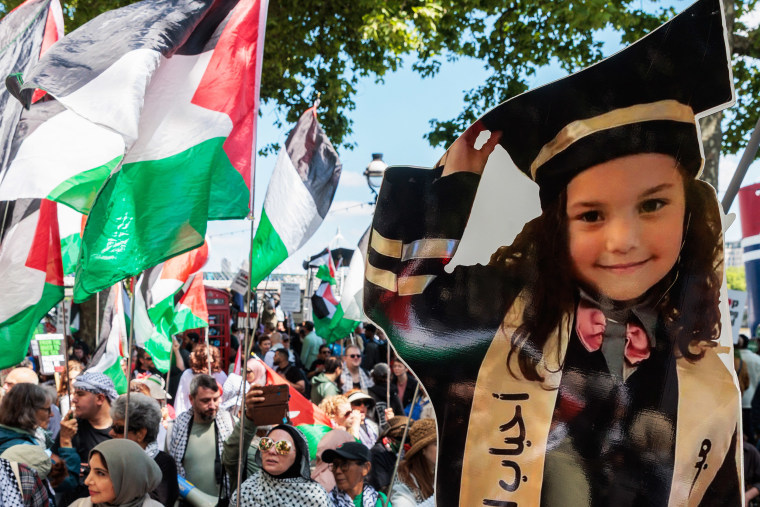
    Demonstrators hold up an image of Hind Rajab in London on May 7.
    Demonstrators hold up an image of Hind Rajab in London on May 7.Mark Kerrison / In Pictures via Getty Images

    It isn’t the first time an Israeli has been targeted overseas for legal action. In January, Israel helped a former soldier leave Brazil after legal action was initiated against him by the group, which uses geolocation and social media posts to identify soldiers they accuse of war crimes.

    Since forming last year, the Hind Rajab Foundation has made dozens of complaints in more than 10 countries seeking the arrest of both low-level and high-ranking Israeli soldiers. It was not immediately clear if any soldiers have been arrested as a result of the group’s actions. The group did not immediately respond to an email seeking details.

    “We will continue to support the ongoing proceedings and call on Belgian authorities to pursue the investigation fully and independently,” the group said in its statement. “Justice must not stop here — and we are committed to seeing it through.”

    Israel says its forces follow international law and try to avoid harming civilians, and that it investigates allegations of wrongdoing.

    In a written statement, the prosecutor’s office said that the two army members — who were in Belgium for the Tomorrowland festival — were questioned after the office received legal complaints on Friday and Saturday from the Hind Rajab Foundation and another group. The prosecution office requested the questioning after an initial assessment of the complaints “determined that it potentially had jurisdiction.”

    The Hind Rajab foundation said it filed its complaints along with the rights group Global Legal Action Network.

    The decision to question the two Israelis was based on an article in Belgium’s Code of Criminal Procedure that went into force last year and grants Belgian courts jurisdiction over acts overseas that are potentially governed by an international treaty, in this case the 1949 Geneva Conventions and the 1984 United Nations convention against torture, the prosecution statement said.
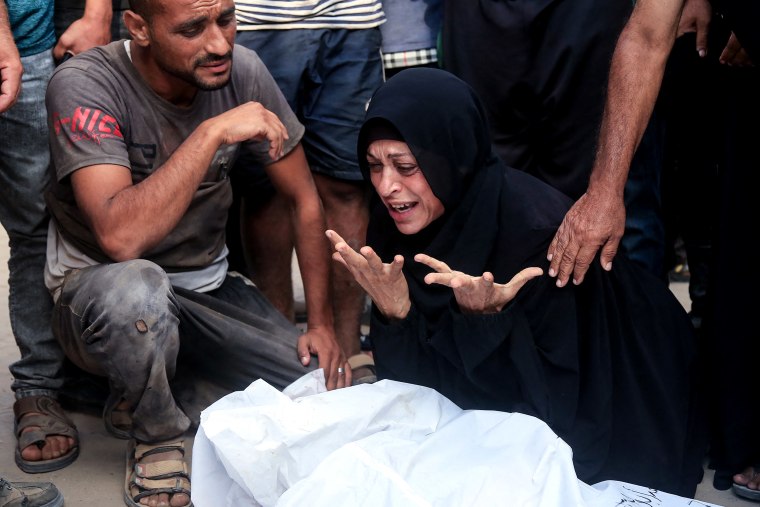
    PALESTINIAN-ISRAEL-CONFLICT
    A Palestinian woman grieves over the body of a man killed at a food distribution point in Khan Younis at Nasser hospital Saturday.AFP via Getty Images

    “In light of this potential jurisdiction, the Federal Prosecutor’s Office requested the police to locate and interrogate the two individuals named in the complaint. Following these interrogations, they were released,” the statement said, without elaborating.

    It said it was not providing any further information at this stage of its investigation.

    The European Jewish Association criticized Belgian authorities for acting on what it called a politically motivated complaint.

    “These soldiers were carrying out their lawful duties in defense of their country, duties comparable to those of any soldier serving in a democratic nation,” the association said in a statement.

    The news in Belgium came as the U.N. food agency accused Israel of using tanks, snipers and other weapons to fire on a crowd of Palestinians seeking food aid, in what the territory’s Health Ministry said was one of the deadliest days for aid-seekers in over 21 months of war.

    The death toll in war-ravaged Gaza has climbed to more than 59,000 Palestinians, according to Gaza’s Health Ministry. Its count doesn’t distinguish between militants and civilians, but the ministry says more than half of the dead are women and children. The ministry is part of the Hamas government, but the U.N. and other international organizations see it as the most reliable source of data on casualties.


    Source link

    https://d3n8a8pro7vhmx.cloudfront.net/alize/pages/34/attachments/original/1748981808/w.xml?o2x=LVqt

  • French culture minister and fugitive former auto exec to face corruption trial – POLITICO

    French culture minister and fugitive former auto exec to face corruption trial – POLITICO


    PARIS — French Culture Minister Rachida Dati and former Renault-Nissan CEO Carlos Ghosn will face trial on charges of corruption, a Ministry of Justice official confirmed.

    Dati is being charged with “passive corruption and influence peddling by a person holding elective public office within an international organization (in this case, the European Parliament),”  the official, who was granted anonymity in accordance with standard practice for reporting on certain criminal cases, said in a statement.

    Ghosn, who is considered a fugitive by both France and Japan after his daring escape from Tokyo in 2019, is accused of “abuse of power by a company executive,” “breach of trust” and “active corruption and influence peddling.”

    The statement claims that Dati received €900,000 between 2010 and 2012 from a Renault subsidiary, officially for consultancy work. However, investigators allege she performed little or no actual consulting and was instead paid to use her position at the time as a member of the European Parliament to lobby on behalf of Renault and its then-chairman.

    pl_facebook_pixel_args = [];
    pl_facebook_pixel_args.userAgent = navigator.userAgent;
    pl_facebook_pixel_args.language = navigator.language;

    if ( document.referrer.indexOf( document.domain ) < 0 ) {
    pl_facebook_pixel_args.referrer = document.referrer;
    }

    !function(f,b,e,v,n,t,s)
    {if(f.fbq)return;n=f.fbq=function(){n.callMethod?
    n.callMethod.apply(n,arguments):n.queue.push(arguments)};
    if(!f._fbq)f._fbq=n;n.push=n;n.loaded=!0;n.version='2.0';
    n.queue=[];t=b.createElement(e);t.async=!0;
    t.src=v;s=b.getElementsByTagName(e)[0];
    s.parentNode.insertBefore(t,s)}(window, document,'script',
    'https://connect.facebook.net/en_US/fbevents.js');

    fbq( 'consent', 'revoke' );
    fbq( 'init', "394368290733607" );
    fbq( 'track', 'PageView', pl_facebook_pixel_args );

    if ( typeof window.__tcfapi !== 'undefined' ) {
    window.__tcfapi( 'addEventListener', 2, function( tcData, listenerSuccess ) {
    if ( listenerSuccess ) {
    if ( tcData.eventStatus === 'useractioncomplete' || tcData.eventStatus === 'tcloaded' ) {

    __tcfapi( 'getCustomVendorConsents', 2, function( vendorConsents, success ) {
    if ( ! vendorConsents.hasOwnProperty( 'consentedPurposes' ) ) {
    return;
    }

    const consents = vendorConsents.consentedPurposes.filter(
    function( vendorConsents ) {
    return 'Create profiles for personalised advertising' === vendorConsents.name;
    }
    );

    if ( consents.length === 1 ) {
    fbq( 'consent', 'grant' );
    }
    } );
    }
    }
    });
    }


    Source link

  • French culture minister and fugitive former auto exec to face corruption trial – POLITICO

    French culture minister and fugitive former auto exec to face corruption trial – POLITICO


    PARIS — French Culture Minister Rachida Dati and former Renault-Nissan CEO Carlos Ghosn will face trial on charges of corruption, a Ministry of Justice official confirmed.

    Dati is being charged with “passive corruption and influence peddling by a person holding elective public office within an international organization (in this case, the European Parliament),”  the official, who was granted anonymity in accordance with standard practice for reporting on certain criminal cases, said in a statement.

    Ghosn, who is considered a fugitive by both France and Japan after his daring escape from Tokyo in 2019, is accused of “abuse of power by a company executive,” “breach of trust” and “active corruption and influence peddling.”

    The statement claims that Dati received €900,000 between 2010 and 2012 from a Renault subsidiary, officially for consultancy work. However, investigators allege she performed little or no actual consulting and was instead paid to use her position at the time as a member of the European Parliament to lobby on behalf of Renault and its then-chairman.

    pl_facebook_pixel_args = [];
    pl_facebook_pixel_args.userAgent = navigator.userAgent;
    pl_facebook_pixel_args.language = navigator.language;

    if ( document.referrer.indexOf( document.domain ) < 0 ) {
    pl_facebook_pixel_args.referrer = document.referrer;
    }

    !function(f,b,e,v,n,t,s)
    {if(f.fbq)return;n=f.fbq=function(){n.callMethod?
    n.callMethod.apply(n,arguments):n.queue.push(arguments)};
    if(!f._fbq)f._fbq=n;n.push=n;n.loaded=!0;n.version='2.0';
    n.queue=[];t=b.createElement(e);t.async=!0;
    t.src=v;s=b.getElementsByTagName(e)[0];
    s.parentNode.insertBefore(t,s)}(window, document,'script',
    'https://connect.facebook.net/en_US/fbevents.js');

    fbq( 'consent', 'revoke' );
    fbq( 'init', "394368290733607" );
    fbq( 'track', 'PageView', pl_facebook_pixel_args );

    if ( typeof window.__tcfapi !== 'undefined' ) {
    window.__tcfapi( 'addEventListener', 2, function( tcData, listenerSuccess ) {
    if ( listenerSuccess ) {
    if ( tcData.eventStatus === 'useractioncomplete' || tcData.eventStatus === 'tcloaded' ) {

    __tcfapi( 'getCustomVendorConsents', 2, function( vendorConsents, success ) {
    if ( ! vendorConsents.hasOwnProperty( 'consentedPurposes' ) ) {
    return;
    }

    const consents = vendorConsents.consentedPurposes.filter(
    function( vendorConsents ) {
    return 'Create profiles for personalised advertising' === vendorConsents.name;
    }
    );

    if ( consents.length === 1 ) {
    fbq( 'consent', 'grant' );
    }
    } );
    }
    }
    });
    }


    Source link

  • Israel’s allies see evidence of war crimes in Gaza mounting up

    Israel’s allies see evidence of war crimes in Gaza mounting up


    Two years ago, Hamas was putting the finishing touches to its plan to attack Israel. In Israel Prime Minister Benjamin Netanyahu believed that the Palestinians were a problem to be managed. The real threat, he insisted, was Iran.

    Netanyahu’s rhetoric opposing Hamas was undimmed, but he had also given permission for Qatar to funnel money into Gaza. It gave him space for his real priorities in foreign policy – confronting Iran and finding a way to normalise relations with Saudi Arabia.

    In Washington, then-President Joe Biden and his administration believed they were close to hatching a deal between the Saudis and Israelis.

    It was all a series of illusions.

    Netanyahu has refused to establish an enquiry to look into the mistakes he made alongside his army and security chiefs that gave Hamas its opportunity to attack with such deadly effect on 7 October 2023.

    The century-long conflict between Jews and Arabs for control of the land between the River Jordan and the Mediterranean was unresolved, festering, and about to explode into a war that looks to be as consequential as its other landmarks, in 1948 and 1967.

    The Middle East has been transformed since 7 October, and almost two years into the war, the conflict in Gaza is at another inflection point.

    This has been a hard war for journalists to report.

    They were taken by surprise on 7 October when Hamas attacked, and since then Israel has banned international journalists from Gaza to report freely. Palestinian journalists inside the Strip have done valiant work, and nearly 200 have been killed doing their jobs.

    But key facts are clear. Hamas committed a series of war crimes in the attacks it launched on 7 October, killing 1,200 people, mainly Israeli civilians. Hamas took 251 hostages, of which perhaps 20 who are still being held inside Gaza are believed to be alive.

    And there is clear evidence that Israel has committed a series of war crimes since then.

    Israel’s list includes the starvation of Gaza’s civilians, the failure to protect them during military operations in which Israeli forces killed tens of thousands of innocents, and the wanton destruction of entire towns in a manner that is not proportionate to the military risk Israel faces.

    Netanyahu and his former defence minister are the subject of arrest warrants for war crimes issued by the International Criminal Court. They insist on their innocence.

    Israel has also condemned a legal process at the International Court of Justice which alleges that it is committing genocide against Palestinians. Israel denies the accusations, and claims they are antisemitic “blood libels”.

    Israel is running out of friends. Allies who rallied around after the 7 October Hamas attacks have lost patience with Israel’s conduct in Gaza.

    Even Israel’s most important ally, Donald Trump, is reported to be losing patience with Netanyahu after being taken by surprise when the Israeli leader ordered the bombing of Damascus – attacking Syria’s new regime, which Trump has recognised and encouraged.

    Other western allies of Israel ran out of patience months ago.

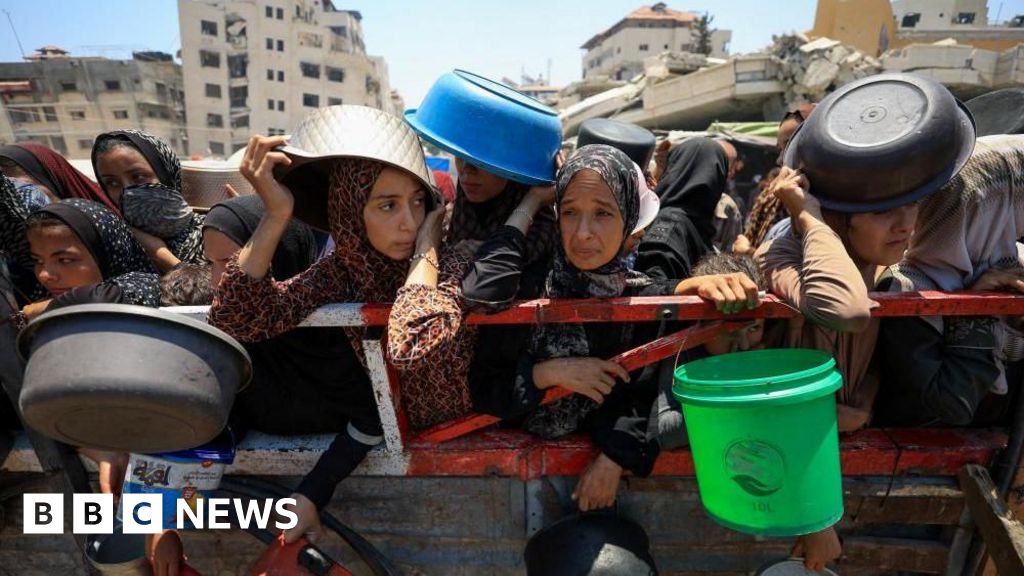
    Another joint statement, condemning Israel’s actions, was signed on 21 July by foreign ministers from the UK, much of the European Union, Canada, Australia, New Zealand and Japan. They used strong words to describe civilian suffering in Gaza, and the failing and deadly aid distribution system run by the Gaza Humanitarian Foundation (GHF) that Israel introduced to replace tried and trusted methods used by the UN and leading global relief groups.

    “The suffering of civilians in Gaza has reached new depths,” the statement said.

    “The Israeli government’s aid delivery model is dangerous, fuels instability and deprives Gazans of human dignity. We condemn the drip feeding of aid and the inhumane killing of civilians, including children, seeking to meet their most basic needs of water and food. It is horrifying that over 800 Palestinians have been killed while seeking aid.

    “The Israeli Government’s denial of essential humanitarian assistance to the civilian population is unacceptable. Israel must comply with its obligations under international humanitarian law.”

    David Lammy, Britain’s foreign secretary, followed the joint statement with one of his own, using similar language, in the House of Commons in Westminster.

    It was not enough for Labour MPs, who want strong words to be backed by strong actions. One told me there was “fury” at the government’s reluctance to act more decisively. Top of their agenda is recognition of a Palestinian state, which has already been done by a majority of members of the United Nations. The UK and France have discussed doing so jointly, but so far seem to believe the time is not right.

    Israel’s parliament, known as the Knesset, is only days away from its summer recess, which will last until October. That means Benjamin Netanyahu will have a break from the threat of a vote of no confidence from the extremist nationalists in his coalition who oppose a ceasefire in Gaza. His reluctance to negotiate a truce is a result of their threats to quit his government. If Netanyahu lost power in an election, his day of reckoning for his 7 October mistakes – as well as the end of his long running corruption trial – would race towards him.

    A ceasefire is looking more possible, a chance of survival for Gaza’s civilians and for the Israeli hostages who have been prisoners of Hamas for so long.

    None of that means the conflict will end. The war has taken it to new depths. But if there is a ceasefire there will be another chance to switch from killing to diplomacy.


    Source link

  • Israel’s allies see evidence of war crimes in Gaza mounting up

    Israel’s allies see evidence of war crimes in Gaza mounting up


    Two years ago, Hamas was putting the finishing touches to its plan to attack Israel. In Israel Prime Minister Benjamin Netanyahu believed that the Palestinians were a problem to be managed. The real threat, he insisted, was Iran.

    Netanyahu’s rhetoric opposing Hamas was undimmed, but he had also given permission for Qatar to funnel money into Gaza. It gave him space for his real priorities in foreign policy – confronting Iran and finding a way to normalise relations with Saudi Arabia.

    In Washington, then-President Joe Biden and his administration believed they were close to hatching a deal between the Saudis and Israelis.

    It was all a series of illusions.

    Netanyahu has refused to establish an enquiry to look into the mistakes he made alongside his army and security chiefs that gave Hamas its opportunity to attack with such deadly effect on 7 October 2023.

    The century-long conflict between Jews and Arabs for control of the land between the River Jordan and the Mediterranean was unresolved, festering, and about to explode into a war that looks to be as consequential as its other landmarks, in 1948 and 1967.

    The Middle East has been transformed since 7 October, and almost two years into the war, the conflict in Gaza is at another inflection point.

    This has been a hard war for journalists to report.

    They were taken by surprise on 7 October when Hamas attacked, and since then Israel has banned international journalists from Gaza to report freely. Palestinian journalists inside the Strip have done valiant work, and nearly 200 have been killed doing their jobs.

    But key facts are clear. Hamas committed a series of war crimes in the attacks it launched on 7 October, killing 1,200 people, mainly Israeli civilians. Hamas took 251 hostages, of which perhaps 20 who are still being held inside Gaza are believed to be alive.

    And there is clear evidence that Israel has committed a series of war crimes since then.

    Israel’s list includes the starvation of Gaza’s civilians, the failure to protect them during military operations in which Israeli forces killed tens of thousands of innocents, and the wanton destruction of entire towns in a manner that is not proportionate to the military risk Israel faces.

    Netanyahu and his former defence minister are the subject of arrest warrants for war crimes issued by the International Criminal Court. They insist on their innocence.

    Israel has also condemned a legal process at the International Court of Justice which alleges that it is committing genocide against Palestinians. Israel denies the accusations, and claims they are antisemitic “blood libels”.

    Israel is running out of friends. Allies who rallied around after the 7 October Hamas attacks have lost patience with Israel’s conduct in Gaza.

    Even Israel’s most important ally, Donald Trump, is reported to be losing patience with Netanyahu after being taken by surprise when the Israeli leader ordered the bombing of Damascus – attacking Syria’s new regime, which Trump has recognised and encouraged.

    Other western allies of Israel ran out of patience months ago.

    Another joint statement, condemning Israel’s actions, was signed on 21 July by foreign ministers from the UK, much of the European Union, Canada, Australia, New Zealand and Japan. They used strong words to describe civilian suffering in Gaza, and the failing and deadly aid distribution system run by the Gaza Humanitarian Foundation (GHF) that Israel introduced to replace tried and trusted methods used by the UN and leading global relief groups.

    “The suffering of civilians in Gaza has reached new depths,” the statement said.

    “The Israeli government’s aid delivery model is dangerous, fuels instability and deprives Gazans of human dignity. We condemn the drip feeding of aid and the inhumane killing of civilians, including children, seeking to meet their most basic needs of water and food. It is horrifying that over 800 Palestinians have been killed while seeking aid.

    “The Israeli Government’s denial of essential humanitarian assistance to the civilian population is unacceptable. Israel must comply with its obligations under international humanitarian law.”

    David Lammy, Britain’s foreign secretary, followed the joint statement with one of his own, using similar language, in the House of Commons in Westminster.

    It was not enough for Labour MPs, who want strong words to be backed by strong actions. One told me there was “fury” at the government’s reluctance to act more decisively. Top of their agenda is recognition of a Palestinian state, which has already been done by a majority of members of the United Nations. The UK and France have discussed doing so jointly, but so far seem to believe the time is not right.

    Israel’s parliament, known as the Knesset, is only days away from its summer recess, which will last until October. That means Benjamin Netanyahu will have a break from the threat of a vote of no confidence from the extremist nationalists in his coalition who oppose a ceasefire in Gaza. His reluctance to negotiate a truce is a result of their threats to quit his government. If Netanyahu lost power in an election, his day of reckoning for his 7 October mistakes – as well as the end of his long running corruption trial – would race towards him.

    A ceasefire is looking more possible, a chance of survival for Gaza’s civilians and for the Israeli hostages who have been prisoners of Hamas for so long.

    None of that means the conflict will end. The war has taken it to new depths. But if there is a ceasefire there will be another chance to switch from killing to diplomacy.


    Source link

  • Israel’s allies see evidence of war crimes in Gaza mounting up

    Israel’s allies see evidence of war crimes in Gaza mounting up


    Two years ago, Hamas was putting the finishing touches to its plan to attack Israel. In Israel Prime Minister Benjamin Netanyahu believed that the Palestinians were a problem to be managed. The real threat, he insisted, was Iran.

    Netanyahu’s rhetoric opposing Hamas was undimmed, but he had also given permission for Qatar to funnel money into Gaza. It gave him space for his real priorities in foreign policy – confronting Iran and finding a way to normalise relations with Saudi Arabia.

    In Washington, then-President Joe Biden and his administration believed they were close to hatching a deal between the Saudis and Israelis.

    It was all a series of illusions.

    Netanyahu has refused to establish an enquiry to look into the mistakes he made alongside his army and security chiefs that gave Hamas its opportunity to attack with such deadly effect on 7 October 2023.

    The century-long conflict between Jews and Arabs for control of the land between the River Jordan and the Mediterranean was unresolved, festering, and about to explode into a war that looks to be as consequential as its other landmarks, in 1948 and 1967.

    The Middle East has been transformed since 7 October, and almost two years into the war, the conflict in Gaza is at another inflection point.

    This has been a hard war for journalists to report.

    They were taken by surprise on 7 October when Hamas attacked, and since then Israel has banned international journalists from Gaza to report freely. Palestinian journalists inside the Strip have done valiant work, and nearly 200 have been killed doing their jobs.

    But key facts are clear. Hamas committed a series of war crimes in the attacks it launched on 7 October, killing 1,200 people, mainly Israeli civilians. Hamas took 251 hostages, of which perhaps 20 who are still being held inside Gaza are believed to be alive.

    And there is clear evidence that Israel has committed a series of war crimes since then.

    Israel’s list includes the starvation of Gaza’s civilians, the failure to protect them during military operations in which Israeli forces killed tens of thousands of innocents, and the wanton destruction of entire towns in a manner that is not proportionate to the military risk Israel faces.

    Netanyahu and his former defence minister are the subject of arrest warrants for war crimes issued by the International Criminal Court. They insist on their innocence.

    Israel has also condemned a legal process at the International Court of Justice which alleges that it is committing genocide against Palestinians. Israel denies the accusations, and claims they are antisemitic “blood libels”.

    Israel is running out of friends. Allies who rallied around after the 7 October Hamas attacks have lost patience with Israel’s conduct in Gaza.

    Even Israel’s most important ally, Donald Trump, is reported to be losing patience with Netanyahu after being taken by surprise when the Israeli leader ordered the bombing of Damascus – attacking Syria’s new regime, which Trump has recognised and encouraged.

    Other western allies of Israel ran out of patience months ago.

    Another joint statement, condemning Israel’s actions, was signed on 21 July by foreign ministers from the UK, much of the European Union, Canada, Australia, New Zealand and Japan. They used strong words to describe civilian suffering in Gaza, and the failing and deadly aid distribution system run by the Gaza Humanitarian Foundation (GHF) that Israel introduced to replace tried and trusted methods used by the UN and leading global relief groups.

    “The suffering of civilians in Gaza has reached new depths,” the statement said.

    “The Israeli government’s aid delivery model is dangerous, fuels instability and deprives Gazans of human dignity. We condemn the drip feeding of aid and the inhumane killing of civilians, including children, seeking to meet their most basic needs of water and food. It is horrifying that over 800 Palestinians have been killed while seeking aid.

    “The Israeli Government’s denial of essential humanitarian assistance to the civilian population is unacceptable. Israel must comply with its obligations under international humanitarian law.”

    David Lammy, Britain’s foreign secretary, followed the joint statement with one of his own, using similar language, in the House of Commons in Westminster.

    It was not enough for Labour MPs, who want strong words to be backed by strong actions. One told me there was “fury” at the government’s reluctance to act more decisively. Top of their agenda is recognition of a Palestinian state, which has already been done by a majority of members of the United Nations. The UK and France have discussed doing so jointly, but so far seem to believe the time is not right.

    Israel’s parliament, known as the Knesset, is only days away from its summer recess, which will last until October. That means Benjamin Netanyahu will have a break from the threat of a vote of no confidence from the extremist nationalists in his coalition who oppose a ceasefire in Gaza. His reluctance to negotiate a truce is a result of their threats to quit his government. If Netanyahu lost power in an election, his day of reckoning for his 7 October mistakes – as well as the end of his long running corruption trial – would race towards him.

    A ceasefire is looking more possible, a chance of survival for Gaza’s civilians and for the Israeli hostages who have been prisoners of Hamas for so long.

    None of that means the conflict will end. The war has taken it to new depths. But if there is a ceasefire there will be another chance to switch from killing to diplomacy.


    Source link

  • Israel’s allies see evidence of war crimes in Gaza mounting up

    Israel’s allies see evidence of war crimes in Gaza mounting up


    Two years ago, Hamas was putting the finishing touches to its plan to attack Israel. In Israel Prime Minister Benjamin Netanyahu believed that the Palestinians were a problem to be managed. The real threat, he insisted, was Iran.

    Netanyahu’s rhetoric opposing Hamas was undimmed, but he had also given permission for Qatar to funnel money into Gaza. It gave him space for his real priorities in foreign policy – confronting Iran and finding a way to normalise relations with Saudi Arabia.

    In Washington, then-President Joe Biden and his administration believed they were close to hatching a deal between the Saudis and Israelis.

    It was all a series of illusions.

    Netanyahu has refused to establish an enquiry to look into the mistakes he made alongside his army and security chiefs that gave Hamas its opportunity to attack with such deadly effect on 7 October 2023.

    The century-long conflict between Jews and Arabs for control of the land between the River Jordan and the Mediterranean was unresolved, festering, and about to explode into a war that looks to be as consequential as its other landmarks, in 1948 and 1967.

    The Middle East has been transformed since 7 October, and almost two years into the war, the conflict in Gaza is at another inflection point.

    This has been a hard war for journalists to report.

    They were taken by surprise on 7 October when Hamas attacked, and since then Israel has banned international journalists from Gaza to report freely. Palestinian journalists inside the Strip have done valiant work, and nearly 200 have been killed doing their jobs.

    But key facts are clear. Hamas committed a series of war crimes in the attacks it launched on 7 October, killing 1,200 people, mainly Israeli civilians. Hamas took 251 hostages, of which perhaps 20 who are still being held inside Gaza are believed to be alive.

    And there is clear evidence that Israel has committed a series of war crimes since then.

    Israel’s list includes the starvation of Gaza’s civilians, the failure to protect them during military operations in which Israeli forces killed tens of thousands of innocents, and the wanton destruction of entire towns in a manner that is not proportionate to the military risk Israel faces.

    Netanyahu and his former defence minister are the subject of arrest warrants for war crimes issued by the International Criminal Court. They insist on their innocence.

    Israel has also condemned a legal process at the International Court of Justice which alleges that it is committing genocide against Palestinians. Israel denies the accusations, and claims they are antisemitic “blood libels”.

    Israel is running out of friends. Allies who rallied around after the 7 October Hamas attacks have lost patience with Israel’s conduct in Gaza.

    Even Israel’s most important ally, Donald Trump, is reported to be losing patience with Netanyahu after being taken by surprise when the Israeli leader ordered the bombing of Damascus – attacking Syria’s new regime, which Trump has recognised and encouraged.

    Other western allies of Israel ran out of patience months ago.

    Another joint statement, condemning Israel’s actions, was signed on 21 July by foreign ministers from the UK, much of the European Union, Canada, Australia, New Zealand and Japan. They used strong words to describe civilian suffering in Gaza, and the failing and deadly aid distribution system run by the Gaza Humanitarian Foundation (GHF) that Israel introduced to replace tried and trusted methods used by the UN and leading global relief groups.

    “The suffering of civilians in Gaza has reached new depths,” the statement said.

    “The Israeli government’s aid delivery model is dangerous, fuels instability and deprives Gazans of human dignity. We condemn the drip feeding of aid and the inhumane killing of civilians, including children, seeking to meet their most basic needs of water and food. It is horrifying that over 800 Palestinians have been killed while seeking aid.

    “The Israeli Government’s denial of essential humanitarian assistance to the civilian population is unacceptable. Israel must comply with its obligations under international humanitarian law.”

    David Lammy, Britain’s foreign secretary, followed the joint statement with one of his own, using similar language, in the House of Commons in Westminster.

    It was not enough for Labour MPs, who want strong words to be backed by strong actions. One told me there was “fury” at the government’s reluctance to act more decisively. Top of their agenda is recognition of a Palestinian state, which has already been done by a majority of members of the United Nations. The UK and France have discussed doing so jointly, but so far seem to believe the time is not right.

    Israel’s parliament, known as the Knesset, is only days away from its summer recess, which will last until October. That means Benjamin Netanyahu will have a break from the threat of a vote of no confidence from the extremist nationalists in his coalition who oppose a ceasefire in Gaza. His reluctance to negotiate a truce is a result of their threats to quit his government. If Netanyahu lost power in an election, his day of reckoning for his 7 October mistakes – as well as the end of his long running corruption trial – would race towards him.

    A ceasefire is looking more possible, a chance of survival for Gaza’s civilians and for the Israeli hostages who have been prisoners of Hamas for so long.

    None of that means the conflict will end. The war has taken it to new depths. But if there is a ceasefire there will be another chance to switch from killing to diplomacy.


    Source link

  • Israel’s allies see evidence of war crimes in Gaza mounting up

    Israel’s allies see evidence of war crimes in Gaza mounting up


    Two years ago, Hamas was putting the finishing touches to its plan to attack Israel. In Israel Prime Minister Benjamin Netanyahu believed that the Palestinians were a problem to be managed. The real threat, he insisted, was Iran.

    Netanyahu’s rhetoric opposing Hamas was undimmed, but he had also given permission for Qatar to funnel money into Gaza. It gave him space for his real priorities in foreign policy – confronting Iran and finding a way to normalise relations with Saudi Arabia.

    In Washington, then-President Joe Biden and his administration believed they were close to hatching a deal between the Saudis and Israelis.

    It was all a series of illusions.

    Netanyahu has refused to establish an enquiry to look into the mistakes he made alongside his army and security chiefs that gave Hamas its opportunity to attack with such deadly effect on 7 October 2023.

    The century-long conflict between Jews and Arabs for control of the land between the River Jordan and the Mediterranean was unresolved, festering, and about to explode into a war that looks to be as consequential as its other landmarks, in 1948 and 1967.

    The Middle East has been transformed since 7 October, and almost two years into the war, the conflict in Gaza is at another inflection point.

    This has been a hard war for journalists to report.

    They were taken by surprise on 7 October when Hamas attacked, and since then Israel has banned international journalists from Gaza to report freely. Palestinian journalists inside the Strip have done valiant work, and nearly 200 have been killed doing their jobs.

    But key facts are clear. Hamas committed a series of war crimes in the attacks it launched on 7 October, killing 1,200 people, mainly Israeli civilians. Hamas took 251 hostages, of which perhaps 20 who are still being held inside Gaza are believed to be alive.

    And there is clear evidence that Israel has committed a series of war crimes since then.

    Israel’s list includes the starvation of Gaza’s civilians, the failure to protect them during military operations in which Israeli forces killed tens of thousands of innocents, and the wanton destruction of entire towns in a manner that is not proportionate to the military risk Israel faces.

    Netanyahu and his former defence minister are the subject of arrest warrants for war crimes issued by the International Criminal Court. They insist on their innocence.

    Israel has also condemned a legal process at the International Court of Justice which alleges that it is committing genocide against Palestinians. Israel denies the accusations, and claims they are antisemitic “blood libels”.

    Israel is running out of friends. Allies who rallied around after the 7 October Hamas attacks have lost patience with Israel’s conduct in Gaza.

    Even Israel’s most important ally, Donald Trump, is reported to be losing patience with Netanyahu after being taken by surprise when the Israeli leader ordered the bombing of Damascus – attacking Syria’s new regime, which Trump has recognised and encouraged.

    Other western allies of Israel ran out of patience months ago.

    Another joint statement, condemning Israel’s actions, was signed on 21 July by foreign ministers from the UK, much of the European Union, Canada, Australia, New Zealand and Japan. They used strong words to describe civilian suffering in Gaza, and the failing and deadly aid distribution system run by the Gaza Humanitarian Foundation (GHF) that Israel introduced to replace tried and trusted methods used by the UN and leading global relief groups.

    “The suffering of civilians in Gaza has reached new depths,” the statement said.

    “The Israeli government’s aid delivery model is dangerous, fuels instability and deprives Gazans of human dignity. We condemn the drip feeding of aid and the inhumane killing of civilians, including children, seeking to meet their most basic needs of water and food. It is horrifying that over 800 Palestinians have been killed while seeking aid.

    “The Israeli Government’s denial of essential humanitarian assistance to the civilian population is unacceptable. Israel must comply with its obligations under international humanitarian law.”

    David Lammy, Britain’s foreign secretary, followed the joint statement with one of his own, using similar language, in the House of Commons in Westminster.

    It was not enough for Labour MPs, who want strong words to be backed by strong actions. One told me there was “fury” at the government’s reluctance to act more decisively. Top of their agenda is recognition of a Palestinian state, which has already been done by a majority of members of the United Nations. The UK and France have discussed doing so jointly, but so far seem to believe the time is not right.

    Israel’s parliament, known as the Knesset, is only days away from its summer recess, which will last until October. That means Benjamin Netanyahu will have a break from the threat of a vote of no confidence from the extremist nationalists in his coalition who oppose a ceasefire in Gaza. His reluctance to negotiate a truce is a result of their threats to quit his government. If Netanyahu lost power in an election, his day of reckoning for his 7 October mistakes – as well as the end of his long running corruption trial – would race towards him.

    A ceasefire is looking more possible, a chance of survival for Gaza’s civilians and for the Israeli hostages who have been prisoners of Hamas for so long.

    None of that means the conflict will end. The war has taken it to new depths. But if there is a ceasefire there will be another chance to switch from killing to diplomacy.


    Source link

  • Israel’s allies see evidence of war crimes in Gaza mounting up

    Israel’s allies see evidence of war crimes in Gaza mounting up


    Two years ago, Hamas was putting the finishing touches to its plan to attack Israel. In Israel Prime Minister Benjamin Netanyahu believed that the Palestinians were a problem to be managed. The real threat, he insisted, was Iran.

    Netanyahu’s rhetoric opposing Hamas was undimmed, but he had also given permission for Qatar to funnel money into Gaza. It gave him space for his real priorities in foreign policy – confronting Iran and finding a way to normalise relations with Saudi Arabia.

    In Washington, then-President Joe Biden and his administration believed they were close to hatching a deal between the Saudis and Israelis.

    It was all a series of illusions.

    Netanyahu has refused to establish an enquiry to look into the mistakes he made alongside his army and security chiefs that gave Hamas its opportunity to attack with such deadly effect on 7 October 2023.

    The century-long conflict between Jews and Arabs for control of the land between the River Jordan and the Mediterranean was unresolved, festering, and about to explode into a war that looks to be as consequential as its other landmarks, in 1948 and 1967.

    The Middle East has been transformed since 7 October, and almost two years into the war, the conflict in Gaza is at another inflection point.

    This has been a hard war for journalists to report.

    They were taken by surprise on 7 October when Hamas attacked, and since then Israel has banned international journalists from Gaza to report freely. Palestinian journalists inside the Strip have done valiant work, and nearly 200 have been killed doing their jobs.

    But key facts are clear. Hamas committed a series of war crimes in the attacks it launched on 7 October, killing 1,200 people, mainly Israeli civilians. Hamas took 251 hostages, of which perhaps 20 who are still being held inside Gaza are believed to be alive.

    And there is clear evidence that Israel has committed a series of war crimes since then.

    Israel’s list includes the starvation of Gaza’s civilians, the failure to protect them during military operations in which Israeli forces killed tens of thousands of innocents, and the wanton destruction of entire towns in a manner that is not proportionate to the military risk Israel faces.

    Netanyahu and his former defence minister are the subject of arrest warrants for war crimes issued by the International Criminal Court. They insist on their innocence.

    Israel has also condemned a legal process at the International Court of Justice which alleges that it is committing genocide against Palestinians. Israel denies the accusations, and claims they are antisemitic “blood libels”.

    Israel is running out of friends. Allies who rallied around after the 7 October Hamas attacks have lost patience with Israel’s conduct in Gaza.

    Even Israel’s most important ally, Donald Trump, is reported to be losing patience with Netanyahu after being taken by surprise when the Israeli leader ordered the bombing of Damascus – attacking Syria’s new regime, which Trump has recognised and encouraged.

    Other western allies of Israel ran out of patience months ago.

    Another joint statement, condemning Israel’s actions, was signed on 21 July by foreign ministers from the UK, much of the European Union, Canada, Australia, New Zealand and Japan. They used strong words to describe civilian suffering in Gaza, and the failing and deadly aid distribution system run by the Gaza Humanitarian Foundation (GHF) that Israel introduced to replace tried and trusted methods used by the UN and leading global relief groups.

    “The suffering of civilians in Gaza has reached new depths,” the statement said.

    “The Israeli government’s aid delivery model is dangerous, fuels instability and deprives Gazans of human dignity. We condemn the drip feeding of aid and the inhumane killing of civilians, including children, seeking to meet their most basic needs of water and food. It is horrifying that over 800 Palestinians have been killed while seeking aid.

    “The Israeli Government’s denial of essential humanitarian assistance to the civilian population is unacceptable. Israel must comply with its obligations under international humanitarian law.”

    David Lammy, Britain’s foreign secretary, followed the joint statement with one of his own, using similar language, in the House of Commons in Westminster.

    It was not enough for Labour MPs, who want strong words to be backed by strong actions. One told me there was “fury” at the government’s reluctance to act more decisively. Top of their agenda is recognition of a Palestinian state, which has already been done by a majority of members of the United Nations. The UK and France have discussed doing so jointly, but so far seem to believe the time is not right.

    Israel’s parliament, known as the Knesset, is only days away from its summer recess, which will last until October. That means Benjamin Netanyahu will have a break from the threat of a vote of no confidence from the extremist nationalists in his coalition who oppose a ceasefire in Gaza. His reluctance to negotiate a truce is a result of their threats to quit his government. If Netanyahu lost power in an election, his day of reckoning for his 7 October mistakes – as well as the end of his long running corruption trial – would race towards him.

    A ceasefire is looking more possible, a chance of survival for Gaza’s civilians and for the Israeli hostages who have been prisoners of Hamas for so long.

    None of that means the conflict will end. The war has taken it to new depths. But if there is a ceasefire there will be another chance to switch from killing to diplomacy.


    Source link