Blog

  • More than two million evacuated from deadly floods

    More than two million evacuated from deadly floods


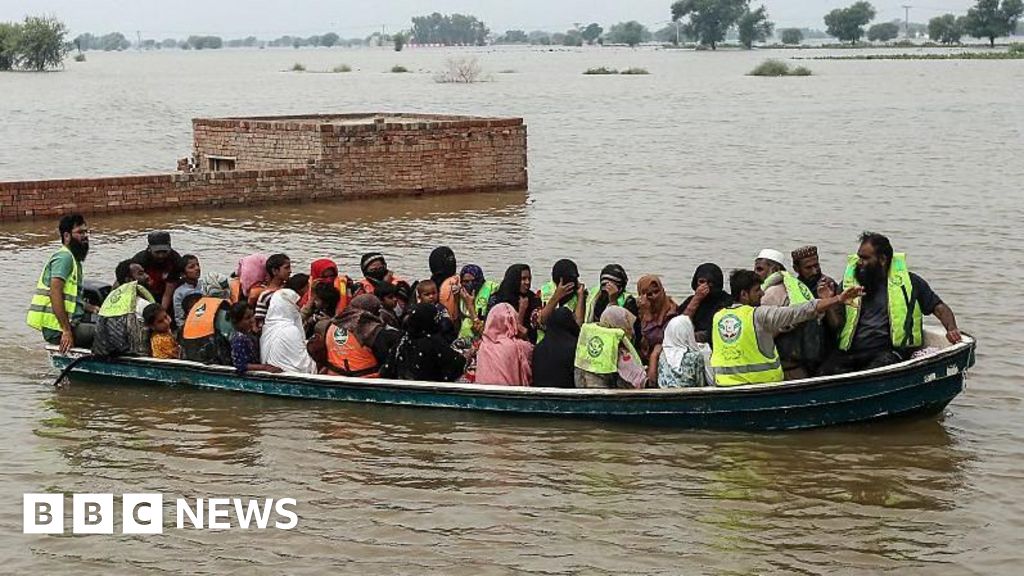
    More than two million people have been evacuated in Pakistan’s Punjab province as floods sweep the country’s eastern region, authorities have said.

    Another 150,000 have been evacuated in Sindh province, national disaster management chief Inam Haider Malik told reporters on Thursday, warning that the “number may rise over the coming days”.

    Monsoon rains have killed more than 900 people nationwide since late June, according to an update from the International Medical Corps on Friday.

    Climate change has worsened floods in Pakistan, as heavy rains cause rivers to overflow. But critics also blame a lack of government investment in disaster mitigation, such as better alert systems and infrastructure.

    The floods, which have destroyed larges swathes of farms and houses, are devastating for residents in Pakistan, 40% of whom live below the poverty line.

    Many families chose to stay home to protect their property despite flood risks, residents in Punjab’s flood-stricken areas told the BBC last month.

    Rescuers had to go door-to-door to relocate villagers and their livestock by boats – but this method also comes with risks of its own, as the small boats are forced to contend with strong currents.

    Nine people died on Tuesday after a rescue boat carrying flood victims capsized in the Indus River. Days earlier, five people died in a similar incident on the outskirts of Jalalpur Pirwala city.

    The floods have also wreaked havoc in neighbouring India, killing at least 30 people and affecting more than 354,000.

    Pakistan’s National Disaster Management Authority says it has delivered tonnes of relief supplies, including blankets, tents and water filtration devices to flood-hit areas in Punjab.

    Malik said it would take weeks for the water to dry before they could start “rehabilitation work” on thousands of villages and fields, Dawn reported.

    This week, the UN allocated $5m to support Pakistan’s flood response, while the US State Department approved funding and deployed disaster response personnel – the first assistance of its kind during Trump’s second term, ABC reported.

    Pakistan’s geography makes it extremely vulnerable to climate change, as the country contends with both extreme heat and rain. Its melting glaciers have also created new lakes at risk of glacial outbursts.

    In 2022, months of heavy rain in Pakistan killed more than 1,700 people and affected more than 30 million in what became one of the deadliest flood events in history.

    Amid the latest wave of floods, Pakistani authorities this week declared a climate emergency. Prime Minister Shehbaz Sharif has also ordered officials to come up with a 300-day plan to address challenges posed by climate change.

    Source link

  • More than two million evacuated from deadly floods

    More than two million evacuated from deadly floods


    More than two million people have been evacuated in Pakistan’s Punjab province as floods sweep the country’s eastern region, authorities have said.

    Another 150,000 have been evacuated in Sindh province, national disaster management chief Inam Haider Malik told reporters on Thursday, warning that the “number may rise over the coming days”.

    Monsoon rains have killed more than 900 people nationwide since late June, according to an update from the International Medical Corps on Friday.

    Climate change has worsened floods in Pakistan, as heavy rains cause rivers to overflow. But critics also blame a lack of government investment in disaster mitigation, such as better alert systems and infrastructure.

    The floods, which have destroyed larges swathes of farms and houses, are devastating for residents in Pakistan, 40% of whom live below the poverty line.

    Many families chose to stay home to protect their property despite flood risks, residents in Punjab’s flood-stricken areas told the BBC last month.

    Rescuers had to go door-to-door to relocate villagers and their livestock by boats – but this method also comes with risks of its own, as the small boats are forced to contend with strong currents.

    Nine people died on Tuesday after a rescue boat carrying flood victims capsized in the Indus River. Days earlier, five people died in a similar incident on the outskirts of Jalalpur Pirwala city.

    The floods have also wreaked havoc in neighbouring India, killing at least 30 people and affecting more than 354,000.

    Pakistan’s National Disaster Management Authority says it has delivered tonnes of relief supplies, including blankets, tents and water filtration devices to flood-hit areas in Punjab.

    Malik said it would take weeks for the water to dry before they could start “rehabilitation work” on thousands of villages and fields, Dawn reported.

    This week, the UN allocated $5m to support Pakistan’s flood response, while the US State Department approved funding and deployed disaster response personnel – the first assistance of its kind during Trump’s second term, ABC reported.

    Pakistan’s geography makes it extremely vulnerable to climate change, as the country contends with both extreme heat and rain. Its melting glaciers have also created new lakes at risk of glacial outbursts.

    In 2022, months of heavy rain in Pakistan killed more than 1,700 people and affected more than 30 million in what became one of the deadliest flood events in history.

    Amid the latest wave of floods, Pakistani authorities this week declared a climate emergency. Prime Minister Shehbaz Sharif has also ordered officials to come up with a 300-day plan to address challenges posed by climate change.


    Source link

  • Trump finally wants to put the squeeze on Russia. Now comes the hard part. – POLITICO

    Trump finally wants to put the squeeze on Russia. Now comes the hard part. – POLITICO


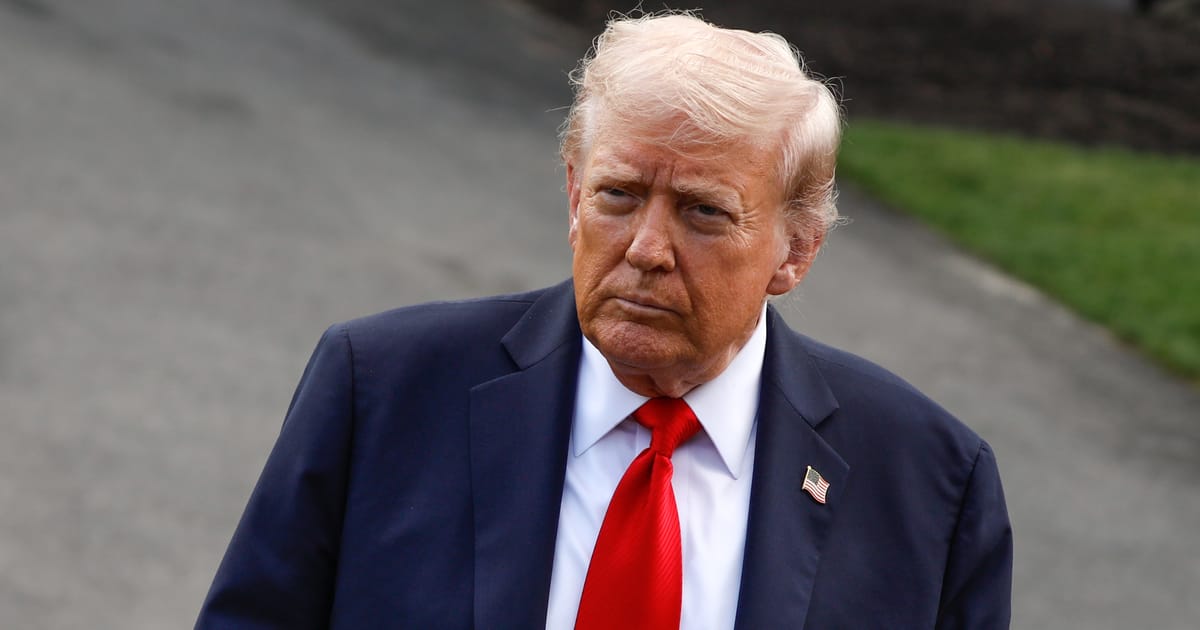
    A recent discussion paper floated by the Danish presidency of the Council of the EU, seen by POLITICO, explored whether capitals would be open to imposing tariffs on Moscow as part of the bloc’s 19th sanctions package. That idea, according to several diplomats briefed on the talks, won little traction among ministers when it was discussed last month.  

    Pump for Trump 

    The U.S. president has also called on Europe to stop buying Russian fossil fuels — the Kremlin uses the proceeds to pay for its tanks and troops — providing helpful leverage to EU leaders already pushing for a total end to imports from the country. 

    Energy Secretary Chris Wright landed in Brussels for meetings on Thursday, where he hoped to cement the details of an agreement struck between Trump and von der Leyen for the bloc to buy an additional $750 billion worth of American gas, oil and nuclear fuel. 

    “These are ambitious energy import targets,” Wright told reporters on a conference call. “Certainly the U.S. can supply that, but that’s a framework that’s expecting energy trade to grow significantly from our country … the U.S.’s liquefied natural gas exports growing to displace the rest of Russian natural gas that is still imported into Europe.” 

    At a press conference following the meeting with his American counterpart, Energy Commissioner Dan Jørgensen said he intended to accelerate the bloc’s commitment to end all imports of Russian natural gas by the end of 2027 — potentially bringing the deadline forward if it can be agreed as part of a compromise with member countries. 

    “I have put forward a proposal to ban the import of Russian gas,” he said. “For that to … happen in a way that doesn’t lead to increases in prices and security of supply problems in Europe, we need help from our American friends. We need to import more LNG from the U.S.”

    Aside from being a major commercial opportunity for the U.S., the proposal also gives Brussels a stronger hand in dealing with Kremlin-friendly countries like Hungary and Slovakia, which have been holding out against the plans to sever ties with Russia.

    pl_facebook_pixel_args = [];
    pl_facebook_pixel_args.userAgent = navigator.userAgent;
    pl_facebook_pixel_args.language = navigator.language;

    if ( document.referrer.indexOf( document.domain ) < 0 ) {
    pl_facebook_pixel_args.referrer = document.referrer;
    }

    !function(f,b,e,v,n,t,s)
    {if(f.fbq)return;n=f.fbq=function(){n.callMethod?
    n.callMethod.apply(n,arguments):n.queue.push(arguments)};
    if(!f._fbq)f._fbq=n;n.push=n;n.loaded=!0;n.version='2.0';
    n.queue=[];t=b.createElement(e);t.async=!0;
    t.src=v;s=b.getElementsByTagName(e)[0];
    s.parentNode.insertBefore(t,s)}(window, document,'script',
    'https://connect.facebook.net/en_US/fbevents.js');

    fbq( 'consent', 'revoke' );
    fbq( 'init', "394368290733607" );
    fbq( 'track', 'PageView', pl_facebook_pixel_args );

    if ( typeof window.__tcfapi !== 'undefined' ) {
    window.__tcfapi( 'addEventListener', 2, function( tcData, listenerSuccess ) {
    if ( listenerSuccess ) {
    if ( tcData.eventStatus === 'useractioncomplete' || tcData.eventStatus === 'tcloaded' ) {

    __tcfapi( 'getCustomVendorConsents', 2, function( vendorConsents, success ) {
    if ( ! vendorConsents.hasOwnProperty( 'consentedPurposes' ) ) {
    return;
    }

    const consents = vendorConsents.consentedPurposes.filter(
    function( vendorConsents ) {
    return 'Create profiles for personalised advertising' === vendorConsents.name;
    }
    );

    if ( consents.length === 1 ) {
    fbq( 'consent', 'grant' );
    }
    } );
    }
    }
    });
    }


    Source link

  • Trump finally wants to put the squeeze on Russia. Now comes the hard part. – POLITICO

    Trump finally wants to put the squeeze on Russia. Now comes the hard part. – POLITICO


    A recent discussion paper floated by the Danish presidency of the Council of the EU, seen by POLITICO, explored whether capitals would be open to imposing tariffs on Moscow as part of the bloc’s 19th sanctions package. That idea, according to several diplomats briefed on the talks, won little traction among ministers when it was discussed last month.  

    Pump for Trump 

    The U.S. president has also called on Europe to stop buying Russian fossil fuels — the Kremlin uses the proceeds to pay for its tanks and troops — providing helpful leverage to EU leaders already pushing for a total end to imports from the country. 

    Energy Secretary Chris Wright landed in Brussels for meetings on Thursday, where he hoped to cement the details of an agreement struck between Trump and von der Leyen for the bloc to buy an additional $750 billion worth of American gas, oil and nuclear fuel. 

    “These are ambitious energy import targets,” Wright told reporters on a conference call. “Certainly the U.S. can supply that, but that’s a framework that’s expecting energy trade to grow significantly from our country … the U.S.’s liquefied natural gas exports growing to displace the rest of Russian natural gas that is still imported into Europe.” 

    At a press conference following the meeting with his American counterpart, Energy Commissioner Dan Jørgensen said he intended to accelerate the bloc’s commitment to end all imports of Russian natural gas by the end of 2027 — potentially bringing the deadline forward if it can be agreed as part of a compromise with member countries. 

    “I have put forward a proposal to ban the import of Russian gas,” he said. “For that to … happen in a way that doesn’t lead to increases in prices and security of supply problems in Europe, we need help from our American friends. We need to import more LNG from the U.S.”

    Aside from being a major commercial opportunity for the U.S., the proposal also gives Brussels a stronger hand in dealing with Kremlin-friendly countries like Hungary and Slovakia, which have been holding out against the plans to sever ties with Russia.

    pl_facebook_pixel_args = [];
    pl_facebook_pixel_args.userAgent = navigator.userAgent;
    pl_facebook_pixel_args.language = navigator.language;

    if ( document.referrer.indexOf( document.domain ) < 0 ) {
    pl_facebook_pixel_args.referrer = document.referrer;
    }

    !function(f,b,e,v,n,t,s)
    {if(f.fbq)return;n=f.fbq=function(){n.callMethod?
    n.callMethod.apply(n,arguments):n.queue.push(arguments)};
    if(!f._fbq)f._fbq=n;n.push=n;n.loaded=!0;n.version='2.0';
    n.queue=[];t=b.createElement(e);t.async=!0;
    t.src=v;s=b.getElementsByTagName(e)[0];
    s.parentNode.insertBefore(t,s)}(window, document,'script',
    'https://connect.facebook.net/en_US/fbevents.js');

    fbq( 'consent', 'revoke' );
    fbq( 'init', "394368290733607" );
    fbq( 'track', 'PageView', pl_facebook_pixel_args );

    if ( typeof window.__tcfapi !== 'undefined' ) {
    window.__tcfapi( 'addEventListener', 2, function( tcData, listenerSuccess ) {
    if ( listenerSuccess ) {
    if ( tcData.eventStatus === 'useractioncomplete' || tcData.eventStatus === 'tcloaded' ) {

    __tcfapi( 'getCustomVendorConsents', 2, function( vendorConsents, success ) {
    if ( ! vendorConsents.hasOwnProperty( 'consentedPurposes' ) ) {
    return;
    }

    const consents = vendorConsents.consentedPurposes.filter(
    function( vendorConsents ) {
    return 'Create profiles for personalised advertising' === vendorConsents.name;
    }
    );

    if ( consents.length === 1 ) {
    fbq( 'consent', 'grant' );
    }
    } );
    }
    }
    });
    }


    Source link

  • Trump finally wants to put the squeeze on Russia. Now comes the hard part. – POLITICO

    Trump finally wants to put the squeeze on Russia. Now comes the hard part. – POLITICO


    A recent discussion paper floated by the Danish presidency of the Council of the EU, seen by POLITICO, explored whether capitals would be open to imposing tariffs on Moscow as part of the bloc’s 19th sanctions package. That idea, according to several diplomats briefed on the talks, won little traction among ministers when it was discussed last month.  

    Pump for Trump 

    The U.S. president has also called on Europe to stop buying Russian fossil fuels — the Kremlin uses the proceeds to pay for its tanks and troops — providing helpful leverage to EU leaders already pushing for a total end to imports from the country. 

    Energy Secretary Chris Wright landed in Brussels for meetings on Thursday, where he hoped to cement the details of an agreement struck between Trump and von der Leyen for the bloc to buy an additional $750 billion worth of American gas, oil and nuclear fuel. 

    “These are ambitious energy import targets,” Wright told reporters on a conference call. “Certainly the U.S. can supply that, but that’s a framework that’s expecting energy trade to grow significantly from our country … the U.S.’s liquefied natural gas exports growing to displace the rest of Russian natural gas that is still imported into Europe.” 

    At a press conference following the meeting with his American counterpart, Energy Commissioner Dan Jørgensen said he intended to accelerate the bloc’s commitment to end all imports of Russian natural gas by the end of 2027 — potentially bringing the deadline forward if it can be agreed as part of a compromise with member countries. 

    “I have put forward a proposal to ban the import of Russian gas,” he said. “For that to … happen in a way that doesn’t lead to increases in prices and security of supply problems in Europe, we need help from our American friends. We need to import more LNG from the U.S.”

    Aside from being a major commercial opportunity for the U.S., the proposal also gives Brussels a stronger hand in dealing with Kremlin-friendly countries like Hungary and Slovakia, which have been holding out against the plans to sever ties with Russia.

    pl_facebook_pixel_args = [];
    pl_facebook_pixel_args.userAgent = navigator.userAgent;
    pl_facebook_pixel_args.language = navigator.language;

    if ( document.referrer.indexOf( document.domain ) < 0 ) {
    pl_facebook_pixel_args.referrer = document.referrer;
    }

    !function(f,b,e,v,n,t,s)
    {if(f.fbq)return;n=f.fbq=function(){n.callMethod?
    n.callMethod.apply(n,arguments):n.queue.push(arguments)};
    if(!f._fbq)f._fbq=n;n.push=n;n.loaded=!0;n.version='2.0';
    n.queue=[];t=b.createElement(e);t.async=!0;
    t.src=v;s=b.getElementsByTagName(e)[0];
    s.parentNode.insertBefore(t,s)}(window, document,'script',
    'https://connect.facebook.net/en_US/fbevents.js');

    fbq( 'consent', 'revoke' );
    fbq( 'init', "394368290733607" );
    fbq( 'track', 'PageView', pl_facebook_pixel_args );

    if ( typeof window.__tcfapi !== 'undefined' ) {
    window.__tcfapi( 'addEventListener', 2, function( tcData, listenerSuccess ) {
    if ( listenerSuccess ) {
    if ( tcData.eventStatus === 'useractioncomplete' || tcData.eventStatus === 'tcloaded' ) {

    __tcfapi( 'getCustomVendorConsents', 2, function( vendorConsents, success ) {
    if ( ! vendorConsents.hasOwnProperty( 'consentedPurposes' ) ) {
    return;
    }

    const consents = vendorConsents.consentedPurposes.filter(
    function( vendorConsents ) {
    return 'Create profiles for personalised advertising' === vendorConsents.name;
    }
    );

    if ( consents.length === 1 ) {
    fbq( 'consent', 'grant' );
    }
    } );
    }
    }
    });
    }


    Source link

  • Trump finally wants to put the squeeze on Russia. Now comes the hard part. – POLITICO

    Trump finally wants to put the squeeze on Russia. Now comes the hard part. – POLITICO


    A recent discussion paper floated by the Danish presidency of the Council of the EU, seen by POLITICO, explored whether capitals would be open to imposing tariffs on Moscow as part of the bloc’s 19th sanctions package. That idea, according to several diplomats briefed on the talks, won little traction among ministers when it was discussed last month.  

    Pump for Trump 

    The U.S. president has also called on Europe to stop buying Russian fossil fuels — the Kremlin uses the proceeds to pay for its tanks and troops — providing helpful leverage to EU leaders already pushing for a total end to imports from the country. 

    Energy Secretary Chris Wright landed in Brussels for meetings on Thursday, where he hoped to cement the details of an agreement struck between Trump and von der Leyen for the bloc to buy an additional $750 billion worth of American gas, oil and nuclear fuel. 

    “These are ambitious energy import targets,” Wright told reporters on a conference call. “Certainly the U.S. can supply that, but that’s a framework that’s expecting energy trade to grow significantly from our country … the U.S.’s liquefied natural gas exports growing to displace the rest of Russian natural gas that is still imported into Europe.” 

    At a press conference following the meeting with his American counterpart, Energy Commissioner Dan Jørgensen said he intended to accelerate the bloc’s commitment to end all imports of Russian natural gas by the end of 2027 — potentially bringing the deadline forward if it can be agreed as part of a compromise with member countries. 

    “I have put forward a proposal to ban the import of Russian gas,” he said. “For that to … happen in a way that doesn’t lead to increases in prices and security of supply problems in Europe, we need help from our American friends. We need to import more LNG from the U.S.”

    Aside from being a major commercial opportunity for the U.S., the proposal also gives Brussels a stronger hand in dealing with Kremlin-friendly countries like Hungary and Slovakia, which have been holding out against the plans to sever ties with Russia.

    pl_facebook_pixel_args = [];
    pl_facebook_pixel_args.userAgent = navigator.userAgent;
    pl_facebook_pixel_args.language = navigator.language;

    if ( document.referrer.indexOf( document.domain ) < 0 ) {
    pl_facebook_pixel_args.referrer = document.referrer;
    }

    !function(f,b,e,v,n,t,s)
    {if(f.fbq)return;n=f.fbq=function(){n.callMethod?
    n.callMethod.apply(n,arguments):n.queue.push(arguments)};
    if(!f._fbq)f._fbq=n;n.push=n;n.loaded=!0;n.version='2.0';
    n.queue=[];t=b.createElement(e);t.async=!0;
    t.src=v;s=b.getElementsByTagName(e)[0];
    s.parentNode.insertBefore(t,s)}(window, document,'script',
    'https://connect.facebook.net/en_US/fbevents.js');

    fbq( 'consent', 'revoke' );
    fbq( 'init', "394368290733607" );
    fbq( 'track', 'PageView', pl_facebook_pixel_args );

    if ( typeof window.__tcfapi !== 'undefined' ) {
    window.__tcfapi( 'addEventListener', 2, function( tcData, listenerSuccess ) {
    if ( listenerSuccess ) {
    if ( tcData.eventStatus === 'useractioncomplete' || tcData.eventStatus === 'tcloaded' ) {

    __tcfapi( 'getCustomVendorConsents', 2, function( vendorConsents, success ) {
    if ( ! vendorConsents.hasOwnProperty( 'consentedPurposes' ) ) {
    return;
    }

    const consents = vendorConsents.consentedPurposes.filter(
    function( vendorConsents ) {
    return 'Create profiles for personalised advertising' === vendorConsents.name;
    }
    );

    if ( consents.length === 1 ) {
    fbq( 'consent', 'grant' );
    }
    } );
    }
    }
    });
    }


    Source link

  • Trump finally wants to put the squeeze on Russia. Now comes the hard part. – POLITICO

    Trump finally wants to put the squeeze on Russia. Now comes the hard part. – POLITICO


    A recent discussion paper floated by the Danish presidency of the Council of the EU, seen by POLITICO, explored whether capitals would be open to imposing tariffs on Moscow as part of the bloc’s 19th sanctions package. That idea, according to several diplomats briefed on the talks, won little traction among ministers when it was discussed last month.  

    Pump for Trump 

    The U.S. president has also called on Europe to stop buying Russian fossil fuels — the Kremlin uses the proceeds to pay for its tanks and troops — providing helpful leverage to EU leaders already pushing for a total end to imports from the country. 

    Energy Secretary Chris Wright landed in Brussels for meetings on Thursday, where he hoped to cement the details of an agreement struck between Trump and von der Leyen for the bloc to buy an additional $750 billion worth of American gas, oil and nuclear fuel. 

    “These are ambitious energy import targets,” Wright told reporters on a conference call. “Certainly the U.S. can supply that, but that’s a framework that’s expecting energy trade to grow significantly from our country … the U.S.’s liquefied natural gas exports growing to displace the rest of Russian natural gas that is still imported into Europe.” 

    At a press conference following the meeting with his American counterpart, Energy Commissioner Dan Jørgensen said he intended to accelerate the bloc’s commitment to end all imports of Russian natural gas by the end of 2027 — potentially bringing the deadline forward if it can be agreed as part of a compromise with member countries. 

    “I have put forward a proposal to ban the import of Russian gas,” he said. “For that to … happen in a way that doesn’t lead to increases in prices and security of supply problems in Europe, we need help from our American friends. We need to import more LNG from the U.S.”

    Aside from being a major commercial opportunity for the U.S., the proposal also gives Brussels a stronger hand in dealing with Kremlin-friendly countries like Hungary and Slovakia, which have been holding out against the plans to sever ties with Russia.

    pl_facebook_pixel_args = [];
    pl_facebook_pixel_args.userAgent = navigator.userAgent;
    pl_facebook_pixel_args.language = navigator.language;

    if ( document.referrer.indexOf( document.domain ) < 0 ) {
    pl_facebook_pixel_args.referrer = document.referrer;
    }

    !function(f,b,e,v,n,t,s)
    {if(f.fbq)return;n=f.fbq=function(){n.callMethod?
    n.callMethod.apply(n,arguments):n.queue.push(arguments)};
    if(!f._fbq)f._fbq=n;n.push=n;n.loaded=!0;n.version='2.0';
    n.queue=[];t=b.createElement(e);t.async=!0;
    t.src=v;s=b.getElementsByTagName(e)[0];
    s.parentNode.insertBefore(t,s)}(window, document,'script',
    'https://connect.facebook.net/en_US/fbevents.js');

    fbq( 'consent', 'revoke' );
    fbq( 'init', "394368290733607" );
    fbq( 'track', 'PageView', pl_facebook_pixel_args );

    if ( typeof window.__tcfapi !== 'undefined' ) {
    window.__tcfapi( 'addEventListener', 2, function( tcData, listenerSuccess ) {
    if ( listenerSuccess ) {
    if ( tcData.eventStatus === 'useractioncomplete' || tcData.eventStatus === 'tcloaded' ) {

    __tcfapi( 'getCustomVendorConsents', 2, function( vendorConsents, success ) {
    if ( ! vendorConsents.hasOwnProperty( 'consentedPurposes' ) ) {
    return;
    }

    const consents = vendorConsents.consentedPurposes.filter(
    function( vendorConsents ) {
    return 'Create profiles for personalised advertising' === vendorConsents.name;
    }
    );

    if ( consents.length === 1 ) {
    fbq( 'consent', 'grant' );
    }
    } );
    }
    }
    });
    }


    Source link

  • Trump finally wants to put the squeeze on Russia. Now comes the hard part. – POLITICO

    Trump finally wants to put the squeeze on Russia. Now comes the hard part. – POLITICO


    A recent discussion paper floated by the Danish presidency of the Council of the EU, seen by POLITICO, explored whether capitals would be open to imposing tariffs on Moscow as part of the bloc’s 19th sanctions package. That idea, according to several diplomats briefed on the talks, won little traction among ministers when it was discussed last month.  

    Pump for Trump 

    The U.S. president has also called on Europe to stop buying Russian fossil fuels — the Kremlin uses the proceeds to pay for its tanks and troops — providing helpful leverage to EU leaders already pushing for a total end to imports from the country. 

    Energy Secretary Chris Wright landed in Brussels for meetings on Thursday, where he hoped to cement the details of an agreement struck between Trump and von der Leyen for the bloc to buy an additional $750 billion worth of American gas, oil and nuclear fuel. 

    “These are ambitious energy import targets,” Wright told reporters on a conference call. “Certainly the U.S. can supply that, but that’s a framework that’s expecting energy trade to grow significantly from our country … the U.S.’s liquefied natural gas exports growing to displace the rest of Russian natural gas that is still imported into Europe.” 

    At a press conference following the meeting with his American counterpart, Energy Commissioner Dan Jørgensen said he intended to accelerate the bloc’s commitment to end all imports of Russian natural gas by the end of 2027 — potentially bringing the deadline forward if it can be agreed as part of a compromise with member countries. 

    “I have put forward a proposal to ban the import of Russian gas,” he said. “For that to … happen in a way that doesn’t lead to increases in prices and security of supply problems in Europe, we need help from our American friends. We need to import more LNG from the U.S.”

    Aside from being a major commercial opportunity for the U.S., the proposal also gives Brussels a stronger hand in dealing with Kremlin-friendly countries like Hungary and Slovakia, which have been holding out against the plans to sever ties with Russia.

    pl_facebook_pixel_args = [];
    pl_facebook_pixel_args.userAgent = navigator.userAgent;
    pl_facebook_pixel_args.language = navigator.language;

    if ( document.referrer.indexOf( document.domain ) < 0 ) {
    pl_facebook_pixel_args.referrer = document.referrer;
    }

    !function(f,b,e,v,n,t,s)
    {if(f.fbq)return;n=f.fbq=function(){n.callMethod?
    n.callMethod.apply(n,arguments):n.queue.push(arguments)};
    if(!f._fbq)f._fbq=n;n.push=n;n.loaded=!0;n.version='2.0';
    n.queue=[];t=b.createElement(e);t.async=!0;
    t.src=v;s=b.getElementsByTagName(e)[0];
    s.parentNode.insertBefore(t,s)}(window, document,'script',
    'https://connect.facebook.net/en_US/fbevents.js');

    fbq( 'consent', 'revoke' );
    fbq( 'init', "394368290733607" );
    fbq( 'track', 'PageView', pl_facebook_pixel_args );

    if ( typeof window.__tcfapi !== 'undefined' ) {
    window.__tcfapi( 'addEventListener', 2, function( tcData, listenerSuccess ) {
    if ( listenerSuccess ) {
    if ( tcData.eventStatus === 'useractioncomplete' || tcData.eventStatus === 'tcloaded' ) {

    __tcfapi( 'getCustomVendorConsents', 2, function( vendorConsents, success ) {
    if ( ! vendorConsents.hasOwnProperty( 'consentedPurposes' ) ) {
    return;
    }

    const consents = vendorConsents.consentedPurposes.filter(
    function( vendorConsents ) {
    return 'Create profiles for personalised advertising' === vendorConsents.name;
    }
    );

    if ( consents.length === 1 ) {
    fbq( 'consent', 'grant' );
    }
    } );
    }
    }
    });
    }


    Source link

  • U.S. influencer who filmed himself wrestling wild crocodiles in Australia is under investigation: “Dangerous and illegal”

    U.S. influencer who filmed himself wrestling wild crocodiles in Australia is under investigation: “Dangerous and illegal”


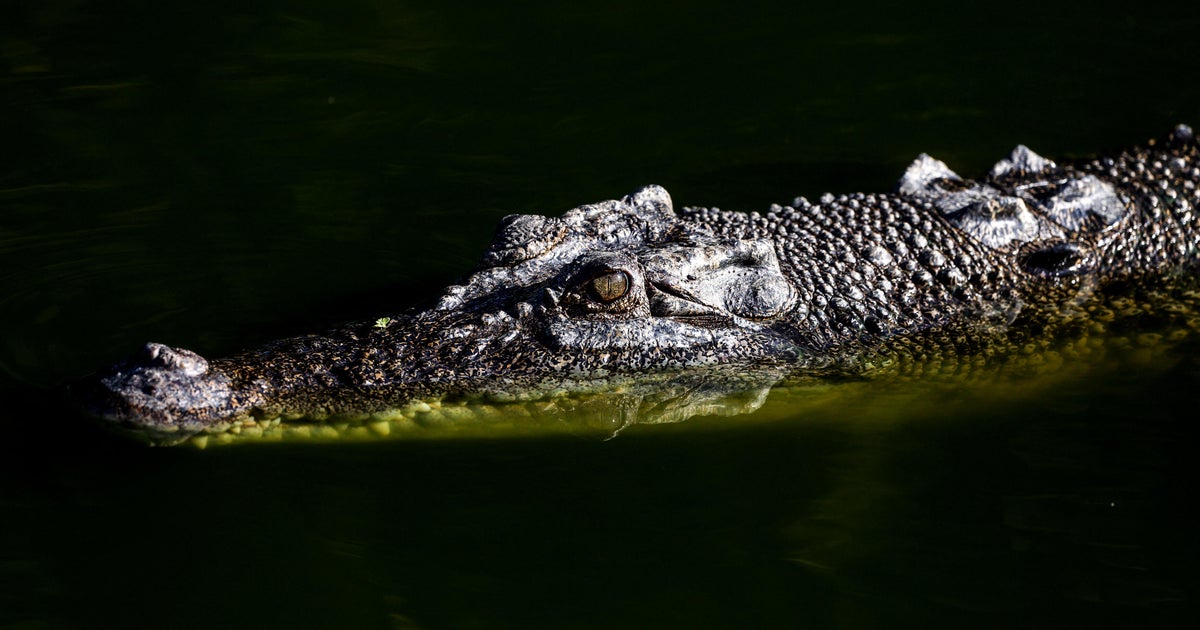
    Australian authorities are investigating an American influencer who filmed himself wrestling wild crocodiles in Queensland, condemning the “extremely dangerous and illegal” activity.

    In a series of videos on his Instagram, bare-chested Mike Holston, who goes by “therealtarzann” online, tussles with saltwater and freshwater crocodiles.

    In one post, he dives into the water, emerging holding the crocodile by its throat with blood streaming from his elbow.

    “He got a hold of me, but I got a hold of him,” Holston says.

    In another, Holston jumps off a boat and into a bushy waterway in pursuit of a crocodile, which he then wrestles.

    Holston has said the videos, which have amassed millions of views, were for “educational purposes.”

    But the videos prompted outrage in Australia, where the maximum penalty for interfering with a saltwater crocodile is $24,800.

    The state of Queensland said Wednesday it was “actively investigating” the two videos.

    “These actions are extremely dangerous and illegal, and we are actively exploring strong compliance action including fines to deter any person from this type of behaviour,” its environment department said. “Let us be clear: people should not attempt to capture freshwater or saltwater crocodiles in Queensland, unless they are trained and licensed to do so.”

    The state’s Premier David Crisafulli also called the influencer a “goose.”

    Holston did not respond to requests for comment.

    “These posts can have disastrous consequences”  

    Australia’s famously diverse flora and fauna is highly protected and attempts to interfere with it can face strict penalties.

    Another U.S. influencer sparked outrage in March after a video appeared to show her pestering a baby wombat.

    And Bob Irwin, the father of late celebrity “crocodile hunter” Steve Irwin, said this week people needed to respect Australia’s wildlife or be deported.

    “People visiting our country need to respect our wildlife, or they need to be booted out the door,” he said in a statement released to Australian media.

    “These posts can have disastrous consequences for both people and wildlife,” Irwin said.

    Government figures estimate there are between 20,000 and 30,000 saltwater crocodiles in Queensland in a vast area known as “Croc Country.”

    Both saltwater and freshwater crocodiles can measure to 13 feet long, with male saltwater crocs weighing over 600 pounds and male freshwater crocs weighing as much as 132 pounds,

    They are a protected and vulnerable species and have been known to attack humans.

    “Due to their size and their territorial, opportunistic nature, saltwater crocodiles are considered an aggressive species,” the Queensland environment department says. “Basically, once these crocs reach adult size, any creature they can overpower is fair game. If a human encroaches on a saltwater croc’s territory, the croc may decide to attack.”

    Between December 1985 and April 2024, there were 34 non-fatal attacks and 14 fatal attacks by wild saltwater crocodiles in Queensland.

    In August 2024, police said human remains were found inside a large crocodile suspected of killing a tourist in Australia. A month before that, a 12-year-old girl was snatched by a crocodile while swimming with her family in a creek in the Northern Territory. Her remains were found days later and wildlife rangers shot dead a 14-foot crocodile.


    Source link