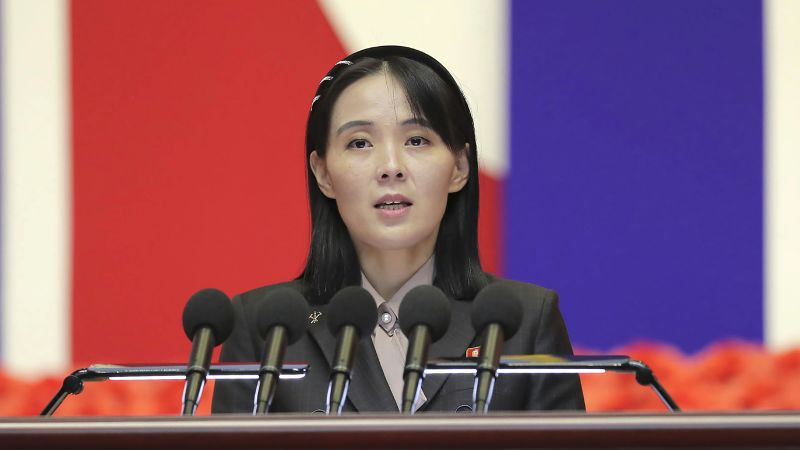
The powerful sister of North Korean leader Kim Jong Un on Thursday dismissed South Korean claims the North is removing some of its loudspeakers along the inter-Korean border, mocking the government in Seoul for clinging to hopes of renewed diplomacy between the war-divided rivals.
South Korea’s military said over the weekend that it had detected the North removing some of its loudspeakers, days after the South dismantled its own front-line speakers used for anti-North propaganda broadcasts in a bid to ease tensions.
Kim Yo Jong reiterated previous North Korean statements that it has no immediate interest in reviving long-stalled negotiations with Washington and Seoul, citing an upcoming joint military exercise between the allies as proof of their continued hostility toward Pyongyang.
South Korea’s Joint Chiefs of Staff did not disclose where it spotted the North removing some of its speakers. The North Korean speakers that have been visible from civilian-accessible border areas in the South were still seen by AP photojournalists after the military’s announcement.
During a Cabinet meeting Tuesday, South Korea’s new liberal President Lee Jae Myung described the North’s alleged steps as a “reciprocal measure” and expressed hope the Koreas could “gradually reopen dialogue and communication.”
Kim accused Lee’s government of misleading the public, saying that North Koreans “have never removed loudspeakers installed on the border area and are not willing to remove them.”
The South’s government and military did not immediately respond to Kim’s comments, published by state media.
She also dismissed South Korean media speculation that the North may use this week’s planned meeting between Russian President Vladimir Putin and U.S. President Donald Trump to convey a message to Washington via Moscow.
“Why should we send a message to the U.S. side,” she said, adding that the North has no interest in talks with the Americans.
Since Russia’s invasion of Ukraine in 2022, North Korea has made Russia the priority of its foreign policy and has sent thousands of troops and large supplies of military equipment, including artillery and missiles, to help fuel Russia’s war.
North Korean and Russian state media said Wednesday that Kim Jong Un and Putin held a phone call to discuss their deepening ties and war efforts against Ukraine.
Russia’s TASS news agency said Putin also shared with Kim information about his upcoming talks with Trump in Alaska on Friday, but the North Korean reports did not mention the Trump meeting.
Kim Yo Jong had also released statements in July dismissing Washington and Seoul’s stated desires to restart diplomacy aimed at defusing the North’s nuclear program, which derailed in 2019 following a collapsed summit with Trump during his first term.
In recent months, South Korean border residents have complained that North Korean speakers blasted irritating sounds, including howling animals and pounding gongs, in a tit-for-tat response to South Korean propaganda broadcasts.
The South Korean military said the North stopped its broadcasts in June, after Lee ordered to halt South’s broadcasts in his government’s first concrete step toward easing tensions between the war-divided rivals.
The South’s military began removing its speakers from border areas last week but did not say if they would be redeployed if tensions flared again.
North Korea, extremely sensitive to any outside criticism of its authoritarian leadership and its third-generation ruler, had seen South Korea’s anti-Pyongyang propaganda broadcasts as a major provocation.
The South’s previous conservative government resumed daily loudspeaker broadcasts in June last year, following a yearslong pause, in retaliation for North Korea flying trash-laden balloons toward the South.
The speakers blasted propaganda messages and K-pop songs, a playlist designed to strike a nerve in Pyongyang, where Kim Jong Un has been pushing to eliminate the influence of South Korean pop culture and language among the population, in part of attempts to strengthen his family’s dynastic rule.
The psychological warfare campaigns further heightened tensions already inflamed by North Korea’s advancing nuclear program and South Korean efforts to expand joint military exercises with the United States and their trilateral security cooperation with Japan.
Lee, who took office in June after winning an early election to replace ousted conservative Yoon Suk Yeol, wants to improve relations with Pyongyang, which reacted furiously to Yoon’s hard-line policies.
Experts, however, say the North clearly feels no urgency to resume diplomacy with South Korea and the U.S. anytime soon and remains focused on its alignment with Russia.
Tensions on the peninsula could rise later this month with the large-scale annual combined U.S.-South Korean military exercises that start Aug. 18.
North Korea portrays the joint drills as invasion rehearsals and often uses them as a pretext for military demonstrations and weapons tests to advance its nuclear program.
The powerful sister of North Korean leader Kim Jong Un on Thursday dismissed South Korean claims the North is removing some of its loudspeakers along the inter-Korean border, mocking the government in Seoul for clinging to hopes of renewed diplomacy between the war-divided rivals.
South Korea’s military said over the weekend that it had detected the North removing some of its loudspeakers, days after the South dismantled its own front-line speakers used for anti-North propaganda broadcasts in a bid to ease tensions.
Kim Yo Jong reiterated previous North Korean statements that it has no immediate interest in reviving long-stalled negotiations with Washington and Seoul, citing an upcoming joint military exercise between the allies as proof of their continued hostility toward Pyongyang.
South Korea’s Joint Chiefs of Staff did not disclose where it spotted the North removing some of its speakers. The North Korean speakers that have been visible from civilian-accessible border areas in the South were still seen by AP photojournalists after the military’s announcement.
During a Cabinet meeting Tuesday, South Korea’s new liberal President Lee Jae Myung described the North’s alleged steps as a “reciprocal measure” and expressed hope the Koreas could “gradually reopen dialogue and communication.”
Kim accused Lee’s government of misleading the public, saying that North Koreans “have never removed loudspeakers installed on the border area and are not willing to remove them.”
The South’s government and military did not immediately respond to Kim’s comments, published by state media.
She also dismissed South Korean media speculation that the North may use this week’s planned meeting between Russian President Vladimir Putin and U.S. President Donald Trump to convey a message to Washington via Moscow.
“Why should we send a message to the U.S. side,” she said, adding that the North has no interest in talks with the Americans.
Since Russia’s invasion of Ukraine in 2022, North Korea has made Russia the priority of its foreign policy and has sent thousands of troops and large supplies of military equipment, including artillery and missiles, to help fuel Russia’s war.
North Korean and Russian state media said Wednesday that Kim Jong Un and Putin held a phone call to discuss their deepening ties and war efforts against Ukraine.
Russia’s TASS news agency said Putin also shared with Kim information about his upcoming talks with Trump in Alaska on Friday, but the North Korean reports did not mention the Trump meeting.
Kim Yo Jong had also released statements in July dismissing Washington and Seoul’s stated desires to restart diplomacy aimed at defusing the North’s nuclear program, which derailed in 2019 following a collapsed summit with Trump during his first term.
In recent months, South Korean border residents have complained that North Korean speakers blasted irritating sounds, including howling animals and pounding gongs, in a tit-for-tat response to South Korean propaganda broadcasts.
The South Korean military said the North stopped its broadcasts in June, after Lee ordered to halt South’s broadcasts in his government’s first concrete step toward easing tensions between the war-divided rivals.
The South’s military began removing its speakers from border areas last week but did not say if they would be redeployed if tensions flared again.
North Korea, extremely sensitive to any outside criticism of its authoritarian leadership and its third-generation ruler, had seen South Korea’s anti-Pyongyang propaganda broadcasts as a major provocation.
The South’s previous conservative government resumed daily loudspeaker broadcasts in June last year, following a yearslong pause, in retaliation for North Korea flying trash-laden balloons toward the South.
The speakers blasted propaganda messages and K-pop songs, a playlist designed to strike a nerve in Pyongyang, where Kim Jong Un has been pushing to eliminate the influence of South Korean pop culture and language among the population, in part of attempts to strengthen his family’s dynastic rule.
The psychological warfare campaigns further heightened tensions already inflamed by North Korea’s advancing nuclear program and South Korean efforts to expand joint military exercises with the United States and their trilateral security cooperation with Japan.
Lee, who took office in June after winning an early election to replace ousted conservative Yoon Suk Yeol, wants to improve relations with Pyongyang, which reacted furiously to Yoon’s hard-line policies.
Experts, however, say the North clearly feels no urgency to resume diplomacy with South Korea and the U.S. anytime soon and remains focused on its alignment with Russia.
Tensions on the peninsula could rise later this month with the large-scale annual combined U.S.-South Korean military exercises that start Aug. 18.
North Korea portrays the joint drills as invasion rehearsals and often uses them as a pretext for military demonstrations and weapons tests to advance its nuclear program.
The powerful sister of North Korean leader Kim Jong Un on Thursday dismissed South Korean claims the North is removing some of its loudspeakers along the inter-Korean border, mocking the government in Seoul for clinging to hopes of renewed diplomacy between the war-divided rivals.
South Korea’s military said over the weekend that it had detected the North removing some of its loudspeakers, days after the South dismantled its own front-line speakers used for anti-North propaganda broadcasts in a bid to ease tensions.
Kim Yo Jong reiterated previous North Korean statements that it has no immediate interest in reviving long-stalled negotiations with Washington and Seoul, citing an upcoming joint military exercise between the allies as proof of their continued hostility toward Pyongyang.
South Korea’s Joint Chiefs of Staff did not disclose where it spotted the North removing some of its speakers. The North Korean speakers that have been visible from civilian-accessible border areas in the South were still seen by AP photojournalists after the military’s announcement.
During a Cabinet meeting Tuesday, South Korea’s new liberal President Lee Jae Myung described the North’s alleged steps as a “reciprocal measure” and expressed hope the Koreas could “gradually reopen dialogue and communication.”
Kim accused Lee’s government of misleading the public, saying that North Koreans “have never removed loudspeakers installed on the border area and are not willing to remove them.”
The South’s government and military did not immediately respond to Kim’s comments, published by state media.
She also dismissed South Korean media speculation that the North may use this week’s planned meeting between Russian President Vladimir Putin and U.S. President Donald Trump to convey a message to Washington via Moscow.
“Why should we send a message to the U.S. side,” she said, adding that the North has no interest in talks with the Americans.
Since Russia’s invasion of Ukraine in 2022, North Korea has made Russia the priority of its foreign policy and has sent thousands of troops and large supplies of military equipment, including artillery and missiles, to help fuel Russia’s war.
North Korean and Russian state media said Wednesday that Kim Jong Un and Putin held a phone call to discuss their deepening ties and war efforts against Ukraine.
Russia’s TASS news agency said Putin also shared with Kim information about his upcoming talks with Trump in Alaska on Friday, but the North Korean reports did not mention the Trump meeting.
Kim Yo Jong had also released statements in July dismissing Washington and Seoul’s stated desires to restart diplomacy aimed at defusing the North’s nuclear program, which derailed in 2019 following a collapsed summit with Trump during his first term.
In recent months, South Korean border residents have complained that North Korean speakers blasted irritating sounds, including howling animals and pounding gongs, in a tit-for-tat response to South Korean propaganda broadcasts.
The South Korean military said the North stopped its broadcasts in June, after Lee ordered to halt South’s broadcasts in his government’s first concrete step toward easing tensions between the war-divided rivals.
The South’s military began removing its speakers from border areas last week but did not say if they would be redeployed if tensions flared again.
North Korea, extremely sensitive to any outside criticism of its authoritarian leadership and its third-generation ruler, had seen South Korea’s anti-Pyongyang propaganda broadcasts as a major provocation.
The South’s previous conservative government resumed daily loudspeaker broadcasts in June last year, following a yearslong pause, in retaliation for North Korea flying trash-laden balloons toward the South.
The speakers blasted propaganda messages and K-pop songs, a playlist designed to strike a nerve in Pyongyang, where Kim Jong Un has been pushing to eliminate the influence of South Korean pop culture and language among the population, in part of attempts to strengthen his family’s dynastic rule.
The psychological warfare campaigns further heightened tensions already inflamed by North Korea’s advancing nuclear program and South Korean efforts to expand joint military exercises with the United States and their trilateral security cooperation with Japan.
Lee, who took office in June after winning an early election to replace ousted conservative Yoon Suk Yeol, wants to improve relations with Pyongyang, which reacted furiously to Yoon’s hard-line policies.
Experts, however, say the North clearly feels no urgency to resume diplomacy with South Korea and the U.S. anytime soon and remains focused on its alignment with Russia.
Tensions on the peninsula could rise later this month with the large-scale annual combined U.S.-South Korean military exercises that start Aug. 18.
North Korea portrays the joint drills as invasion rehearsals and often uses them as a pretext for military demonstrations and weapons tests to advance its nuclear program.
The powerful sister of North Korean leader Kim Jong Un on Thursday dismissed South Korean claims the North is removing some of its loudspeakers along the inter-Korean border, mocking the government in Seoul for clinging to hopes of renewed diplomacy between the war-divided rivals.
South Korea’s military said over the weekend that it had detected the North removing some of its loudspeakers, days after the South dismantled its own front-line speakers used for anti-North propaganda broadcasts in a bid to ease tensions.
Kim Yo Jong reiterated previous North Korean statements that it has no immediate interest in reviving long-stalled negotiations with Washington and Seoul, citing an upcoming joint military exercise between the allies as proof of their continued hostility toward Pyongyang.
South Korea’s Joint Chiefs of Staff did not disclose where it spotted the North removing some of its speakers. The North Korean speakers that have been visible from civilian-accessible border areas in the South were still seen by AP photojournalists after the military’s announcement.
During a Cabinet meeting Tuesday, South Korea’s new liberal President Lee Jae Myung described the North’s alleged steps as a “reciprocal measure” and expressed hope the Koreas could “gradually reopen dialogue and communication.”
Kim accused Lee’s government of misleading the public, saying that North Koreans “have never removed loudspeakers installed on the border area and are not willing to remove them.”
The South’s government and military did not immediately respond to Kim’s comments, published by state media.
She also dismissed South Korean media speculation that the North may use this week’s planned meeting between Russian President Vladimir Putin and U.S. President Donald Trump to convey a message to Washington via Moscow.
“Why should we send a message to the U.S. side,” she said, adding that the North has no interest in talks with the Americans.
Since Russia’s invasion of Ukraine in 2022, North Korea has made Russia the priority of its foreign policy and has sent thousands of troops and large supplies of military equipment, including artillery and missiles, to help fuel Russia’s war.
North Korean and Russian state media said Wednesday that Kim Jong Un and Putin held a phone call to discuss their deepening ties and war efforts against Ukraine.
Russia’s TASS news agency said Putin also shared with Kim information about his upcoming talks with Trump in Alaska on Friday, but the North Korean reports did not mention the Trump meeting.
Kim Yo Jong had also released statements in July dismissing Washington and Seoul’s stated desires to restart diplomacy aimed at defusing the North’s nuclear program, which derailed in 2019 following a collapsed summit with Trump during his first term.
In recent months, South Korean border residents have complained that North Korean speakers blasted irritating sounds, including howling animals and pounding gongs, in a tit-for-tat response to South Korean propaganda broadcasts.
The South Korean military said the North stopped its broadcasts in June, after Lee ordered to halt South’s broadcasts in his government’s first concrete step toward easing tensions between the war-divided rivals.
The South’s military began removing its speakers from border areas last week but did not say if they would be redeployed if tensions flared again.
North Korea, extremely sensitive to any outside criticism of its authoritarian leadership and its third-generation ruler, had seen South Korea’s anti-Pyongyang propaganda broadcasts as a major provocation.
The South’s previous conservative government resumed daily loudspeaker broadcasts in June last year, following a yearslong pause, in retaliation for North Korea flying trash-laden balloons toward the South.
The speakers blasted propaganda messages and K-pop songs, a playlist designed to strike a nerve in Pyongyang, where Kim Jong Un has been pushing to eliminate the influence of South Korean pop culture and language among the population, in part of attempts to strengthen his family’s dynastic rule.
The psychological warfare campaigns further heightened tensions already inflamed by North Korea’s advancing nuclear program and South Korean efforts to expand joint military exercises with the United States and their trilateral security cooperation with Japan.
Lee, who took office in June after winning an early election to replace ousted conservative Yoon Suk Yeol, wants to improve relations with Pyongyang, which reacted furiously to Yoon’s hard-line policies.
Experts, however, say the North clearly feels no urgency to resume diplomacy with South Korea and the U.S. anytime soon and remains focused on its alignment with Russia.
Tensions on the peninsula could rise later this month with the large-scale annual combined U.S.-South Korean military exercises that start Aug. 18.
North Korea portrays the joint drills as invasion rehearsals and often uses them as a pretext for military demonstrations and weapons tests to advance its nuclear program.
The powerful sister of North Korean leader Kim Jong Un on Thursday dismissed South Korean claims the North is removing some of its loudspeakers along the inter-Korean border, mocking the government in Seoul for clinging to hopes of renewed diplomacy between the war-divided rivals.
South Korea’s military said over the weekend that it had detected the North removing some of its loudspeakers, days after the South dismantled its own front-line speakers used for anti-North propaganda broadcasts in a bid to ease tensions.
Kim Yo Jong reiterated previous North Korean statements that it has no immediate interest in reviving long-stalled negotiations with Washington and Seoul, citing an upcoming joint military exercise between the allies as proof of their continued hostility toward Pyongyang.
South Korea’s Joint Chiefs of Staff did not disclose where it spotted the North removing some of its speakers. The North Korean speakers that have been visible from civilian-accessible border areas in the South were still seen by AP photojournalists after the military’s announcement.
During a Cabinet meeting Tuesday, South Korea’s new liberal President Lee Jae Myung described the North’s alleged steps as a “reciprocal measure” and expressed hope the Koreas could “gradually reopen dialogue and communication.”
Kim accused Lee’s government of misleading the public, saying that North Koreans “have never removed loudspeakers installed on the border area and are not willing to remove them.”
The South’s government and military did not immediately respond to Kim’s comments, published by state media.
She also dismissed South Korean media speculation that the North may use this week’s planned meeting between Russian President Vladimir Putin and U.S. President Donald Trump to convey a message to Washington via Moscow.
“Why should we send a message to the U.S. side,” she said, adding that the North has no interest in talks with the Americans.
Since Russia’s invasion of Ukraine in 2022, North Korea has made Russia the priority of its foreign policy and has sent thousands of troops and large supplies of military equipment, including artillery and missiles, to help fuel Russia’s war.
North Korean and Russian state media said Wednesday that Kim Jong Un and Putin held a phone call to discuss their deepening ties and war efforts against Ukraine.
Russia’s TASS news agency said Putin also shared with Kim information about his upcoming talks with Trump in Alaska on Friday, but the North Korean reports did not mention the Trump meeting.
Kim Yo Jong had also released statements in July dismissing Washington and Seoul’s stated desires to restart diplomacy aimed at defusing the North’s nuclear program, which derailed in 2019 following a collapsed summit with Trump during his first term.
In recent months, South Korean border residents have complained that North Korean speakers blasted irritating sounds, including howling animals and pounding gongs, in a tit-for-tat response to South Korean propaganda broadcasts.
The South Korean military said the North stopped its broadcasts in June, after Lee ordered to halt South’s broadcasts in his government’s first concrete step toward easing tensions between the war-divided rivals.
The South’s military began removing its speakers from border areas last week but did not say if they would be redeployed if tensions flared again.
North Korea, extremely sensitive to any outside criticism of its authoritarian leadership and its third-generation ruler, had seen South Korea’s anti-Pyongyang propaganda broadcasts as a major provocation.
The South’s previous conservative government resumed daily loudspeaker broadcasts in June last year, following a yearslong pause, in retaliation for North Korea flying trash-laden balloons toward the South.
The speakers blasted propaganda messages and K-pop songs, a playlist designed to strike a nerve in Pyongyang, where Kim Jong Un has been pushing to eliminate the influence of South Korean pop culture and language among the population, in part of attempts to strengthen his family’s dynastic rule.
The psychological warfare campaigns further heightened tensions already inflamed by North Korea’s advancing nuclear program and South Korean efforts to expand joint military exercises with the United States and their trilateral security cooperation with Japan.
Lee, who took office in June after winning an early election to replace ousted conservative Yoon Suk Yeol, wants to improve relations with Pyongyang, which reacted furiously to Yoon’s hard-line policies.
Experts, however, say the North clearly feels no urgency to resume diplomacy with South Korea and the U.S. anytime soon and remains focused on its alignment with Russia.
Tensions on the peninsula could rise later this month with the large-scale annual combined U.S.-South Korean military exercises that start Aug. 18.
North Korea portrays the joint drills as invasion rehearsals and often uses them as a pretext for military demonstrations and weapons tests to advance its nuclear program.
The powerful sister of North Korean leader Kim Jong Un on Thursday dismissed South Korean claims the North is removing some of its loudspeakers along the inter-Korean border, mocking the government in Seoul for clinging to hopes of renewed diplomacy between the war-divided rivals.
South Korea’s military said over the weekend that it had detected the North removing some of its loudspeakers, days after the South dismantled its own front-line speakers used for anti-North propaganda broadcasts in a bid to ease tensions.
Kim Yo Jong reiterated previous North Korean statements that it has no immediate interest in reviving long-stalled negotiations with Washington and Seoul, citing an upcoming joint military exercise between the allies as proof of their continued hostility toward Pyongyang.
South Korea’s Joint Chiefs of Staff did not disclose where it spotted the North removing some of its speakers. The North Korean speakers that have been visible from civilian-accessible border areas in the South were still seen by AP photojournalists after the military’s announcement.
During a Cabinet meeting Tuesday, South Korea’s new liberal President Lee Jae Myung described the North’s alleged steps as a “reciprocal measure” and expressed hope the Koreas could “gradually reopen dialogue and communication.”
Kim accused Lee’s government of misleading the public, saying that North Koreans “have never removed loudspeakers installed on the border area and are not willing to remove them.”
The South’s government and military did not immediately respond to Kim’s comments, published by state media.
She also dismissed South Korean media speculation that the North may use this week’s planned meeting between Russian President Vladimir Putin and U.S. President Donald Trump to convey a message to Washington via Moscow.
“Why should we send a message to the U.S. side,” she said, adding that the North has no interest in talks with the Americans.
Since Russia’s invasion of Ukraine in 2022, North Korea has made Russia the priority of its foreign policy and has sent thousands of troops and large supplies of military equipment, including artillery and missiles, to help fuel Russia’s war.
North Korean and Russian state media said Wednesday that Kim Jong Un and Putin held a phone call to discuss their deepening ties and war efforts against Ukraine.
Russia’s TASS news agency said Putin also shared with Kim information about his upcoming talks with Trump in Alaska on Friday, but the North Korean reports did not mention the Trump meeting.
Kim Yo Jong had also released statements in July dismissing Washington and Seoul’s stated desires to restart diplomacy aimed at defusing the North’s nuclear program, which derailed in 2019 following a collapsed summit with Trump during his first term.
In recent months, South Korean border residents have complained that North Korean speakers blasted irritating sounds, including howling animals and pounding gongs, in a tit-for-tat response to South Korean propaganda broadcasts.
The South Korean military said the North stopped its broadcasts in June, after Lee ordered to halt South’s broadcasts in his government’s first concrete step toward easing tensions between the war-divided rivals.
The South’s military began removing its speakers from border areas last week but did not say if they would be redeployed if tensions flared again.
North Korea, extremely sensitive to any outside criticism of its authoritarian leadership and its third-generation ruler, had seen South Korea’s anti-Pyongyang propaganda broadcasts as a major provocation.
The South’s previous conservative government resumed daily loudspeaker broadcasts in June last year, following a yearslong pause, in retaliation for North Korea flying trash-laden balloons toward the South.
The speakers blasted propaganda messages and K-pop songs, a playlist designed to strike a nerve in Pyongyang, where Kim Jong Un has been pushing to eliminate the influence of South Korean pop culture and language among the population, in part of attempts to strengthen his family’s dynastic rule.
The psychological warfare campaigns further heightened tensions already inflamed by North Korea’s advancing nuclear program and South Korean efforts to expand joint military exercises with the United States and their trilateral security cooperation with Japan.
Lee, who took office in June after winning an early election to replace ousted conservative Yoon Suk Yeol, wants to improve relations with Pyongyang, which reacted furiously to Yoon’s hard-line policies.
Experts, however, say the North clearly feels no urgency to resume diplomacy with South Korea and the U.S. anytime soon and remains focused on its alignment with Russia.
Tensions on the peninsula could rise later this month with the large-scale annual combined U.S.-South Korean military exercises that start Aug. 18.
North Korea portrays the joint drills as invasion rehearsals and often uses them as a pretext for military demonstrations and weapons tests to advance its nuclear program.
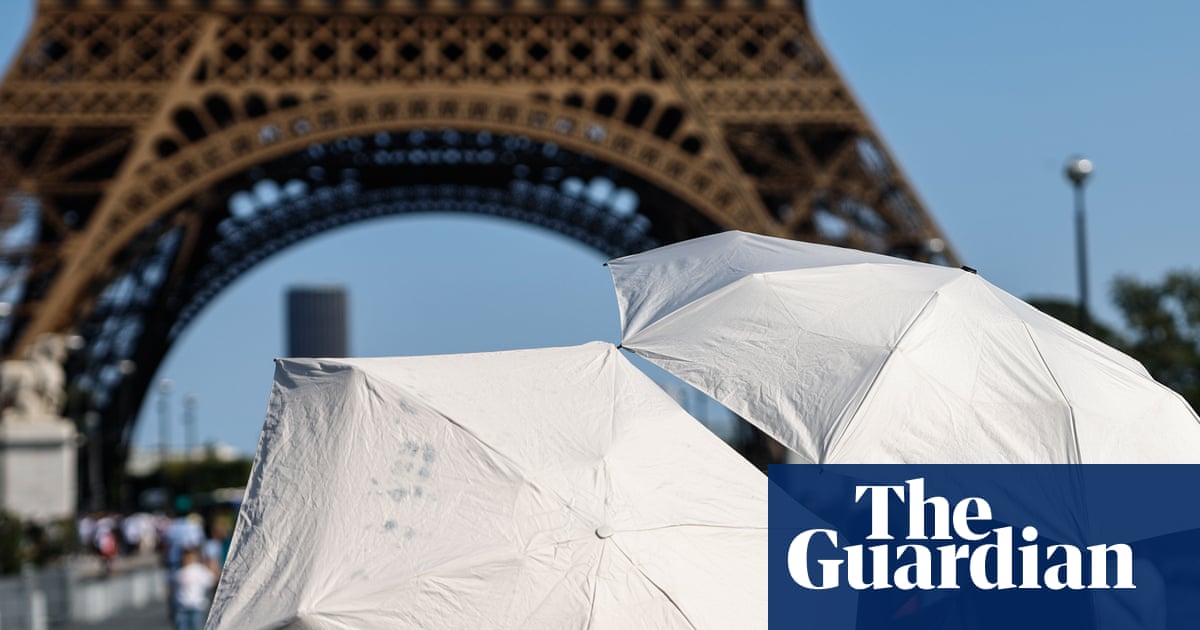
Somehow, the heat hits harder when you’re on holiday.
Tourists who hoped to idle on Croatian beaches this week will have instead singed their feet on scorching sand. Families on a break in Madrid will have choked on smoke from a deadly wildfire that ripped through a suburb of the Spanish capital. Visitors to Mount Vesuvius in Italy will have been turned away from the trails as firefighters battled blazes on the volcano’s slopes.
And then there are campers in south-west France, where 40% of selected weather stations recorded heat above 40C on Monday, who may have wished they had stayed home.
Fierce heat is scorching southern Europe for the second time this summer, breaking temperature records and fuelling wildfires that have forced thousands of people across several countries to flee their homes.
The heatwave, which has been made longer and stronger by the blanket of fossil fuel pollution that smothers the Earth, has struck during the holiday season when tourist-dependent economies in the Mediterranean and the Balkans are most exposed to variations in weather.
For locals and visitors alike, the formerly Instagram-friendly views now seem apocalyptic. Firefighters are tackling fierce blazes in countries from Portugal to Turkey, and the infernos are known to have killed people in France, Spain, Albania, Montenegro and Greece.
Across the continent, black smoke is darkening blood-red skies.
“We are being cooked alive,” said Alexandre Favaios, the mayor of Vila Real, in northern Portugal. “This cannot continue.”
Wildfires in Europe burned more than 400,000 hectares in the first seven months of 2025, according to data published by EU fire scientists on Tuesday. Although it is not the worst the continent has seen for this time of year, the burned area is 87% greater than the average over the last two decades.
In the coming week, the scientists warned, “extreme to very extreme conditions” for fire weather will persist. They project “particularly severe” risks in much of southern Europe, as well as high anomalies in parts of the Nordics.
“We are at extreme risk of forest fires,” the Spanish prime minister Pedro Sánchez warned on Tuesday. “Please be very cautious.”
Feeling the heat
Will tourists head north? … a firefighting helicopter collects water near Atlanterra Beach, Spain. Photograph: Marcelo del Pozo/Reuters
I have felt the fear that wildfires can instil in an absent-minded tourist. At a Portuguese friend’s wedding in 2022, by a lake in the rural centre of the country, a nearby forest fire forced us to head indoors early so helicopters could fill buckets with fresh water to battle the blaze. The next day, as we lounged in the outdoor pool of a holiday home, white soot rained down on us like snow.
The hot ashes had been lifted up by plumes of smoke that grew redder and redder as the fire came closer. After some fretting among the group, one friend with a newborn baby decided it was time to leave, so we fled to the coast. We drove past locals, mostly retired, who stood outside their homes and watched in horror as flames drew near.
Wildfires kill hundreds of people around the world each year – a death toll far lower than that from floods, which kill thousands, and from heatwaves, which kill hundreds of thousands. But factor in the smoke and the human cost rises rapidly. The latest research estimates that the air pollution spewed by wildfires kills a staggering 1.5 million people globally each year.
There are economic costs, too. As southern Europe bakes and burns each summer, tourists who cannot travel out of season are starting to abandon traditional holiday destinations in favour of “coolcations” farther north that beat the heat.
Even that strategy will have led to some disappointment this summer. At the start of the month, a heatwave hit cool Nordic countries and sent temperatures north of the Arctic Circle to a staggering 32-33C. “Truly unprecedented” was how one meteorologist described the heatwave.
The upshot is that flight shame might not be what keeps people from holidaying far from home as the planet heats up. Instead, it could be the rising cost of travel as Europe’s once-stable climate violently breaks down.
This is an edited version of the This is Europe newsletter. If you want to read the complete version every Wednesday, please sign up here.
Somehow, the heat hits harder when you’re on holiday.
Tourists who hoped to idle on Croatian beaches this week will have instead singed their feet on scorching sand. Families on a break in Madrid will have choked on smoke from a deadly wildfire that ripped through a suburb of the Spanish capital. Visitors to Mount Vesuvius in Italy will have been turned away from the trails as firefighters battled blazes on the volcano’s slopes.
And then there are campers in south-west France, where 40% of selected weather stations recorded heat above 40C on Monday, who may have wished they had stayed home.
Fierce heat is scorching southern Europe for the second time this summer, breaking temperature records and fuelling wildfires that have forced thousands of people across several countries to flee their homes.
The heatwave, which has been made longer and stronger by the blanket of fossil fuel pollution that smothers the Earth, has struck during the holiday season when tourist-dependent economies in the Mediterranean and the Balkans are most exposed to variations in weather.
For locals and visitors alike, the formerly Instagram-friendly views now seem apocalyptic. Firefighters are tackling fierce blazes in countries from Portugal to Turkey, and the infernos are known to have killed people in France, Spain, Albania, Montenegro and Greece.
Across the continent, black smoke is darkening blood-red skies.
“We are being cooked alive,” said Alexandre Favaios, the mayor of Vila Real, in northern Portugal. “This cannot continue.”
Wildfires in Europe burned more than 400,000 hectares in the first seven months of 2025, according to data published by EU fire scientists on Tuesday. Although it is not the worst the continent has seen for this time of year, the burned area is 87% greater than the average over the last two decades.
In the coming week, the scientists warned, “extreme to very extreme conditions” for fire weather will persist. They project “particularly severe” risks in much of southern Europe, as well as high anomalies in parts of the Nordics.
“We are at extreme risk of forest fires,” the Spanish prime minister Pedro Sánchez warned on Tuesday. “Please be very cautious.”
Feeling the heat
Will tourists head north? … a firefighting helicopter collects water near Atlanterra Beach, Spain. Photograph: Marcelo del Pozo/Reuters
I have felt the fear that wildfires can instil in an absent-minded tourist. At a Portuguese friend’s wedding in 2022, by a lake in the rural centre of the country, a nearby forest fire forced us to head indoors early so helicopters could fill buckets with fresh water to battle the blaze. The next day, as we lounged in the outdoor pool of a holiday home, white soot rained down on us like snow.
The hot ashes had been lifted up by plumes of smoke that grew redder and redder as the fire came closer. After some fretting among the group, one friend with a newborn baby decided it was time to leave, so we fled to the coast. We drove past locals, mostly retired, who stood outside their homes and watched in horror as flames drew near.
Wildfires kill hundreds of people around the world each year – a death toll far lower than that from floods, which kill thousands, and from heatwaves, which kill hundreds of thousands. But factor in the smoke and the human cost rises rapidly. The latest research estimates that the air pollution spewed by wildfires kills a staggering 1.5 million people globally each year.
There are economic costs, too. As southern Europe bakes and burns each summer, tourists who cannot travel out of season are starting to abandon traditional holiday destinations in favour of “coolcations” farther north that beat the heat.
Even that strategy will have led to some disappointment this summer. At the start of the month, a heatwave hit cool Nordic countries and sent temperatures north of the Arctic Circle to a staggering 32-33C. “Truly unprecedented” was how one meteorologist described the heatwave.
The upshot is that flight shame might not be what keeps people from holidaying far from home as the planet heats up. Instead, it could be the rising cost of travel as Europe’s once-stable climate violently breaks down.
This is an edited version of the This is Europe newsletter. If you want to read the complete version every Wednesday, please sign up here.
Somehow, the heat hits harder when you’re on holiday.
Tourists who hoped to idle on Croatian beaches this week will have instead singed their feet on scorching sand. Families on a break in Madrid will have choked on smoke from a deadly wildfire that ripped through a suburb of the Spanish capital. Visitors to Mount Vesuvius in Italy will have been turned away from the trails as firefighters battled blazes on the volcano’s slopes.
And then there are campers in south-west France, where 40% of selected weather stations recorded heat above 40C on Monday, who may have wished they had stayed home.
Fierce heat is scorching southern Europe for the second time this summer, breaking temperature records and fuelling wildfires that have forced thousands of people across several countries to flee their homes.
The heatwave, which has been made longer and stronger by the blanket of fossil fuel pollution that smothers the Earth, has struck during the holiday season when tourist-dependent economies in the Mediterranean and the Balkans are most exposed to variations in weather.
For locals and visitors alike, the formerly Instagram-friendly views now seem apocalyptic. Firefighters are tackling fierce blazes in countries from Portugal to Turkey, and the infernos are known to have killed people in France, Spain, Albania, Montenegro and Greece.
Across the continent, black smoke is darkening blood-red skies.
“We are being cooked alive,” said Alexandre Favaios, the mayor of Vila Real, in northern Portugal. “This cannot continue.”
Wildfires in Europe burned more than 400,000 hectares in the first seven months of 2025, according to data published by EU fire scientists on Tuesday. Although it is not the worst the continent has seen for this time of year, the burned area is 87% greater than the average over the last two decades.
In the coming week, the scientists warned, “extreme to very extreme conditions” for fire weather will persist. They project “particularly severe” risks in much of southern Europe, as well as high anomalies in parts of the Nordics.
“We are at extreme risk of forest fires,” the Spanish prime minister Pedro Sánchez warned on Tuesday. “Please be very cautious.”
Feeling the heat
Will tourists head north? … a firefighting helicopter collects water near Atlanterra Beach, Spain. Photograph: Marcelo del Pozo/Reuters
I have felt the fear that wildfires can instil in an absent-minded tourist. At a Portuguese friend’s wedding in 2022, by a lake in the rural centre of the country, a nearby forest fire forced us to head indoors early so helicopters could fill buckets with fresh water to battle the blaze. The next day, as we lounged in the outdoor pool of a holiday home, white soot rained down on us like snow.
The hot ashes had been lifted up by plumes of smoke that grew redder and redder as the fire came closer. After some fretting among the group, one friend with a newborn baby decided it was time to leave, so we fled to the coast. We drove past locals, mostly retired, who stood outside their homes and watched in horror as flames drew near.
Wildfires kill hundreds of people around the world each year – a death toll far lower than that from floods, which kill thousands, and from heatwaves, which kill hundreds of thousands. But factor in the smoke and the human cost rises rapidly. The latest research estimates that the air pollution spewed by wildfires kills a staggering 1.5 million people globally each year.
There are economic costs, too. As southern Europe bakes and burns each summer, tourists who cannot travel out of season are starting to abandon traditional holiday destinations in favour of “coolcations” farther north that beat the heat.
Even that strategy will have led to some disappointment this summer. At the start of the month, a heatwave hit cool Nordic countries and sent temperatures north of the Arctic Circle to a staggering 32-33C. “Truly unprecedented” was how one meteorologist described the heatwave.
The upshot is that flight shame might not be what keeps people from holidaying far from home as the planet heats up. Instead, it could be the rising cost of travel as Europe’s once-stable climate violently breaks down.
This is an edited version of the This is Europe newsletter. If you want to read the complete version every Wednesday, please sign up here.