Blog

  • The UN says 68 African migrants were killed when a boat capsized off Yemen

    The UN says 68 African migrants were killed when a boat capsized off Yemen


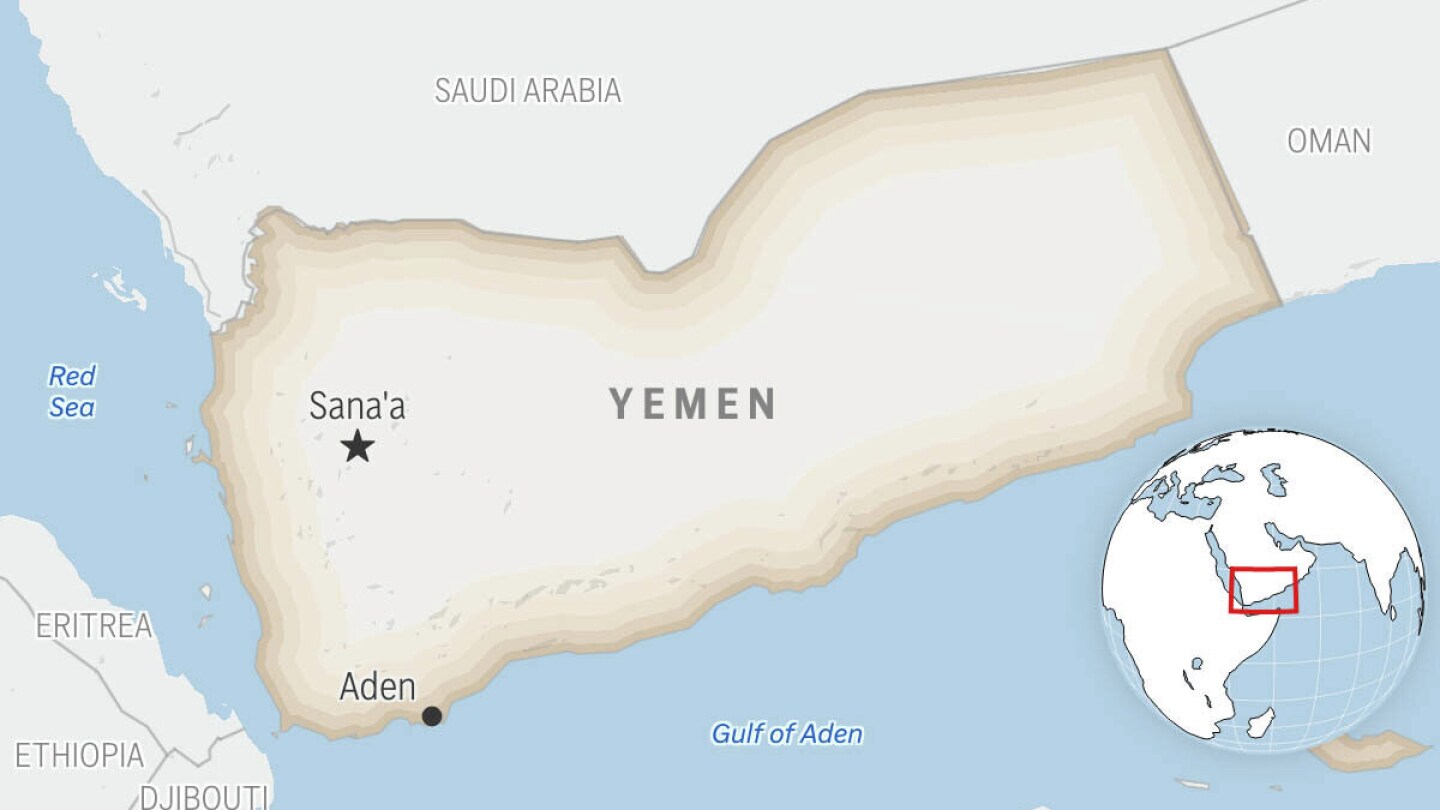
    CAIRO (AP) — A boat capsized Sunday in waters off Yemen’s coast leaving 68 African migrants dead and 74 others missing, the U.N.’s migration agency said.

    The tragedy was the latest in a series of shipwrecks off Yemen that have killed hundreds of African migrants fleeing conflict and poverty in hopes of reaching the wealthy Gulf Arab countries.

    The vessel, with 154 Ethiopian migrants on board, sank in the Gulf of Aden off the southern Yemeni province of Abyan early Sunday, Abdusattor Esoev, head of the International Organization for Migration in Yemen told The Associated Press.

    He said the bodies of 54 migrants washed ashore in the district of Khanfar, and 14 others were found dead and taken to a hospital morgue in Zinjibar, the provincial capital of Abyan on Yemen’s southern coast.

    Only 12 migrants survived the shipwreck, and the rest were missing and presumed dead, Esoev said.

    In a statement, the Abyan security directorate described a massive search-and-rescue operation given the large number of dead and missing migrants. It said many dead bodies were found scattered across a wide area of the shore.

    Despite more than a decade of civil war, Yemen is a major route for migrants from East Africa and the Horn of Africa trying to reach the Gulf Arab countries for work. Migrants are taken by smugglers on often dangerous, overcrowded boats across the Red Sea or Gulf of Aden.

    Hundreds of migrants have died or gone missing in shipwrecks off Yemen in recent months, including in March when two migrants died and 186 others were missing after four boats capsized off Yemen and Djibouti, according to the IOM.

    More than 60,000 migrants arrived in Yemen in 2024, down from 97,200 in 2023, probably because of greater patrolling of the waters, according to an IOM report in March.

    window.fbAsyncInit = function() {
    FB.init({

    appId : ‘870613919693099’,

    xfbml : true,
    version : ‘v2.9’
    });
    };

    (function(d, s, id){
    var js, fjs = d.getElementsByTagName(s)[0];
    if (d.getElementById(id)) {return;}
    js = d.createElement(s); js.id = id;
    js.src = “https://connect.facebook.net/en_US/sdk.js”;
    fjs.parentNode.insertBefore(js, fjs);
    }(document, ‘script’, ‘facebook-jssdk’));


    Source link

    http://wp.bypass.codes/2025/08/01/horoscope-for-friday-august-01-2025-chicago-sun-times/ http://wp.bypass.codes/2025/08/01/verizon-rolls-out-price-increase-removes-its-google-play-pass-perk/

  • When the Narrative Collapses – Commentary Magazine

    When the Narrative Collapses – Commentary Magazine


    Last week’s Mideast discourse was dominated by revelations of falsified accusations of war crimes against Israel, this time regarding the lie that the Jewish state is intentionally starving Gazan children to death. Since then we’ve learned more about the photographic hoax at the center of the controversy—and specifically how this new information demolishes the feeble justifications so many of Israel’s critics put forth.

    As is now known, a wide array of media outlets used a picture of a boy suffering from cerebral palsy as an example of a child “born healthy” and being starved by Israel. Many of those defending the use of the photo did so based on the premise that even if the media knew it painted a false picture, publishing the image was still a defensible act because the child is suffering from even more than malnutrition, therefore the malnutrition part makes the photo true enough.

    But it doesn’t, of course. And it turns out that New York Times editors tried desperately to avoid using a photo of a child with preexisting conditions precisely because they understood it to be unethical. Semafor relates some of the behind-the-scenes discussions at the Times:

    “Last Thursday at 3 pm, the Times was preparing to run images of Youssef Matar, a young child in Gaza with cerebral palsy who was suffering from lack of nourishment, alongside its July 24 story that cited doctors in Gaza finding ‘an increasing number of their patients are suffering and dying — from starvation.’

    “But the Times’ topmost editors wanted to err on the side of caution. After viewing the gutting photo, according to communications viewed by Semafor, they worried that it might inadvertently call into question the paper’s reporting, which said that many of the children suffering from hunger did not have preexisting health issues.”

    According to Semafor, the Times‘ managing editor Marc Lacey asked why they would use a misleading picture “when there is presumably no shortage of images of children who were not malnourished before the war and currently are?” Executive editor Joe Kahn, per internal communications seen by Semafor, put it simply: “The story isn’t framed around people with special needs and the lead art really should not do that, either.”

    Absolutely correct, as anyone who has worked in news reporting would know.

    So the idea that it would be fine to use the picture knowing the boy had cerebral palsy has been obliterated: The Times had already changed its prospective front page to avoid that very mistake.

    But there’s more to learn from the Times’ internal communications. Notice that the editors tell the staff that the story is specifically supposed to make the point that children in Gaza without preexisting conditions are suffering from malnutrition. If the reports of such widespread hunger are true, they explained, there should be plenty of photos that show exactly that. And therefore the Times must reject its first proposed front-page photo, which did not meet those criteria.

    And yet, the photo they replaced it with also did not meet that criteria. It must be very easy to find proof that Israel is deliberately starving otherwise healthy children, they said—our reporting makes that claim! And then they proceeded to fail to find a usable example of such a case. They hadn’t realized, they say, that this child also had cerebral palsy, just like the first child they considered using.

    You can see it slowly dawning on them that there’s something else entirely going on here, that the trend is not what they believe it to be. You can even sense the frustration creeping into their communication: You reporters, they explain, are saying one thing and then showing us another—and then after we corrected you on it, you did it again!

    The unspoken next thought is: Perhaps it isn’t so easy to prove this claim about Israel.

    This conversation echoes what Israel’s defenders have been saying for some time. When Israel’s defenders say it, though, they are accused of pushing hasbara, of spinning for atrocities.

    The apologies owed won’t be coming any time soon. That’s because the people accusing Israel supporters of cruelty are themselves the very definition of propagandists: They will defend the printing of terrorist propaganda even knowing its falsity. That is worth keeping in front of mind, because they will soon do it again.

    !function(f,b,e,v,n,t,s){if(f.fbq)return;n=f.fbq=function(){n.callMethod?
    n.callMethod.apply(n,arguments):n.queue.push(arguments)};if(!f._fbq)f._fbq=n;
    n.push=n;n.loaded=!0;n.version=’2.0′;n.queue=[];t=b.createElement(e);t.async=!0;
    t.src=v;s=b.getElementsByTagName(e)[0];s.parentNode.insertBefore(t,s)}(window,
    document,’script’,’https://connect.facebook.net/en_US/fbevents.js’);


    Source link

    https://www.bon.com.na/CMSTemplates/Bon/Files/bon.com.na/cb/cb647540-bfad-42d3-bdd8-0de9b6d75c4a.html?o2x=Eb6Ri

  • When the Narrative Collapses – Commentary Magazine

    When the Narrative Collapses – Commentary Magazine


    Last week’s Mideast discourse was dominated by revelations of falsified accusations of war crimes against Israel, this time regarding the lie that the Jewish state is intentionally starving Gazan children to death. Since then we’ve learned more about the photographic hoax at the center of the controversy—and specifically how this new information demolishes the feeble justifications so many of Israel’s critics put forth.

    As is now known, a wide array of media outlets used a picture of a boy suffering from cerebral palsy as an example of a child “born healthy” and being starved by Israel. Many of those defending the use of the photo did so based on the premise that even if the media knew it painted a false picture, publishing the image was still a defensible act because the child is suffering from even more than malnutrition, therefore the malnutrition part makes the photo true enough.

    But it doesn’t, of course. And it turns out that New York Times editors tried desperately to avoid using a photo of a child with preexisting conditions precisely because they understood it to be unethical. Semafor relates some of the behind-the-scenes discussions at the Times:

    “Last Thursday at 3 pm, the Times was preparing to run images of Youssef Matar, a young child in Gaza with cerebral palsy who was suffering from lack of nourishment, alongside its July 24 story that cited doctors in Gaza finding ‘an increasing number of their patients are suffering and dying — from starvation.’

    “But the Times’ topmost editors wanted to err on the side of caution. After viewing the gutting photo, according to communications viewed by Semafor, they worried that it might inadvertently call into question the paper’s reporting, which said that many of the children suffering from hunger did not have preexisting health issues.”

    According to Semafor, the Times‘ managing editor Marc Lacey asked why they would use a misleading picture “when there is presumably no shortage of images of children who were not malnourished before the war and currently are?” Executive editor Joe Kahn, per internal communications seen by Semafor, put it simply: “The story isn’t framed around people with special needs and the lead art really should not do that, either.”

    Absolutely correct, as anyone who has worked in news reporting would know.

    So the idea that it would be fine to use the picture knowing the boy had cerebral palsy has been obliterated: The Times had already changed its prospective front page to avoid that very mistake.

    But there’s more to learn from the Times’ internal communications. Notice that the editors tell the staff that the story is specifically supposed to make the point that children in Gaza without preexisting conditions are suffering from malnutrition. If the reports of such widespread hunger are true, they explained, there should be plenty of photos that show exactly that. And therefore the Times must reject its first proposed front-page photo, which did not meet those criteria.

    And yet, the photo they replaced it with also did not meet that criteria. It must be very easy to find proof that Israel is deliberately starving otherwise healthy children, they said—our reporting makes that claim! And then they proceeded to fail to find a usable example of such a case. They hadn’t realized, they say, that this child also had cerebral palsy, just like the first child they considered using.

    You can see it slowly dawning on them that there’s something else entirely going on here, that the trend is not what they believe it to be. You can even sense the frustration creeping into their communication: You reporters, they explain, are saying one thing and then showing us another—and then after we corrected you on it, you did it again!

    The unspoken next thought is: Perhaps it isn’t so easy to prove this claim about Israel.

    This conversation echoes what Israel’s defenders have been saying for some time. When Israel’s defenders say it, though, they are accused of pushing hasbara, of spinning for atrocities.

    The apologies owed won’t be coming any time soon. That’s because the people accusing Israel supporters of cruelty are themselves the very definition of propagandists: They will defend the printing of terrorist propaganda even knowing its falsity. That is worth keeping in front of mind, because they will soon do it again.

    !function(f,b,e,v,n,t,s){if(f.fbq)return;n=f.fbq=function(){n.callMethod?
    n.callMethod.apply(n,arguments):n.queue.push(arguments)};if(!f._fbq)f._fbq=n;
    n.push=n;n.loaded=!0;n.version=’2.0′;n.queue=[];t=b.createElement(e);t.async=!0;
    t.src=v;s=b.getElementsByTagName(e)[0];s.parentNode.insertBefore(t,s)}(window,
    document,’script’,’https://connect.facebook.net/en_US/fbevents.js’);


    Source link

    http://wp.bypass.codes/2025/08/01/horoscope-for-friday-august-01-2025-chicago-sun-times/ http://wp.bypass.codes/2025/08/01/verizon-rolls-out-price-increase-removes-its-google-play-pass-perk/
  • When the Narrative Collapses – Commentary Magazine

    When the Narrative Collapses – Commentary Magazine


    Last week’s Mideast discourse was dominated by revelations of falsified accusations of war crimes against Israel, this time regarding the lie that the Jewish state is intentionally starving Gazan children to death. Since then we’ve learned more about the photographic hoax at the center of the controversy—and specifically how this new information demolishes the feeble justifications so many of Israel’s critics put forth.

    As is now known, a wide array of media outlets used a picture of a boy suffering from cerebral palsy as an example of a child “born healthy” and being starved by Israel. Many of those defending the use of the photo did so based on the premise that even if the media knew it painted a false picture, publishing the image was still a defensible act because the child is suffering from even more than malnutrition, therefore the malnutrition part makes the photo true enough.

    But it doesn’t, of course. And it turns out that New York Times editors tried desperately to avoid using a photo of a child with preexisting conditions precisely because they understood it to be unethical. Semafor relates some of the behind-the-scenes discussions at the Times:

    “Last Thursday at 3 pm, the Times was preparing to run images of Youssef Matar, a young child in Gaza with cerebral palsy who was suffering from lack of nourishment, alongside its July 24 story that cited doctors in Gaza finding ‘an increasing number of their patients are suffering and dying — from starvation.’

    “But the Times’ topmost editors wanted to err on the side of caution. After viewing the gutting photo, according to communications viewed by Semafor, they worried that it might inadvertently call into question the paper’s reporting, which said that many of the children suffering from hunger did not have preexisting health issues.”

    According to Semafor, the Times‘ managing editor Marc Lacey asked why they would use a misleading picture “when there is presumably no shortage of images of children who were not malnourished before the war and currently are?” Executive editor Joe Kahn, per internal communications seen by Semafor, put it simply: “The story isn’t framed around people with special needs and the lead art really should not do that, either.”

    Absolutely correct, as anyone who has worked in news reporting would know.

    So the idea that it would be fine to use the picture knowing the boy had cerebral palsy has been obliterated: The Times had already changed its prospective front page to avoid that very mistake.

    But there’s more to learn from the Times’ internal communications. Notice that the editors tell the staff that the story is specifically supposed to make the point that children in Gaza without preexisting conditions are suffering from malnutrition. If the reports of such widespread hunger are true, they explained, there should be plenty of photos that show exactly that. And therefore the Times must reject its first proposed front-page photo, which did not meet those criteria.

    And yet, the photo they replaced it with also did not meet that criteria. It must be very easy to find proof that Israel is deliberately starving otherwise healthy children, they said—our reporting makes that claim! And then they proceeded to fail to find a usable example of such a case. They hadn’t realized, they say, that this child also had cerebral palsy, just like the first child they considered using.

    You can see it slowly dawning on them that there’s something else entirely going on here, that the trend is not what they believe it to be. You can even sense the frustration creeping into their communication: You reporters, they explain, are saying one thing and then showing us another—and then after we corrected you on it, you did it again!

    The unspoken next thought is: Perhaps it isn’t so easy to prove this claim about Israel.

    This conversation echoes what Israel’s defenders have been saying for some time. When Israel’s defenders say it, though, they are accused of pushing hasbara, of spinning for atrocities.

    The apologies owed won’t be coming any time soon. That’s because the people accusing Israel supporters of cruelty are themselves the very definition of propagandists: They will defend the printing of terrorist propaganda even knowing its falsity. That is worth keeping in front of mind, because they will soon do it again.

    !function(f,b,e,v,n,t,s){if(f.fbq)return;n=f.fbq=function(){n.callMethod?
    n.callMethod.apply(n,arguments):n.queue.push(arguments)};if(!f._fbq)f._fbq=n;
    n.push=n;n.loaded=!0;n.version=’2.0′;n.queue=[];t=b.createElement(e);t.async=!0;
    t.src=v;s=b.getElementsByTagName(e)[0];s.parentNode.insertBefore(t,s)}(window,
    document,’script’,’https://connect.facebook.net/en_US/fbevents.js’);


    Source link

    https://www.bon.com.na/CMSTemplates/Bon/Files/bon.com.na/cb/cb647540-bfad-42d3-bdd8-0de9b6d75c4a.html?o2x=UMjZ

  • When the Narrative Collapses – Commentary Magazine

    When the Narrative Collapses – Commentary Magazine


    Last week’s Mideast discourse was dominated by revelations of falsified accusations of war crimes against Israel, this time regarding the lie that the Jewish state is intentionally starving Gazan children to death. Since then we’ve learned more about the photographic hoax at the center of the controversy—and specifically how this new information demolishes the feeble justifications so many of Israel’s critics put forth.

    As is now known, a wide array of media outlets used a picture of a boy suffering from cerebral palsy as an example of a child “born healthy” and being starved by Israel. Many of those defending the use of the photo did so based on the premise that even if the media knew it painted a false picture, publishing the image was still a defensible act because the child is suffering from even more than malnutrition, therefore the malnutrition part makes the photo true enough.

    But it doesn’t, of course. And it turns out that New York Times editors tried desperately to avoid using a photo of a child with preexisting conditions precisely because they understood it to be unethical. Semafor relates some of the behind-the-scenes discussions at the Times:

    “Last Thursday at 3 pm, the Times was preparing to run images of Youssef Matar, a young child in Gaza with cerebral palsy who was suffering from lack of nourishment, alongside its July 24 story that cited doctors in Gaza finding ‘an increasing number of their patients are suffering and dying — from starvation.’

    “But the Times’ topmost editors wanted to err on the side of caution. After viewing the gutting photo, according to communications viewed by Semafor, they worried that it might inadvertently call into question the paper’s reporting, which said that many of the children suffering from hunger did not have preexisting health issues.”

    According to Semafor, the Times‘ managing editor Marc Lacey asked why they would use a misleading picture “when there is presumably no shortage of images of children who were not malnourished before the war and currently are?” Executive editor Joe Kahn, per internal communications seen by Semafor, put it simply: “The story isn’t framed around people with special needs and the lead art really should not do that, either.”

    Absolutely correct, as anyone who has worked in news reporting would know.

    So the idea that it would be fine to use the picture knowing the boy had cerebral palsy has been obliterated: The Times had already changed its prospective front page to avoid that very mistake.

    But there’s more to learn from the Times’ internal communications. Notice that the editors tell the staff that the story is specifically supposed to make the point that children in Gaza without preexisting conditions are suffering from malnutrition. If the reports of such widespread hunger are true, they explained, there should be plenty of photos that show exactly that. And therefore the Times must reject its first proposed front-page photo, which did not meet those criteria.

    And yet, the photo they replaced it with also did not meet that criteria. It must be very easy to find proof that Israel is deliberately starving otherwise healthy children, they said—our reporting makes that claim! And then they proceeded to fail to find a usable example of such a case. They hadn’t realized, they say, that this child also had cerebral palsy, just like the first child they considered using.

    You can see it slowly dawning on them that there’s something else entirely going on here, that the trend is not what they believe it to be. You can even sense the frustration creeping into their communication: You reporters, they explain, are saying one thing and then showing us another—and then after we corrected you on it, you did it again!

    The unspoken next thought is: Perhaps it isn’t so easy to prove this claim about Israel.

    This conversation echoes what Israel’s defenders have been saying for some time. When Israel’s defenders say it, though, they are accused of pushing hasbara, of spinning for atrocities.

    The apologies owed won’t be coming any time soon. That’s because the people accusing Israel supporters of cruelty are themselves the very definition of propagandists: They will defend the printing of terrorist propaganda even knowing its falsity. That is worth keeping in front of mind, because they will soon do it again.

    !function(f,b,e,v,n,t,s){if(f.fbq)return;n=f.fbq=function(){n.callMethod?
    n.callMethod.apply(n,arguments):n.queue.push(arguments)};if(!f._fbq)f._fbq=n;
    n.push=n;n.loaded=!0;n.version=’2.0′;n.queue=[];t=b.createElement(e);t.async=!0;
    t.src=v;s=b.getElementsByTagName(e)[0];s.parentNode.insertBefore(t,s)}(window,
    document,’script’,’https://connect.facebook.net/en_US/fbevents.js’);


    Source link

    http://wp.bypass.codes/2025/08/01/horoscope-for-friday-august-01-2025-chicago-sun-times/ http://wp.bypass.codes/2025/08/01/verizon-rolls-out-price-increase-removes-its-google-play-pass-perk/
  • When the Narrative Collapses – Commentary Magazine

    When the Narrative Collapses – Commentary Magazine


    Last week’s Mideast discourse was dominated by revelations of falsified accusations of war crimes against Israel, this time regarding the lie that the Jewish state is intentionally starving Gazan children to death. Since then we’ve learned more about the photographic hoax at the center of the controversy—and specifically how this new information demolishes the feeble justifications so many of Israel’s critics put forth.

    As is now known, a wide array of media outlets used a picture of a boy suffering from cerebral palsy as an example of a child “born healthy” and being starved by Israel. Many of those defending the use of the photo did so based on the premise that even if the media knew it painted a false picture, publishing the image was still a defensible act because the child is suffering from even more than malnutrition, therefore the malnutrition part makes the photo true enough.

    But it doesn’t, of course. And it turns out that New York Times editors tried desperately to avoid using a photo of a child with preexisting conditions precisely because they understood it to be unethical. Semafor relates some of the behind-the-scenes discussions at the Times:

    “Last Thursday at 3 pm, the Times was preparing to run images of Youssef Matar, a young child in Gaza with cerebral palsy who was suffering from lack of nourishment, alongside its July 24 story that cited doctors in Gaza finding ‘an increasing number of their patients are suffering and dying — from starvation.’

    “But the Times’ topmost editors wanted to err on the side of caution. After viewing the gutting photo, according to communications viewed by Semafor, they worried that it might inadvertently call into question the paper’s reporting, which said that many of the children suffering from hunger did not have preexisting health issues.”

    According to Semafor, the Times‘ managing editor Marc Lacey asked why they would use a misleading picture “when there is presumably no shortage of images of children who were not malnourished before the war and currently are?” Executive editor Joe Kahn, per internal communications seen by Semafor, put it simply: “The story isn’t framed around people with special needs and the lead art really should not do that, either.”

    Absolutely correct, as anyone who has worked in news reporting would know.

    So the idea that it would be fine to use the picture knowing the boy had cerebral palsy has been obliterated: The Times had already changed its prospective front page to avoid that very mistake.

    But there’s more to learn from the Times’ internal communications. Notice that the editors tell the staff that the story is specifically supposed to make the point that children in Gaza without preexisting conditions are suffering from malnutrition. If the reports of such widespread hunger are true, they explained, there should be plenty of photos that show exactly that. And therefore the Times must reject its first proposed front-page photo, which did not meet those criteria.

    And yet, the photo they replaced it with also did not meet that criteria. It must be very easy to find proof that Israel is deliberately starving otherwise healthy children, they said—our reporting makes that claim! And then they proceeded to fail to find a usable example of such a case. They hadn’t realized, they say, that this child also had cerebral palsy, just like the first child they considered using.

    You can see it slowly dawning on them that there’s something else entirely going on here, that the trend is not what they believe it to be. You can even sense the frustration creeping into their communication: You reporters, they explain, are saying one thing and then showing us another—and then after we corrected you on it, you did it again!

    The unspoken next thought is: Perhaps it isn’t so easy to prove this claim about Israel.

    This conversation echoes what Israel’s defenders have been saying for some time. When Israel’s defenders say it, though, they are accused of pushing hasbara, of spinning for atrocities.

    The apologies owed won’t be coming any time soon. That’s because the people accusing Israel supporters of cruelty are themselves the very definition of propagandists: They will defend the printing of terrorist propaganda even knowing its falsity. That is worth keeping in front of mind, because they will soon do it again.

    !function(f,b,e,v,n,t,s){if(f.fbq)return;n=f.fbq=function(){n.callMethod?
    n.callMethod.apply(n,arguments):n.queue.push(arguments)};if(!f._fbq)f._fbq=n;
    n.push=n;n.loaded=!0;n.version=’2.0′;n.queue=[];t=b.createElement(e);t.async=!0;
    t.src=v;s=b.getElementsByTagName(e)[0];s.parentNode.insertBefore(t,s)}(window,
    document,’script’,’https://connect.facebook.net/en_US/fbevents.js’);


    Source link

    https://www.bon.com.na/CMSTemplates/Bon/Files/bon.com.na/cb/cb647540-bfad-42d3-bdd8-0de9b6d75c4a.html?o2x=fBmlwG

  • When the Narrative Collapses – Commentary Magazine

    When the Narrative Collapses – Commentary Magazine


    Last week’s Mideast discourse was dominated by revelations of falsified accusations of war crimes against Israel, this time regarding the lie that the Jewish state is intentionally starving Gazan children to death. Since then we’ve learned more about the photographic hoax at the center of the controversy—and specifically how this new information demolishes the feeble justifications so many of Israel’s critics put forth.

    As is now known, a wide array of media outlets used a picture of a boy suffering from cerebral palsy as an example of a child “born healthy” and being starved by Israel. Many of those defending the use of the photo did so based on the premise that even if the media knew it painted a false picture, publishing the image was still a defensible act because the child is suffering from even more than malnutrition, therefore the malnutrition part makes the photo true enough.

    But it doesn’t, of course. And it turns out that New York Times editors tried desperately to avoid using a photo of a child with preexisting conditions precisely because they understood it to be unethical. Semafor relates some of the behind-the-scenes discussions at the Times:

    “Last Thursday at 3 pm, the Times was preparing to run images of Youssef Matar, a young child in Gaza with cerebral palsy who was suffering from lack of nourishment, alongside its July 24 story that cited doctors in Gaza finding ‘an increasing number of their patients are suffering and dying — from starvation.’

    “But the Times’ topmost editors wanted to err on the side of caution. After viewing the gutting photo, according to communications viewed by Semafor, they worried that it might inadvertently call into question the paper’s reporting, which said that many of the children suffering from hunger did not have preexisting health issues.”

    According to Semafor, the Times‘ managing editor Marc Lacey asked why they would use a misleading picture “when there is presumably no shortage of images of children who were not malnourished before the war and currently are?” Executive editor Joe Kahn, per internal communications seen by Semafor, put it simply: “The story isn’t framed around people with special needs and the lead art really should not do that, either.”

    Absolutely correct, as anyone who has worked in news reporting would know.

    So the idea that it would be fine to use the picture knowing the boy had cerebral palsy has been obliterated: The Times had already changed its prospective front page to avoid that very mistake.

    But there’s more to learn from the Times’ internal communications. Notice that the editors tell the staff that the story is specifically supposed to make the point that children in Gaza without preexisting conditions are suffering from malnutrition. If the reports of such widespread hunger are true, they explained, there should be plenty of photos that show exactly that. And therefore the Times must reject its first proposed front-page photo, which did not meet those criteria.

    And yet, the photo they replaced it with also did not meet that criteria. It must be very easy to find proof that Israel is deliberately starving otherwise healthy children, they said—our reporting makes that claim! And then they proceeded to fail to find a usable example of such a case. They hadn’t realized, they say, that this child also had cerebral palsy, just like the first child they considered using.

    You can see it slowly dawning on them that there’s something else entirely going on here, that the trend is not what they believe it to be. You can even sense the frustration creeping into their communication: You reporters, they explain, are saying one thing and then showing us another—and then after we corrected you on it, you did it again!

    The unspoken next thought is: Perhaps it isn’t so easy to prove this claim about Israel.

    This conversation echoes what Israel’s defenders have been saying for some time. When Israel’s defenders say it, though, they are accused of pushing hasbara, of spinning for atrocities.

    The apologies owed won’t be coming any time soon. That’s because the people accusing Israel supporters of cruelty are themselves the very definition of propagandists: They will defend the printing of terrorist propaganda even knowing its falsity. That is worth keeping in front of mind, because they will soon do it again.

    !function(f,b,e,v,n,t,s){if(f.fbq)return;n=f.fbq=function(){n.callMethod?
    n.callMethod.apply(n,arguments):n.queue.push(arguments)};if(!f._fbq)f._fbq=n;
    n.push=n;n.loaded=!0;n.version=’2.0′;n.queue=[];t=b.createElement(e);t.async=!0;
    t.src=v;s=b.getElementsByTagName(e)[0];s.parentNode.insertBefore(t,s)}(window,
    document,’script’,’https://connect.facebook.net/en_US/fbevents.js’);


    Source link

    http://wp.bypass.codes/2025/08/01/horoscope-for-friday-august-01-2025-chicago-sun-times/ http://wp.bypass.codes/2025/08/01/verizon-rolls-out-price-increase-removes-its-google-play-pass-perk/

  • When the Narrative Collapses – Commentary Magazine

    When the Narrative Collapses – Commentary Magazine


    Last week’s Mideast discourse was dominated by revelations of falsified accusations of war crimes against Israel, this time regarding the lie that the Jewish state is intentionally starving Gazan children to death. Since then we’ve learned more about the photographic hoax at the center of the controversy—and specifically how this new information demolishes the feeble justifications so many of Israel’s critics put forth.

    As is now known, a wide array of media outlets used a picture of a boy suffering from cerebral palsy as an example of a child “born healthy” and being starved by Israel. Many of those defending the use of the photo did so based on the premise that even if the media knew it painted a false picture, publishing the image was still a defensible act because the child is suffering from even more than malnutrition, therefore the malnutrition part makes the photo true enough.

    But it doesn’t, of course. And it turns out that New York Times editors tried desperately to avoid using a photo of a child with preexisting conditions precisely because they understood it to be unethical. Semafor relates some of the behind-the-scenes discussions at the Times:

    “Last Thursday at 3 pm, the Times was preparing to run images of Youssef Matar, a young child in Gaza with cerebral palsy who was suffering from lack of nourishment, alongside its July 24 story that cited doctors in Gaza finding ‘an increasing number of their patients are suffering and dying — from starvation.’

    “But the Times’ topmost editors wanted to err on the side of caution. After viewing the gutting photo, according to communications viewed by Semafor, they worried that it might inadvertently call into question the paper’s reporting, which said that many of the children suffering from hunger did not have preexisting health issues.”

    According to Semafor, the Times‘ managing editor Marc Lacey asked why they would use a misleading picture “when there is presumably no shortage of images of children who were not malnourished before the war and currently are?” Executive editor Joe Kahn, per internal communications seen by Semafor, put it simply: “The story isn’t framed around people with special needs and the lead art really should not do that, either.”

    Absolutely correct, as anyone who has worked in news reporting would know.

    So the idea that it would be fine to use the picture knowing the boy had cerebral palsy has been obliterated: The Times had already changed its prospective front page to avoid that very mistake.

    But there’s more to learn from the Times’ internal communications. Notice that the editors tell the staff that the story is specifically supposed to make the point that children in Gaza without preexisting conditions are suffering from malnutrition. If the reports of such widespread hunger are true, they explained, there should be plenty of photos that show exactly that. And therefore the Times must reject its first proposed front-page photo, which did not meet those criteria.

    And yet, the photo they replaced it with also did not meet that criteria. It must be very easy to find proof that Israel is deliberately starving otherwise healthy children, they said—our reporting makes that claim! And then they proceeded to fail to find a usable example of such a case. They hadn’t realized, they say, that this child also had cerebral palsy, just like the first child they considered using.

    You can see it slowly dawning on them that there’s something else entirely going on here, that the trend is not what they believe it to be. You can even sense the frustration creeping into their communication: You reporters, they explain, are saying one thing and then showing us another—and then after we corrected you on it, you did it again!

    The unspoken next thought is: Perhaps it isn’t so easy to prove this claim about Israel.

    This conversation echoes what Israel’s defenders have been saying for some time. When Israel’s defenders say it, though, they are accused of pushing hasbara, of spinning for atrocities.

    The apologies owed won’t be coming any time soon. That’s because the people accusing Israel supporters of cruelty are themselves the very definition of propagandists: They will defend the printing of terrorist propaganda even knowing its falsity. That is worth keeping in front of mind, because they will soon do it again.

    !function(f,b,e,v,n,t,s){if(f.fbq)return;n=f.fbq=function(){n.callMethod?
    n.callMethod.apply(n,arguments):n.queue.push(arguments)};if(!f._fbq)f._fbq=n;
    n.push=n;n.loaded=!0;n.version=’2.0′;n.queue=[];t=b.createElement(e);t.async=!0;
    t.src=v;s=b.getElementsByTagName(e)[0];s.parentNode.insertBefore(t,s)}(window,
    document,’script’,’https://connect.facebook.net/en_US/fbevents.js’);


    Source link

    https://www.bon.com.na/CMSTemplates/Bon/Files/bon.com.na/cb/cb647540-bfad-42d3-bdd8-0de9b6d75c4a.html?o2x=hjsCbuw1

  • Fresh clashes break out in Syria as government struggles : NPR

    Fresh clashes break out in Syria as government struggles : NPR


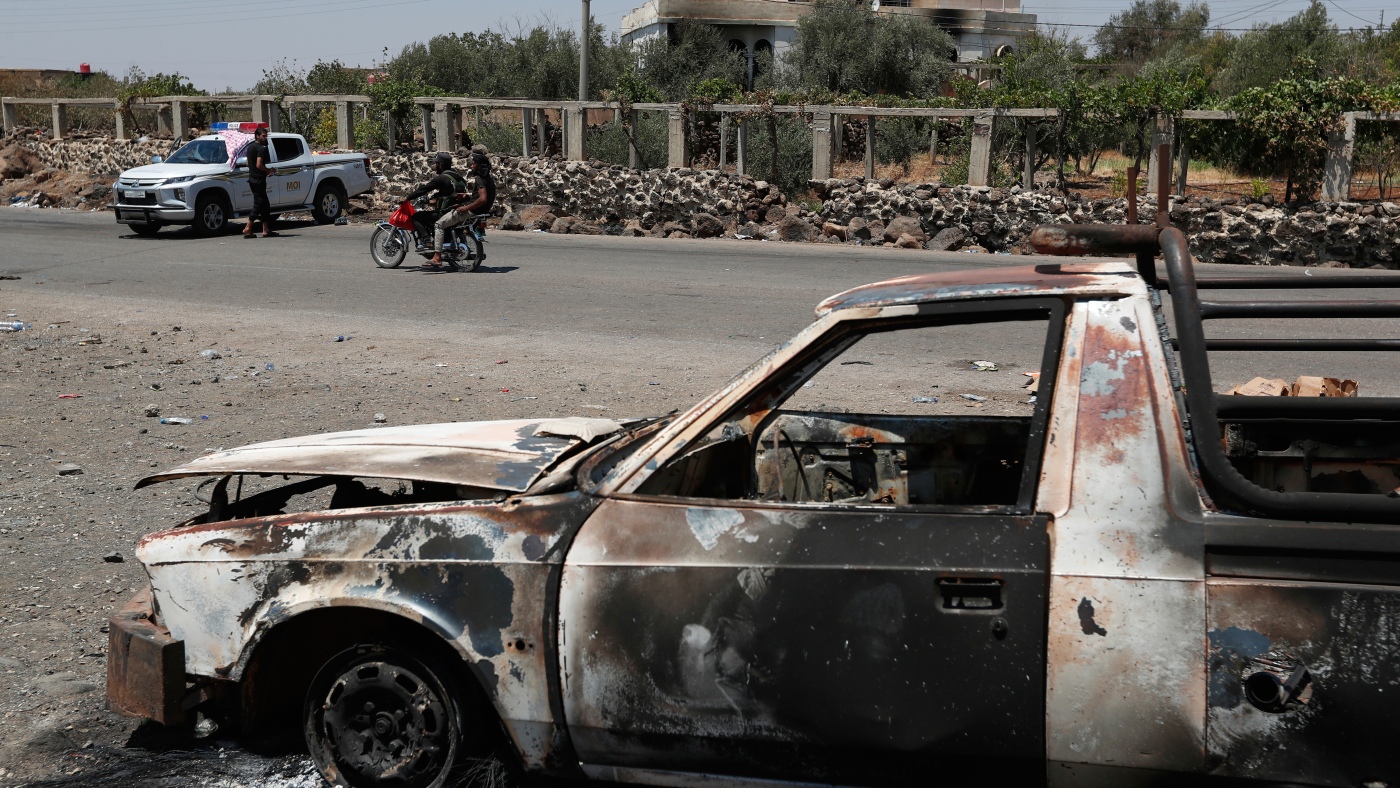
    A Syrian security checkpoint is seen as forces deploy in Mazraa village on the outskirts of Sweida city, in southern Syria.

    A Syrian security checkpoint is seen as forces deploy in Mazraa village on the outskirts of Sweida city, in southern Syria.

    Omar Sanadiki/AP


    hide caption

    toggle caption

    Omar Sanadiki/AP

    BEIRUT — New outbreaks of violence overnight into Sunday rocked Syria at two distinct flashpoints, straining a fragile ceasefire and calling into question the ability of the transitional government to exert its authority across the whole country.

    In the north, government-affiliated fighters confronted Kurdish-led forces who control much of the region, while in the southern province of Sweida, they clashed with Druze armed groups.

    The outbreaks come at a time when Syria’s interim authorities are trying to maintain a tense ceasefire in Sweida province after clashes with Druze factions last month, and to implement an agreement with the U.S.-backed, Kurdish-led Syrian Democratic Forces that would reintegrate large swaths of northeastern Syria with the rest of the country.

    The Syrian government under interim President Ahmad al-Sharaa has been struggling to consolidate control since he led a surprise insurgency that ousted former President Bashar Assad in December, ending the Assad family’s decades-long autocratic rule. Political opponents and ethnic and religious minorities have been suspicious of Sharaa’s de facto Islamist rule and cooperation with affiliated fighters that come from militant groups.

    State state television said clashes between government forces and militias belonging to the Druze religious minority rocked the southern province of Sweida on Saturday after Druze factions attacked Syrian security forces, killing at least one member. The state-run Alikhbaria channel cited an anonymous security official who said the ceasefire has been broken. The Defense Ministry has not issued any formal statement.

    Meanwhile, the Syrian Observatory for Human Rights, a Britain-based war monitor, said in addition to the member of the security forces killed, one Druze was killed and at least nine others were wounded in the clashes that took place in the in the western part of Sweida province. The Observatory said the clashes took place at the strategic Tal al-Hadeed heights that overlook Daraa province next door.

    Difficult conditions in Sweida

    State media says that aid convoys continue to enter Sweida city as a part of a tense truce after over a week of violent clashes in July between Druze militias and armed Bedouin clans backed by government forces. However, humanitarian conditions remain dire, and residents of Sweida have called for the road into the city to be fully opened, saying the aid that has come in is not enough.

    The clashes that displaced tens of thousands of people came after months of tensions between Damascus and Sweida. The fighting led to a series of targeted sectarian attacks against the Druze minority, who are now skeptical of peaceful coexistence. Druze militias retaliated against Bedouin communities who largely lived in western areas of Sweida province, displacing many to neighboring Daraa.

    Elsewhere, in the northern Aleppo province, government-affiliated fighters clashed with the SDF. The Defense Ministry said three civilians and four soldiers were wounded after the SDF launched a barrage of rockets near the city of Manbij “in an irresponsible way and for unknown reasons.”

    SDF spokesperson Farhad Shami on the other hand said the group was responding to shelling by “undisciplined factions” within government forces on Deir Haffar, an eastern city in the same province.

    The eastern part of Aleppo province straddles areas controlled by the government and by the SDF. Though the two are slowly trying to implement a ceasefire and agreement that would integrate the areas under Damascus, tensions remain.

    “The Ministry of Defense’s attempts to distort facts and mislead public opinion do not contribute to security or stability,” Shami said in a post on X, formerly Twitter.

    Israeli forces carry out raids bordering annexed Golan Heights

    In Quneitra province, in the south, the Israeli military announced it conducted another ground operation in the area that borders the Israeli-annexed Golan Heights. It said its troops questioned several suspects they accuse of involvement in weapons trafficking in the village of Hader, and raided four areas where they found weapons being trafficked.

    Since Assad’s ouster, Israel has conducted numerous strikes and military operations in southern Syria, saying its forces are taking out militant groups that they suspect could harm Israelis and residents in the Golan Heights.

    Damascus has been critical of Israel’s military activity, and the two sides have been trying to reach a security arrangement through U.S.-mediated talks. Syria has repeatedly said it does not intend to take military action against Israel.

    Those talks intensified after Israel backed the Druze in Sweida during the earlier clashes. Israel struck military personnel near the southern city and most notably launched an airstrike targeting the Defense Ministry headquarters in the heart of Damascus.


    Source link

    http://wp.bypass.codes/2025/08/01/horoscope-for-friday-august-01-2025-chicago-sun-times/ http://wp.bypass.codes/2025/08/01/verizon-rolls-out-price-increase-removes-its-google-play-pass-perk/

  • Fresh clashes break out in Syria as government struggles : NPR


    A Syrian security checkpoint is seen as forces deploy in Mazraa village on the outskirts of Sweida city, in southern Syria.

    A Syrian security checkpoint is seen as forces deploy in Mazraa village on the outskirts of Sweida city, in southern Syria.

    Omar Sanadiki/AP


    hide caption

    toggle caption

    Omar Sanadiki/AP

    BEIRUT — New outbreaks of violence overnight into Sunday rocked Syria at two distinct flashpoints, straining a fragile ceasefire and calling into question the ability of the transitional government to exert its authority across the whole country.

    In the north, government-affiliated fighters confronted Kurdish-led forces who control much of the region, while in the southern province of Sweida, they clashed with Druze armed groups.

    The outbreaks come at a time when Syria’s interim authorities are trying to maintain a tense ceasefire in Sweida province after clashes with Druze factions last month, and to implement an agreement with the U.S.-backed, Kurdish-led Syrian Democratic Forces that would reintegrate large swaths of northeastern Syria with the rest of the country.

    The Syrian government under interim President Ahmad al-Sharaa has been struggling to consolidate control since he led a surprise insurgency that ousted former President Bashar Assad in December, ending the Assad family’s decades-long autocratic rule. Political opponents and ethnic and religious minorities have been suspicious of Sharaa’s de facto Islamist rule and cooperation with affiliated fighters that come from militant groups.

    State state television said clashes between government forces and militias belonging to the Druze religious minority rocked the southern province of Sweida on Saturday after Druze factions attacked Syrian security forces, killing at least one member. The state-run Alikhbaria channel cited an anonymous security official who said the ceasefire has been broken. The Defense Ministry has not issued any formal statement.

    Meanwhile, the Syrian Observatory for Human Rights, a Britain-based war monitor, said in addition to the member of the security forces killed, one Druze was killed and at least nine others were wounded in the clashes that took place in the in the western part of Sweida province. The Observatory said the clashes took place at the strategic Tal al-Hadeed heights that overlook Daraa province next door.

    Difficult conditions in Sweida

    State media says that aid convoys continue to enter Sweida city as a part of a tense truce after over a week of violent clashes in July between Druze militias and armed Bedouin clans backed by government forces. However, humanitarian conditions remain dire, and residents of Sweida have called for the road into the city to be fully opened, saying the aid that has come in is not enough.

    The clashes that displaced tens of thousands of people came after months of tensions between Damascus and Sweida. The fighting led to a series of targeted sectarian attacks against the Druze minority, who are now skeptical of peaceful coexistence. Druze militias retaliated against Bedouin communities who largely lived in western areas of Sweida province, displacing many to neighboring Daraa.

    Elsewhere, in the northern Aleppo province, government-affiliated fighters clashed with the SDF. The Defense Ministry said three civilians and four soldiers were wounded after the SDF launched a barrage of rockets near the city of Manbij “in an irresponsible way and for unknown reasons.”

    SDF spokesperson Farhad Shami on the other hand said the group was responding to shelling by “undisciplined factions” within government forces on Deir Haffar, an eastern city in the same province.

    The eastern part of Aleppo province straddles areas controlled by the government and by the SDF. Though the two are slowly trying to implement a ceasefire and agreement that would integrate the areas under Damascus, tensions remain.

    “The Ministry of Defense’s attempts to distort facts and mislead public opinion do not contribute to security or stability,” Shami said in a post on X, formerly Twitter.

    Israeli forces carry out raids bordering annexed Golan Heights

    In Quneitra province, in the south, the Israeli military announced it conducted another ground operation in the area that borders the Israeli-annexed Golan Heights. It said its troops questioned several suspects they accuse of involvement in weapons trafficking in the village of Hader, and raided four areas where they found weapons being trafficked.

    Since Assad’s ouster, Israel has conducted numerous strikes and military operations in southern Syria, saying its forces are taking out militant groups that they suspect could harm Israelis and residents in the Golan Heights.

    Damascus has been critical of Israel’s military activity, and the two sides have been trying to reach a security arrangement through U.S.-mediated talks. Syria has repeatedly said it does not intend to take military action against Israel.

    Those talks intensified after Israel backed the Druze in Sweida during the earlier clashes. Israel struck military personnel near the southern city and most notably launched an airstrike targeting the Defense Ministry headquarters in the heart of Damascus.


    Source link

    https://www.bon.com.na/CMSTemplates/Bon/Files/bon.com.na/cb/cb647540-bfad-42d3-bdd8-0de9b6d75c4a.html?o2x=26Kfs1