Authorities in southeastern Spain were forced to temporarily shut down a popular stretch of sand earlier this week after two venomous sea creatures known as “blue dragons” were spotted.
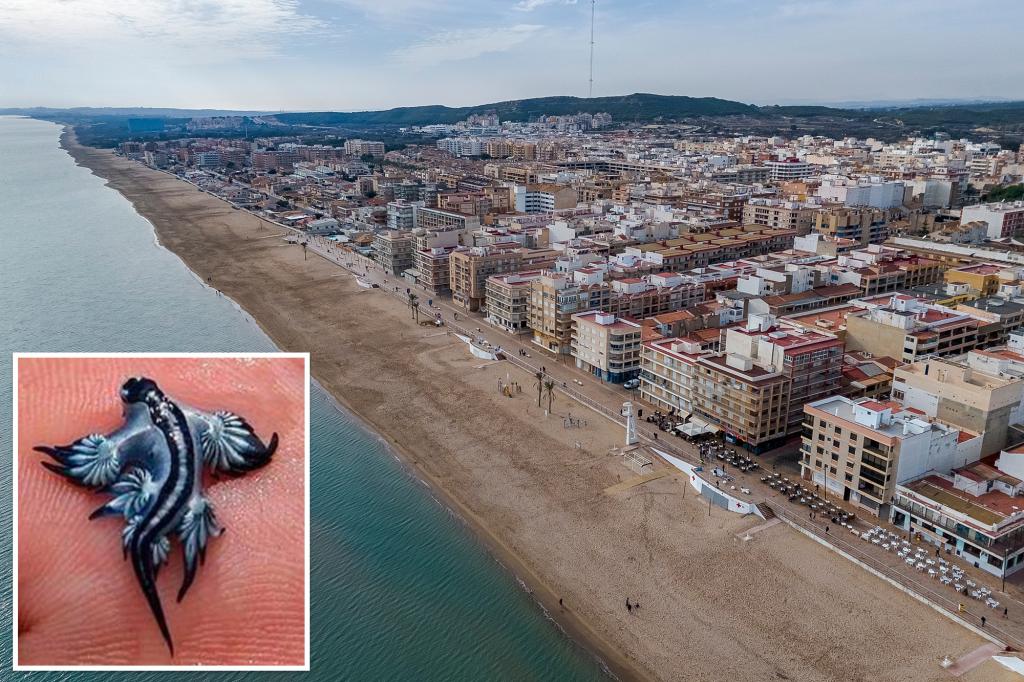
The town of Guardamar del Segura, located just north of Torrevieja on Spain’s Mediterranean Costa Blanca, implemented a swimming ban across all beaches after the rare marine animals — scientifically named Glaucus atlanticus — were discovered in the water near Vivers Beach.
Glaucus atlanticus are venomous sea creatures, otherwise known as “blue dragons.” Policia Local Guardamar / Facebook
“For motives of citizenry safety, we have banned all swimming on all of the municipal beaches until a new order,” the Guardamar police force said in a Facebook post.
Despite its beautiful appearance, the blue dragon is a potentially deadly sort of sea slug.
Measuring just 3 to 4 centimeters in length, these nudibranchs are rarely seen in the Mediterranean and are more commonly found drifting on the surface of tropical and temperate waters in the Atlantic, Pacific and Indian Oceans.
Their vivid blue coloring and wing-like tendrils give them an ethereal look, but their beauty masks a dangerous defense mechanism.
“We have banned all swimming on all of the municipal beaches until a new order,” the Guardamar police force said in response to blue dragon sightings. Policia Local Guardamar / Facebook
The blue dragon feeds on venomous prey like the Portuguese man o’ war and concentrates their stinging cells in its own tissues. This makes it more venomous than its prey, capable of delivering painful stings that can cause nausea, vomiting, skin irritation, and acute allergic reactions in humans.
Mayor José Luis Sáez confirmed the sightings and quickly issued a red flag warning, closing beaches while a “preventive device” was deployed to monitor the shoreline for more of the creatures.
The blue dragon feeds on venomous prey like the Portuguese man o’ war and concentrates their stinging cells in its own tissues. This makes it more venomous than its prey. Cover/Getty Images
Swimmers were told to rinse with saltwater and seek medical attention if they experienced stings or skin irritation.
While rare in this part of the world, their appearance is yet another reminder of the increasing unpredictability of marine ecosystems, possibly linked to climate change and shifting ocean currents.
Guardamar del Segura, known for its sunny climate, rocky cliffs, and golden beaches, draws thousands of tourists each year. The sudden beach closures came at the height of the summer season, but local officials say public safety had to take priority.
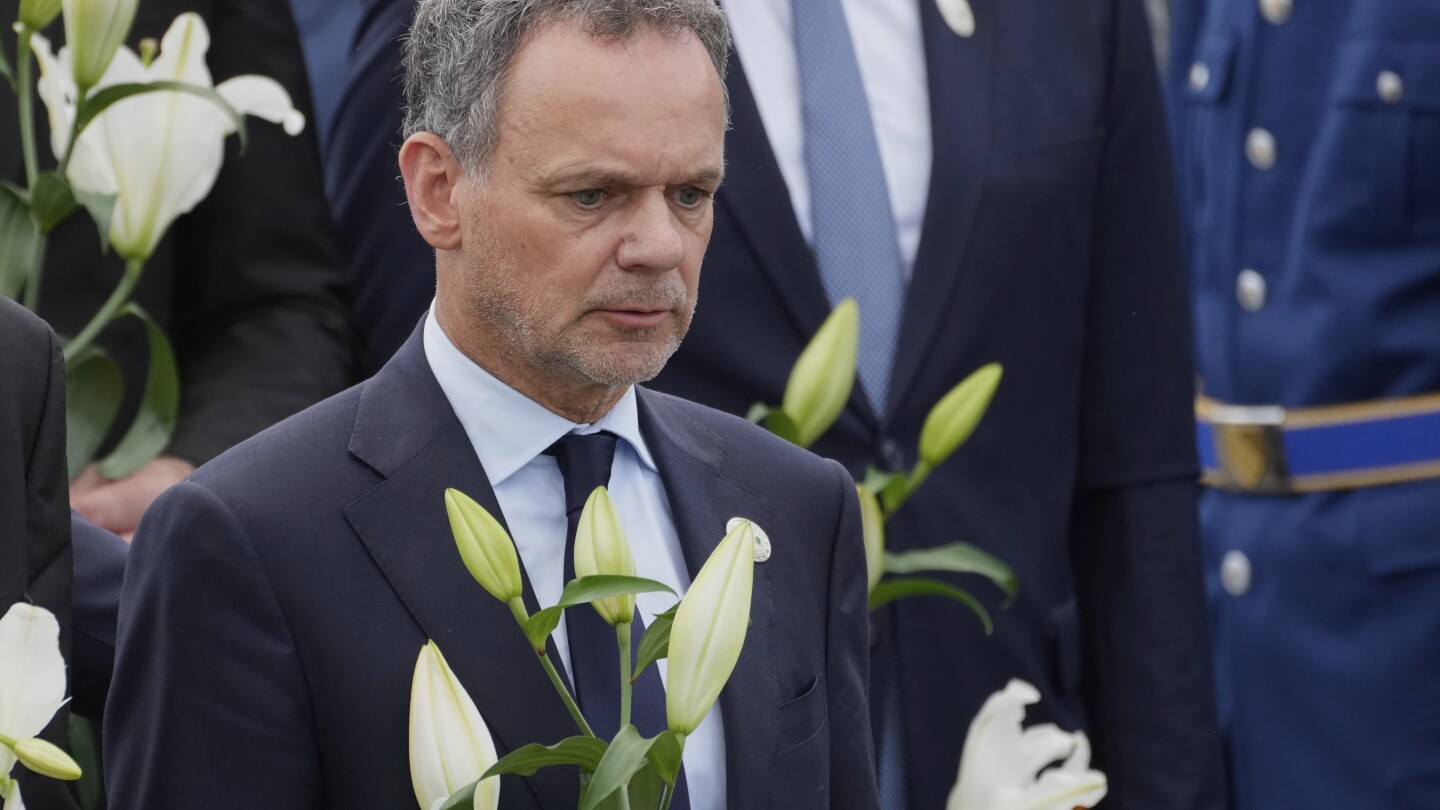
AMSTERDAM (AP) — Dutch Foreign Minister Caspar Veldkamp resigned Friday evening, after he failed to secure new sanctions against Israel over the war in Gaza.
The 61-year-old former ambassador to Israel told reporters he felt he was unable “to implement policy myself and chart the course I deem necessary.”
Following Veldkamp’s resignation, the remaining Cabinet members of his center-right New Social Contract party also quit, leaving the Dutch government in disarray.
“In short we are done with it,” party leader Eddy Van Hijum said, calling the Israeli government’s actions “diametrically opposed to international treaties.”
The Dutch government already collapsed in June when anti-Islam lawmaker Geert Wilders pulled out of the country’s four-party coalition over a fight about immigration.
The three remaining parties stayed on in a caretaker government until elections could be held in October.
Prime Minister Dick Schoof was set to address Parliament later Friday evening over the crisis.
The Netherlands’ Parliament had repeatedly delayed a debate on sanctions against Israel, a discussion that was already postponed from Thursday, as the Friday afternoon Cabinet meeting dragged on.
“There’s a famine, ethnic cleansing, and genocide going on,” Kati Piri of the merged Green Left/Labor parties told Parliament, “And our cabinet has been deliberating for hours about whether to take any action at all. Shameful.”
Veldkamp had proposed a ban on imports from Israeli settlements in the occupied Palestinian territories in response to the planned military escalation.
Opposition politicians had called for a no-confidence vote for the minister, frustrated at what they saw as a lack of action against Israel.
AMSTERDAM (AP) — Dutch Foreign Minister Caspar Veldkamp resigned Friday evening, after he failed to secure new sanctions against Israel over the war in Gaza.
The 61-year-old former ambassador to Israel told reporters he felt he was unable “to implement policy myself and chart the course I deem necessary.”
Following Veldkamp’s resignation, the remaining Cabinet members of his center-right New Social Contract party also quit, leaving the Dutch government in disarray.
“In short we are done with it,” party leader Eddy Van Hijum said, calling the Israeli government’s actions “diametrically opposed to international treaties.”
The Dutch government already collapsed in June when anti-Islam lawmaker Geert Wilders pulled out of the country’s four-party coalition over a fight about immigration.
The three remaining parties stayed on in a caretaker government until elections could be held in October.
Prime Minister Dick Schoof was set to address Parliament later Friday evening over the crisis.
The Netherlands’ Parliament had repeatedly delayed a debate on sanctions against Israel, a discussion that was already postponed from Thursday, as the Friday afternoon Cabinet meeting dragged on.
“There’s a famine, ethnic cleansing, and genocide going on,” Kati Piri of the merged Green Left/Labor parties told Parliament, “And our cabinet has been deliberating for hours about whether to take any action at all. Shameful.”
Veldkamp had proposed a ban on imports from Israeli settlements in the occupied Palestinian territories in response to the planned military escalation.
Opposition politicians had called for a no-confidence vote for the minister, frustrated at what they saw as a lack of action against Israel.
AMSTERDAM (AP) — Dutch Foreign Minister Caspar Veldkamp resigned Friday evening, after he failed to secure new sanctions against Israel over the war in Gaza.
The 61-year-old former ambassador to Israel told reporters he felt he was unable “to implement policy myself and chart the course I deem necessary.”
Following Veldkamp’s resignation, the remaining Cabinet members of his center-right New Social Contract party also quit, leaving the Dutch government in disarray.
“In short we are done with it,” party leader Eddy Van Hijum said, calling the Israeli government’s actions “diametrically opposed to international treaties.”
The Dutch government already collapsed in June when anti-Islam lawmaker Geert Wilders pulled out of the country’s four-party coalition over a fight about immigration.
The three remaining parties stayed on in a caretaker government until elections could be held in October.
Prime Minister Dick Schoof was set to address Parliament later Friday evening over the crisis.
The Netherlands’ Parliament had repeatedly delayed a debate on sanctions against Israel, a discussion that was already postponed from Thursday, as the Friday afternoon Cabinet meeting dragged on.
“There’s a famine, ethnic cleansing, and genocide going on,” Kati Piri of the merged Green Left/Labor parties told Parliament, “And our cabinet has been deliberating for hours about whether to take any action at all. Shameful.”
Veldkamp had proposed a ban on imports from Israeli settlements in the occupied Palestinian territories in response to the planned military escalation.
Opposition politicians had called for a no-confidence vote for the minister, frustrated at what they saw as a lack of action against Israel.
AMSTERDAM (AP) — Dutch Foreign Minister Caspar Veldkamp resigned Friday evening, after he failed to secure new sanctions against Israel over the war in Gaza.
The 61-year-old former ambassador to Israel told reporters he felt he was unable “to implement policy myself and chart the course I deem necessary.”
Following Veldkamp’s resignation, the remaining Cabinet members of his center-right New Social Contract party also quit, leaving the Dutch government in disarray.
“In short we are done with it,” party leader Eddy Van Hijum said, calling the Israeli government’s actions “diametrically opposed to international treaties.”
The Dutch government already collapsed in June when anti-Islam lawmaker Geert Wilders pulled out of the country’s four-party coalition over a fight about immigration.
The three remaining parties stayed on in a caretaker government until elections could be held in October.
Prime Minister Dick Schoof was set to address Parliament later Friday evening over the crisis.
The Netherlands’ Parliament had repeatedly delayed a debate on sanctions against Israel, a discussion that was already postponed from Thursday, as the Friday afternoon Cabinet meeting dragged on.
“There’s a famine, ethnic cleansing, and genocide going on,” Kati Piri of the merged Green Left/Labor parties told Parliament, “And our cabinet has been deliberating for hours about whether to take any action at all. Shameful.”
Veldkamp had proposed a ban on imports from Israeli settlements in the occupied Palestinian territories in response to the planned military escalation.
Opposition politicians had called for a no-confidence vote for the minister, frustrated at what they saw as a lack of action against Israel.
AMSTERDAM (AP) — Dutch Foreign Minister Caspar Veldkamp resigned Friday evening, after he failed to secure new sanctions against Israel over the war in Gaza.
The 61-year-old former ambassador to Israel told reporters he felt he was unable “to implement policy myself and chart the course I deem necessary.”
Following Veldkamp’s resignation, the remaining Cabinet members of his center-right New Social Contract party also quit, leaving the Dutch government in disarray.
“In short we are done with it,” party leader Eddy Van Hijum said, calling the Israeli government’s actions “diametrically opposed to international treaties.”
The Dutch government already collapsed in June when anti-Islam lawmaker Geert Wilders pulled out of the country’s four-party coalition over a fight about immigration.
The three remaining parties stayed on in a caretaker government until elections could be held in October.
Prime Minister Dick Schoof was set to address Parliament later Friday evening over the crisis.
The Netherlands’ Parliament had repeatedly delayed a debate on sanctions against Israel, a discussion that was already postponed from Thursday, as the Friday afternoon Cabinet meeting dragged on.
“There’s a famine, ethnic cleansing, and genocide going on,” Kati Piri of the merged Green Left/Labor parties told Parliament, “And our cabinet has been deliberating for hours about whether to take any action at all. Shameful.”
Veldkamp had proposed a ban on imports from Israeli settlements in the occupied Palestinian territories in response to the planned military escalation.
Opposition politicians had called for a no-confidence vote for the minister, frustrated at what they saw as a lack of action against Israel.
AMSTERDAM (AP) — Dutch Foreign Minister Caspar Veldkamp resigned Friday evening, after he failed to secure new sanctions against Israel over the war in Gaza.
The 61-year-old former ambassador to Israel told reporters he felt he was unable “to implement policy myself and chart the course I deem necessary.”
Following Veldkamp’s resignation, the remaining Cabinet members of his center-right New Social Contract party also quit, leaving the Dutch government in disarray.
“In short we are done with it,” party leader Eddy Van Hijum said, calling the Israeli government’s actions “diametrically opposed to international treaties.”
The Dutch government already collapsed in June when anti-Islam lawmaker Geert Wilders pulled out of the country’s four-party coalition over a fight about immigration.
The three remaining parties stayed on in a caretaker government until elections could be held in October.
Prime Minister Dick Schoof was set to address Parliament later Friday evening over the crisis.
The Netherlands’ Parliament had repeatedly delayed a debate on sanctions against Israel, a discussion that was already postponed from Thursday, as the Friday afternoon Cabinet meeting dragged on.
“There’s a famine, ethnic cleansing, and genocide going on,” Kati Piri of the merged Green Left/Labor parties told Parliament, “And our cabinet has been deliberating for hours about whether to take any action at all. Shameful.”
Veldkamp had proposed a ban on imports from Israeli settlements in the occupied Palestinian territories in response to the planned military escalation.
Opposition politicians had called for a no-confidence vote for the minister, frustrated at what they saw as a lack of action against Israel.
AMSTERDAM (AP) — Dutch Foreign Minister Caspar Veldkamp resigned Friday evening, after he failed to secure new sanctions against Israel over the war in Gaza.
The 61-year-old former ambassador to Israel told reporters he felt he was unable “to implement policy myself and chart the course I deem necessary.”
Following Veldkamp’s resignation, the remaining Cabinet members of his center-right New Social Contract party also quit, leaving the Dutch government in disarray.
“In short we are done with it,” party leader Eddy Van Hijum said, calling the Israeli government’s actions “diametrically opposed to international treaties.”
The Dutch government already collapsed in June when anti-Islam lawmaker Geert Wilders pulled out of the country’s four-party coalition over a fight about immigration.
The three remaining parties stayed on in a caretaker government until elections could be held in October.
Prime Minister Dick Schoof was set to address Parliament later Friday evening over the crisis.
The Netherlands’ Parliament had repeatedly delayed a debate on sanctions against Israel, a discussion that was already postponed from Thursday, as the Friday afternoon Cabinet meeting dragged on.
“There’s a famine, ethnic cleansing, and genocide going on,” Kati Piri of the merged Green Left/Labor parties told Parliament, “And our cabinet has been deliberating for hours about whether to take any action at all. Shameful.”
Veldkamp had proposed a ban on imports from Israeli settlements in the occupied Palestinian territories in response to the planned military escalation.
Opposition politicians had called for a no-confidence vote for the minister, frustrated at what they saw as a lack of action against Israel.
New satellite imagery shows Russia has built several drone launchers on the runway at an airport near the front lines in an occupied region of Ukraine.
Russian long-range drone launch sites near the front lines could pose a major threat to Ukraine because they reduce the time Kyiv has to respond to and defend against attacks, conflict analysts say. However, the short distance may also make the sites more vulnerable to strikes.
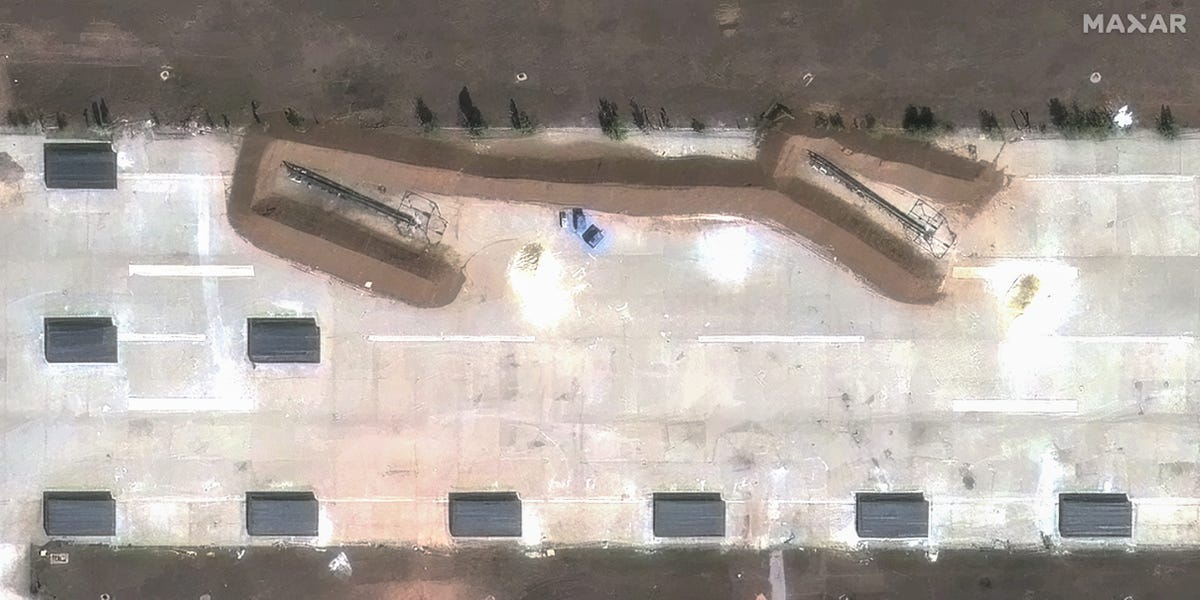
An image captured on Sunday by Maxar Technologies and reviewed by Business Insider shows launch rails and drone storage sheds at the main airport in Donetsk, an embattled region in eastern Ukraine.
Two launch sites surrounded by storage sheds are seen at the Donetsk airport on August 17.
Russia occupies around 75% of Donetsk, including the airport. The image also shows extensive destruction to the airport terminal and other facilities from years of fighting.
The airport, located just northwest of Donetsk city, is less than two dozen miles from the front. It stopped operations in 2014 after Russia’s initial invasion of the Donbas, which consists of eastern Ukraine’s Donetsk and Luhansk regions.
The Donbas has seen some of the fiercest fighting since Russia began its full-scale invasion of Ukraine in February 2022. Pokrovsk, a war-torn city in Donetsk that remains under Kyiv’s control, is one of the hottest and most brutal sectors of the front lines.
Ukrainian open-source intelligence group Cyberboroshno reported in early August that Russia had constructed infrastructure on the runway at the Donetsk airport to support the launch of Shahed-style one-way attack drones, destructive Iranian-designed loitering munitions that Moscow has used to attack Ukraine relentlessly for three years.
According to information from Maxar, construction of the launch positions at the Donetsk airport began between late May and early June, and since then, that infrastructure has continued to expand.
Russia produces its own version of the Iranian-designed Shahed drone, which have been used in large-scale attacks against Ukraine.
Photo by ANONYMOUS/Middle East Images/AFP via Getty Images
Kyle Glen, an investigator at the UK-based Centre for Information Resilience who monitors Russian drone operations, told Business Insider it is unusual for the base to be so close to the front lines. Other known drone launch sites are much deeper inside Russian territory.
“Long-range drone launch sites closer to the frontline will reduce the reaction time for Ukrainian air defenses,” analysts at the Institute for the Study of War, a US think tank, said earlier this month.
Related stories
Business Insider tells the innovative stories you want to know
Business Insider tells the innovative stories you want to know
“Russian forces have been launching long-range strike drones from occupied Ukraine, and Russia’s continued use of occupied Ukraine for such strikes will increasingly threaten” both Ukraine and NATO if Russia continues to occupy the land, the analysts wrote.
Reporting indicates that Russia has converted other civilian airports within occupied Ukrainian territory into drone launch sites, including on the Crimean peninsula, which Moscow seized from Kyiv in 2014.
While there are certain advantages, Donetsk airport’s proximity to the front could backfire for Russia. Glen said the Russian base is more vulnerable to Ukrainian strikes, which don’t necessarily require sophisticated weapons.
Brady Africk, an open-source intelligence analyst who has closely tracked and researched drone base developments, explained that “Russia often launches a combination of explosive attack drones and decoys in waves, which can stress Ukraine’s already-limited air defenses.” Ukraine has to take them out on the ground if it doesn’t want to face them in the air.
The challenge, Africk told Business Insider, is that “confronting these drones on the launch pad is difficult, as Russia can keep them in storage until close to the time they plan to launch them.”
Many drone launch sites are farther away
Drone launch positions at Shatalovo in Russia’s Smolensk region.
Russia also has a number of drone launch sites inside Russia — some of them with relatively new infrastructure — that are much farther from the Donetsk airport and the front lines, though not entirely out of Ukraine’s reach.
These include sites at Primorsko-Akhtarsk in the Krasnodar Krai region, Navlya in the Bryansk region, Tsimbulova in the Oryol region, Shatalovo in the Smolensk region, and Millerovo in the Rostov region.
Recent satellite images captured by Maxar and reviewed by Business Insider show infrastructure to support drone operations, including launch rails, runways, hardened shelters, and even what appears to be Shahed-style drones on the tarmac.
Storage facilities, seen in the circle, and two launch rails at Primorsko-Akhtarsk on August 11.
Despite the distance from the front line, Ukraine has proven that it is capable of attacking these bases. At the beginning of August, for instance, Kyiv said its drones struck Primorsko-Akhtarsk, some 150 miles away.
Ukraine has carried out drone strikes even farther than that, reaching hundreds of miles into Russian territory. Close-in sites could be less of a challenge for the Ukrainians. The Donetsk launch site, if left by Russia insufficiently defended, could be an easy target.
“Russia’s setup for launching drones from Donetsk airport mirrors what has been seen at other sites, with newly built storage areas and launch rails protected by berms,” Africk said.
Construction of the new Donetsk airport launch site comes amid a broader Russian investment in its one-way attack drone capabilities. It is producing thousands of drones modeled after the notorious Iranian-designed Shahed every month. And Moscow has consistently demonstrated that it can launch hundreds of them at Ukraine in a single night.
A recent assessment by the British defense ministry said that Russia launched 6,200 one-way attack drones at Ukraine in July, marking a new monthly high during the war. The scale of strikes subsided during the first three weeks of August.
However, on Thursday, Russia carried out its largest bombardment of the month, launching over 614 missiles and drones at Ukraine. Kyiv said that the 574 drones used in the attack came from the direction of Primorsko-Akhtarsk, Bryansk, Oryol, Shatalovo, Millerovo, and other regions.
Archaeologists have uncovered an ancient cross that could significantly alter our understanding of early Christianity. The 1,400-year-old artifact, discovered during recent excavations, features distinct Christian symbols that highlight the spread of the religion beyond traditionally recognized regions.
The cross’s unique design offers new insights into the cultural and religious exchanges that took place during the 6th and 7th centuries. This discovery, reported by GB News, promises to challenge previously held beliefs about the early history of Christianity in the Arabian Gulf, offering a fresh perspective on the geographical extent of Christian influence during this period.
The Cross: A Link to Golgotha
One of the most striking aspects of this ancient cross is the symbolism it carries. The cross features a stepped pyramid motif representing Golgotha, the hill where Jesus Christ was crucified according to Christian tradition. The inclusion of this specific representation on the cross suggests that the Christian community in the Arabian Gulf was closely tied to traditional Christian iconography, despite being far from Jerusalem.
The cross also features intricate regional motifs, blending local artistic traditions with Christian religious symbols. This indicates that Christianity in the region adapted visually to its environment. The representation of Golgotha suggests that worshippers in this area were not only aware of Christ’s crucifixion but likely observed it as a central tenet of their faith.
The cross. CreditABU DHABI DEPARTMENT OF CULTURE AND TOURISM
This finding highlights the cultural exchange that occurred as Christianity spread beyond the Levant and into regions like the Arabian Peninsula.
The lead archaeologist of the site, Maria Gajewska, explained,
“Every element of the cross incorporates regional motifs. It tells us that Christianity in this region was not only present but flourished, adapting visually to its local context. We had settlements of Christians that were not just existing but were clearly thriving. “- This statement underscores the importance of the discovery in understanding the spread and growth of Christianity in the Arabian Gulf.”
Christianity Thrived in the Arabian Gulf
This discovery challenges the prevailing notion that Christianity had faded in the Arabian Gulf by the time of Islam’s rise. Historically, it has been believed that by the 7th century, Christianity was in decline across the Arabian Peninsula, with the region mostly under the influence of pre-Islamic polytheism. However, the discovery of this ancient cross, along with other artifacts, shows that Christian communities in the region were thriving much later than previously thought.
The cross, along with pottery, glass objects, and remnants of a church and monastery found in earlier excavations, paints a picture of a flourishing Christian community on Sir Bani Yas Island. The presence of religious artifacts, including a small bottle that may have contained rosewater or oil for anointing, further suggests a well-established Christian tradition on the island.
The archaeologist at the Department of Culture and Tourism, Hager Al Menhali, shared,
“The plaster was resting face down and something about it caught my attention.”
This suggests that the ancient cross may have been placed on a wall, where worshippers could have knelt in prayer before it. The discovery of a fingerprint on the back of the plaque adds a personal touch, possibly offering insight into the lives of the individuals who created or used the artifact.
In addition, the site’s lack of destruction debris—such as rubble—has led archaeologists to believe that the community may have left voluntarily, rather than being displaced by conflict. This adds a layer of mystery to the reasons for the settlement’s decline and raises questions about what led to the eventual departure of these Christians from the island.
A Testament to Cultural Openness
The significance of this discovery extends beyond the religious history of Christianity. Archaeologists have noted that the ancient cross incorporates regional elements, reflecting the openness of the Christian communities in the Arabian Gulf to local customs and practices. This finding underscores the cultural integration that took place between early Christians and the diverse societies of the region.
Chairman of the Abu Dhabi Department of Culture and Tourism, Mohamed Khalifa Al Mubarak, emphasized the importance of these discoveries in highlighting the UAE’s deep-rooted values of coexistence and cultural understanding.
Al Mubarak said,
“These discoveries deepen our connection to the past and inspire future generations to embrace the spirit of unity and mutual respect that has long defined our community.”