
Blog

  • Famine confirmed in Gaza City is ‘failure of humanity’, UN chief says

    Famine confirmed in Gaza City is ‘failure of humanity’, UN chief says


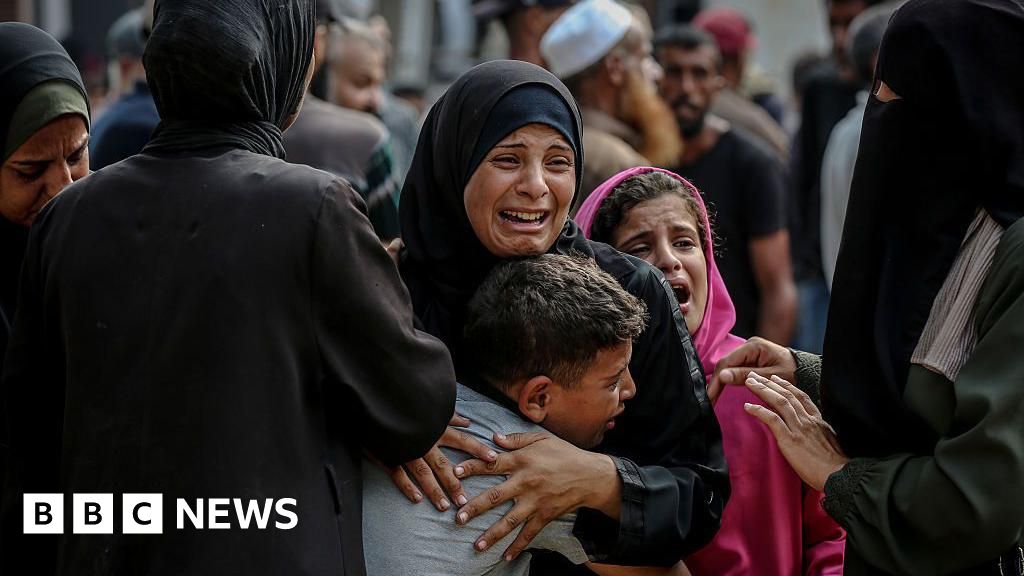
    Getty Images A crying woman wearing black hugs a young boy, with other crying people around them. Getty Images

    The United Nations chief has described the famine confirmed in Gaza City and its surrounding areas as a “failure of humanity”.

    Antonio Gutteres said the situation was a “man-made disaster” after a UN-backed body, which identifies hunger levels around the world, raised its food insecurity status in parts of the territory to Phase 5 – the highest and most severe.

    The Integrated Food Security Phase Classification (IPC) says more than half a million people across Gaza are facing “catastrophic” conditions characterised by “starvation, destitution and death”.

    The report was labelled an “outright lie” by Israel, which has denied there is starvation in the territory.

    The UN says Israel is continuing to restrict the amount of aid entering Gaza, which Israel also denies.

    Its denials are in direct contradiction to what more than 100 humanitarian groups, witnesses on the ground, multiple UN bodies, and several of Israel’s allies, including the UK, have said.

    The IPC says that an “immediate, at-scale response” is needed or there will be an “unacceptable escalation” in famine-related deaths.

    It predicts that between mid-August and the end of September, famine will expand across the strip to Deir al-Balah and Khan Younis.

    During this period, almost a third of the population – nearly 641,000 people – are expected to face “catastrophic conditions” in IPC Phase 5, while the number of people to face “emergency” conditions in IPC Phase 4 will likely increase to 1.14 million – or 58% of the population.

    The report also projects that up to June 2026, malnutrition will threaten the lives of 132,000 children aged under five.

    Since the start of the war, Gaza’s Hamas-run health ministry has reported that 271 people have died of malnutrition – including 112 children.

    Only four previous famines have been classified by the IPC since it was established in 2004, the most recent in Sudan in 2024.

    The IPC cannot officially declare famine – that is usually done by governments or the United Nations.

    Reem Tawfiq Khader, 41, a mother of five from Gaza City, said: “The declaration of famine came too late, but it is still important.

    “We haven’t eaten any protein for five months. My youngest child is four years old – he doesn’t know what fruit and vegetables look or taste like.”

    Rida Hijjeh, 29, said her five-year-old daughter Lamia’s weight had dropped from 19kg (42lbs) to 10.5kg (23lbs). She said Lamia was healthy before the war began and had no prior illnesses.

    “This all happened only because of the famine,” she said. “There is simply nothing for the child to eat. There are no vegetables, no fruits.”

    Now, Lamia suffers from swelling in her legs, thinning hair, and nerve problems, she said.

    In response to the report, UN aid chief Tom Fletcher said the famine was entirely preventable, saying food could not get through to the Palestinian territory “because of systematic obstruction by Israel”.

    UN Secretary General Antonio Guterres said: “Just when it seems there are no words left to describe the living hell in Gaza, a new one has been added: ‘famine’.”

    He described it as “not a mystery,” but rather “a man-made disaster, a moral indictment, and a failure of humanity itself”.

    He added that Israel has “unequivocal obligations under international law – including the duty of ensuring food and medical supplies of the population”.

    Phillipe Lazzarini, head of the UN agency for Palestinian refugees (Unrwa), said: “This is starvation by design & man-made by the Government of Israel”.

    UN Human Rights Chief Volker Turk described the famine as “the direct result of actions taken by the Israeli Government”, which has “unlawfully restricted” the entry of aid.

    UK foreign secretary David Lammy said described the famine as a “moral outrage.”

    “The Israeli government’s refusal to allow sufficient aid into Gaza has caused this man-made catastrophe,” he wrote on X.

    Israeli Prime Minister Benjamin Netanyahu said in a statement: “Israel does not have a policy of starvation, Israel has a policy of preventing starvation. Since the beginning of the war Israel has enabled 2 million tons of aid to enter the Gaza Strip, over one ton of aid per person.”

    In recent months, Israel has come under widespread international condemnation for the aid situation in the Gaza Strip.

    Last month, after weeks of mounting pressure, the Israeli military said it had airdropped humanitarian aid into Gaza – a move that was criticised at the time by aid agencies as a “grotesque distraction“.

    Anadolu via Getty Images Black parachutes with crates of aid attached fall out of the grey sky onto a barren sandy landscape, with hundreds of people running to try and open them. Anadolu via Getty Images

    Aid groups say air drops are ineffective and that Israel should allow more aid in through the normal routes

    Other aid drops have since taken place – but warnings have been issued about their safety, with reports that civilians were hit and killed by the falling pallets.

    Earlier this week, BBC Verify found 10 separate occasions where aid was dropped into an area that the Israeli military has explicitly warned people not to enter.

    In addition to airdrops, Israel said it would designate humanitarian corridors for UN convoys. However, on Tuesday the UN warned that the “trickle of aid” entering Gaza was insufficient to “avert widespread starvation”.

    Cogat, the Israeli military body in charge of aid, says roughly 300 aid trucks are entering daily, but the UN says 600 trucks of supplies a day are needed.

    The IPC report comes as Israel prepares to launch a new military offensive aimed at occupying Gaza City.

    Israel’s military launched a campaign in Gaza in response to the Hamas-led attack on southern Israel on 7 October 2023, in which about 1,200 people were killed and 251 others were taken hostage.

    At least 62,122 people have been killed in Gaza since then, according to the territory’s Hamas-run health ministry.

    Most of Gaza’s population has also been displaced multiple times; more than 90% of homes are estimated to be damaged or destroyed; and the healthcare, water, sanitation and hygiene systems have collapsed.



    Source link

  • Famine confirmed in Gaza City is ‘failure of humanity’, UN chief says

    Famine confirmed in Gaza City is ‘failure of humanity’, UN chief says


    Getty Images A crying woman wearing black hugs a young boy, with other crying people around them. Getty Images

    The United Nations chief has described the famine confirmed in Gaza City and its surrounding areas as a “failure of humanity”.

    Antonio Gutteres said the situation was a “man-made disaster” after a UN-backed body, which identifies hunger levels around the world, raised its food insecurity status in parts of the territory to Phase 5 – the highest and most severe.

    The Integrated Food Security Phase Classification (IPC) says more than half a million people across Gaza are facing “catastrophic” conditions characterised by “starvation, destitution and death”.

    The report was labelled an “outright lie” by Israel, which has denied there is starvation in the territory.

    The UN says Israel is continuing to restrict the amount of aid entering Gaza, which Israel also denies.

    Its denials are in direct contradiction to what more than 100 humanitarian groups, witnesses on the ground, multiple UN bodies, and several of Israel’s allies, including the UK, have said.

    The IPC says that an “immediate, at-scale response” is needed or there will be an “unacceptable escalation” in famine-related deaths.

    It predicts that between mid-August and the end of September, famine will expand across the strip to Deir al-Balah and Khan Younis.

    During this period, almost a third of the population – nearly 641,000 people – are expected to face “catastrophic conditions” in IPC Phase 5, while the number of people to face “emergency” conditions in IPC Phase 4 will likely increase to 1.14 million – or 58% of the population.

    The report also projects that up to June 2026, malnutrition will threaten the lives of 132,000 children aged under five.

    Since the start of the war, Gaza’s Hamas-run health ministry has reported that 271 people have died of malnutrition – including 112 children.

    Only four previous famines have been classified by the IPC since it was established in 2004, the most recent in Sudan in 2024.

    The IPC cannot officially declare famine – that is usually done by governments or the United Nations.

    Reem Tawfiq Khader, 41, a mother of five from Gaza City, said: “The declaration of famine came too late, but it is still important.

    “We haven’t eaten any protein for five months. My youngest child is four years old – he doesn’t know what fruit and vegetables look or taste like.”

    Rida Hijjeh, 29, said her five-year-old daughter Lamia’s weight had dropped from 19kg (42lbs) to 10.5kg (23lbs). She said Lamia was healthy before the war began and had no prior illnesses.

    “This all happened only because of the famine,” she said. “There is simply nothing for the child to eat. There are no vegetables, no fruits.”

    Now, Lamia suffers from swelling in her legs, thinning hair, and nerve problems, she said.

    In response to the report, UN aid chief Tom Fletcher said the famine was entirely preventable, saying food could not get through to the Palestinian territory “because of systematic obstruction by Israel”.

    UN Secretary General Antonio Guterres said: “Just when it seems there are no words left to describe the living hell in Gaza, a new one has been added: ‘famine’.”

    He described it as “not a mystery,” but rather “a man-made disaster, a moral indictment, and a failure of humanity itself”.

    He added that Israel has “unequivocal obligations under international law – including the duty of ensuring food and medical supplies of the population”.

    Phillipe Lazzarini, head of the UN agency for Palestinian refugees (Unrwa), said: “This is starvation by design & man-made by the Government of Israel”.

    UN Human Rights Chief Volker Turk described the famine as “the direct result of actions taken by the Israeli Government”, which has “unlawfully restricted” the entry of aid.

    UK foreign secretary David Lammy said described the famine as a “moral outrage.”

    “The Israeli government’s refusal to allow sufficient aid into Gaza has caused this man-made catastrophe,” he wrote on X.

    Israeli Prime Minister Benjamin Netanyahu said in a statement: “Israel does not have a policy of starvation, Israel has a policy of preventing starvation. Since the beginning of the war Israel has enabled 2 million tons of aid to enter the Gaza Strip, over one ton of aid per person.”

    In recent months, Israel has come under widespread international condemnation for the aid situation in the Gaza Strip.

    Last month, after weeks of mounting pressure, the Israeli military said it had airdropped humanitarian aid into Gaza – a move that was criticised at the time by aid agencies as a “grotesque distraction“.

    Anadolu via Getty Images Black parachutes with crates of aid attached fall out of the grey sky onto a barren sandy landscape, with hundreds of people running to try and open them. Anadolu via Getty Images

    Aid groups say air drops are ineffective and that Israel should allow more aid in through the normal routes

    Other aid drops have since taken place – but warnings have been issued about their safety, with reports that civilians were hit and killed by the falling pallets.

    Earlier this week, BBC Verify found 10 separate occasions where aid was dropped into an area that the Israeli military has explicitly warned people not to enter.

    In addition to airdrops, Israel said it would designate humanitarian corridors for UN convoys. However, on Tuesday the UN warned that the “trickle of aid” entering Gaza was insufficient to “avert widespread starvation”.

    Cogat, the Israeli military body in charge of aid, says roughly 300 aid trucks are entering daily, but the UN says 600 trucks of supplies a day are needed.

    The IPC report comes as Israel prepares to launch a new military offensive aimed at occupying Gaza City.

    Israel’s military launched a campaign in Gaza in response to the Hamas-led attack on southern Israel on 7 October 2023, in which about 1,200 people were killed and 251 others were taken hostage.

    At least 62,122 people have been killed in Gaza since then, according to the territory’s Hamas-run health ministry.

    Most of Gaza’s population has also been displaced multiple times; more than 90% of homes are estimated to be damaged or destroyed; and the healthcare, water, sanitation and hygiene systems have collapsed.



    Source link

  • Famine confirmed in Gaza City is ‘failure of humanity’, UN chief says

    Famine confirmed in Gaza City is ‘failure of humanity’, UN chief says


    Getty Images A crying woman wearing black hugs a young boy, with other crying people around them. Getty Images

    The United Nations chief has described the famine confirmed in Gaza City and its surrounding areas as a “failure of humanity”.

    Antonio Gutteres said the situation was a “man-made disaster” after a UN-backed body, which identifies hunger levels around the world, raised its food insecurity status in parts of the territory to Phase 5 – the highest and most severe.

    The Integrated Food Security Phase Classification (IPC) says more than half a million people across Gaza are facing “catastrophic” conditions characterised by “starvation, destitution and death”.

    The report was labelled an “outright lie” by Israel, which has denied there is starvation in the territory.

    The UN says Israel is continuing to restrict the amount of aid entering Gaza, which Israel also denies.

    Its denials are in direct contradiction to what more than 100 humanitarian groups, witnesses on the ground, multiple UN bodies, and several of Israel’s allies, including the UK, have said.

    The IPC says that an “immediate, at-scale response” is needed or there will be an “unacceptable escalation” in famine-related deaths.

    It predicts that between mid-August and the end of September, famine will expand across the strip to Deir al-Balah and Khan Younis.

    During this period, almost a third of the population – nearly 641,000 people – are expected to face “catastrophic conditions” in IPC Phase 5, while the number of people to face “emergency” conditions in IPC Phase 4 will likely increase to 1.14 million – or 58% of the population.

    The report also projects that up to June 2026, malnutrition will threaten the lives of 132,000 children aged under five.

    Since the start of the war, Gaza’s Hamas-run health ministry has reported that 271 people have died of malnutrition – including 112 children.

    Only four previous famines have been classified by the IPC since it was established in 2004, the most recent in Sudan in 2024.

    The IPC cannot officially declare famine – that is usually done by governments or the United Nations.

    Reem Tawfiq Khader, 41, a mother of five from Gaza City, said: “The declaration of famine came too late, but it is still important.

    “We haven’t eaten any protein for five months. My youngest child is four years old – he doesn’t know what fruit and vegetables look or taste like.”

    Rida Hijjeh, 29, said her five-year-old daughter Lamia’s weight had dropped from 19kg (42lbs) to 10.5kg (23lbs). She said Lamia was healthy before the war began and had no prior illnesses.

    “This all happened only because of the famine,” she said. “There is simply nothing for the child to eat. There are no vegetables, no fruits.”

    Now, Lamia suffers from swelling in her legs, thinning hair, and nerve problems, she said.

    In response to the report, UN aid chief Tom Fletcher said the famine was entirely preventable, saying food could not get through to the Palestinian territory “because of systematic obstruction by Israel”.

    UN Secretary General Antonio Guterres said: “Just when it seems there are no words left to describe the living hell in Gaza, a new one has been added: ‘famine’.”

    He described it as “not a mystery,” but rather “a man-made disaster, a moral indictment, and a failure of humanity itself”.

    He added that Israel has “unequivocal obligations under international law – including the duty of ensuring food and medical supplies of the population”.

    Phillipe Lazzarini, head of the UN agency for Palestinian refugees (Unrwa), said: “This is starvation by design & man-made by the Government of Israel”.

    UN Human Rights Chief Volker Turk described the famine as “the direct result of actions taken by the Israeli Government”, which has “unlawfully restricted” the entry of aid.

    UK foreign secretary David Lammy said described the famine as a “moral outrage.”

    “The Israeli government’s refusal to allow sufficient aid into Gaza has caused this man-made catastrophe,” he wrote on X.

    Israeli Prime Minister Benjamin Netanyahu said in a statement: “Israel does not have a policy of starvation, Israel has a policy of preventing starvation. Since the beginning of the war Israel has enabled 2 million tons of aid to enter the Gaza Strip, over one ton of aid per person.”

    In recent months, Israel has come under widespread international condemnation for the aid situation in the Gaza Strip.

    Last month, after weeks of mounting pressure, the Israeli military said it had airdropped humanitarian aid into Gaza – a move that was criticised at the time by aid agencies as a “grotesque distraction“.

    Anadolu via Getty Images Black parachutes with crates of aid attached fall out of the grey sky onto a barren sandy landscape, with hundreds of people running to try and open them. Anadolu via Getty Images

    Aid groups say air drops are ineffective and that Israel should allow more aid in through the normal routes

    Other aid drops have since taken place – but warnings have been issued about their safety, with reports that civilians were hit and killed by the falling pallets.

    Earlier this week, BBC Verify found 10 separate occasions where aid was dropped into an area that the Israeli military has explicitly warned people not to enter.

    In addition to airdrops, Israel said it would designate humanitarian corridors for UN convoys. However, on Tuesday the UN warned that the “trickle of aid” entering Gaza was insufficient to “avert widespread starvation”.

    Cogat, the Israeli military body in charge of aid, says roughly 300 aid trucks are entering daily, but the UN says 600 trucks of supplies a day are needed.

    The IPC report comes as Israel prepares to launch a new military offensive aimed at occupying Gaza City.

    Israel’s military launched a campaign in Gaza in response to the Hamas-led attack on southern Israel on 7 October 2023, in which about 1,200 people were killed and 251 others were taken hostage.

    At least 62,122 people have been killed in Gaza since then, according to the territory’s Hamas-run health ministry.

    Most of Gaza’s population has also been displaced multiple times; more than 90% of homes are estimated to be damaged or destroyed; and the healthcare, water, sanitation and hygiene systems have collapsed.



    Source link

  • Famine confirmed in Gaza City is ‘failure of humanity’, UN chief says

    Famine confirmed in Gaza City is ‘failure of humanity’, UN chief says


    Getty Images A crying woman wearing black hugs a young boy, with other crying people around them. Getty Images

    The United Nations chief has described the famine confirmed in Gaza City and its surrounding areas as a “failure of humanity”.

    Antonio Gutteres said the situation was a “man-made disaster” after a UN-backed body, which identifies hunger levels around the world, raised its food insecurity status in parts of the territory to Phase 5 – the highest and most severe.

    The Integrated Food Security Phase Classification (IPC) says more than half a million people across Gaza are facing “catastrophic” conditions characterised by “starvation, destitution and death”.

    The report was labelled an “outright lie” by Israel, which has denied there is starvation in the territory.

    The UN says Israel is continuing to restrict the amount of aid entering Gaza, which Israel also denies.

    Its denials are in direct contradiction to what more than 100 humanitarian groups, witnesses on the ground, multiple UN bodies, and several of Israel’s allies, including the UK, have said.

    The IPC says that an “immediate, at-scale response” is needed or there will be an “unacceptable escalation” in famine-related deaths.

    It predicts that between mid-August and the end of September, famine will expand across the strip to Deir al-Balah and Khan Younis.

    During this period, almost a third of the population – nearly 641,000 people – are expected to face “catastrophic conditions” in IPC Phase 5, while the number of people to face “emergency” conditions in IPC Phase 4 will likely increase to 1.14 million – or 58% of the population.

    The report also projects that up to June 2026, malnutrition will threaten the lives of 132,000 children aged under five.

    Since the start of the war, Gaza’s Hamas-run health ministry has reported that 271 people have died of malnutrition – including 112 children.

    Only four previous famines have been classified by the IPC since it was established in 2004, the most recent in Sudan in 2024.

    The IPC cannot officially declare famine – that is usually done by governments or the United Nations.

    Reem Tawfiq Khader, 41, a mother of five from Gaza City, said: “The declaration of famine came too late, but it is still important.

    “We haven’t eaten any protein for five months. My youngest child is four years old – he doesn’t know what fruit and vegetables look or taste like.”

    Rida Hijjeh, 29, said her five-year-old daughter Lamia’s weight had dropped from 19kg (42lbs) to 10.5kg (23lbs). She said Lamia was healthy before the war began and had no prior illnesses.

    “This all happened only because of the famine,” she said. “There is simply nothing for the child to eat. There are no vegetables, no fruits.”

    Now, Lamia suffers from swelling in her legs, thinning hair, and nerve problems, she said.

    In response to the report, UN aid chief Tom Fletcher said the famine was entirely preventable, saying food could not get through to the Palestinian territory “because of systematic obstruction by Israel”.

    UN Secretary General Antonio Guterres said: “Just when it seems there are no words left to describe the living hell in Gaza, a new one has been added: ‘famine’.”

    He described it as “not a mystery,” but rather “a man-made disaster, a moral indictment, and a failure of humanity itself”.

    He added that Israel has “unequivocal obligations under international law – including the duty of ensuring food and medical supplies of the population”.

    Phillipe Lazzarini, head of the UN agency for Palestinian refugees (Unrwa), said: “This is starvation by design & man-made by the Government of Israel”.

    UN Human Rights Chief Volker Turk described the famine as “the direct result of actions taken by the Israeli Government”, which has “unlawfully restricted” the entry of aid.

    UK foreign secretary David Lammy said described the famine as a “moral outrage.”

    “The Israeli government’s refusal to allow sufficient aid into Gaza has caused this man-made catastrophe,” he wrote on X.

    Israeli Prime Minister Benjamin Netanyahu said in a statement: “Israel does not have a policy of starvation, Israel has a policy of preventing starvation. Since the beginning of the war Israel has enabled 2 million tons of aid to enter the Gaza Strip, over one ton of aid per person.”

    In recent months, Israel has come under widespread international condemnation for the aid situation in the Gaza Strip.

    Last month, after weeks of mounting pressure, the Israeli military said it had airdropped humanitarian aid into Gaza – a move that was criticised at the time by aid agencies as a “grotesque distraction“.

    Anadolu via Getty Images Black parachutes with crates of aid attached fall out of the grey sky onto a barren sandy landscape, with hundreds of people running to try and open them. Anadolu via Getty Images

    Aid groups say air drops are ineffective and that Israel should allow more aid in through the normal routes

    Other aid drops have since taken place – but warnings have been issued about their safety, with reports that civilians were hit and killed by the falling pallets.

    Earlier this week, BBC Verify found 10 separate occasions where aid was dropped into an area that the Israeli military has explicitly warned people not to enter.

    In addition to airdrops, Israel said it would designate humanitarian corridors for UN convoys. However, on Tuesday the UN warned that the “trickle of aid” entering Gaza was insufficient to “avert widespread starvation”.

    Cogat, the Israeli military body in charge of aid, says roughly 300 aid trucks are entering daily, but the UN says 600 trucks of supplies a day are needed.

    The IPC report comes as Israel prepares to launch a new military offensive aimed at occupying Gaza City.

    Israel’s military launched a campaign in Gaza in response to the Hamas-led attack on southern Israel on 7 October 2023, in which about 1,200 people were killed and 251 others were taken hostage.

    At least 62,122 people have been killed in Gaza since then, according to the territory’s Hamas-run health ministry.

    Most of Gaza’s population has also been displaced multiple times; more than 90% of homes are estimated to be damaged or destroyed; and the healthcare, water, sanitation and hygiene systems have collapsed.



    Source link

  • Famine confirmed in Gaza City is ‘failure of humanity’, UN chief says

    Famine confirmed in Gaza City is ‘failure of humanity’, UN chief says


    Getty Images A crying woman wearing black hugs a young boy, with other crying people around them. Getty Images

    The United Nations chief has described the famine confirmed in Gaza City and its surrounding areas as a “failure of humanity”.

    Antonio Gutteres said the situation was a “man-made disaster” after a UN-backed body, which identifies hunger levels around the world, raised its food insecurity status in parts of the territory to Phase 5 – the highest and most severe.

    The Integrated Food Security Phase Classification (IPC) says more than half a million people across Gaza are facing “catastrophic” conditions characterised by “starvation, destitution and death”.

    The report was labelled an “outright lie” by Israel, which has denied there is starvation in the territory.

    The UN says Israel is continuing to restrict the amount of aid entering Gaza, which Israel also denies.

    Its denials are in direct contradiction to what more than 100 humanitarian groups, witnesses on the ground, multiple UN bodies, and several of Israel’s allies, including the UK, have said.

    The IPC says that an “immediate, at-scale response” is needed or there will be an “unacceptable escalation” in famine-related deaths.

    It predicts that between mid-August and the end of September, famine will expand across the strip to Deir al-Balah and Khan Younis.

    During this period, almost a third of the population – nearly 641,000 people – are expected to face “catastrophic conditions” in IPC Phase 5, while the number of people to face “emergency” conditions in IPC Phase 4 will likely increase to 1.14 million – or 58% of the population.

    The report also projects that up to June 2026, malnutrition will threaten the lives of 132,000 children aged under five.

    Since the start of the war, Gaza’s Hamas-run health ministry has reported that 271 people have died of malnutrition – including 112 children.

    Only four previous famines have been classified by the IPC since it was established in 2004, the most recent in Sudan in 2024.

    The IPC cannot officially declare famine – that is usually done by governments or the United Nations.

    Reem Tawfiq Khader, 41, a mother of five from Gaza City, said: “The declaration of famine came too late, but it is still important.

    “We haven’t eaten any protein for five months. My youngest child is four years old – he doesn’t know what fruit and vegetables look or taste like.”

    Rida Hijjeh, 29, said her five-year-old daughter Lamia’s weight had dropped from 19kg (42lbs) to 10.5kg (23lbs). She said Lamia was healthy before the war began and had no prior illnesses.

    “This all happened only because of the famine,” she said. “There is simply nothing for the child to eat. There are no vegetables, no fruits.”

    Now, Lamia suffers from swelling in her legs, thinning hair, and nerve problems, she said.

    In response to the report, UN aid chief Tom Fletcher said the famine was entirely preventable, saying food could not get through to the Palestinian territory “because of systematic obstruction by Israel”.

    UN Secretary General Antonio Guterres said: “Just when it seems there are no words left to describe the living hell in Gaza, a new one has been added: ‘famine’.”

    He described it as “not a mystery,” but rather “a man-made disaster, a moral indictment, and a failure of humanity itself”.

    He added that Israel has “unequivocal obligations under international law – including the duty of ensuring food and medical supplies of the population”.

    Phillipe Lazzarini, head of the UN agency for Palestinian refugees (Unrwa), said: “This is starvation by design & man-made by the Government of Israel”.

    UN Human Rights Chief Volker Turk described the famine as “the direct result of actions taken by the Israeli Government”, which has “unlawfully restricted” the entry of aid.

    UK foreign secretary David Lammy said described the famine as a “moral outrage.”

    “The Israeli government’s refusal to allow sufficient aid into Gaza has caused this man-made catastrophe,” he wrote on X.

    Israeli Prime Minister Benjamin Netanyahu said in a statement: “Israel does not have a policy of starvation, Israel has a policy of preventing starvation. Since the beginning of the war Israel has enabled 2 million tons of aid to enter the Gaza Strip, over one ton of aid per person.”

    In recent months, Israel has come under widespread international condemnation for the aid situation in the Gaza Strip.

    Last month, after weeks of mounting pressure, the Israeli military said it had airdropped humanitarian aid into Gaza – a move that was criticised at the time by aid agencies as a “grotesque distraction“.

    Anadolu via Getty Images Black parachutes with crates of aid attached fall out of the grey sky onto a barren sandy landscape, with hundreds of people running to try and open them. Anadolu via Getty Images

    Aid groups say air drops are ineffective and that Israel should allow more aid in through the normal routes

    Other aid drops have since taken place – but warnings have been issued about their safety, with reports that civilians were hit and killed by the falling pallets.

    Earlier this week, BBC Verify found 10 separate occasions where aid was dropped into an area that the Israeli military has explicitly warned people not to enter.

    In addition to airdrops, Israel said it would designate humanitarian corridors for UN convoys. However, on Tuesday the UN warned that the “trickle of aid” entering Gaza was insufficient to “avert widespread starvation”.

    Cogat, the Israeli military body in charge of aid, says roughly 300 aid trucks are entering daily, but the UN says 600 trucks of supplies a day are needed.

    The IPC report comes as Israel prepares to launch a new military offensive aimed at occupying Gaza City.

    Israel’s military launched a campaign in Gaza in response to the Hamas-led attack on southern Israel on 7 October 2023, in which about 1,200 people were killed and 251 others were taken hostage.

    At least 62,122 people have been killed in Gaza since then, according to the territory’s Hamas-run health ministry.

    Most of Gaza’s population has also been displaced multiple times; more than 90% of homes are estimated to be damaged or destroyed; and the healthcare, water, sanitation and hygiene systems have collapsed.


    Source link

  • Israeli defense minister warns that ‘gates of hell’ will open on Gaza City

    Israeli defense minister warns that ‘gates of hell’ will open on Gaza City


    GAZA CITY, Gaza Strip (AP) — Israel’s defense minister warned Friday that Gaza’s largest city could be destroyed unless Hamas yields to his country’s terms, as the world’s leading authority on food crises said the city is gripped by famine from fighting and an Israeli blockade.

    A day after Prime Minister Benjamin Netanyahu said he would authorize the military to mount a major operation to seize Gaza City, Defense Minister Israel Katz warned that it could “turn into Rafah and Beit Hanoun,” areas largely reduced to rubble earlier in the war.

    “The gates of hell will soon open on the heads of Hamas’ murderers and rapists in Gaza — until they agree to Israel’s conditions for ending the war,” Katz wrote in a post on X.

    He restated Israel’s ceasefire demands: the release of all hostages and Hamas’ complete disarmament.

    Famine now grips Gaza’s largest city

    • It threatens to spread across the territory without a ceasefire and an end to restrictions on humanitarian aid.
    • This is the first time the IPC has confirmed a famine in the Middle East, and it comes after months of warnings by aid groups that Israel’s restrictions of food and other aid into Gaza, and its military offensive, were causing high levels of starvation among Palestinian civilians, particularly children.
    • More than half a million people in Gaza — about a quarter of the population — face catastrophic levels of hunger, and many are at risk of dying from malnutrition-related causes, according to a report by the world’s leading authority on food crises.

    Hamas issued a statement that called Katz’s comments “a confession of committing a crime that amounts to ethnic cleansing.” The militant group has said it would release captives in exchange for ending the war, but it rejects disarmament without the creation of a Palestinian state.

    U.S. President Donald Trump, meanwhile, expressed frustration with Hamas’ stance in long-running ceasefire talks, suggesting the militant group was less interested in making deals to release hostages with so few left alive in captivity.

    “The situation has to end. It’s extortion, and it has to end,” Trump told reporters Friday. “And we’ll see what happens. I actually think (the hostages are) safer in many ways if you went in and you really went in fast and you did it.”

    Netanyahu on Thursday said he had instructed officials “to begin immediate negotiations” to release hostages and end the war on Israel’s terms. It was not immediately clear if that meant Israel would return to long-running talks mediated by Egypt and Qatar after Hamas said earlier this week that it accepted a new proposal from the mediators.

    Gaza City offensive could begin within days

    With ground troops already active in strategic areas, the wide-scale operation in Gaza City could start within days.

    Israel says Gaza City is still a Hamas stronghold, with a network of militant tunnels, after several previous large-scale raids. The city is also home to hundreds of thousands of civilians, some of whom have fled from other areas, and it contains some of the territory’s critical infrastructure and health facilities.

    Israel could also accept the latest ceasefire proposal, which would forestall the offensive. The proposal calls for a phased deal involving hostage and prisoner exchanges and a pullback of Israeli troops, while talks continue on a longer-term cease-fire. Israeli leaders have resisted such terms since abandoning a similar agreement earlier this year under pressure from Netanyahu’s far-right coalition allies.

    Many Israelis fear an assault could doom the roughly 20 hostages who have survived captivity since Hamas’ Oct. 7, 2023, attack. Aid groups and international leaders warn that renewed fighting would worsen Gaza’s humanitarian crisis.

    The logistics of evacuating civilians are expected to be daunting. Many residents say repeated displacement is pointless since nowhere in Gaza is safe, while medical groups warn that Israel’s call to move patients south is unworkable, with no facilities to receive them.

    Netanyahu has argued that the offensive is the surest way to free captives and crush Hamas.

    “These two things — defeating Hamas and releasing all our hostages — go hand in hand,” Netanyahu said Thursday while touring a command center in southern Israel.

    Since 251 people were taken hostage more than 22 months ago, ceasefire agreements and other deals have accounted for the vast majority of the 148 who were released, including the bodies of eight dead hostages.

    Israel has managed to rescue only eight hostages alive and to retrieve the bodies of 49 others. Fifty hostages remain in Gaza, about 20 of whom Israel believes to be alive.

    Report says famine could spread beyond Gaza City

    The world’s leading authority on food crises said Friday that Gaza City is gripped by famine that is likely to spread if fighting and restrictions on humanitarian aid continue.

    A report by the Integrated Food Security Phase Classification says nearly half a million people in Gaza, about one-fourth of the population, face catastrophic hunger that leaves many at risk of dying.

    Netanyahu’s office denounced the IPC report as “an outright lie.”

    Israel says it has allowed enough aid to enter during the war, and it eased its blockade in recent weeks after images of emaciated children sparked international outrage. But U.N. agencies say it’s not nearly enough, especially after Israel imposed a complete ban on food imports from early March to mid-May.

    Airstrike hits area ahead of broader offensive

    Gaza City’s Shifa Hospital said at least 17 Palestinians were killed Friday as Israel escalated activity in the lead-up to its broader planned offensive.

    An Israeli airstrike hit a school in Sheikh Radwan, a Gaza City neighborhood where Palestinians shelter in makeshift tents in the schoolyard. At least seven people died, according to an eyewitness and hospital records.

    The Israeli military said it wasn’t aware of a strike in the area but in a statement said troops were operating on the outskirts of Gaza City and in the Zeitoun neighborhood.

    Amal Aboul Aas, who is sheltering in Gaza City after being displaced four times, said the explosions were so intense she couldn’t sleep, yet she couldn’t leave either.

    “We do not have the money, the resources or the energy to evacuate again. I just wish for a quick death right where I am here because I am not going anywhere. Eventually one of these missiles will hit me,” she told The Associated Press.

    Meanwhile, sirens sounded in central Israel late Friday when a missile fired from Yemen appeared to break apart in mid-air, prompting reports of falling shrapnel, the Israeli military said. There were no immediate reports of injuries.

    Yemen’s Houthi rebels said they launched the missile, targeting Israel’s largest airport, in retaliation for “genocide and starvation” in Gaza.

    The Gaza Health Ministry said Friday that at least 62,263 Palestinians have been killed in the war. The total number of malnutrition-related deaths rose by two to 273, including 112 children, the ministry said.

    The ministry is part of the Hamas-run government and staffed by medical professionals. It does not say whether those killed by Israeli fire are civilians or combatants, but it says around half were women and children. The U.N. and many independent experts consider its figures to be the most reliable estimate of wartime casualties. Israel disputes its toll but has not provided its own.

    Hamas-led militants started the war when they attacked Israel on Oct. 7, 2023, killing some 1,200 people, mostly civilians, and taking hostages.

    ___

    Metz reported from Jerusalem. Associated Press writers Melanie Lidman in Tel Aviv, Israel, and Michelle Price in Washington contributed.

    window.fbAsyncInit = function() {
    FB.init({

    appId : ‘870613919693099’,

    xfbml : true,
    version : ‘v2.9’
    });
    };

    (function(d, s, id){
    var js, fjs = d.getElementsByTagName(s)[0];
    if (d.getElementById(id)) {return;}
    js = d.createElement(s); js.id = id;
    js.src = “https://connect.facebook.net/en_US/sdk.js”;
    fjs.parentNode.insertBefore(js, fjs);
    }(document, ‘script’, ‘facebook-jssdk’));


    Source link

  • Dutch FM resigns after failing to secure cabinet support for new sanctions on Israel

    Dutch FM resigns after failing to secure cabinet support for new sanctions on Israel


    Dutch Foreign Minister Caspar Veldkamp resigned Friday evening, after he failed to secure new sanctions against Israel over the war with Hamas in Gaza.

    Veldkamp had informed the country’s parliament he intended to bring in new measures in response to Israel’s planned offensive in Gaza City and other heavily populated areas, but was unable to secure the support of his coalition partners.

    The 61-year-old former ambassador to Israel told reporters he felt he was unable “to implement policy myself and chart the course I deem necessary.”

    Following Veldkamp’s resignation, the remaining cabinet members of his center-right New Social Contract party also quit, leaving the Dutch government in disarray.

    “In short, we are done with it,” party leader Eddy Van Hijum said, calling the Israeli government’s actions “diametrically opposed to international treaties.”

    The Dutch government already collapsed in June when anti-Islam lawmaker Geert Wilders pulled out of the country’s four-party coalition over a fight about immigration.

    The three remaining parties stayed on in a caretaker government until elections could be held in October.

    The Netherlands’ Prime Minister Dick Schoof gives a press conference with Poland’s Prime Minister (not in picture) during their meeting in Warsaw, Poland, on July 7, 2025. (Sergei Gapon/AFP)

    Prime Minister Dick Schoof addressed parliament later Friday evening over the crisis, saying that he regretted the resignation of Veldkamp and the withdrawal of his party.

    Schoof said events in Gaza were “worsening” and “dramatic.” “Everyone is aware of that,” he told deputies.

    The UN’s hunger monitor said earlier on Friday the Gaza Strip’s largest city is gripped by famine, and that it’s likely to spread across the territory without a ceasefire and an end to restrictions on humanitarian aid. Israel vehemently denied the reports as “lies” and “modern blood libel,” while the United States appeared to dismiss the famine declaration as part of a “false narrative of deliberate mass starvation” from Hamas, which started the ongoing war with its October 7, 2023, terror onslaught in southern Israel.

    The Netherlands’ parliament had repeatedly delayed a debate on sanctions against Israel, a discussion that was already postponed from Thursday, as the Friday afternoon cabinet meeting dragged on.

    “There’s a famine, ethnic cleansing, and genocide going on,” Kati Piri of the merged Green Left/Labor parties told Parliament, “And our cabinet has been deliberating for hours about whether to take any action at all. Shameful.”

    Illustrative: Palestinian flags flutter in the wind on Dam Square with the Royal Palace of Amsterdam in the background (Paleis op de Dam), in Amsterdam, on November 15, 2024. (Simon Wohlfahrt/AFP)

    Veldkamp had proposed a ban on imports from Israeli settlements in response to the planned military offensive.

    Opposition politicians had called for a no-confidence vote for the minister, frustrated at what they saw as a lack of action against Israel.

    Last month, the Netherlands declared far-right Israeli ministers Itamar Ben Gvir and Bezalel Smotrich persona non grata. It was also among 21 countries that signed a joint declaration on Thursday condemning Israel’s approval of a major West Bank settlement project as “unacceptable and contrary to international law.”


    Is The Times of Israel important to you?

    If so, we have a request. 

    Every day, even during war, our journalists keep you abreast of the most important developments that merit your attention. Millions of people rely on ToI for fast, fair and free coverage of Israel and the Jewish world. 

    We care about Israel – and we know you do too. So today, we have an ask: show your appreciation for our work by joining The Times of Israel Community, an exclusive group for readers like you who appreciate and financially support our work. 


    Yes, I’ll give


    Yes, I’ll give

    Already a member? Sign in to stop seeing this


    You appreciate our journalism


    We’re really pleased that you’ve read X Times of Israel articles in the past month.

    You clearly find our careful reporting valuable, in a time when facts are often distorted and news coverage often lacks context.

    Your support is essential to continue our work. We want to continue delivering the professional journalism you value, even as the demands on our newsroom have grown dramatically since October 7.

    So today, please consider joining our reader support group, The Times of Israel Community. For as little as $6 a month you’ll become our partners while enjoying The Times of Israel AD-FREE, as well as accessing exclusive content available only to Times of Israel Community members.

    Thank you,
    David Horovitz, Founding Editor of The Times of Israel


    Join Our Community


    Join Our Community

    Already a member? Sign in to stop seeing this

    !function(f,b,e,v,n,t,s)
    {if(f.fbq)return;n=f.fbq=function(){n.callMethod?
    n.callMethod.apply(n,arguments):n.queue.push(arguments)};
    if(!f._fbq)f._fbq=n;n.push=n;n.loaded=!0;n.version=’2.0′;
    n.queue=[];t=b.createElement(e);t.async=!0;
    t.src=v;s=b.getElementsByTagName(e)[0];
    s.parentNode.insertBefore(t,s)}(window, document,’script’,
    ‘https://connect.facebook.net/en_US/fbevents.js’);
    fbq(‘init’, ‘272776440645465’);
    fbq(‘track’, ‘PageView’);


    Source link

  • Dutch FM resigns after failing to secure cabinet support for new sanctions on Israel

    Dutch FM resigns after failing to secure cabinet support for new sanctions on Israel


    Dutch Foreign Minister Caspar Veldkamp resigned Friday evening, after he failed to secure new sanctions against Israel over the war with Hamas in Gaza.

    Veldkamp had informed the country’s parliament he intended to bring in new measures in response to Israel’s planned offensive in Gaza City and other heavily populated areas, but was unable to secure the support of his coalition partners.

    The 61-year-old former ambassador to Israel told reporters he felt he was unable “to implement policy myself and chart the course I deem necessary.”

    Following Veldkamp’s resignation, the remaining cabinet members of his center-right New Social Contract party also quit, leaving the Dutch government in disarray.

    “In short, we are done with it,” party leader Eddy Van Hijum said, calling the Israeli government’s actions “diametrically opposed to international treaties.”

    The Dutch government already collapsed in June when anti-Islam lawmaker Geert Wilders pulled out of the country’s four-party coalition over a fight about immigration.

    The three remaining parties stayed on in a caretaker government until elections could be held in October.

    The Netherlands’ Prime Minister Dick Schoof gives a press conference with Poland’s Prime Minister (not in picture) during their meeting in Warsaw, Poland, on July 7, 2025. (Sergei Gapon/AFP)

    Prime Minister Dick Schoof addressed parliament later Friday evening over the crisis, saying that he regretted the resignation of Veldkamp and the withdrawal of his party.

    Schoof said events in Gaza were “worsening” and “dramatic.” “Everyone is aware of that,” he told deputies.

    The UN’s hunger monitor said earlier on Friday the Gaza Strip’s largest city is gripped by famine, and that it’s likely to spread across the territory without a ceasefire and an end to restrictions on humanitarian aid. Israel vehemently denied the reports as “lies” and “modern blood libel,” while the United States appeared to dismiss the famine declaration as part of a “false narrative of deliberate mass starvation” from Hamas, which started the ongoing war with its October 7, 2023, terror onslaught in southern Israel.

    The Netherlands’ parliament had repeatedly delayed a debate on sanctions against Israel, a discussion that was already postponed from Thursday, as the Friday afternoon cabinet meeting dragged on.

    “There’s a famine, ethnic cleansing, and genocide going on,” Kati Piri of the merged Green Left/Labor parties told Parliament, “And our cabinet has been deliberating for hours about whether to take any action at all. Shameful.”

    Illustrative: Palestinian flags flutter in the wind on Dam Square with the Royal Palace of Amsterdam in the background (Paleis op de Dam), in Amsterdam, on November 15, 2024. (Simon Wohlfahrt/AFP)

    Veldkamp had proposed a ban on imports from Israeli settlements in response to the planned military offensive.

    Opposition politicians had called for a no-confidence vote for the minister, frustrated at what they saw as a lack of action against Israel.

    Last month, the Netherlands declared far-right Israeli ministers Itamar Ben Gvir and Bezalel Smotrich persona non grata. It was also among 21 countries that signed a joint declaration on Thursday condemning Israel’s approval of a major West Bank settlement project as “unacceptable and contrary to international law.”


    Is The Times of Israel important to you?

    If so, we have a request. 

    Every day, even during war, our journalists keep you abreast of the most important developments that merit your attention. Millions of people rely on ToI for fast, fair and free coverage of Israel and the Jewish world. 

    We care about Israel – and we know you do too. So today, we have an ask: show your appreciation for our work by joining The Times of Israel Community, an exclusive group for readers like you who appreciate and financially support our work. 


    Yes, I’ll give


    Yes, I’ll give

    Already a member? Sign in to stop seeing this


    You appreciate our journalism


    We’re really pleased that you’ve read X Times of Israel articles in the past month.

    You clearly find our careful reporting valuable, in a time when facts are often distorted and news coverage often lacks context.

    Your support is essential to continue our work. We want to continue delivering the professional journalism you value, even as the demands on our newsroom have grown dramatically since October 7.

    So today, please consider joining our reader support group, The Times of Israel Community. For as little as $6 a month you’ll become our partners while enjoying The Times of Israel AD-FREE, as well as accessing exclusive content available only to Times of Israel Community members.

    Thank you,
    David Horovitz, Founding Editor of The Times of Israel


    Join Our Community


    Join Our Community

    Already a member? Sign in to stop seeing this

    !function(f,b,e,v,n,t,s)
    {if(f.fbq)return;n=f.fbq=function(){n.callMethod?
    n.callMethod.apply(n,arguments):n.queue.push(arguments)};
    if(!f._fbq)f._fbq=n;n.push=n;n.loaded=!0;n.version=’2.0′;
    n.queue=[];t=b.createElement(e);t.async=!0;
    t.src=v;s=b.getElementsByTagName(e)[0];
    s.parentNode.insertBefore(t,s)}(window, document,’script’,
    ‘https://connect.facebook.net/en_US/fbevents.js’);
    fbq(‘init’, ‘272776440645465’);
    fbq(‘track’, ‘PageView’);


    Source link