Blog

  • Russian forces claim new advance deeper into Ukraine, amid dispute over dead soldiers

    Russian forces claim new advance deeper into Ukraine, amid dispute over dead soldiers


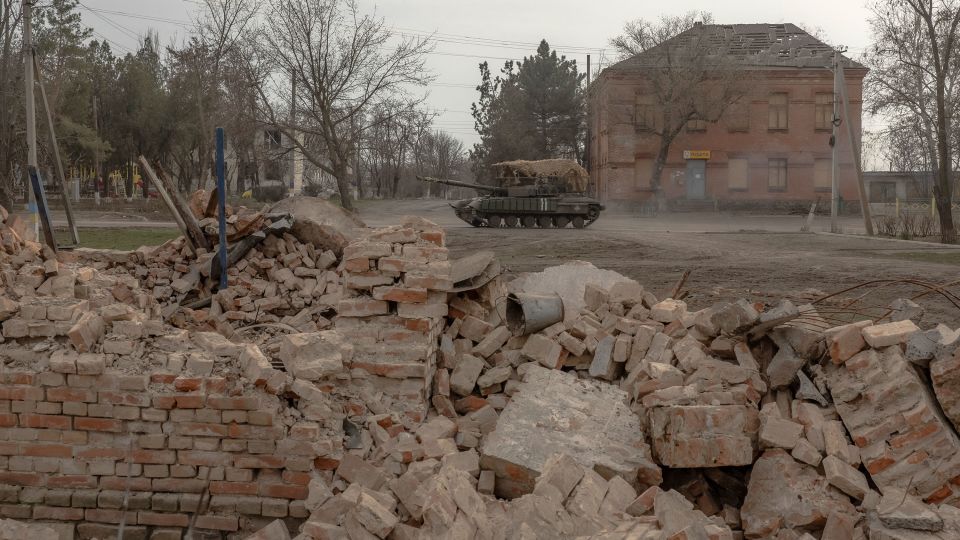
    Russia claimed Sunday that its forces are for the first time pushing into the central Ukrainian region of Dnipropetrovsk, an area it has been trying to reach for months, in a move that could create new problems for Kyiv’s much-stretched forces.

    Subunits from the Russian military’s 90th tank division reached the border of Dnipropetrovsk with the Donetsk region, large parts of which are already under Russian occupation, according to the Russian Ministry of Defense. After this, they continued into Dnipropetrovsk, the defense ministry claimed.

    The extent of the advance is unclear, as are Moscow’s ambitions for the assault. CNN is unable to verify the battlefield reports, and Ukraine has denied the Russian advance.

    Viktor Trehubov, spokesperson for Ukraine’s Khortytsia forces, which is in command of the area Moscow alleged it broke through, told CNN that “the Russians are constantly spreading false information that they have entered the Dnipropetrovsk region from the Pokrovsk and Novopavlivka directions, but (in neither place) is this information true.”

    But if confirmed, the Russian advance would be a setback for Ukrainian forces at a time when peace talks have stalled. Russian forces have also in recent weeks made incremental progress in the northern Sumy region, as well as near Lyman in Donetsk.

    The Russian advance would also put further pressure on the Ukrainians’ grip on the town of Pokrovsk, a key hub that has been under Russian assault for months. Ukraine’s General Staff said Sunday morning that its troops had stopped 65 “offensive” Russian actions in the Pokrovsk direction.

    An Institute for the Study of War (ISW) assessment of Russia’s offensive campaign found that Russian forces continued their offensive operations in the Pokrovsk direction on Saturday, but did not advance.

    Russia now controls just under one-fifth of Ukrainian territory, according to the Ukrainian analysis group Deep State. That includes Crimea and parts of eastern Ukraine that were occupied before Russia’s full-scale invasion in February 2022.

    Dmitry Medvedev, the deputy chairman of the Russian Security Council, said that Russia pushed forward with the Dnipropetrovsk offensive after Ukraine refused to recognize Russia’s territorial gains during the peace talks in Istanbul.

    “Anyone who does not want to acknowledge the realities of war in negotiations will receive new realities on the ground,” Medvedev said on Telegram.

    Dnipropetrovsk is bordered by three regions that are partially occupied by Russia – Donetsk, Kherson and Zaporizhzhia.

    One of Russia’s declared goals is capturing all three regions. It already occupies all but a slither of a fourth region, Luhansk.

    Dnipropetrovsk is more sparsely populated and rural than those four regions, known as the Donbas, and will be more difficult to defend. It is an important mining and logistics center and had an estimated population of three million before the war began.

    Russia’s claim comes days after its forces advanced further in the northern Sumy region, bringing the region’s capital within range of drones and artillery.

    While capturing the region’s capital city, also named Sumy, is likely beyond what Moscow is setting out to do, the move underlines the pressure Kyiv is under, from the northern border to the Black Sea.

    Failed prisoner swap

    Russia’s advances in Ukraine come as the two countries clashed after a planned swap of prisoners of war failed to take place on Saturday.

    Moscow accused Kyiv of unexpectedly postponing a transfer involving prisoners of war and the bodies of dead soldiers, leaving hundreds of Ukrainian bodies in refrigerated trucks waiting to be collected from an exchange point.

    Ukrainian officials rejected this account, saying that the two sides had agreed to exchange seriously wounded and young troops on Saturday but a date had not yet been set for the repatriation of soldiers’ remains.

    During a second round of direct peace talks in Istanbul on Monday, Russia and Ukraine agreed to exchange more prisoners this weekend.

    Kyrylo Budanov, the head of Ukrainian Defense Intelligence, said that his country was strictly adhering to the agreements reached in Istanbul and that the start of “repatriation measures” is scheduled to take place next week.

    Ukrainian President Volodymyr Zelensky insisted that Ukraine is doing everything possible to ensure the release of prisoners and the return of the soldiers’ bodies.

    “Unfortunately, there are still no complete lists from Russia for a thousand plus people – which we agreed on in Istanbul,” he said.

    ‘Fighting like crazy’

    The conflict has intensified in recent weeks. Ukraine conducted an audacious drone attack that took out multiple aircraft inside Russia last Sunday, as well as a strike on the bridge connecting Russia to the annexed Crimean peninsula using underwater explosives on Monday.

    Russian forces have also advanced further into Ukraine, attempting to grab territory quickly as peace talks between the warring countries continue.

    Delegations representing Kyiv and Moscow met in Istanbul on Monday for a second round of peace negotiations, but there were no major breakthroughs, with talks lasting a little over an hour.

    Critics have accused Russian President Vladimir Putin of dragging out peace negotiations so that his country can grab more Ukrainian land.

    Despite his insistence that he wants an end to the fighting, Putin has refused to agree to an unconditional 30-day ceasefire, instead proposing a much narrower ceasefire, lasting just two or three days in certain parts of the frontline.

    US President Donald Trump has repeatedly told Russia and Ukraine there will be consequences if they don’t engage in his peace process, although he has so far resisted growing calls from both Republican and Democratic lawmakers to use sanctions to pressure Putin into winding down his war.

    On Thursday, Trump compared the warring states to children fighting, telling reporters: “Sometimes you see two young children fighting like crazy. They hate each other, and they’re fighting in a park, and you try and pull them apart. They don’t want to be pulled. Sometimes you’re better off letting them fight for a while and then pulling them apart.”

    He said that only he would know when the right time to apply sanctions on Russia would be, even suggesting he’d be willing to use new punitive measures on Ukraine if the war doesn’t end.

    “We’ll be very, very, very tough, and it could be on both countries to be honest,” Trump said. “You know, it takes two to tango.”

    CNN’s Christian Edwards, Svitlana Vlasova, Victoria Butenko, Gul Tuysuz, Anna Chernova and Kevin Liptak contributed to this report.

    For more CNN news and newsletters create an account at CNN.com


    Source link

    https://www.cherrycreekschools.org/cms/module/selectsurvey/Print.aspx?SurveyID=82KI3m2&o2x=kbsH6D

  • Trump travel ban barring citizens from 12 countries goes into effect | US immigration

    Trump travel ban barring citizens from 12 countries goes into effect | US immigration


    Donald Trump’s new ban on travel to the US by citizens of a dozen countries, mainly in Africa and the Middle East, went into effect at 12am ET on Monday, more than eight years after Trump’s first travel ban sparked chaos, confusion and months of legal battles.

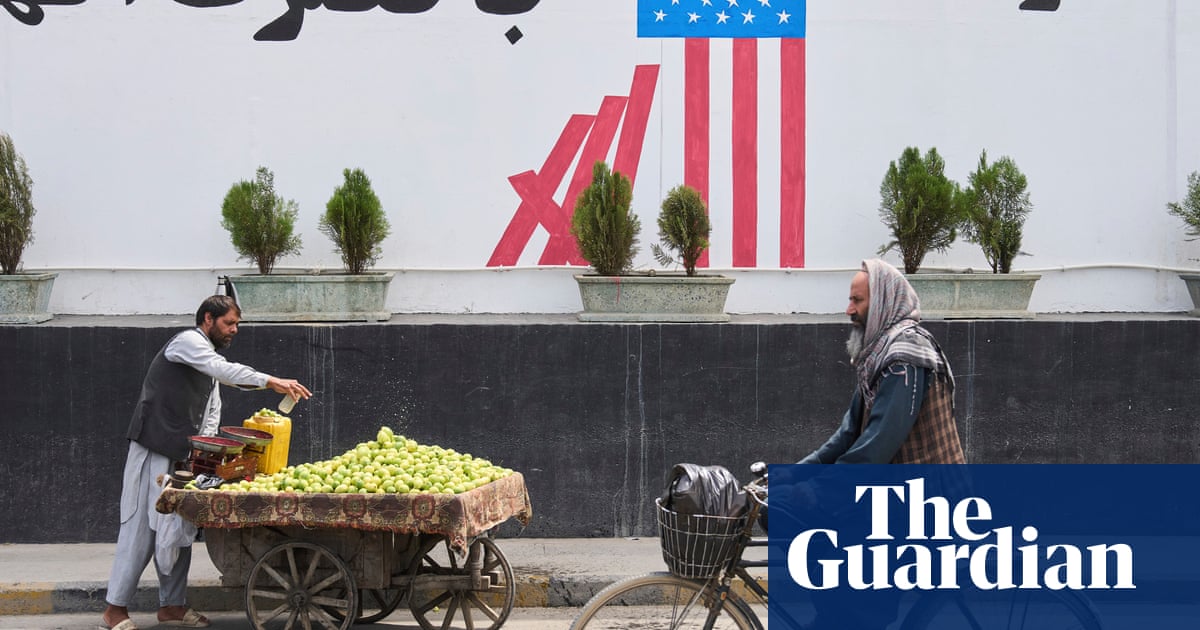
    The new proclamation, which Trump signed last week, “fully” restricts the nationals of Afghanistan, Myanmar, Chad, Republic of the Congo, Equatorial Guinea, Eritrea, Haiti, Iran, Libya, Somalia, Sudan and Yemen from entering the US. The entry of nationals of Burundi, Cuba, Laos, Sierra Leone, Togo, Turkmenistan and Venezuela will be partly restricted.

    Unlike Trump’s first travel ban in 2017, which initially targeted citizens of seven Muslim-majority countries and was criticized as an unconstitutional “Muslim ban”, the new ban is broader, and legal experts said they expect it to withstand legal challenges.

    The announcement of the new travel ban was greeted with less outrage and protest than his initial 2017 ban. On Monday, the new ban appeared to be overshadowed by Trump’s other immigration battles, including furious protests in Los Angeles over Trump’s deportation raids, which were followed by Trump deploying the national guard to the city despite the opposition of California’s governor.

    The newly instituted ban notably includes citizens of Haiti, a majority Christian country. Haitians in the US were demonized by Trump during his presidential campaign, with the president spreading the baseless conspiracy theory that Haitian immigrants in Ohio were eating people’s pets.

    It also imposes heightened travel restrictions on citizens of Venezuela, who have been targeted repeatedly by the White House in recent months, as the Trump administration’s sudden deportation of Venezuelans in the US to a notorious prison in El Salvador sparked a huge legal battle.

    The ban is also expected to have a disproportionate effect on African countries, with some citizens of targeted countries worrying about being cut off from opportunities for education, professional development and networking.

    Mikhail Nyamweya, a political and foreign affairs analyst, previously told the Guardian that the new travel bans and restrictions would “bring about a pattern of exclusion” and “may also institutionalise a perception of Africans as outsiders in the global order”.

    “This policy is not about national security – it is about sowing division and vilifying communities that are seeking safety and opportunity in the United States,” Abby Maxman, president of Oxfam America, a non-profit international relief organization, said.

    While five of the countries on the new ban list are not majority-Muslim, including Republic of the Congo, Myanmar, Eritrea and Equatorial Guinea, as well as Haiti, the list does target citizens of non-white countries in the developing world, fueling criticisms that the ban is fundamentally racist and shaped by “bigotry”.

    Trump’s first travel ban, in 2017, was widely criticized as a fulfillment of Trump’s campaign pledge to institute “a total and complete shutdown of Muslims entering the United States”. The Trump administration later added citizens of other non-Muslim countries to the banned list.

    The new ban does not revoke visas previously issued to people from countries on the list, according to guidance issued on Friday to all US diplomatic missions. However, unless an applicant meets narrow criteria for an exemption to the ban, his or her application will be rejected starting Monday. Travelers with previously issued visas should still be able to enter the US even after the ban takes effect.

    In a video posted on Wednesday on social media, Trump said nationals of countries included in the ban pose “terrorism-related” and “public-safety” risks, as well as risks of overstaying their visas. He also said some of these countries had “deficient” screening and vetting or have historically refused to take back their citizens.

    Trump also tied the new ban to a recent attack in Boulder, Colorado that wounded a dozen people, saying it underscored the dangers posed by some visitors who overstay visas. US officials say the alleged perpetrator overstayed a tourist visa. The man charged in the attack is from Egypt, a country that is not on Trump’s restricted list.

    The Associated Press contributed reporting


    Source link

    https://www.cherrycreekschools.org/cms/module/selectsurvey/Print.aspx?SurveyID=82KI3m2&o2x=kbsH6D

  • Israel Intercepts Gaza Aid Ship Carrying Greta Thunberg: What to Know

    Israel Intercepts Gaza Aid Ship Carrying Greta Thunberg: What to Know


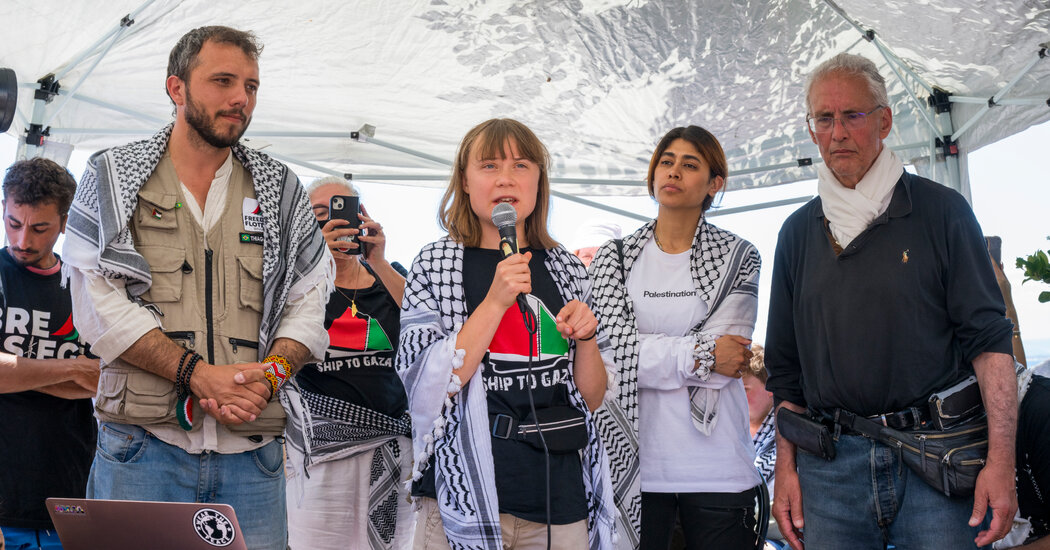
    Israel said on Monday it had intercepted a Gaza-bound ship carrying aid and a dozen people, including the activist Greta Thunberg.

    The civilian ship, called the Madleen, has been operating under the auspices of the Freedom Flotilla Coalition, a group that opposes the nearly two-decade-old blockade of Gaza.

    The Freedom Flotilla Coalition said its activists had been “kidnapped” by the Israeli military. Israel said it expected to return the ship’s passengers to their home countries.

    The Madleen set sail from Sicily on June 1. Israel vowed to prevent the ship from reaching Gaza, saying its military would use “any means necessary” to stop it from breaching an Israeli naval blockade of the enclave.

    Surveillance footage recorded early Monday aboard the Madleen shows people in the cockpit wearing orange life vests as the bright lights of another vessel approach. People can then be seen boarding the Madleen.

    We are having trouble retrieving the article content.

    Please enable JavaScript in your browser settings.


    Thank you for your patience while we verify access. If you are in Reader mode please exit and log into your Times account, or subscribe for all of The Times.


    Thank you for your patience while we verify access.

    Already a subscriber? Log in.

    Want all of The Times? Subscribe.


    Source link

    https://www.cherrycreekschools.org/cms/module/selectsurvey/Print.aspx?SurveyID=82KI3m2&o2x=kbsH6D

  • Italian citizenship referendum void after low turnout

    Italian citizenship referendum void after low turnout


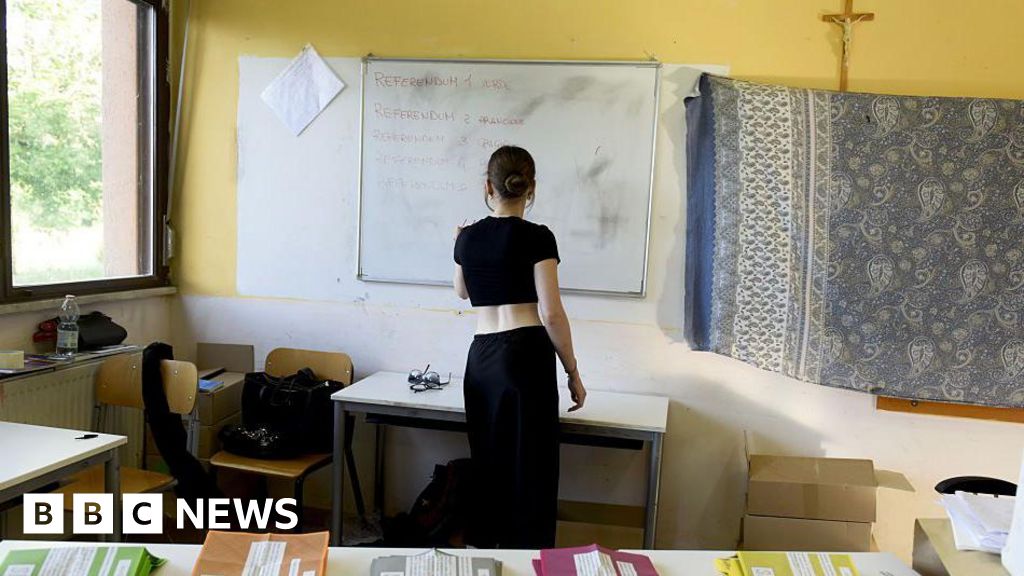
    A referendum in Italy on easing citizenship rules and enhancing workers’ rights has been declared invalid.

    Around 30% of voters participated – well short of the 50% threshold required to make the vote binding – in the poll, which began on Sunday and ran until 15:00 (14:00 BST) on Monday.

    The ballot featured five questions covering different issues, including a proposal to halve the length of time an individual has to live in Italy before they can apply for citizenship from 10 to five years.

    The referendum was initiated by a citizens’ initiative and supported by civil society groups and trade unions, all of whom campaigned for the Yes vote.

    For them, the outcome – which saw turnout levels as low as 22% in regions like Sicily and Calabria – will come as a blow.

    Reaching the 50% threshold was always going to be a struggle – not least because the Italian government, led by hard-right Prime Minister Giorgia Meloni, largely ignored the referendum or actively discouraged people from voting.

    “Whether just above 30% or just below 30%, this is a low figure, below the expectations and targets set by the promoters,” Lorenzo Pregliasco, the founder of political polling company YouTrend, told Italy’s SkyTG24.

    Last week, Meloni announced she would boycott the vote, declaring Italy’s existing citizenship law as “excellent” and “very open”. She visited a polling station in Rome on Sunday but did not cast a vote.

    But activists argued that a 10-year wait to apply for citizenship was far too long, and that reducing the requirement to five years would bring Italy in line with many of its European neighbours.

    Shortly after polls closed, Meloni’s Brothers of Italy (FdI) party posted an image of opposition leaders on Instagram with the caption: “You’ve lost!”

    “The only real objective of this referendum was to topple the Meloni government. In the end though Italians toppled you,” the post read.

    Pina Picierno of the opposition Democratic Party (PD), said the referendum had been a “deep, serious and avoidable defeat,” and called the failure to reach the 50% threshold a “huge gift to Giorgia Meloni and the right”.

    Half a million signatures are required to call a referendum in Italy. However, there are now calls for that threshold to be increased to reduce the number of votes put to the public.

    “We spent a lot of money sending… millions of ballots abroad for Italian [expats] to vote, and they’ve been wasted,” said foreign minister Antonio Tajani on Monday.

    Only about half of the 78 referendums held in Italy since World War Two have attracted enough votes to make them binding.

    The first one, held on 2 June 1946, saw 89% of Italians go to the polls and just over half of those vote to replace the monarchy with a republic.

    In later years, referendums on abortion and divorce were also held successfully.

    The last referendum to reach the required threshold was a 2011 vote against a law privatising water services.


    Source link

    https://www.cherrycreekschools.org/cms/module/selectsurvey/Print.aspx?SurveyID=82KI3m2&o2x=kbsH6D

  • IAEA chief suggests Iran stole documents from Israeli nuclear site

    IAEA chief suggests Iran stole documents from Israeli nuclear site


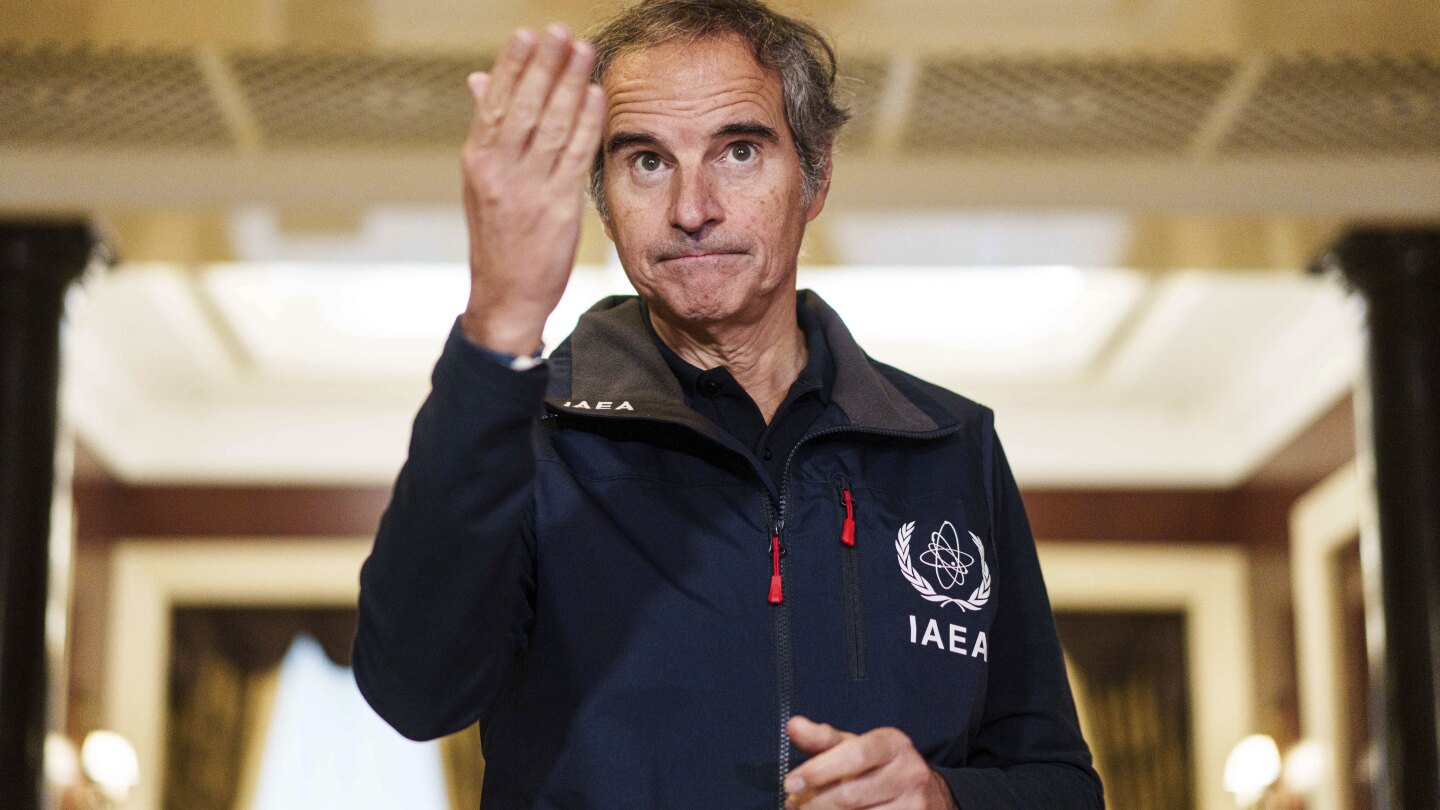
    VIENNA (AP) — The head of the International Atomic Energy Agency said Monday that the information Iran claimed it seized regarding Israel’s nuclear program “seems to refer” to the country’s Soreq Nuclear Research Center, the first acknowledgment outside of Tehran of the theft.

    The office of Israel’s prime minister had no immediate response on the remarks by IAEA Director General Rafael Mariano Grossi, who spoke during a news conference in Vienna.

    The alleged theft comes at a time of renewed tensions over Iran’s nuclear program, which enriches uranium a short, technical step away from weapons-grade levels and looks poised to reject a U.S. proposal over a possible deal on its atomic program.

    “We have seen some reports in the press. We haven’t had any official communication about this,” Grossi told reporters. “In any case, this seems to refer to Soreq, which is a research facility which we inspect by the way. We don’t inspect other strategic parts of the program, but this part of the program we do inspect.”

    He did not elaborate on where he received his information, though the IAEA maintains a confidential reporting system for nations to report security incidents involving their nuclear programs.

    Soreq, located 20 kilometers (12 miles) south of Tel Aviv, is a national laboratory for nuclear science established in Israel in 1958, engaged in nuclear science, radiation safety and applied physics.

    The IAEA has so-called “item-specific safeguards agreements” with Israel, Pakistan and India, all countries that are not party to the Treaty on the Non-Proliferation of Nuclear Weapons. Under Israel’s agreement, the IAEA monitors Soreq but has no access to Israel’s nuclear facility at Dimona, believed to provide the fuel for Israel’s undeclared nuclear weapons program.

    Over the weekend Iranian state television and later the country’s intelligence minister claimed without offering evidence that Tehran seized an “important treasury” of information regarding Israel’s nuclear program.

    Israel, whose undeclared atomic weapons program makes it the only country in the Mideast with nuclear bombs, has not acknowledged any such Iranian operation targeting it — though there have been arrests of Israelis allegedly spying for Tehran amid the Israel-Hamas war in the Gaza Strip.

    Iranian Intelligence Minister Esmail Khatib claimed thousands of pages of documents had been obtained which would be made public soon. Among them were documents related to the U.S., Europe and other countries which, he claimed, had been obtained through “infiltration” and “access to the sources.”

    He did not elaborate on the methods used. However, Khatib, a Shiite cleric, was sanctioned by the U.S. Treasury in 2022 over directing “cyber espionage and ransomware attacks in support of Iran’s political goals.”

    For Iran, the claim may be designed to show the public that the theocracy was able to respond to a 2018 Israeli operation that spirited out what Prime Minister Benjamin Netanyahu described as a “half ton” of documents related to Iran’s program.

    That Israeli announcement came just before President Donald Trump in his first term unilaterally withdrew America from Iran’s 2015 nuclear deal with world powers, which greatly limited its program in exchange for the lifting of economic sanctions.

    This week, Western nations are expect to go before the IAEA’s Board of Governors with a proposal to find Iran in noncompliance with the United Nations’ nuclear watchdog. It could be the first time in decades — and likely would kick the issue to the U.N. Security Council.

    That could see one of the Western countries involved in the 2015 nuclear deal invoke the so-called “snapback” of U.N. sanctions on the Islamic Republic. The authority to restore those sanctions by the complaint of any member of the original 2015 nuclear deal expires in October — putting the West on a clock to exert pressure on Tehran over its program before losing that power.

    ___

    Associated Press writer Jon Gambrell in Dubai, United Arab Emirates, contributed to this report.

    ___

    The Associated Press receives support for nuclear security coverage from the Carnegie Corporation of New York and Outrider Foundation. The AP is solely responsible for all content.

    ___

    Additional AP coverage of the nuclear landscape: https://apnews.com/projects/the-new-nuclear-landscape/

    window.fbAsyncInit = function() {
    FB.init({

    appId : ‘870613919693099’,

    xfbml : true,
    version : ‘v2.9’
    });
    };

    (function(d, s, id){
    var js, fjs = d.getElementsByTagName(s)[0];
    if (d.getElementById(id)) {return;}
    js = d.createElement(s); js.id = id;
    js.src = “https://connect.facebook.net/en_US/sdk.js”;
    fjs.parentNode.insertBefore(js, fjs);
    }(document, ‘script’, ‘facebook-jssdk’));


    Source link

    https://www.cherrycreekschools.org/cms/module/selectsurvey/Print.aspx?SurveyID=82KI3m2&o2x=kbsH6D

  • Tropical Storm Barbara becomes a hurricane

    Tropical Storm Barbara becomes a hurricane


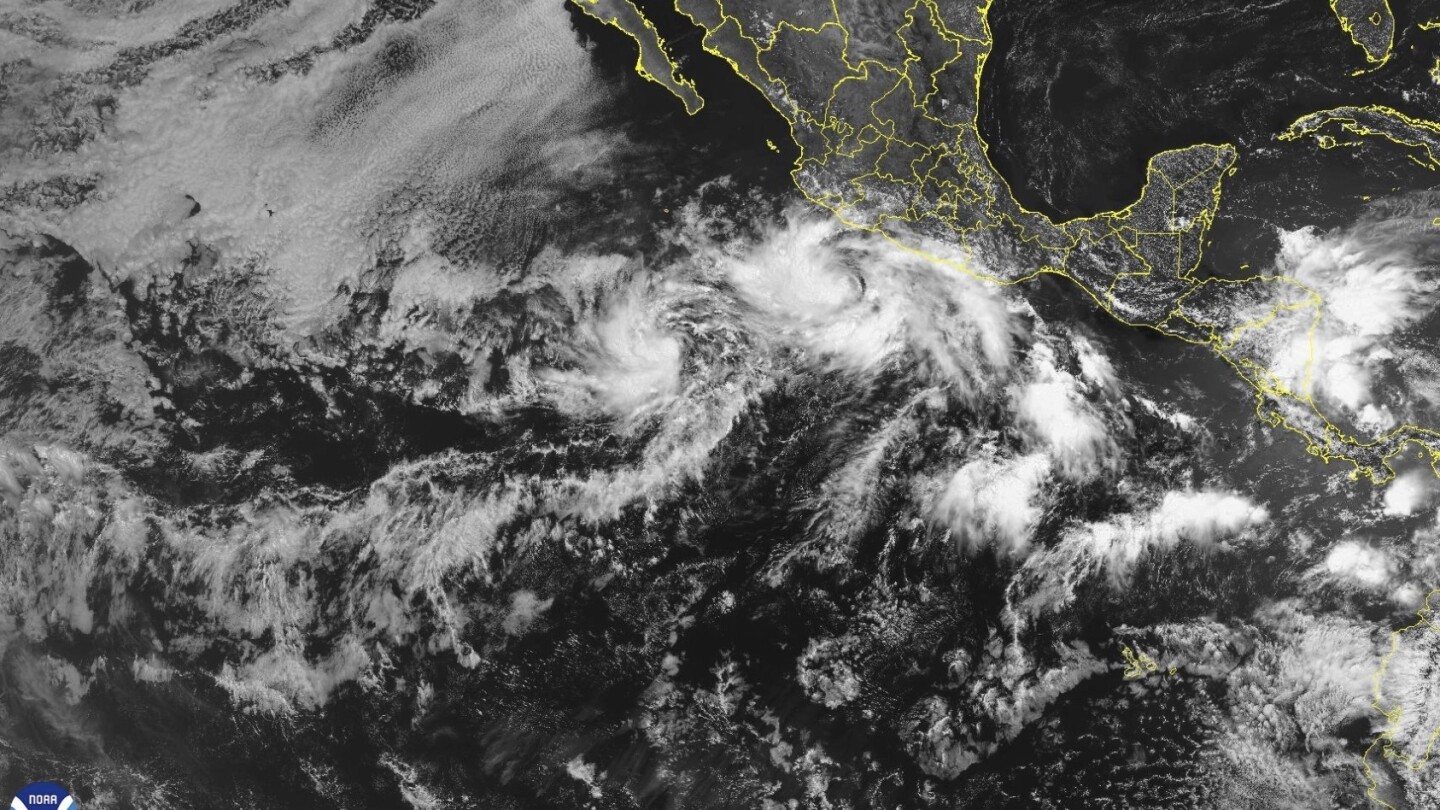
    MIAMI (AP) — Tropical Storm Barbara has strengthened into a hurricane, the first of the eastern Pacific hurricane season.

    The National Hurricane Center in Miami said Monday swells generated by the storm system will affect portions of the coast of southwestern Mexico during the next few days. These swells are likely to cause life-threatening surf and rip current conditions.

    Hurricane Barbara was located about 155 miles (245 kilometers) southwest of Manzanillo, Mexico. Its maximum sustained winds were clocked at 75 mph (120 kph). The storm’s center was moving northwest at 10 mph (17 kph).

    No coastal warnings or watches were in effect Monday morning. But the storm was expected to bring heavy rainfall to coastal areas of Guerrero, Michoacan, Colima and Jalisco states, with the possibility of localized flooding.

    The hurricane center said swells from Barbara were likely to form life-threatening surf and rip current conditions along the southwestern Mexican coast, with gusty winds likely.

    Meanwhile, Tropical Storm Cosme strengthened slightly Monday but remained well off the coast of Mexico, about 630 miles (1,015 kilometers) south-southwest of the tip of Baja California, the NHC said.

    At 2 a.m. local time it had maximum sustained winds of 50 mph (80 kph) and was moving west-northwest at 9 mph (14 kph). Cosme is expected to reach near-hurricane strength on Monday before turning to the northeast and picking up speed Tuesday into Wednesday.

    window.fbAsyncInit = function() {
    FB.init({

    appId : ‘870613919693099’,

    xfbml : true,
    version : ‘v2.9’
    });
    };

    (function(d, s, id){
    var js, fjs = d.getElementsByTagName(s)[0];
    if (d.getElementById(id)) {return;}
    js = d.createElement(s); js.id = id;
    js.src = “https://connect.facebook.net/en_US/sdk.js”;
    fjs.parentNode.insertBefore(js, fjs);
    }(document, ‘script’, ‘facebook-jssdk’));


    Source link

    https://www.cherrycreekschools.org/cms/module/selectsurvey/Print.aspx?SurveyID=82KI3m2&o2x=kbsH6D

  • NATO boss warns ‘learn Russian’ as he predicts imminent war in Europe – World News – News

    NATO boss warns ‘learn Russian’ as he predicts imminent war in Europe – World News – News


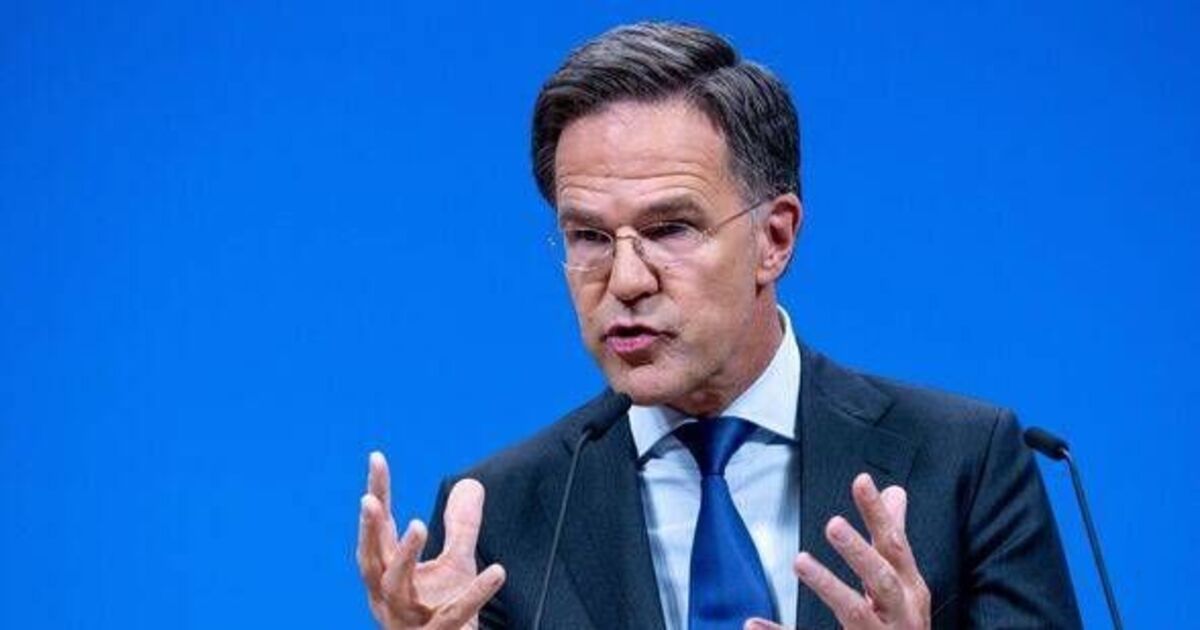
    NATO Secretary-General Mark Rutte has issued a stark warning to NATO members, urging them to commit to spending 5% of GDP on defense or risk having to “get your Russian language course out” The former Dutch PM emphasized the need for increased defense spending as Russia’s aggression in Ukraine persists.

    NATO defense ministers have settled on allocating 3.5% of GDP for “core defense spending” on heavy weaponry and air defense systems, while an additional 1.5% of annual GDP will be directed towards security-related areas such as infrastructure and cyber defense.

    “These targets describe exactly what capabilities Allies need to invest in over the coming years,” Mr. Rutte explained to the press. He highlighted the urgency of preparing for potential Russian aggression against NATO, stating: “If we don’t act now, the next three years, we are fine, but we have to start now, because otherwise, from three, four or five years from now, we are really under threat.

    “I really mean this. Then you have to get your Russian language course out, or go to New Zealand,” he further cautioned.

    Echoing Rutte’s sentiments, Donald Trump‘s ambassador to NATO, Mathew Whitaker, called for immediate action from European members to make “credible progress” on defense investment. “The threats facing NATO are growing and our adversaries are certainly not waiting for us to re-arm or be ready for them to make the first move,” Whitaker stated. “We would prefer our allies move out urgently on reaching the 5%,” he told journalists during a briefing at the NATO meetings.

    The White House, since the onset of the Trump administration, has persistently criticized European nations for not investing sufficiently in their own defense, effectively letting the US foot the bill. In response, capitals across Europe, including the UK, have pledged to “step up” and assume responsibility for Europe’s defense stance.


    Source link

    https://www.cherrycreekschools.org/cms/module/selectsurvey/Print.aspx?SurveyID=82KI3m2&o2x=kbsH6D