
Blog

  • Israeli Navy missile boats strike Houthi power plant near Yemen capital

    Israeli Navy missile boats strike Houthi power plant near Yemen capital


    The Israeli Navy on Sunday morning launched strikes against a power plant south of the Houthi-controlled capital of Yemen, the military and a defense official said.

    The Israel Defense Forces, in a statement, said the strike hit “energy infrastructure used by the Houthi terror regime,” near Sanaa, in response to “repeated attacks by the Houthi terror regime against the State of Israel and its citizens, including the launching of surface-to-surface missiles and UAVs toward Israeli territory.”

    Local media reported large explosions in the area that knocked generators out of service.

    The Houthi-run Al Masirah TV blamed the explosion on “aggression,” without identifying the source. Teams were working to put out a fire caused by the incident, Al Masirah added, citing a source in civil defense.

    An Israeli defense official confirmed the strike was carried out by Navy missile boats. It was only the second time that the Navy has struck in Yemen, after an attack on the Houthi-controlled Hodeida port in June.

    Sunday’s strike marked the fourteenth time that Israel has attacked the Iran-backed Houthis in Yemen, located some 1,800 kilometers (1,100 miles) away.

    Most of the strikes have been carried out by Israeli Air Force fighter jets; the last strike on the Houthis, in July, was carried out by an IAF drone, for the first time.

    In the interim, the Houthis have launched seven ballistic missiles and at least seven drones at Israel, attacks that caused no damage or injuries.

    The Houthis last attacked Israel on Thursday morning with a ballistic missile that was intercepted.

    The Houthis — whose slogan calls for “Death to America, Death to Israel, [and] a Curse on the Jews” — began attacking Israel and maritime traffic in November 2023, a month after the October 7 Hamas massacre.

    The Houthis held their fire during a ceasefire that was reached between Israel and Hamas in January 2025. By that point, they had fired over 40 ballistic missiles and dozens of attack drones and cruise missiles at Israel, including one that killed a civilian and wounded several others in Tel Aviv in July, prompting Israel’s first strike in Yemen.

    Since March 18, when the IDF resumed its offensive against Hamas in the Gaza Strip, the Houthis in Yemen have launched 69 ballistic missiles and at least 22 drones at Israel. Several of the missiles have fallen short.

    Agencies contributed to this report.


    Is The Times of Israel important to you?

    If so, we have a request. 

    Every day, even during war, our journalists keep you abreast of the most important developments that merit your attention. Millions of people rely on ToI for fast, fair and free coverage of Israel and the Jewish world. 

    We care about Israel – and we know you do too. So today, we have an ask: show your appreciation for our work by joining The Times of Israel Community, an exclusive group for readers like you who appreciate and financially support our work. 


    Yes, I’ll give


    Yes, I’ll give

    Already a member? Sign in to stop seeing this


    You appreciate our journalism


    We’re really pleased that you’ve read X Times of Israel articles in the past month.

    You clearly find our careful reporting valuable, in a time when facts are often distorted and news coverage often lacks context.

    Your support is essential to continue our work. We want to continue delivering the professional journalism you value, even as the demands on our newsroom have grown dramatically since October 7.

    So today, please consider joining our reader support group, The Times of Israel Community. For as little as $6 a month you’ll become our partners while enjoying The Times of Israel AD-FREE, as well as accessing exclusive content available only to Times of Israel Community members.

    Thank you,
    David Horovitz, Founding Editor of The Times of Israel


    Join Our Community


    Join Our Community

    Already a member? Sign in to stop seeing this

    !function(f,b,e,v,n,t,s)
    {if(f.fbq)return;n=f.fbq=function(){n.callMethod?
    n.callMethod.apply(n,arguments):n.queue.push(arguments)};
    if(!f._fbq)f._fbq=n;n.push=n;n.loaded=!0;n.version=’2.0′;
    n.queue=[];t=b.createElement(e);t.async=!0;
    t.src=v;s=b.getElementsByTagName(e)[0];
    s.parentNode.insertBefore(t,s)}(window, document,’script’,
    ‘https://connect.facebook.net/en_US/fbevents.js’);
    fbq(‘init’, ‘272776440645465’);
    fbq(‘track’, ‘PageView’);


    Source link

    http://wp.bypass.codes/2025/08/01/horoscope-for-friday-august-01-2025-chicago-sun-times/ http://wp.bypass.codes/2025/08/01/verizon-rolls-out-price-increase-removes-its-google-play-pass-perk/
  • Israeli Navy missile boats strike Houthi power plant near Yemen capital

    Israeli Navy missile boats strike Houthi power plant near Yemen capital


    The Israeli Navy on Sunday morning launched strikes against a power plant south of the Houthi-controlled capital of Yemen, the military and a defense official said.

    The Israel Defense Forces, in a statement, said the strike hit “energy infrastructure used by the Houthi terror regime,” near Sanaa, in response to “repeated attacks by the Houthi terror regime against the State of Israel and its citizens, including the launching of surface-to-surface missiles and UAVs toward Israeli territory.”

    Local media reported large explosions in the area that knocked generators out of service.

    The Houthi-run Al Masirah TV blamed the explosion on “aggression,” without identifying the source. Teams were working to put out a fire caused by the incident, Al Masirah added, citing a source in civil defense.

    An Israeli defense official confirmed the strike was carried out by Navy missile boats. It was only the second time that the Navy has struck in Yemen, after an attack on the Houthi-controlled Hodeida port in June.

    Sunday’s strike marked the fourteenth time that Israel has attacked the Iran-backed Houthis in Yemen, located some 1,800 kilometers (1,100 miles) away.

    Most of the strikes have been carried out by Israeli Air Force fighter jets; the last strike on the Houthis, in July, was carried out by an IAF drone, for the first time.

    In the interim, the Houthis have launched seven ballistic missiles and at least seven drones at Israel, attacks that caused no damage or injuries.

    The Houthis last attacked Israel on Thursday morning with a ballistic missile that was intercepted.

    The Houthis — whose slogan calls for “Death to America, Death to Israel, [and] a Curse on the Jews” — began attacking Israel and maritime traffic in November 2023, a month after the October 7 Hamas massacre.

    The Houthis held their fire during a ceasefire that was reached between Israel and Hamas in January 2025. By that point, they had fired over 40 ballistic missiles and dozens of attack drones and cruise missiles at Israel, including one that killed a civilian and wounded several others in Tel Aviv in July, prompting Israel’s first strike in Yemen.

    Since March 18, when the IDF resumed its offensive against Hamas in the Gaza Strip, the Houthis in Yemen have launched 69 ballistic missiles and at least 22 drones at Israel. Several of the missiles have fallen short.

    Agencies contributed to this report.


    Is The Times of Israel important to you?

    If so, we have a request. 

    Every day, even during war, our journalists keep you abreast of the most important developments that merit your attention. Millions of people rely on ToI for fast, fair and free coverage of Israel and the Jewish world. 

    We care about Israel – and we know you do too. So today, we have an ask: show your appreciation for our work by joining The Times of Israel Community, an exclusive group for readers like you who appreciate and financially support our work. 


    Yes, I’ll give


    Yes, I’ll give

    Already a member? Sign in to stop seeing this


    You appreciate our journalism


    We’re really pleased that you’ve read X Times of Israel articles in the past month.

    You clearly find our careful reporting valuable, in a time when facts are often distorted and news coverage often lacks context.

    Your support is essential to continue our work. We want to continue delivering the professional journalism you value, even as the demands on our newsroom have grown dramatically since October 7.

    So today, please consider joining our reader support group, The Times of Israel Community. For as little as $6 a month you’ll become our partners while enjoying The Times of Israel AD-FREE, as well as accessing exclusive content available only to Times of Israel Community members.

    Thank you,
    David Horovitz, Founding Editor of The Times of Israel


    Join Our Community


    Join Our Community

    Already a member? Sign in to stop seeing this

    !function(f,b,e,v,n,t,s)
    {if(f.fbq)return;n=f.fbq=function(){n.callMethod?
    n.callMethod.apply(n,arguments):n.queue.push(arguments)};
    if(!f._fbq)f._fbq=n;n.push=n;n.loaded=!0;n.version=’2.0′;
    n.queue=[];t=b.createElement(e);t.async=!0;
    t.src=v;s=b.getElementsByTagName(e)[0];
    s.parentNode.insertBefore(t,s)}(window, document,’script’,
    ‘https://connect.facebook.net/en_US/fbevents.js’);
    fbq(‘init’, ‘272776440645465’);
    fbq(‘track’, ‘PageView’);


    Source link

    http://wp.bypass.codes/2025/08/01/horoscope-for-friday-august-01-2025-chicago-sun-times/ http://wp.bypass.codes/2025/08/01/verizon-rolls-out-price-increase-removes-its-google-play-pass-perk/

  • Israeli Navy missile boats strike Houthi power plant near Yemen capital

    Israeli Navy missile boats strike Houthi power plant near Yemen capital


    The Israeli Navy on Sunday morning launched strikes against a power plant south of the Houthi-controlled capital of Yemen, the military and a defense official said.

    The Israel Defense Forces, in a statement, said the strike hit “energy infrastructure used by the Houthi terror regime,” near Sanaa, in response to “repeated attacks by the Houthi terror regime against the State of Israel and its citizens, including the launching of surface-to-surface missiles and UAVs toward Israeli territory.”

    Local media reported large explosions in the area that knocked generators out of service.

    The Houthi-run Al Masirah TV blamed the explosion on “aggression,” without identifying the source. Teams were working to put out a fire caused by the incident, Al Masirah added, citing a source in civil defense.

    An Israeli defense official confirmed the strike was carried out by Navy missile boats. It was only the second time that the Navy has struck in Yemen, after an attack on the Houthi-controlled Hodeida port in June.

    Sunday’s strike marked the fourteenth time that Israel has attacked the Iran-backed Houthis in Yemen, located some 1,800 kilometers (1,100 miles) away.

    Most of the strikes have been carried out by Israeli Air Force fighter jets; the last strike on the Houthis, in July, was carried out by an IAF drone, for the first time.

    In the interim, the Houthis have launched seven ballistic missiles and at least seven drones at Israel, attacks that caused no damage or injuries.

    The Houthis last attacked Israel on Thursday morning with a ballistic missile that was intercepted.

    The Houthis — whose slogan calls for “Death to America, Death to Israel, [and] a Curse on the Jews” — began attacking Israel and maritime traffic in November 2023, a month after the October 7 Hamas massacre.

    The Houthis held their fire during a ceasefire that was reached between Israel and Hamas in January 2025. By that point, they had fired over 40 ballistic missiles and dozens of attack drones and cruise missiles at Israel, including one that killed a civilian and wounded several others in Tel Aviv in July, prompting Israel’s first strike in Yemen.

    Since March 18, when the IDF resumed its offensive against Hamas in the Gaza Strip, the Houthis in Yemen have launched 69 ballistic missiles and at least 22 drones at Israel. Several of the missiles have fallen short.

    Agencies contributed to this report.


    Is The Times of Israel important to you?

    If so, we have a request. 

    Every day, even during war, our journalists keep you abreast of the most important developments that merit your attention. Millions of people rely on ToI for fast, fair and free coverage of Israel and the Jewish world. 

    We care about Israel – and we know you do too. So today, we have an ask: show your appreciation for our work by joining The Times of Israel Community, an exclusive group for readers like you who appreciate and financially support our work. 


    Yes, I’ll give


    Yes, I’ll give

    Already a member? Sign in to stop seeing this


    You appreciate our journalism


    We’re really pleased that you’ve read X Times of Israel articles in the past month.

    You clearly find our careful reporting valuable, in a time when facts are often distorted and news coverage often lacks context.

    Your support is essential to continue our work. We want to continue delivering the professional journalism you value, even as the demands on our newsroom have grown dramatically since October 7.

    So today, please consider joining our reader support group, The Times of Israel Community. For as little as $6 a month you’ll become our partners while enjoying The Times of Israel AD-FREE, as well as accessing exclusive content available only to Times of Israel Community members.

    Thank you,
    David Horovitz, Founding Editor of The Times of Israel


    Join Our Community


    Join Our Community

    Already a member? Sign in to stop seeing this

    !function(f,b,e,v,n,t,s)
    {if(f.fbq)return;n=f.fbq=function(){n.callMethod?
    n.callMethod.apply(n,arguments):n.queue.push(arguments)};
    if(!f._fbq)f._fbq=n;n.push=n;n.loaded=!0;n.version=’2.0′;
    n.queue=[];t=b.createElement(e);t.async=!0;
    t.src=v;s=b.getElementsByTagName(e)[0];
    s.parentNode.insertBefore(t,s)}(window, document,’script’,
    ‘https://connect.facebook.net/en_US/fbevents.js’);
    fbq(‘init’, ‘272776440645465’);
    fbq(‘track’, ‘PageView’);


    Source link

    http://wp.bypass.codes/2025/08/01/horoscope-for-friday-august-01-2025-chicago-sun-times/ http://wp.bypass.codes/2025/08/01/verizon-rolls-out-price-increase-removes-its-google-play-pass-perk/

  • Israeli Navy missile boats strike Houthi power plant near Yemen capital

    Israeli Navy missile boats strike Houthi power plant near Yemen capital


    The Israeli Navy on Sunday morning launched strikes against a power plant south of the Houthi-controlled capital of Yemen, the military and a defense official said.

    The Israel Defense Forces, in a statement, said the strike hit “energy infrastructure used by the Houthi terror regime,” near Sanaa, in response to “repeated attacks by the Houthi terror regime against the State of Israel and its citizens, including the launching of surface-to-surface missiles and UAVs toward Israeli territory.”

    Local media reported large explosions in the area that knocked generators out of service.

    The Houthi-run Al Masirah TV blamed the explosion on “aggression,” without identifying the source. Teams were working to put out a fire caused by the incident, Al Masirah added, citing a source in civil defense.

    An Israeli defense official confirmed the strike was carried out by Navy missile boats. It was only the second time that the Navy has struck in Yemen, after an attack on the Houthi-controlled Hodeida port in June.

    Sunday’s strike marked the fourteenth time that Israel has attacked the Iran-backed Houthis in Yemen, located some 1,800 kilometers (1,100 miles) away.

    Most of the strikes have been carried out by Israeli Air Force fighter jets; the last strike on the Houthis, in July, was carried out by an IAF drone, for the first time.

    In the interim, the Houthis have launched seven ballistic missiles and at least seven drones at Israel, attacks that caused no damage or injuries.

    The Houthis last attacked Israel on Thursday morning with a ballistic missile that was intercepted.

    The Houthis — whose slogan calls for “Death to America, Death to Israel, [and] a Curse on the Jews” — began attacking Israel and maritime traffic in November 2023, a month after the October 7 Hamas massacre.

    The Houthis held their fire during a ceasefire that was reached between Israel and Hamas in January 2025. By that point, they had fired over 40 ballistic missiles and dozens of attack drones and cruise missiles at Israel, including one that killed a civilian and wounded several others in Tel Aviv in July, prompting Israel’s first strike in Yemen.

    Since March 18, when the IDF resumed its offensive against Hamas in the Gaza Strip, the Houthis in Yemen have launched 69 ballistic missiles and at least 22 drones at Israel. Several of the missiles have fallen short.

    Agencies contributed to this report.


    Is The Times of Israel important to you?

    If so, we have a request. 

    Every day, even during war, our journalists keep you abreast of the most important developments that merit your attention. Millions of people rely on ToI for fast, fair and free coverage of Israel and the Jewish world. 

    We care about Israel – and we know you do too. So today, we have an ask: show your appreciation for our work by joining The Times of Israel Community, an exclusive group for readers like you who appreciate and financially support our work. 


    Yes, I’ll give


    Yes, I’ll give

    Already a member? Sign in to stop seeing this


    You appreciate our journalism


    We’re really pleased that you’ve read X Times of Israel articles in the past month.

    You clearly find our careful reporting valuable, in a time when facts are often distorted and news coverage often lacks context.

    Your support is essential to continue our work. We want to continue delivering the professional journalism you value, even as the demands on our newsroom have grown dramatically since October 7.

    So today, please consider joining our reader support group, The Times of Israel Community. For as little as $6 a month you’ll become our partners while enjoying The Times of Israel AD-FREE, as well as accessing exclusive content available only to Times of Israel Community members.

    Thank you,
    David Horovitz, Founding Editor of The Times of Israel


    Join Our Community


    Join Our Community

    Already a member? Sign in to stop seeing this

    !function(f,b,e,v,n,t,s)
    {if(f.fbq)return;n=f.fbq=function(){n.callMethod?
    n.callMethod.apply(n,arguments):n.queue.push(arguments)};
    if(!f._fbq)f._fbq=n;n.push=n;n.loaded=!0;n.version=’2.0′;
    n.queue=[];t=b.createElement(e);t.async=!0;
    t.src=v;s=b.getElementsByTagName(e)[0];
    s.parentNode.insertBefore(t,s)}(window, document,’script’,
    ‘https://connect.facebook.net/en_US/fbevents.js’);
    fbq(‘init’, ‘272776440645465’);
    fbq(‘track’, ‘PageView’);


    Source link

    http://wp.bypass.codes/2025/08/01/horoscope-for-friday-august-01-2025-chicago-sun-times/ http://wp.bypass.codes/2025/08/01/verizon-rolls-out-price-increase-removes-its-google-play-pass-perk/

  • Israeli Navy missile boats strike Houthi power plant near Yemen capital

    Israeli Navy missile boats strike Houthi power plant near Yemen capital


    The Israeli Navy on Sunday morning launched strikes against a power plant south of the Houthi-controlled capital of Yemen, the military and a defense official said.

    The Israel Defense Forces, in a statement, said the strike hit “energy infrastructure used by the Houthi terror regime,” near Sanaa, in response to “repeated attacks by the Houthi terror regime against the State of Israel and its citizens, including the launching of surface-to-surface missiles and UAVs toward Israeli territory.”

    Local media reported large explosions in the area that knocked generators out of service.

    The Houthi-run Al Masirah TV blamed the explosion on “aggression,” without identifying the source. Teams were working to put out a fire caused by the incident, Al Masirah added, citing a source in civil defense.

    An Israeli defense official confirmed the strike was carried out by Navy missile boats. It was only the second time that the Navy has struck in Yemen, after an attack on the Houthi-controlled Hodeida port in June.

    Sunday’s strike marked the fourteenth time that Israel has attacked the Iran-backed Houthis in Yemen, located some 1,800 kilometers (1,100 miles) away.

    Most of the strikes have been carried out by Israeli Air Force fighter jets; the last strike on the Houthis, in July, was carried out by an IAF drone, for the first time.

    In the interim, the Houthis have launched seven ballistic missiles and at least seven drones at Israel, attacks that caused no damage or injuries.

    The Houthis last attacked Israel on Thursday morning with a ballistic missile that was intercepted.

    The Houthis — whose slogan calls for “Death to America, Death to Israel, [and] a Curse on the Jews” — began attacking Israel and maritime traffic in November 2023, a month after the October 7 Hamas massacre.

    The Houthis held their fire during a ceasefire that was reached between Israel and Hamas in January 2025. By that point, they had fired over 40 ballistic missiles and dozens of attack drones and cruise missiles at Israel, including one that killed a civilian and wounded several others in Tel Aviv in July, prompting Israel’s first strike in Yemen.

    Since March 18, when the IDF resumed its offensive against Hamas in the Gaza Strip, the Houthis in Yemen have launched 69 ballistic missiles and at least 22 drones at Israel. Several of the missiles have fallen short.

    Agencies contributed to this report.


    Is The Times of Israel important to you?

    If so, we have a request. 

    Every day, even during war, our journalists keep you abreast of the most important developments that merit your attention. Millions of people rely on ToI for fast, fair and free coverage of Israel and the Jewish world. 

    We care about Israel – and we know you do too. So today, we have an ask: show your appreciation for our work by joining The Times of Israel Community, an exclusive group for readers like you who appreciate and financially support our work. 


    Yes, I’ll give


    Yes, I’ll give

    Already a member? Sign in to stop seeing this


    You appreciate our journalism


    We’re really pleased that you’ve read X Times of Israel articles in the past month.

    You clearly find our careful reporting valuable, in a time when facts are often distorted and news coverage often lacks context.

    Your support is essential to continue our work. We want to continue delivering the professional journalism you value, even as the demands on our newsroom have grown dramatically since October 7.

    So today, please consider joining our reader support group, The Times of Israel Community. For as little as $6 a month you’ll become our partners while enjoying The Times of Israel AD-FREE, as well as accessing exclusive content available only to Times of Israel Community members.

    Thank you,
    David Horovitz, Founding Editor of The Times of Israel


    Join Our Community


    Join Our Community

    Already a member? Sign in to stop seeing this

    !function(f,b,e,v,n,t,s)
    {if(f.fbq)return;n=f.fbq=function(){n.callMethod?
    n.callMethod.apply(n,arguments):n.queue.push(arguments)};
    if(!f._fbq)f._fbq=n;n.push=n;n.loaded=!0;n.version=’2.0′;
    n.queue=[];t=b.createElement(e);t.async=!0;
    t.src=v;s=b.getElementsByTagName(e)[0];
    s.parentNode.insertBefore(t,s)}(window, document,’script’,
    ‘https://connect.facebook.net/en_US/fbevents.js’);
    fbq(‘init’, ‘272776440645465’);
    fbq(‘track’, ‘PageView’);


    Source link

    http://wp.bypass.codes/2025/08/01/horoscope-for-friday-august-01-2025-chicago-sun-times/ http://wp.bypass.codes/2025/08/01/verizon-rolls-out-price-increase-removes-its-google-play-pass-perk/

  • US and Europe are divided over UN peacekeepers in Lebanon

    US and Europe are divided over UN peacekeepers in Lebanon


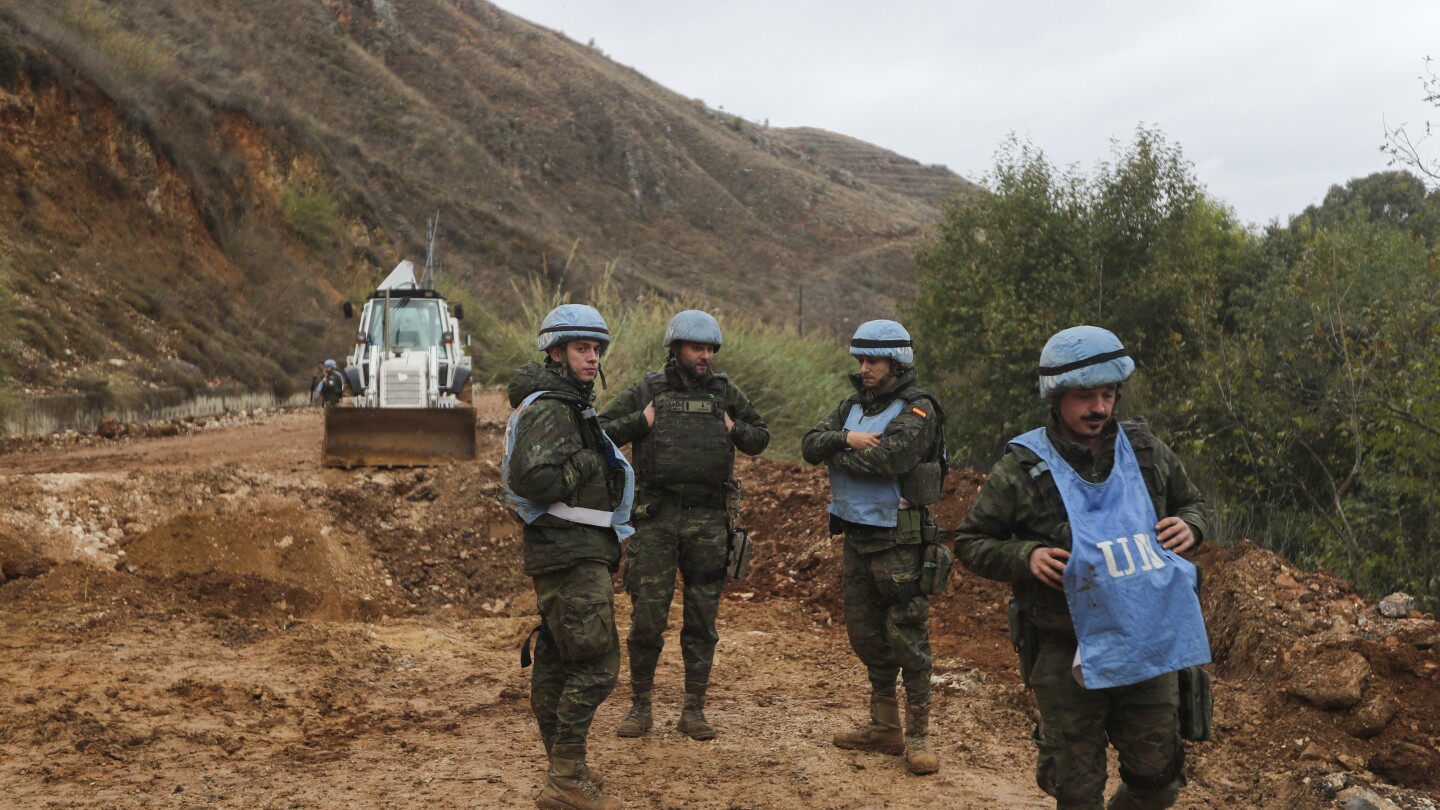
    WASHINGTON (AP) — The future of U.N. peacekeepers in Lebanon has split the United States and its European allies, raising implications for security in the Middle East and becoming the latest snag to vex relations between the U.S. and key partners like France, Britain and Italy.

    At issue is the peacekeeping operation known as UNIFIL, whose mandate expires at the end of August and will need to be renewed by the U.N. Security Council to continue. It was created to oversee the withdrawal of Israeli troops from southern Lebanon after Israel’s 1978 invasion, and its mission was expanded following the monthlong 2006 war between Israel and the militant group Hezbollah.

    The multinational force has played a significant role in monitoring the security situation in southern Lebanon for decades, including during the Israel-Hezbollah war last year, but has drawn criticism from both sides and numerous U.S. lawmakers, some of whom now hold prominent roles in President Donald Trump’s administration or wield new influence with the White House.

    Trump administration political appointees came into office this year with the aim of shutting down UNIFIL as soon as possible. They regard the operation as an ineffectual waste of money that is merely delaying the goal of eliminating Hezbollah’s influence and restoring full security control to the Lebanese Armed Forces that the government says it is not yet capable of doing.

    After securing major cuts in U.S. funding to the peacekeeping force, Secretary of State Marco Rubio signed off early last week on a plan that would wind down and end UNIFIL in the next six months, according to Trump administration officials and congressional aides familiar with the discussions.

    It’s another step as the Trump administration drastically pares back its foreign affairs priorities and budget, including expressing skepticism of international alliances and cutting funding to U.N. agencies and missions. The transatlantic divide also has been apparent on issues ranging from Israel’s war against Hamas in Gaza and the Russia-Ukraine conflict to trade, technology and free speech issues.

    Europeans push back against a quick end to UN peacekeeping in Lebanon

    Israel has for years sought an end to UNIFIL’s mandate, and renewal votes have often come after weeks of political wrangling. Now, the stakes are particularly high after last year’s war and more vigorous opposition in Washington.

    European nations, notably France and Italy, have objected to winding down UNIFIL. With the support of Tom Barrack, U.S. ambassador to Turkey and envoy to Lebanon, they successfully lobbied Rubio and others to support a one-year extension of the peacekeeping mandate followed by a time-certain wind-down period of six months, according to the administration officials and congressional aides, who spoke on condition of anonymity to discuss private diplomatic negotiations.

    Israel also reluctantly agreed to an extension, they said.

    The European argument was that prematurely ending UNIFIL before the Lebanese army is able to fully secure the border area would create a vacuum that Hezbollah could easily exploit.

    The French noted that when a U.N. peacekeeping mission in Mali was terminated before government troops were ready to deal with security threats, Islamic extremists moved in.

    With the U.S. easing off, the issue ahead of the U.N. vote expected at the end of August now appears to be resistance by France and others to setting a firm deadline for the operation to end after the one-year extension, according to the officials and congressional aides.

    French officials did not respond to requests for comment.

    The final French draft resolution, obtained by The Associated Press, does not include a date for UNIFIL’s withdrawal, which U.S. officials say is required for their support. Instead, it would extend the peacekeeping mission for one year and indicates the U.N. Security Council’s “intention to work on a withdrawal.”

    But even if the mandate is renewed, the peacekeeping mission might be scaled down for financial reasons, with the U.N. system likely facing drastic budget cuts, said a U.N. official, who was not authorized to comment to the media and spoke on condition of anonymity.

    One of the U.S. officials said an option being considered was reducing UNIFIL’s numbers while boosting its technological means to monitor the situation on the ground.

    The peacekeeping force has faced criticism

    There are about 10,000 peacekeepers in southern Lebanon, while the Lebanese army has around 6,000 soldiers, a number that is supposed to increase to 10,000.

    Hezbollah supporters in Lebanon have frequently accused the U.N. mission of collusion with Israel and sometimes attacked peacekeepers on patrol. Israel, meanwhile, has accused the peacekeepers of turning a blind eye to Hezbollah’s military activities in southern Lebanon and lobbied for its mandate to end.

    Sarit Zehavi, a former Israeli military intelligence analyst and founder of the Israeli think tank Alma Research and Education Center, said UNIFIL has played a “damaging role with regard to the mission of disarming Hezbollah in south Lebanon.”

    She pointed to the discovery of Hezbollah tunnels and weapons caches close to UNIFIL facilities during and after last year’s Israel-Hezbollah war, when much of the militant group’s senior leadership was killed and much of its arsenal destroyed. Hezbollah is now under increasing pressure to give up the rest of its weapons.

    U.N. spokesman Stephane Dujarric said UNIFIL continues to discover unauthorized weapons, including rocket launchers, mortar rounds and bomb fuses, this week, which it reported to the Lebanese army.

    Under the U.S.- and France-brokered ceasefire, Israel and Hezbollah were to withdraw from southern Lebanon, with the Lebanese army taking control in conjunction with UNIFIL. Israel has continued to occupy five strategic points on the Lebanese side and carry out near-daily airstrikes that it says aim to stop Hezbollah from regrouping.

    Lebanon supports keeping UN peacekeepers

    Lebanese officials have called for UNIFIL to remain, saying the country’s cash-strapped and overstretched army is not yet able to patrol the full area on its own until it.

    Retired Lebanese Army Gen. Khalil Helou said that if UNIFIL’s mandate were to abruptly end, soldiers would need to be pulled away from the porous border with Syria, where smuggling is rife, or from other areas inside of Lebanon — “and this could have consequences for the stability” of the country.

    UNIFIL “is maybe not fulfilling 100% what the Western powers or Israel desire. But for Lebanon, their presence is important,” he said.

    The United Nations also calls the peacekeepers critical to regional stability, Dujarric said.

    UNIFIL spokesperson Andrea Tenenti said deciding on the renewal of the mandate is the prerogative of the U.N. Security Council.

    “We are here to assist the parties in implementation of the mission’s mandate and we’re waiting for the final decision,” he said.

    ___

    Associated Press writer Edith M. Lederer at the United Nations contributed to this report.

    window.fbAsyncInit = function() {
    FB.init({

    appId : ‘870613919693099’,

    xfbml : true,
    version : ‘v2.9’
    });
    };

    (function(d, s, id){
    var js, fjs = d.getElementsByTagName(s)[0];
    if (d.getElementById(id)) {return;}
    js = d.createElement(s); js.id = id;
    js.src = “https://connect.facebook.net/en_US/sdk.js”;
    fjs.parentNode.insertBefore(js, fjs);
    }(document, ‘script’, ‘facebook-jssdk’));


    Source link

    http://wp.bypass.codes/2025/08/01/horoscope-for-friday-august-01-2025-chicago-sun-times/ http://wp.bypass.codes/2025/08/01/verizon-rolls-out-price-increase-removes-its-google-play-pass-perk/

  • US and Europe are divided over UN peacekeepers in Lebanon

    US and Europe are divided over UN peacekeepers in Lebanon


    WASHINGTON (AP) — The future of U.N. peacekeepers in Lebanon has split the United States and its European allies, raising implications for security in the Middle East and becoming the latest snag to vex relations between the U.S. and key partners like France, Britain and Italy.

    At issue is the peacekeeping operation known as UNIFIL, whose mandate expires at the end of August and will need to be renewed by the U.N. Security Council to continue. It was created to oversee the withdrawal of Israeli troops from southern Lebanon after Israel’s 1978 invasion, and its mission was expanded following the monthlong 2006 war between Israel and the militant group Hezbollah.

    The multinational force has played a significant role in monitoring the security situation in southern Lebanon for decades, including during the Israel-Hezbollah war last year, but has drawn criticism from both sides and numerous U.S. lawmakers, some of whom now hold prominent roles in President Donald Trump’s administration or wield new influence with the White House.

    Trump administration political appointees came into office this year with the aim of shutting down UNIFIL as soon as possible. They regard the operation as an ineffectual waste of money that is merely delaying the goal of eliminating Hezbollah’s influence and restoring full security control to the Lebanese Armed Forces that the government says it is not yet capable of doing.

    After securing major cuts in U.S. funding to the peacekeeping force, Secretary of State Marco Rubio signed off early last week on a plan that would wind down and end UNIFIL in the next six months, according to Trump administration officials and congressional aides familiar with the discussions.

    It’s another step as the Trump administration drastically pares back its foreign affairs priorities and budget, including expressing skepticism of international alliances and cutting funding to U.N. agencies and missions. The transatlantic divide also has been apparent on issues ranging from Israel’s war against Hamas in Gaza and the Russia-Ukraine conflict to trade, technology and free speech issues.

    Europeans push back against a quick end to UN peacekeeping in Lebanon

    Israel has for years sought an end to UNIFIL’s mandate, and renewal votes have often come after weeks of political wrangling. Now, the stakes are particularly high after last year’s war and more vigorous opposition in Washington.

    European nations, notably France and Italy, have objected to winding down UNIFIL. With the support of Tom Barrack, U.S. ambassador to Turkey and envoy to Lebanon, they successfully lobbied Rubio and others to support a one-year extension of the peacekeeping mandate followed by a time-certain wind-down period of six months, according to the administration officials and congressional aides, who spoke on condition of anonymity to discuss private diplomatic negotiations.

    Israel also reluctantly agreed to an extension, they said.

    The European argument was that prematurely ending UNIFIL before the Lebanese army is able to fully secure the border area would create a vacuum that Hezbollah could easily exploit.

    The French noted that when a U.N. peacekeeping mission in Mali was terminated before government troops were ready to deal with security threats, Islamic extremists moved in.

    With the U.S. easing off, the issue ahead of the U.N. vote expected at the end of August now appears to be resistance by France and others to setting a firm deadline for the operation to end after the one-year extension, according to the officials and congressional aides.

    French officials did not respond to requests for comment.

    The final French draft resolution, obtained by The Associated Press, does not include a date for UNIFIL’s withdrawal, which U.S. officials say is required for their support. Instead, it would extend the peacekeeping mission for one year and indicates the U.N. Security Council’s “intention to work on a withdrawal.”

    But even if the mandate is renewed, the peacekeeping mission might be scaled down for financial reasons, with the U.N. system likely facing drastic budget cuts, said a U.N. official, who was not authorized to comment to the media and spoke on condition of anonymity.

    One of the U.S. officials said an option being considered was reducing UNIFIL’s numbers while boosting its technological means to monitor the situation on the ground.

    The peacekeeping force has faced criticism

    There are about 10,000 peacekeepers in southern Lebanon, while the Lebanese army has around 6,000 soldiers, a number that is supposed to increase to 10,000.

    Hezbollah supporters in Lebanon have frequently accused the U.N. mission of collusion with Israel and sometimes attacked peacekeepers on patrol. Israel, meanwhile, has accused the peacekeepers of turning a blind eye to Hezbollah’s military activities in southern Lebanon and lobbied for its mandate to end.

    Sarit Zehavi, a former Israeli military intelligence analyst and founder of the Israeli think tank Alma Research and Education Center, said UNIFIL has played a “damaging role with regard to the mission of disarming Hezbollah in south Lebanon.”

    She pointed to the discovery of Hezbollah tunnels and weapons caches close to UNIFIL facilities during and after last year’s Israel-Hezbollah war, when much of the militant group’s senior leadership was killed and much of its arsenal destroyed. Hezbollah is now under increasing pressure to give up the rest of its weapons.

    U.N. spokesman Stephane Dujarric said UNIFIL continues to discover unauthorized weapons, including rocket launchers, mortar rounds and bomb fuses, this week, which it reported to the Lebanese army.

    Under the U.S.- and France-brokered ceasefire, Israel and Hezbollah were to withdraw from southern Lebanon, with the Lebanese army taking control in conjunction with UNIFIL. Israel has continued to occupy five strategic points on the Lebanese side and carry out near-daily airstrikes that it says aim to stop Hezbollah from regrouping.

    Lebanon supports keeping UN peacekeepers

    Lebanese officials have called for UNIFIL to remain, saying the country’s cash-strapped and overstretched army is not yet able to patrol the full area on its own until it.

    Retired Lebanese Army Gen. Khalil Helou said that if UNIFIL’s mandate were to abruptly end, soldiers would need to be pulled away from the porous border with Syria, where smuggling is rife, or from other areas inside of Lebanon — “and this could have consequences for the stability” of the country.

    UNIFIL “is maybe not fulfilling 100% what the Western powers or Israel desire. But for Lebanon, their presence is important,” he said.

    The United Nations also calls the peacekeepers critical to regional stability, Dujarric said.

    UNIFIL spokesperson Andrea Tenenti said deciding on the renewal of the mandate is the prerogative of the U.N. Security Council.

    “We are here to assist the parties in implementation of the mission’s mandate and we’re waiting for the final decision,” he said.

    ___

    Associated Press writer Edith M. Lederer at the United Nations contributed to this report.

    window.fbAsyncInit = function() {
    FB.init({

    appId : ‘870613919693099’,

    xfbml : true,
    version : ‘v2.9’
    });
    };

    (function(d, s, id){
    var js, fjs = d.getElementsByTagName(s)[0];
    if (d.getElementById(id)) {return;}
    js = d.createElement(s); js.id = id;
    js.src = “https://connect.facebook.net/en_US/sdk.js”;
    fjs.parentNode.insertBefore(js, fjs);
    }(document, ‘script’, ‘facebook-jssdk’));


    Source link

    http://wp.bypass.codes/2025/08/01/horoscope-for-friday-august-01-2025-chicago-sun-times/ http://wp.bypass.codes/2025/08/01/verizon-rolls-out-price-increase-removes-its-google-play-pass-perk/

  • US and Europe are divided over UN peacekeepers in Lebanon

    US and Europe are divided over UN peacekeepers in Lebanon


    WASHINGTON (AP) — The future of U.N. peacekeepers in Lebanon has split the United States and its European allies, raising implications for security in the Middle East and becoming the latest snag to vex relations between the U.S. and key partners like France, Britain and Italy.

    At issue is the peacekeeping operation known as UNIFIL, whose mandate expires at the end of August and will need to be renewed by the U.N. Security Council to continue. It was created to oversee the withdrawal of Israeli troops from southern Lebanon after Israel’s 1978 invasion, and its mission was expanded following the monthlong 2006 war between Israel and the militant group Hezbollah.

    The multinational force has played a significant role in monitoring the security situation in southern Lebanon for decades, including during the Israel-Hezbollah war last year, but has drawn criticism from both sides and numerous U.S. lawmakers, some of whom now hold prominent roles in President Donald Trump’s administration or wield new influence with the White House.

    Trump administration political appointees came into office this year with the aim of shutting down UNIFIL as soon as possible. They regard the operation as an ineffectual waste of money that is merely delaying the goal of eliminating Hezbollah’s influence and restoring full security control to the Lebanese Armed Forces that the government says it is not yet capable of doing.

    After securing major cuts in U.S. funding to the peacekeeping force, Secretary of State Marco Rubio signed off early last week on a plan that would wind down and end UNIFIL in the next six months, according to Trump administration officials and congressional aides familiar with the discussions.

    It’s another step as the Trump administration drastically pares back its foreign affairs priorities and budget, including expressing skepticism of international alliances and cutting funding to U.N. agencies and missions. The transatlantic divide also has been apparent on issues ranging from Israel’s war against Hamas in Gaza and the Russia-Ukraine conflict to trade, technology and free speech issues.

    Europeans push back against a quick end to UN peacekeeping in Lebanon

    Israel has for years sought an end to UNIFIL’s mandate, and renewal votes have often come after weeks of political wrangling. Now, the stakes are particularly high after last year’s war and more vigorous opposition in Washington.

    European nations, notably France and Italy, have objected to winding down UNIFIL. With the support of Tom Barrack, U.S. ambassador to Turkey and envoy to Lebanon, they successfully lobbied Rubio and others to support a one-year extension of the peacekeeping mandate followed by a time-certain wind-down period of six months, according to the administration officials and congressional aides, who spoke on condition of anonymity to discuss private diplomatic negotiations.

    Israel also reluctantly agreed to an extension, they said.

    The European argument was that prematurely ending UNIFIL before the Lebanese army is able to fully secure the border area would create a vacuum that Hezbollah could easily exploit.

    The French noted that when a U.N. peacekeeping mission in Mali was terminated before government troops were ready to deal with security threats, Islamic extremists moved in.

    With the U.S. easing off, the issue ahead of the U.N. vote expected at the end of August now appears to be resistance by France and others to setting a firm deadline for the operation to end after the one-year extension, according to the officials and congressional aides.

    French officials did not respond to requests for comment.

    The final French draft resolution, obtained by The Associated Press, does not include a date for UNIFIL’s withdrawal, which U.S. officials say is required for their support. Instead, it would extend the peacekeeping mission for one year and indicates the U.N. Security Council’s “intention to work on a withdrawal.”

    But even if the mandate is renewed, the peacekeeping mission might be scaled down for financial reasons, with the U.N. system likely facing drastic budget cuts, said a U.N. official, who was not authorized to comment to the media and spoke on condition of anonymity.

    One of the U.S. officials said an option being considered was reducing UNIFIL’s numbers while boosting its technological means to monitor the situation on the ground.

    The peacekeeping force has faced criticism

    There are about 10,000 peacekeepers in southern Lebanon, while the Lebanese army has around 6,000 soldiers, a number that is supposed to increase to 10,000.

    Hezbollah supporters in Lebanon have frequently accused the U.N. mission of collusion with Israel and sometimes attacked peacekeepers on patrol. Israel, meanwhile, has accused the peacekeepers of turning a blind eye to Hezbollah’s military activities in southern Lebanon and lobbied for its mandate to end.

    Sarit Zehavi, a former Israeli military intelligence analyst and founder of the Israeli think tank Alma Research and Education Center, said UNIFIL has played a “damaging role with regard to the mission of disarming Hezbollah in south Lebanon.”

    She pointed to the discovery of Hezbollah tunnels and weapons caches close to UNIFIL facilities during and after last year’s Israel-Hezbollah war, when much of the militant group’s senior leadership was killed and much of its arsenal destroyed. Hezbollah is now under increasing pressure to give up the rest of its weapons.

    U.N. spokesman Stephane Dujarric said UNIFIL continues to discover unauthorized weapons, including rocket launchers, mortar rounds and bomb fuses, this week, which it reported to the Lebanese army.

    Under the U.S.- and France-brokered ceasefire, Israel and Hezbollah were to withdraw from southern Lebanon, with the Lebanese army taking control in conjunction with UNIFIL. Israel has continued to occupy five strategic points on the Lebanese side and carry out near-daily airstrikes that it says aim to stop Hezbollah from regrouping.

    Lebanon supports keeping UN peacekeepers

    Lebanese officials have called for UNIFIL to remain, saying the country’s cash-strapped and overstretched army is not yet able to patrol the full area on its own until it.

    Retired Lebanese Army Gen. Khalil Helou said that if UNIFIL’s mandate were to abruptly end, soldiers would need to be pulled away from the porous border with Syria, where smuggling is rife, or from other areas inside of Lebanon — “and this could have consequences for the stability” of the country.

    UNIFIL “is maybe not fulfilling 100% what the Western powers or Israel desire. But for Lebanon, their presence is important,” he said.

    The United Nations also calls the peacekeepers critical to regional stability, Dujarric said.

    UNIFIL spokesperson Andrea Tenenti said deciding on the renewal of the mandate is the prerogative of the U.N. Security Council.

    “We are here to assist the parties in implementation of the mission’s mandate and we’re waiting for the final decision,” he said.

    ___

    Associated Press writer Edith M. Lederer at the United Nations contributed to this report.

    window.fbAsyncInit = function() {
    FB.init({

    appId : ‘870613919693099’,

    xfbml : true,
    version : ‘v2.9’
    });
    };

    (function(d, s, id){
    var js, fjs = d.getElementsByTagName(s)[0];
    if (d.getElementById(id)) {return;}
    js = d.createElement(s); js.id = id;
    js.src = “https://connect.facebook.net/en_US/sdk.js”;
    fjs.parentNode.insertBefore(js, fjs);
    }(document, ‘script’, ‘facebook-jssdk’));


    Source link

    http://wp.bypass.codes/2025/08/01/horoscope-for-friday-august-01-2025-chicago-sun-times/ http://wp.bypass.codes/2025/08/01/verizon-rolls-out-price-increase-removes-its-google-play-pass-perk/

  • US and Europe are divided over UN peacekeepers in Lebanon

    US and Europe are divided over UN peacekeepers in Lebanon


    WASHINGTON (AP) — The future of U.N. peacekeepers in Lebanon has split the United States and its European allies, raising implications for security in the Middle East and becoming the latest snag to vex relations between the U.S. and key partners like France, Britain and Italy.

    At issue is the peacekeeping operation known as UNIFIL, whose mandate expires at the end of August and will need to be renewed by the U.N. Security Council to continue. It was created to oversee the withdrawal of Israeli troops from southern Lebanon after Israel’s 1978 invasion, and its mission was expanded following the monthlong 2006 war between Israel and the militant group Hezbollah.

    The multinational force has played a significant role in monitoring the security situation in southern Lebanon for decades, including during the Israel-Hezbollah war last year, but has drawn criticism from both sides and numerous U.S. lawmakers, some of whom now hold prominent roles in President Donald Trump’s administration or wield new influence with the White House.

    Trump administration political appointees came into office this year with the aim of shutting down UNIFIL as soon as possible. They regard the operation as an ineffectual waste of money that is merely delaying the goal of eliminating Hezbollah’s influence and restoring full security control to the Lebanese Armed Forces that the government says it is not yet capable of doing.

    After securing major cuts in U.S. funding to the peacekeeping force, Secretary of State Marco Rubio signed off early last week on a plan that would wind down and end UNIFIL in the next six months, according to Trump administration officials and congressional aides familiar with the discussions.

    It’s another step as the Trump administration drastically pares back its foreign affairs priorities and budget, including expressing skepticism of international alliances and cutting funding to U.N. agencies and missions. The transatlantic divide also has been apparent on issues ranging from Israel’s war against Hamas in Gaza and the Russia-Ukraine conflict to trade, technology and free speech issues.

    Europeans push back against a quick end to UN peacekeeping in Lebanon

    Israel has for years sought an end to UNIFIL’s mandate, and renewal votes have often come after weeks of political wrangling. Now, the stakes are particularly high after last year’s war and more vigorous opposition in Washington.

    European nations, notably France and Italy, have objected to winding down UNIFIL. With the support of Tom Barrack, U.S. ambassador to Turkey and envoy to Lebanon, they successfully lobbied Rubio and others to support a one-year extension of the peacekeeping mandate followed by a time-certain wind-down period of six months, according to the administration officials and congressional aides, who spoke on condition of anonymity to discuss private diplomatic negotiations.

    Israel also reluctantly agreed to an extension, they said.

    The European argument was that prematurely ending UNIFIL before the Lebanese army is able to fully secure the border area would create a vacuum that Hezbollah could easily exploit.

    The French noted that when a U.N. peacekeeping mission in Mali was terminated before government troops were ready to deal with security threats, Islamic extremists moved in.

    With the U.S. easing off, the issue ahead of the U.N. vote expected at the end of August now appears to be resistance by France and others to setting a firm deadline for the operation to end after the one-year extension, according to the officials and congressional aides.

    French officials did not respond to requests for comment.

    The final French draft resolution, obtained by The Associated Press, does not include a date for UNIFIL’s withdrawal, which U.S. officials say is required for their support. Instead, it would extend the peacekeeping mission for one year and indicates the U.N. Security Council’s “intention to work on a withdrawal.”

    But even if the mandate is renewed, the peacekeeping mission might be scaled down for financial reasons, with the U.N. system likely facing drastic budget cuts, said a U.N. official, who was not authorized to comment to the media and spoke on condition of anonymity.

    One of the U.S. officials said an option being considered was reducing UNIFIL’s numbers while boosting its technological means to monitor the situation on the ground.

    The peacekeeping force has faced criticism

    There are about 10,000 peacekeepers in southern Lebanon, while the Lebanese army has around 6,000 soldiers, a number that is supposed to increase to 10,000.

    Hezbollah supporters in Lebanon have frequently accused the U.N. mission of collusion with Israel and sometimes attacked peacekeepers on patrol. Israel, meanwhile, has accused the peacekeepers of turning a blind eye to Hezbollah’s military activities in southern Lebanon and lobbied for its mandate to end.

    Sarit Zehavi, a former Israeli military intelligence analyst and founder of the Israeli think tank Alma Research and Education Center, said UNIFIL has played a “damaging role with regard to the mission of disarming Hezbollah in south Lebanon.”

    She pointed to the discovery of Hezbollah tunnels and weapons caches close to UNIFIL facilities during and after last year’s Israel-Hezbollah war, when much of the militant group’s senior leadership was killed and much of its arsenal destroyed. Hezbollah is now under increasing pressure to give up the rest of its weapons.

    U.N. spokesman Stephane Dujarric said UNIFIL continues to discover unauthorized weapons, including rocket launchers, mortar rounds and bomb fuses, this week, which it reported to the Lebanese army.

    Under the U.S.- and France-brokered ceasefire, Israel and Hezbollah were to withdraw from southern Lebanon, with the Lebanese army taking control in conjunction with UNIFIL. Israel has continued to occupy five strategic points on the Lebanese side and carry out near-daily airstrikes that it says aim to stop Hezbollah from regrouping.

    Lebanon supports keeping UN peacekeepers

    Lebanese officials have called for UNIFIL to remain, saying the country’s cash-strapped and overstretched army is not yet able to patrol the full area on its own until it.

    Retired Lebanese Army Gen. Khalil Helou said that if UNIFIL’s mandate were to abruptly end, soldiers would need to be pulled away from the porous border with Syria, where smuggling is rife, or from other areas inside of Lebanon — “and this could have consequences for the stability” of the country.

    UNIFIL “is maybe not fulfilling 100% what the Western powers or Israel desire. But for Lebanon, their presence is important,” he said.

    The United Nations also calls the peacekeepers critical to regional stability, Dujarric said.

    UNIFIL spokesperson Andrea Tenenti said deciding on the renewal of the mandate is the prerogative of the U.N. Security Council.

    “We are here to assist the parties in implementation of the mission’s mandate and we’re waiting for the final decision,” he said.

    ___

    Associated Press writer Edith M. Lederer at the United Nations contributed to this report.

    window.fbAsyncInit = function() {
    FB.init({

    appId : ‘870613919693099’,

    xfbml : true,
    version : ‘v2.9’
    });
    };

    (function(d, s, id){
    var js, fjs = d.getElementsByTagName(s)[0];
    if (d.getElementById(id)) {return;}
    js = d.createElement(s); js.id = id;
    js.src = “https://connect.facebook.net/en_US/sdk.js”;
    fjs.parentNode.insertBefore(js, fjs);
    }(document, ‘script’, ‘facebook-jssdk’));


    Source link

    https://www.bon.com.na/CMSTemplates/Bon/Files/bon.com.na/cb/cb647540-bfad-42d3-bdd8-0de9b6d75c4a.html?o2x=MW3tw45